




Pine Wooden Hall Bench
A pine wooden hall bench offers straightforward utility and character, anchoring a passage with timber texture and practical seating.
Pine Wooden Hall Bench
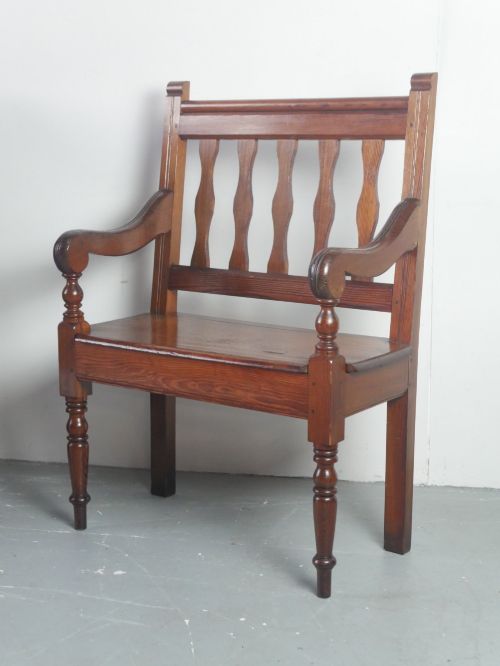
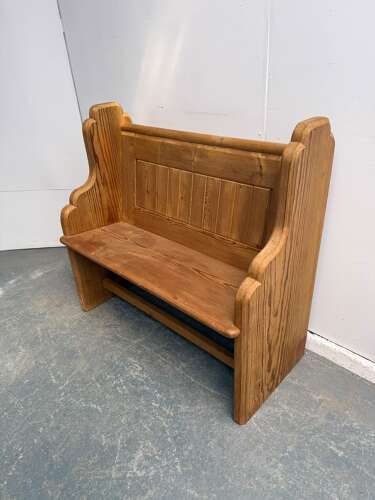
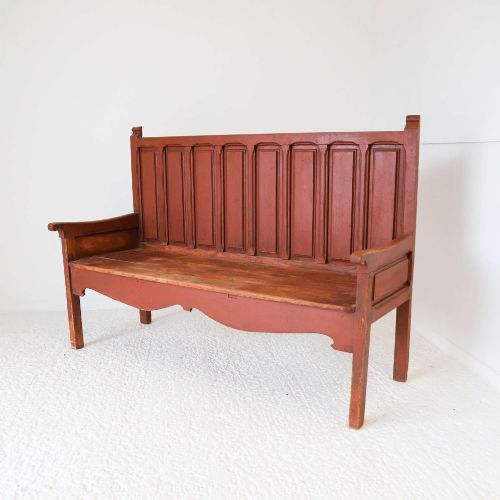
A pine wooden hall bench serves as a functional seat for an entranceway, corridor, or boot room, providing a solid place to sit when removing boots or waiting. These seating pieces span from simple rustic forms to high-backed settles designed to block draughts from doors.
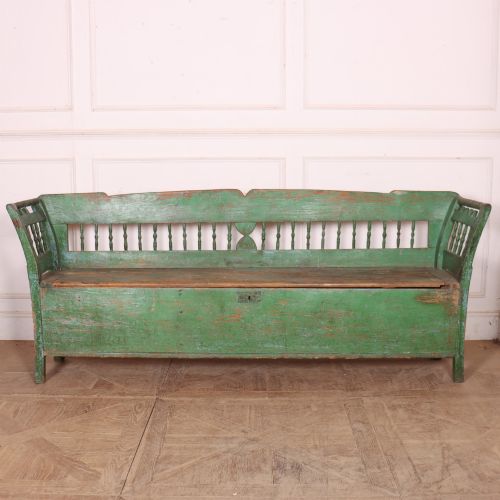
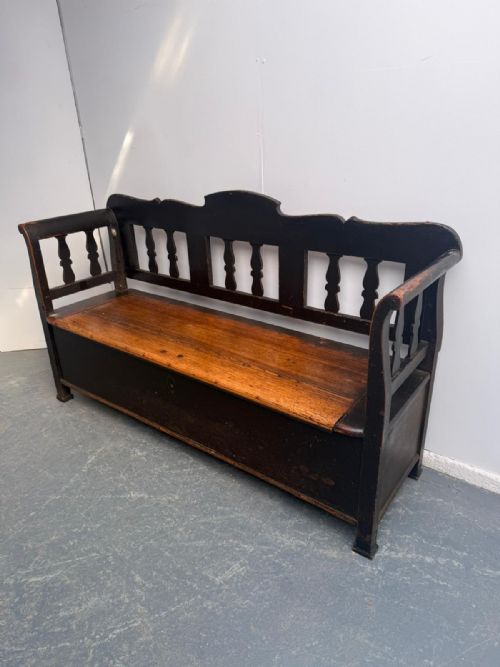
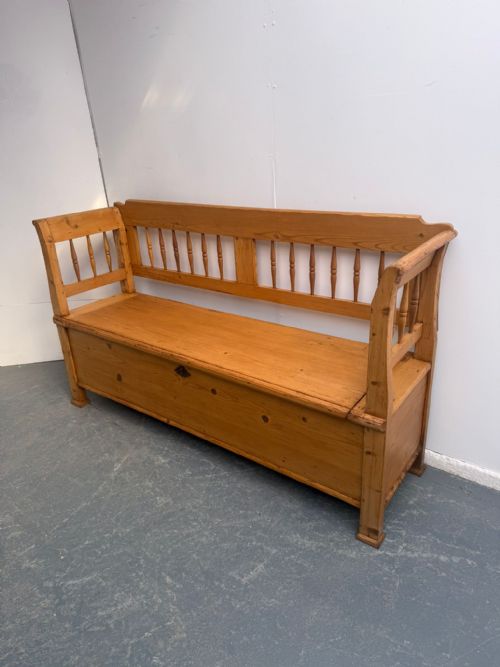
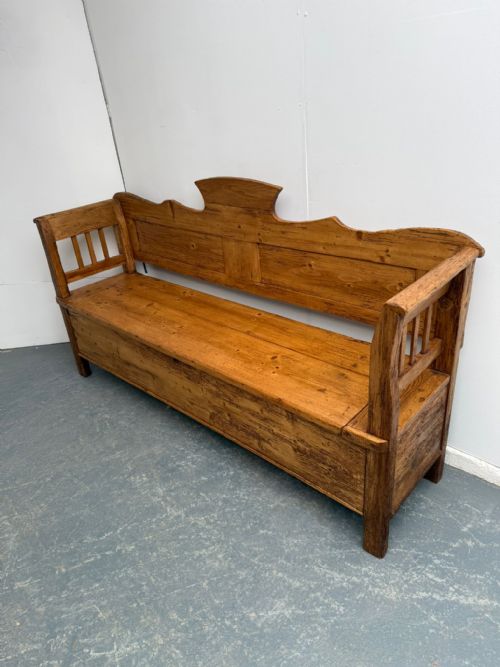
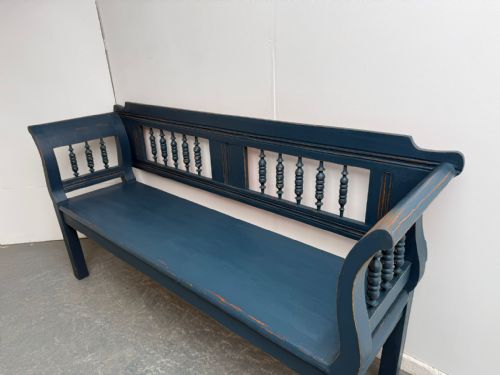
The selections on this page encompass various regional traditions, including English tavern pieces, Hungarian box settles, and Scandinavian painted benches. Dating ranges from the eighteenth century through to the Edwardian era, showing both waxed timber surfaces and old paint finishes.
Box settles with integrated storage beneath the seat appear frequently alongside open benches and window seats. Buyers encounter pieces finished in original black, grey, blue, or cream paint, as well as waxed surfaces that highlight the grain of the softwood.
What varies in quality
The integrity of the timber and the survival of original surface finishes dictate the standing of a piece. Examples retaining their initial painted skin or honest waxed patina carry greater character than those stripped down or aggressively sanded to bare wood.
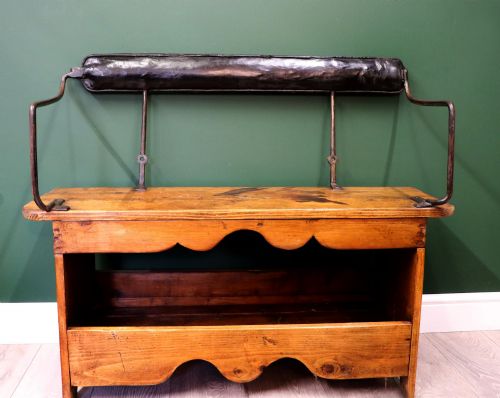
Proportion and construction depth separate standard utilitarian items from finer regional examples, such as high-backed settles with panelled backs or curved barrel forms. Original ironwork and intact internal storage compartments further distinguish superior examples.
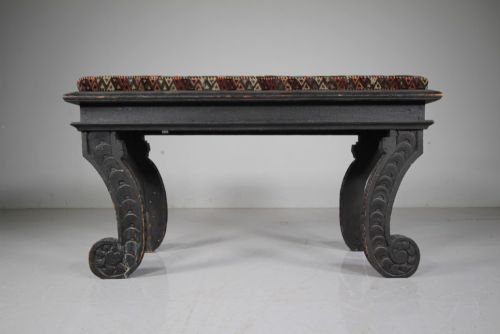
A novel twist on church seating appears alongside organist benches designed for ecclesiastical spaces.
The Pine Wooden Hall Bench Glossary
- Settle
- A wooden bench with a high back, solid arms, and frequently a box seat for storage. This form was originally designed to keep draughts away from people sitting near doors.
- Box settle
- A specific type of settle featuring a hinged seat lid that opens to reveal a storage compartment underneath. It provides dual utility as both seating and a chest.
- Pitch pine
- A dense, resinous variety of pine timber often used in nineteenth-century furniture for its durability and prominent grain pattern. It takes a deep wax polish.
- Barrel backed
- A settle design featuring a curved, enclosing back that wraps around the sitter to offer protection from cold air. This form requires skilled carpentry to shape the solid or panelled back.
- Folk art
- Decorative or utilitarian objects created within a specific regional tradition, often characterised by naive carving, hand-painted finishes, and local design quirks.
Pine Wooden Hall Bench: Frequently Asked Questions
Where should I put a hall bench?
These pieces suit narrow corridors, boot rooms, and entrance halls where linear seating fits well against a wall. High-backed versions work particularly well in large hallways to create a sense of proportion and shelter.
Shorter benches or window seats fit smaller alcoves and landings. Consideration must be given to depth, as settles with storage boxes require clearance for the seat lid to open fully.
How do I care for antique pine?
Maintenance involves applying a natural beeswax polish occasionally to nourish the softwood and protect the surface from moisture. Direct sunlight and sudden changes in temperature should be avoided to prevent the timber from splitting.
Painted surfaces require gentle dusting with a dry cloth rather than liquid cleaners. This preserves the remaining original pigment and prevents unnecessary wear to the finish.
What is the difference between a settle and a bench?
A settle typically includes a high solid back and enclosed arms designed to deflect cold draughts in older buildings. Standard benches offer open construction without high backs or integrated storage compartments.
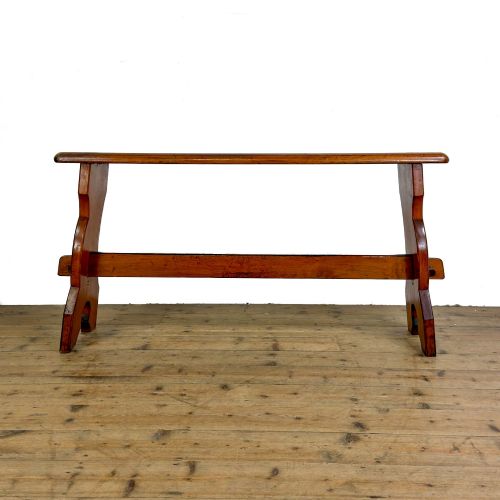
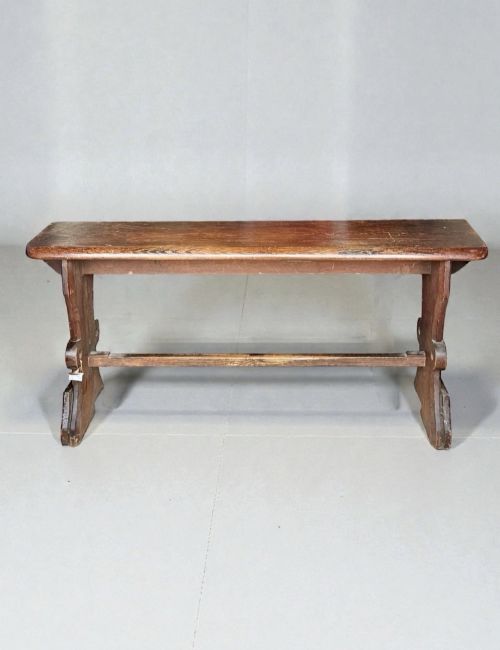
Settles often incorporate a box base beneath the seat for storing household items. Benches tend to have a lighter visual weight and simpler open legs or trestle supports.
How do I identify the period of a pine bench?
Dating relies on examining construction marks, tool traces, and the wear patterns on the timber and iron fittings. Hand-sawn boards, forged iron strap hinges, and pegged joints indicate earlier periods like the eighteenth or early nineteenth century.
Later Victorian and Edwardian examples often display machine-sawn timber and standardised fixings. Surface treatments also offer clues, as genuine historic paint layers show natural craquelure and organic wear.