
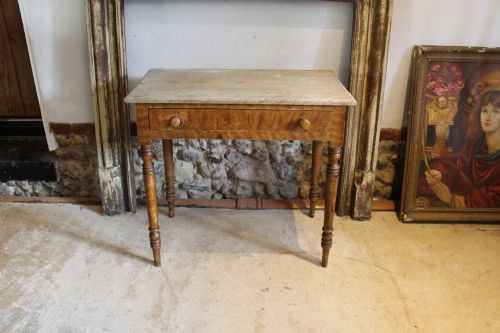
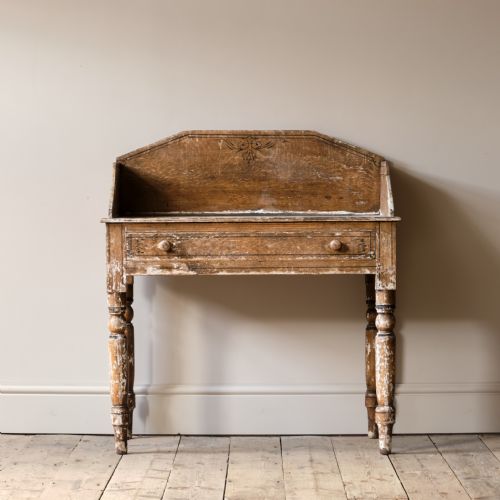
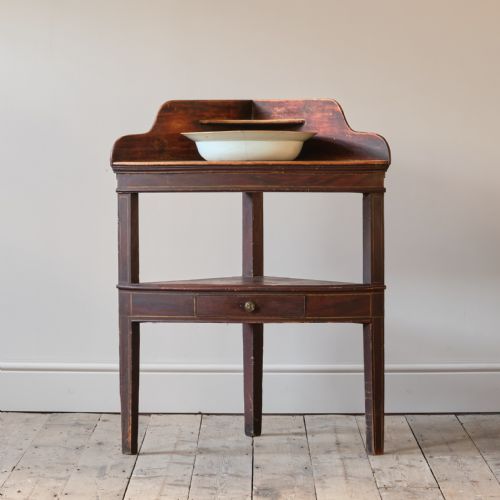
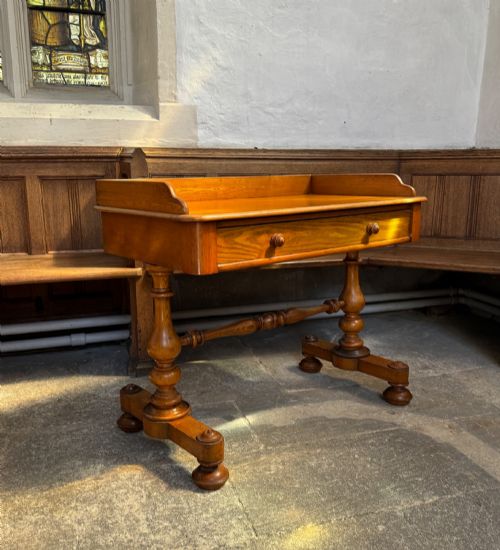

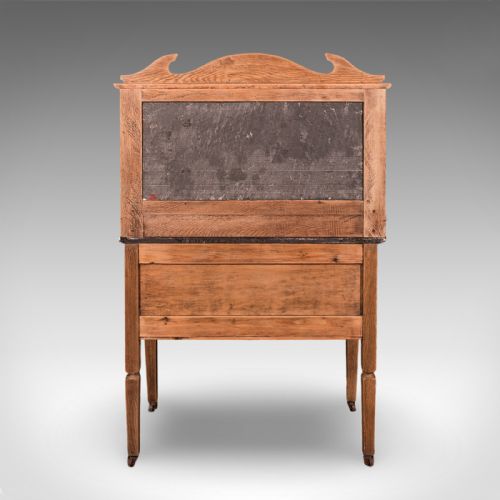
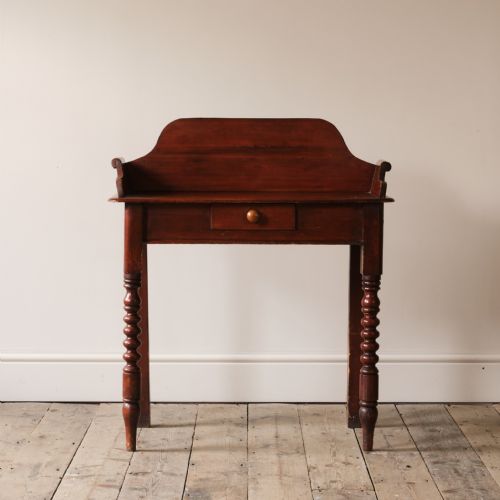
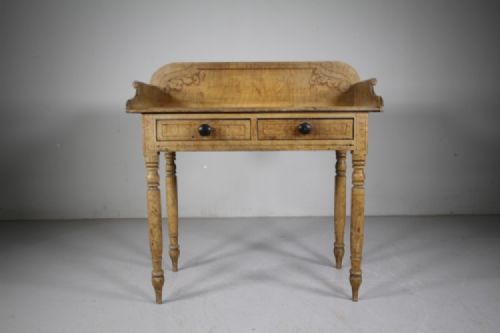


Pine Washstand Table
These pine washstand table examples bring honest utility and character to a room, offering sturdy surfaces shaped by nineteenth-century daily life.
Pine Washstand Table
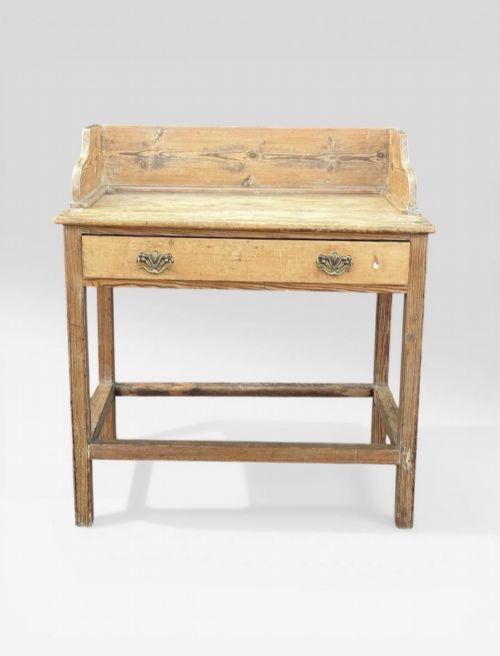
A pine washstand table serves as a functional utility piece from the nineteenth century, designed to hold washing basins and bedroom jugs before plumbing shifted indoors. You will most frequently encounter Victorian and Regency examples, often crossing over in form with simple side tables or dressing tables.
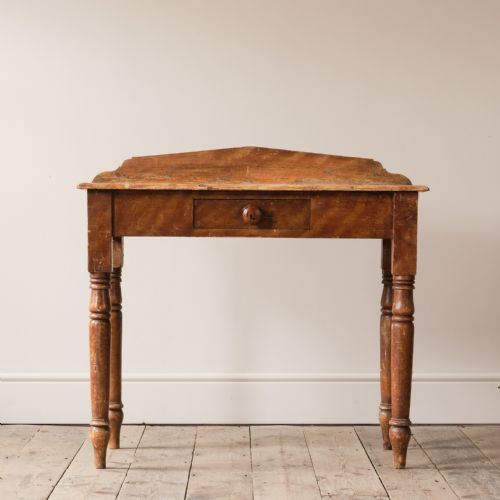
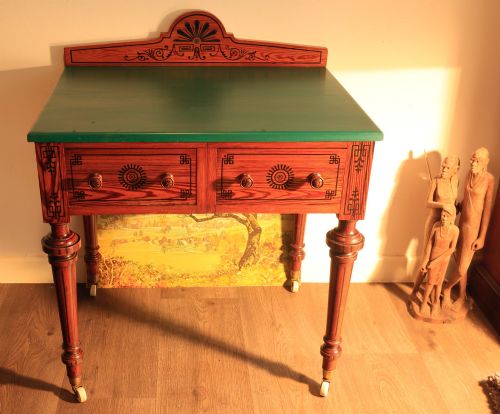
The surviving pieces range from rustic country furniture with scumble or original grain finishes to more formal painted or pitch pine variants. Many retain simple drawer arrangements or low galleries, reflecting their domestic origins in bedrooms and dressing rooms.
Materials and construction
Makers relied primarily on native pine and pitch pine for the structural frames, valued for their durability and straight grain. Carpenters frequently applied surface treatments such as scumble paint, grain finishes, or decorative painted schemes to mimic more expensive hardwoods.
Hardware details typically included brass or metal handles and fixtures, while select pieces incorporated marble or ceramic inserts to withstand water splashes during daily use.
The listings show pieces spanning the Regency, Victorian, and Edwardian eras, constructed primarily from pine, pitch pine, and painted softwood with occasional marble inserts.
Judging quality and preservation
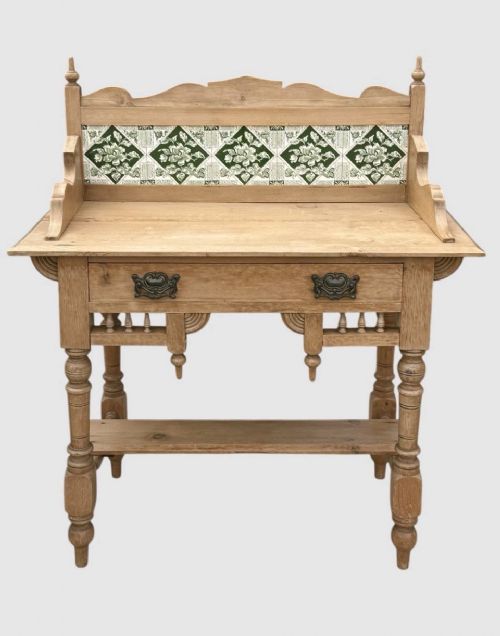
The distinction between standard examples and superior pieces rests in the survival of original surface treatments, such as scumble paint or decorative graining, rather than plain stripped wood. Superior items maintain their integrated galleries, tile backs, and matching hardware without heavy modern alterations.
Proportion and timber selection also set finer pieces apart, with dense pitch pine and balanced Regency or Victorian proportions indicating careful regional workshop production.
The Pine Washstand Table Glossary
- Scumble paint
- A translucent decorative glaze manipulated with combs or brushes over a lighter base coat to imitate figured wood grain. This technique was widely utilised by nineteenth-century painters to elevate plain pine furniture.
- Pitch pine
- A dense, resinous softwood sourced mainly from North America and Britain, known for its distinct grain pattern and durability. It was frequently selected for heavy-use items like washstands and side tables.
- Washstand
- A dedicated bedroom table designed to support a basin, jug, and personal washing accessories. Versions often include small drawers, towel rails, or tiled splashbacks.
- Tile gallery back
- A raised vertical barrier at the rear of a washstand inset with decorative ceramic tiles to protect walls from water splashes. These additions often appear on late Victorian and Edwardian examples.
Pine Washstand Table: Frequently Asked Questions
How were washstand tables originally used?
These tables stood in nineteenth-century bedrooms to hold ceramic basins and water jugs for morning washing before running water became common.
Owners also utilised the flat surfaces and drawers for grooming accessories, brushes, and personal care items.
Are these tables suitable for modern bathrooms?
Many people adapt these sturdy pine tables as vanity bases for modern vessel sinks or place them in hallways and living rooms as side tables.
The treated pine surfaces handle everyday items well, though protecting painted or bare wood from standing water is sensible.
How can I tell a Regency piece from a Victorian one?
Regency washstands typically exhibit restrained classical lines, simpler turning, and lighter proportions reflecting early nineteenth-century tastes.
Victorian variants often display heavier framing, more varied paint treatments, or later additions like tile backs and marble tops.
Why do some washstands have painted finishes?
Makers applied paint, scumble glazes, or faux graining to protect the softwood and give plain pine the appearance of costlier timbers like oak or mahogany.
Original paint surfaces survive today as a key indicator of historical untouched condition.