
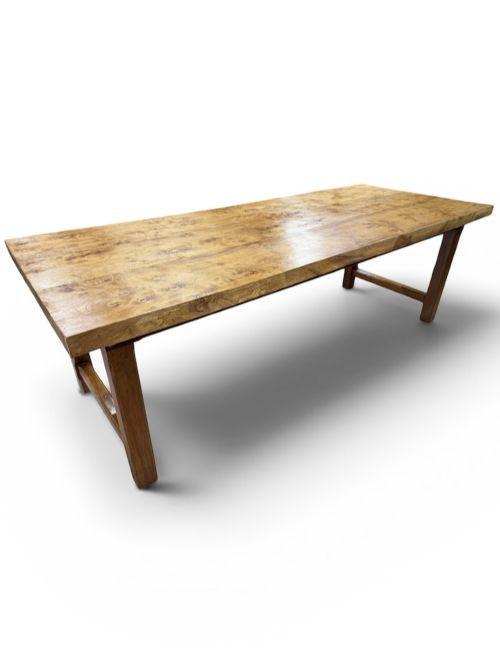
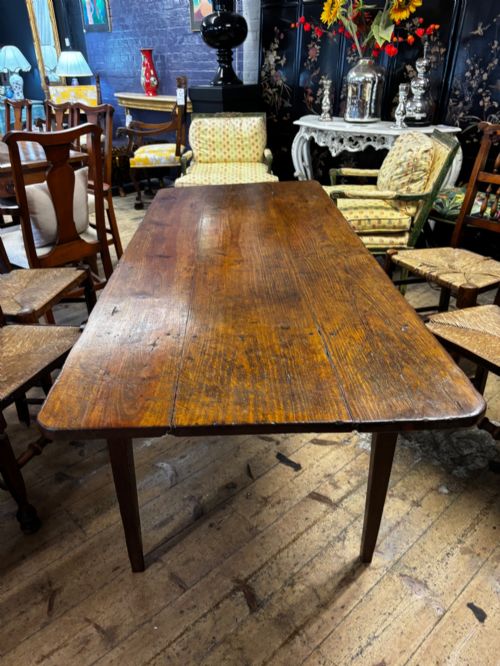
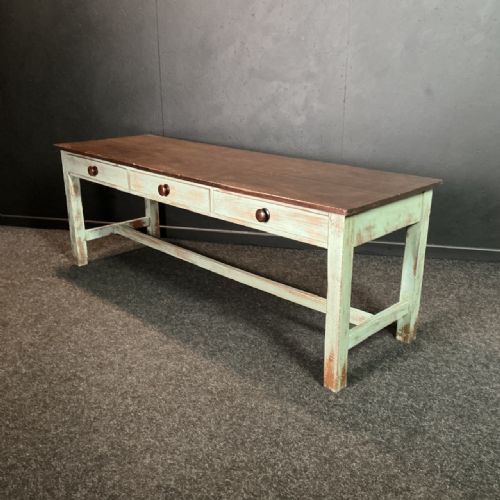
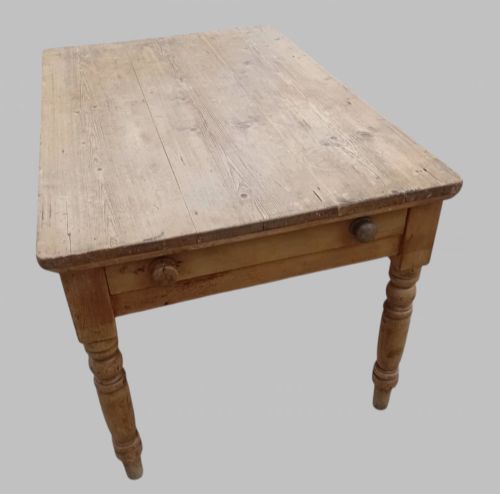
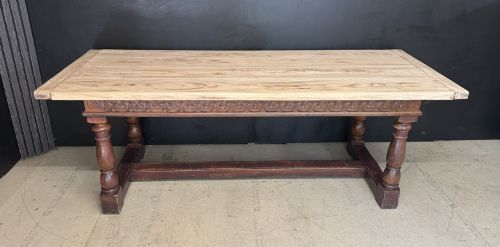
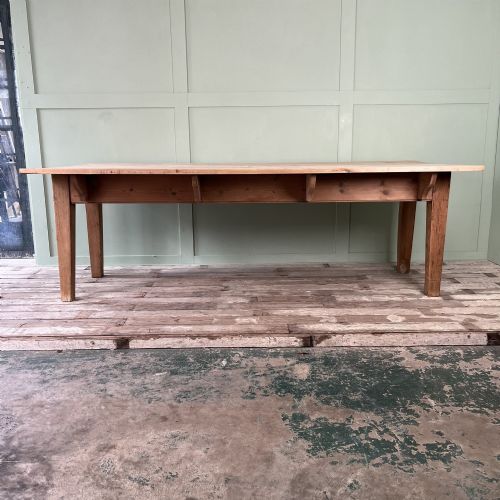
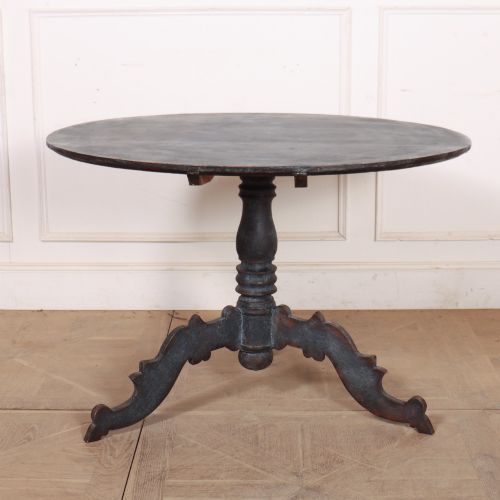
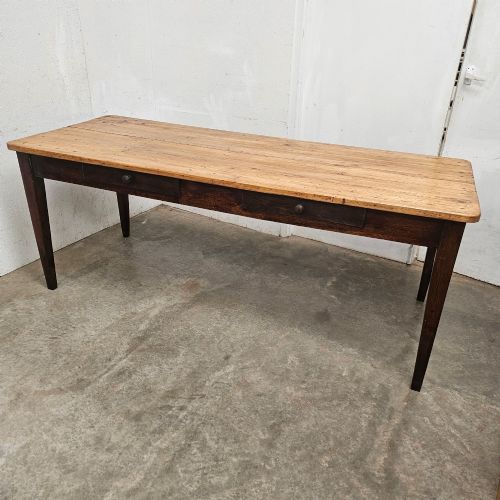

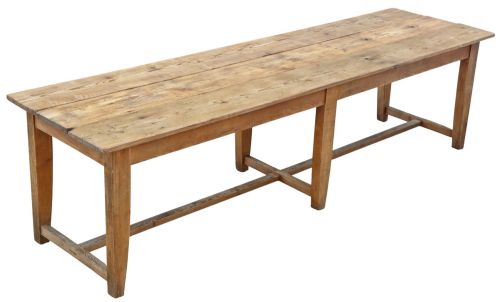
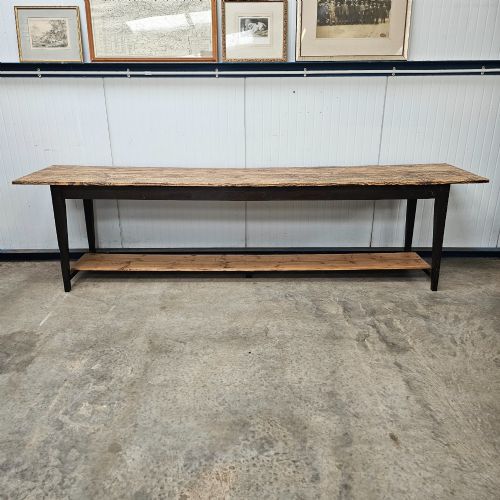
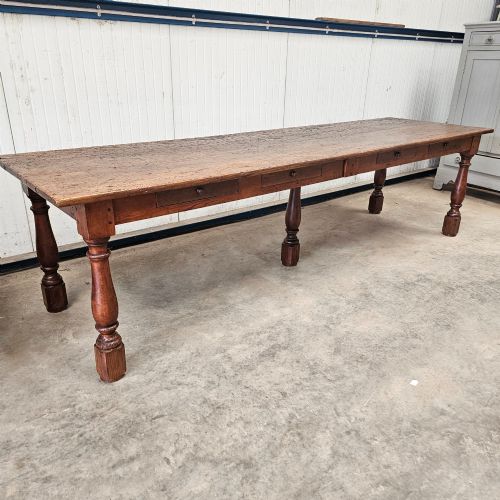
Pine Topped Dining Table
A pine topped dining table brings functional utility and rustic warmth to a kitchen or dining room.
Pine Topped Dining Table
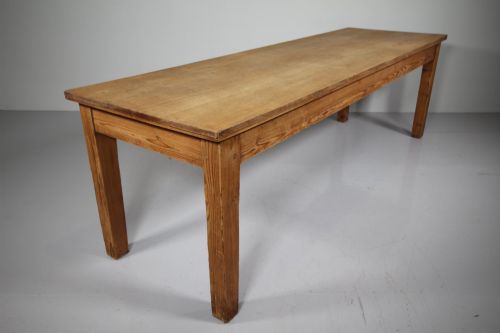
A pine topped dining table serves as a sturdy central piece for communal meals, originating predominantly from the nineteenth century and the Victorian era. These items span various forms including standard kitchen tables, refectory tables, and harvest tables.
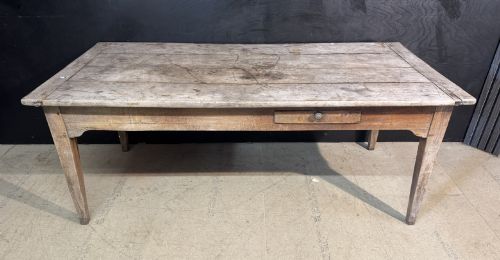
Buyers will frequently encounter examples designed for farmhouse or provincial settings, often featuring timber bases or painted legs. Such tables embody practical domestic history, showing the marks of daily preparation and family use.
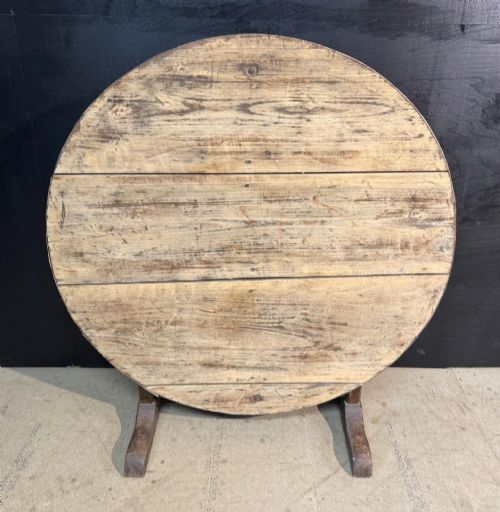
The selection ranges from compact circular kitchen models to long boards accommodating multiple diners. Each pine topped dining table reflects the utilitarian needs of past households through straightforward construction and enduring materials.
How they were made
Maker construction relies heavily on pine for the top planks, paired with supporting timbers such as oak, fruitwood, or iron for bases and frames. Many surfaces display the characteristic pale tone of scrubbed wood resulting from years of vigorous cleaning.
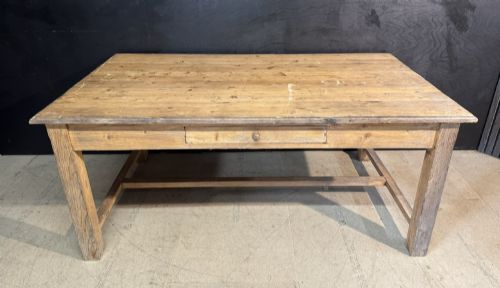
Joinery often incorporates cleated ends on multi-plank tops to manage natural wood movement, alongside trestle supports or X-frames. Original applications of paint frequently survive on the legs and aprons, contrasting with the bare timber above.
Listings feature nineteenth-century and Victorian pine topped dining tables constructed with oak, fruitwood, and iron supports in various farmhouse styles.
What varies in quality
Gradations in quality depend on the selection of timber, the integrity of the original construction, and the survival of authentic surface finishes. Superior pieces exhibit well-proportioned framing, substantial plank thickness, and balanced integration of drawers or trestles.
The character of the top surface heavily influences desirability, particularly where boards retain deep patination from historical use. Retained original paintwork on the lower structure also elevates the distinctiveness of an individual piece.
The Pine Topped Dining Table Glossary
- Scrub top
- A bare wooden tabletop resulting from repeated scrubbing with soap and water to maintain hygiene in working kitchens. This process leaves the grain raised and pale.
- Refectory table
- A long narrow dining table traditionally built for communal dining halls. These examples often utilise sturdy timber frames and stretcher bases for stability.
- Cleated ends
- Wooden battens fixed across the ends of plank tabletops to prevent warping and splitting. They accommodate the natural expansion and contraction of the wood.
- Trestle table
- A table consisting of two or more support frames connected by a longitudinal beam. This design maximises legroom along the length of the seating area.
- Jogltisch
- A traditional European table construction utilising interlocking wooden joints. The method provides robust framing without requiring complex metal fixings.
Pine Topped Dining Table: Frequently Asked Questions
How do I clean a pine top?
Maintenance requires wiping the surface with a damp cloth and mild soap to preserve the aged timber.
Avoid harsh chemical cleaners that strip the natural patina accumulated over decades of use.
Are these tables suitable for daily use?
These pieces were originally built for heavy kitchen labour and communal dining.
Their robust construction handles everyday family meals while accumulating further character over time.
How do I identify a Victorian table?
Victorian examples frequently display turned wooden legs, specific drawer configurations, and proportions suited to nineteenth-century domestic spaces.
Construction details and timber maturity provide further clues regarding the production period.
What is a scrub top?
A scrub top refers to unpolished softwood boards washed frequently in traditional farmhouses.
This cleaning method creates a pale, tactile surface texture distinct from polished hardwoods.