
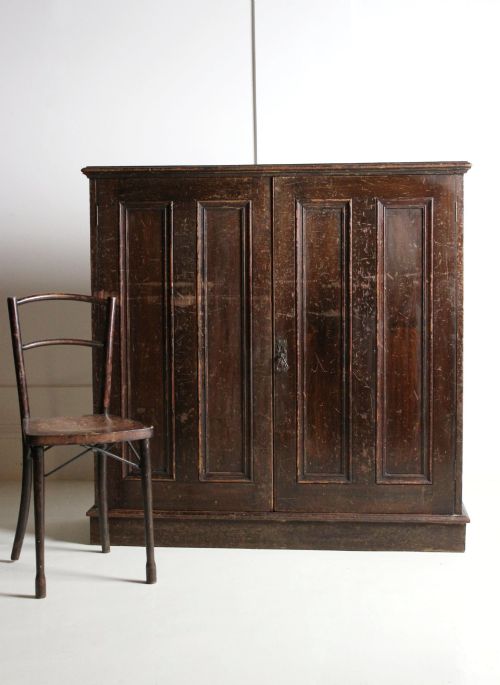
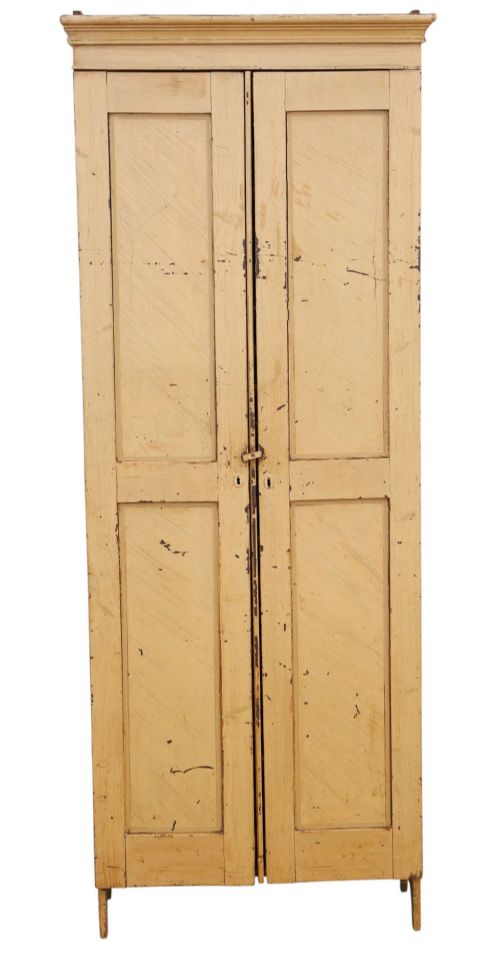
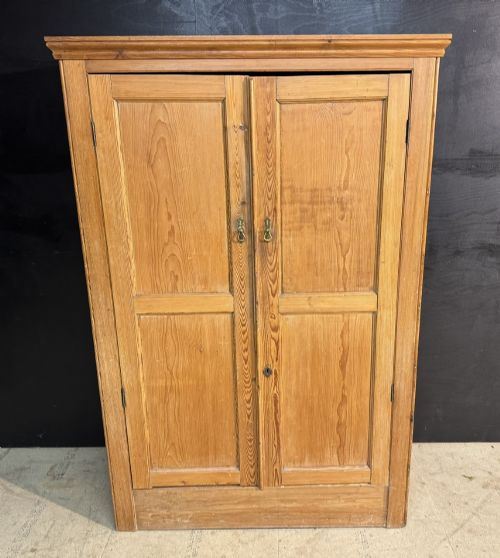
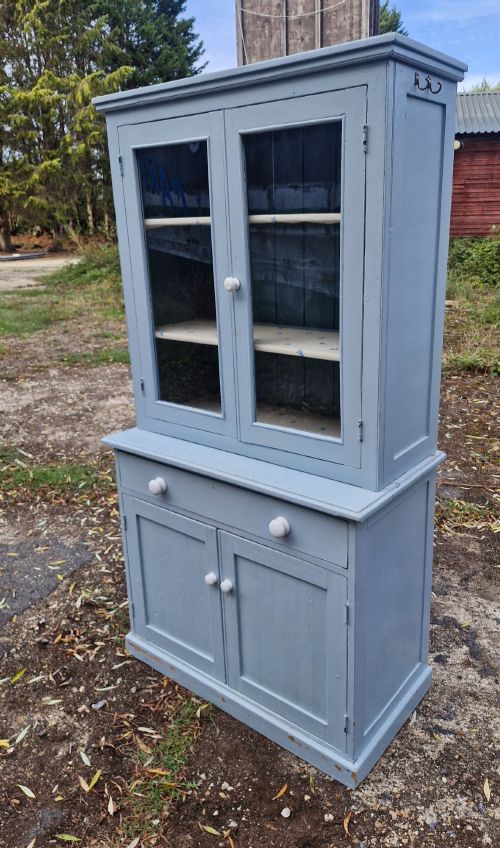
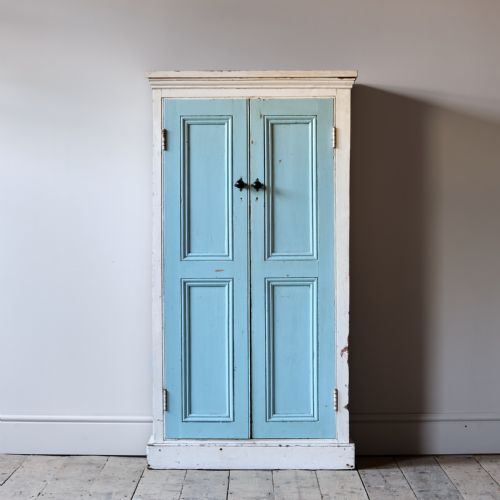
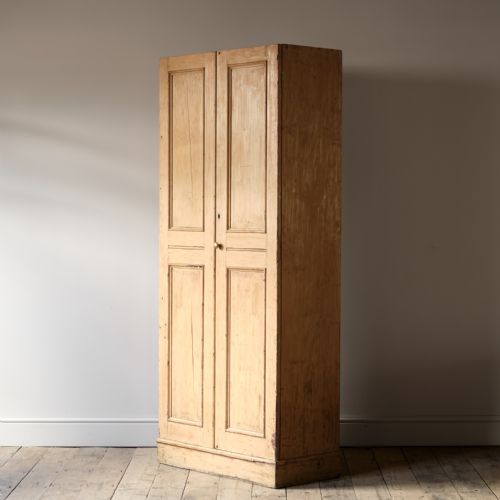
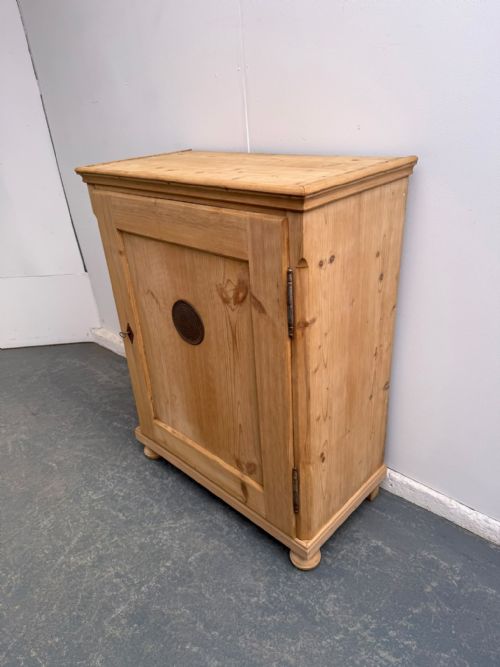
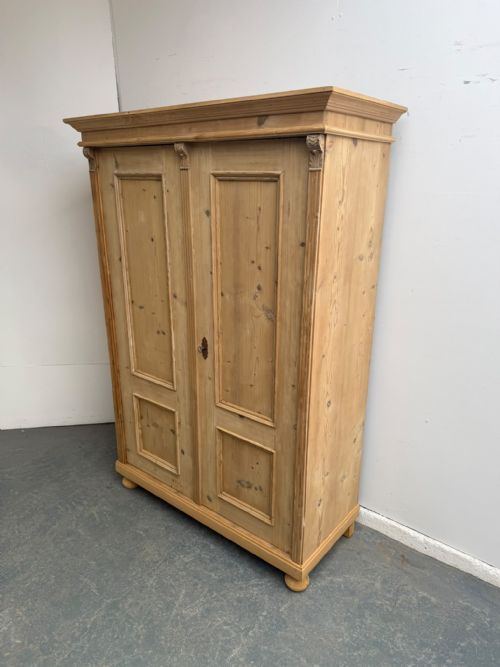

Pine Pantry Cabinet
A pine pantry cabinet brings sturdy domestic storage into a room, offering generous shelving behind solid or vented doors.
Pine Pantry Cabinet
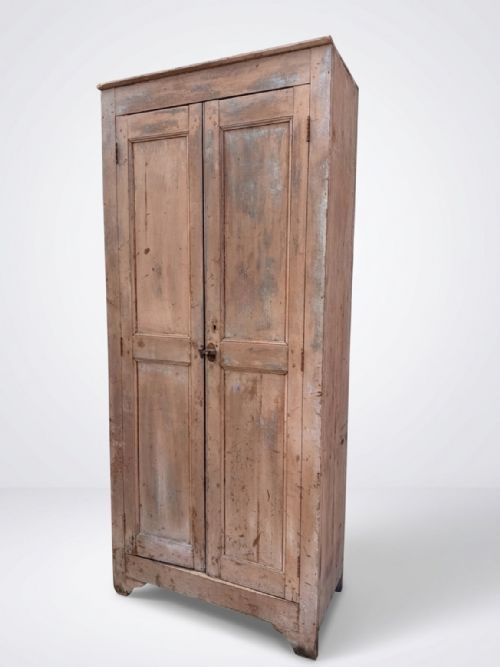
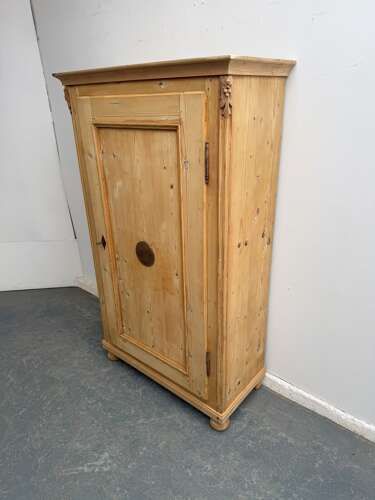
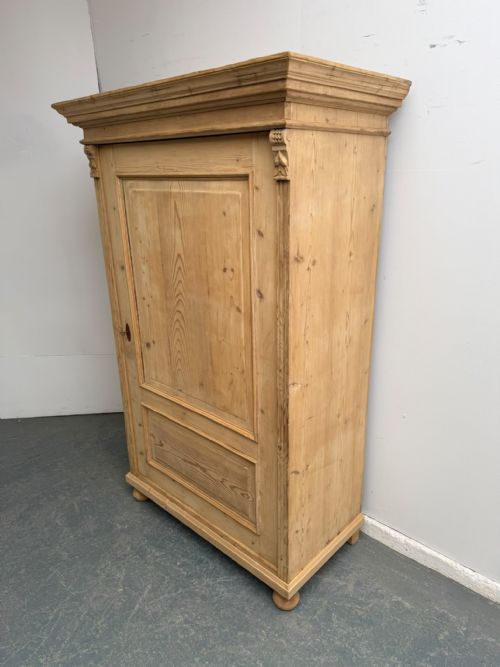
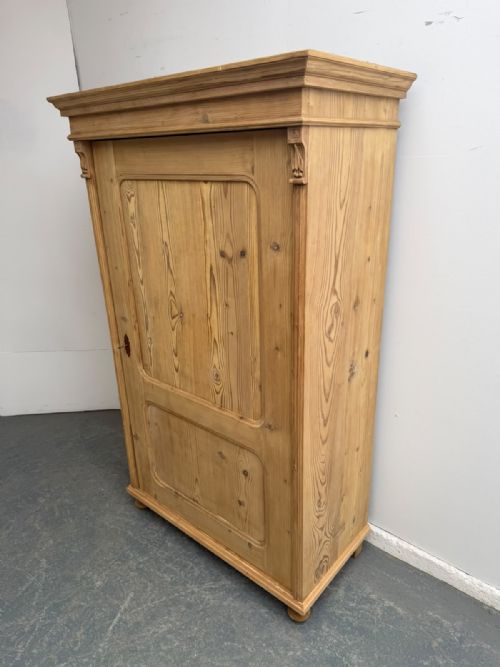
A pine pantry cabinet comprises tall storage cupboards, housekeeper's cupboards, and kitchen larders originating from various country traditions. These pieces serve primarily to store provisions, linens, and kitchen goods within utilitarian domestic spaces.
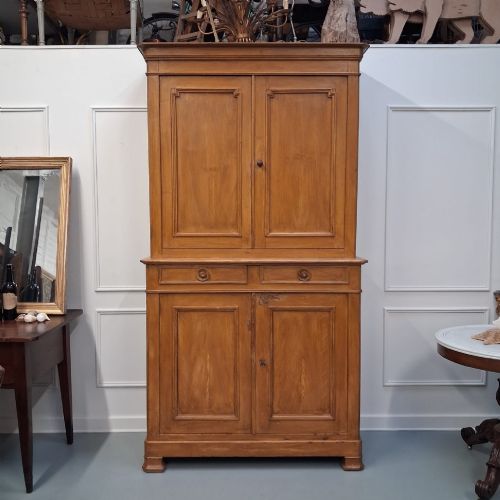
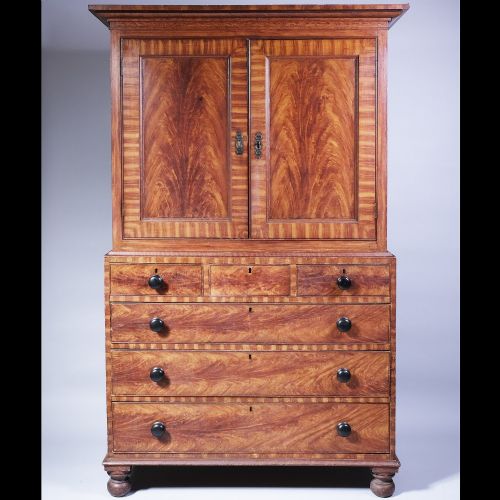
The selection on this page draws heavily from Victorian and 19th-century workshop traditions, alongside Georgian and Edwardian examples. Forms range from narrow single-door cupboards to large multi-door breakfront wardrobes and kitchen dressers.
How they were made
Construction relies on solid pine planks, assembled with iron and brass fixings, hinges, and drawer pulls. Many surfaces retain their original painted finishes, scumble glazes, or exposed waxed timber.
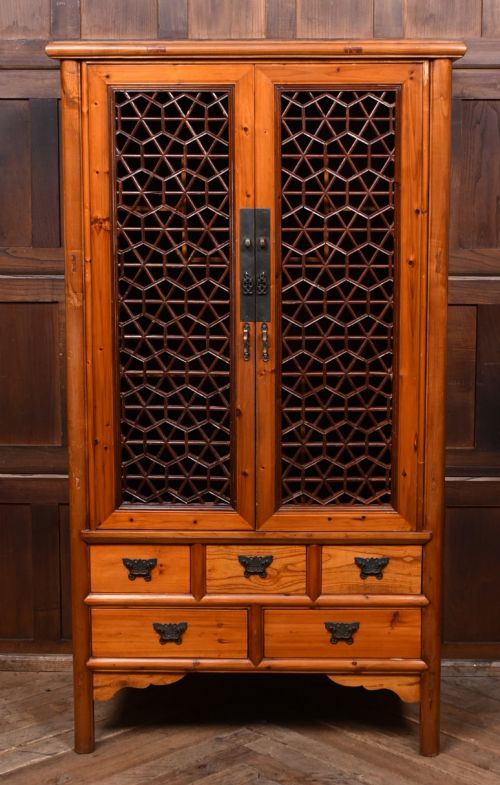
Vented doors utilise mesh or pierced panels to circulate air for food storage, while larger two-part and multi-door configurations provide flexible internal shelving.
Object forms span housekeeper's cupboards, larder cupboards, kitchen dressers, and storage cupboards from English, French, and Scandinavian origins.
What varies in quality
Quality rests in the preservation of original surfaces, such as untouched paint, scumble finishes, or early patinated wax. Pieces retaining their original hardware and intact ventilation panels hold greater distinction.
Proportion and structural integrity separate standard utility pieces from finer regional variants, such as Georgian and early 19th-century Yorkshire or Scandinavian examples.
The Pine Pantry Cabinet Glossary
- Scumble paint
- A decorative surface treatment applied to imitate grain or create mottled texture. It appears frequently on 19th-century utility furniture.
- Housekeeper's cupboard
- A large storage piece traditionally used in large homes for linens and dry goods. These typically feature multiple doors and internal shelving.
- Larder cupboard
- A tall storage unit designed for food preservation, often incorporating ventilated doors to maintain airflow. They form a core category within country furniture.
- Breakfront
- A cabinet design where the central section projects forward from the flanking wings. This architectural arrangement adds depth and presence to larger kitchen dressers.
- Fielded panel
- A wooden panel with bevelled edges designed to fit securely into a framed door groove. This construction method allows the timber to expand and contract safely.
Pine Pantry Cabinet: Frequently Asked Questions
What is a pine pantry cabinet used for?
These cabinets serve as substantial storage furniture for kitchen provisions, dry goods, and household linens. Their deep shelves and tall frames accommodate bulky items with ease.
Historically, they kept foodstuffs organised and protected in domestic pantries and farmhouse kitchens. Today, they function effectively as standalone larders or linen presses in modern homes.
How do I care for a painted pine surface?
Dust the surface regularly with a dry cloth and avoid harsh chemical cleaners that might strip historic paint. Maintaining stable room humidity prevents the pine from warping or cracking.
For waxed timber surfaces, apply a traditional beeswax polish periodically to nourish the grain. Unpainted pine responds well to gentle cleaning that preserves its accumulated patina.
How can I tell the age of a pine cupboard?
Examine the construction methods, such as hand-cut joints, backboards, and the type of fixings utilised in the assembly. Plain iron hinges and hand-forged nails often point to earlier 18th or early 19th-century origins.
Style details like moulded cornices, fielded panels, and original paint finishes also help date the piece. Georgian and early Victorian examples display different proportions compared to later Edwardian variants.
What is a vented kitchen cupboard?
A vented cupboard incorporates pierced wooden panels, mesh, or perforated metal inserts into the door construction. This design allowed air to circulate freely around perishable food items before mechanical refrigeration.
Such cabinets were essential for storing bread, cheese, and vegetables. Surviving examples retain these breathable panels as a defining characteristic.