



Pine Panelled Box
A pine panelled box offers honest, rugged storage shaped by centuries of country craftsmanship.
Pine Panelled Box
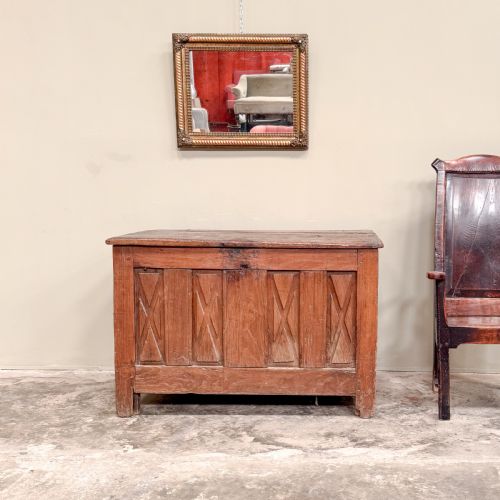
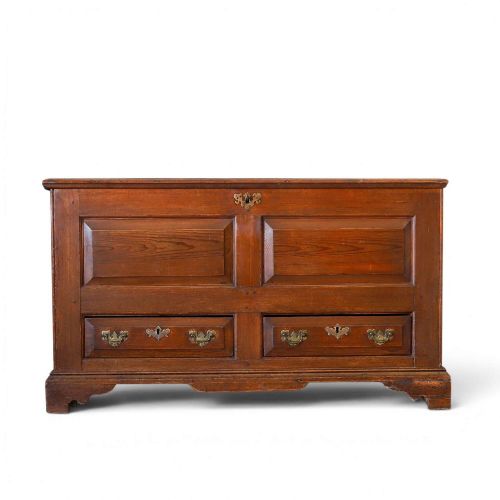
A pine panelled box represents a sturdy tradition of domestic storage, spanning straightforward blanket chests and substantial mule chests with drawers. These utilitarian containers range from early Georgian examples to Victorian pieces, built to hold household textiles and daily provisions.
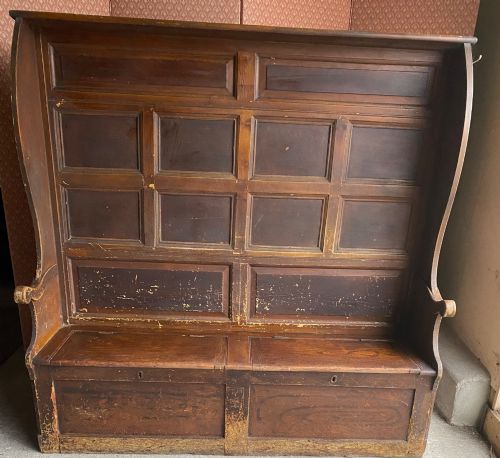
The version most commonly met on this page is the country storage chest or coffer, often featuring simple panel construction. Alongside these chests, buyers will find related forms such as settling benches and log boxes that utilise the same robust timber construction.
Originating across English, Welsh, French, and Hungarian workshops, these pieces wear the distinct characteristics of their local vernacular. They bridge the gap between humble utility and enduring rustic style, suiting both traditional and contemporary interiors.
How they were made
Construction relies heavily on solid pine, frequently paired with secondary woods like elm and oak for structural integrity or internal framing. Joinery is straightforward and robust, using pegged panels and frame-and-panel techniques designed to accommodate the natural movement of timber.
Metal hardware plays a crucial functional role, incorporating iron hinges, latches, and occasional brass details. Many surfaces retain their original painted finishes or historic wax patination, highlighting the grain and the marks of early hand tools.
Pine Panelled Box Retail Price Guide 2026
Typical asking prices for pine panelled box among the pieces listed under this phrase on Sellingantiques today, from the lower quarter to the upper quarter. They describe what is for sale here now, not the wider market.
Some old pine boxes still smell faintly of beeswax and woodsmoke from centuries spent beside farmhouse hearths.
What varies in quality
Quality rests primarily in the integrity of the timber and the honesty of the surfaces, distinguishing pieces with untouched patination from those heavily restored. The crispness of the original panel joinery and the survival of early painted finishes elevate an ordinary box to a finer example.
The Pine Panelled Box Glossary
- Coffer
- A traditional large box used for storing valuables, linen, or documents. These sturdy containers often feature hinged lids and raised panel construction.
- Mule chest
- A storage chest fitted with one or more drawers at the base beneath the main compartment. This form bridges the gap between the simple coffer and the chest of drawers.
- Settle
- A wooden bench with a high back, solid arms, and often a box seat for storage. These seating pieces were designed to keep out draughts in old farmhouse kitchens.
- Panelled
- A method of construction where a frame holds a thinner central board in place. This allows the wood to expand and contract safely with changes in humidity.
- Patina
- The surface sheen and colour developed by wood and paint over decades of handling and wax polishing. This quality marks genuine age and continuous use.
Pine Panelled Box: Frequently Asked Questions
What is a pine panelled box?
A pine panelled box is a traditional wooden storage container built using framed panels to prevent warping. These pieces served practical domestic purposes in country homes, holding textiles, logs, or household goods.
Over generations, the softwood develops a rich surface character through wax polishing or layers of historic paint. They remain popular today for their functional storage capacity and rustic aesthetic.
How were these boxes used?
Historically, these containers served as secure storage for blankets, clothing, and dry goods in domestic settings. Some variations incorporated seating or served double duty as benches near the hearth.
In modern spaces, they adapt easily as coffee tables, end-of-bed storage, or hallway chests for shoes and boots. Their robust construction allows them to withstand daily use while hiding clutter.
How do I tell periods apart?
Differentiating periods relies on observing construction methods, hardware styles, and surface treatments. Pieces from the early eighteenth century often display hand-planed boards and simpler, heavier iron hinges.
Later Victorian and nineteenth-century examples frequently show more standardised joinery or machine-cut elements. Regional traits, such as Welsh or French provincial panelling styles, also provide strong clues to origin and date.
Should I choose painted or waxed?
Choosing between painted and waxed surfaces depends entirely on the visual character you prefer in your interior. Waxed pine highlights the natural grain and golden warmth of the aged softwood.
Original painted finishes offer a bolder splash of historic colour and often carry a charming patina of wear. Both finishes reflect authentic period treatments rather than modern decoration.