

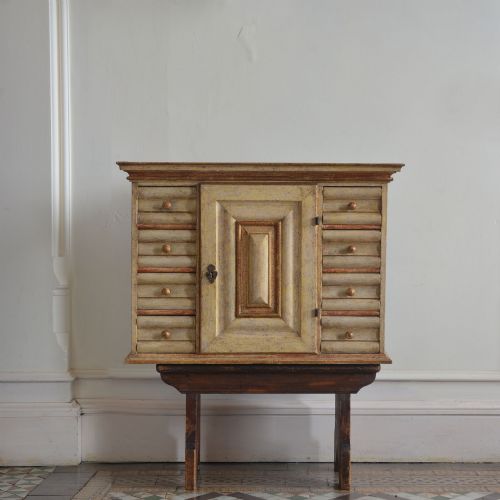
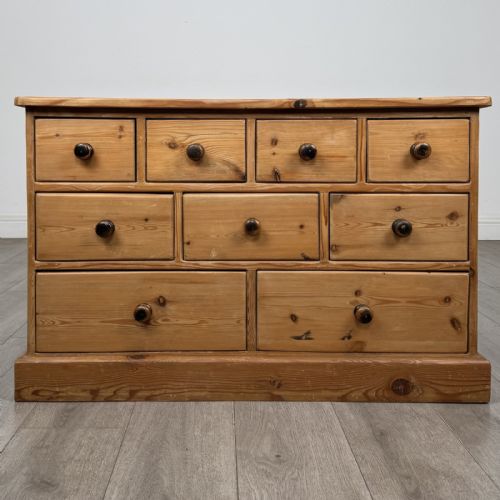
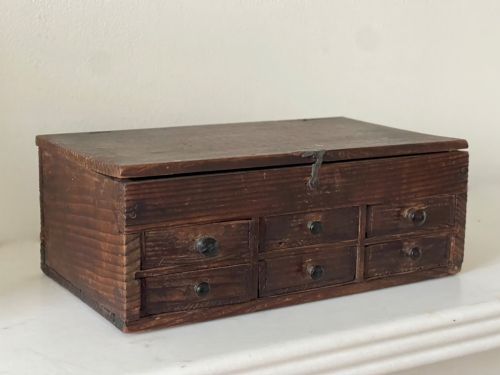

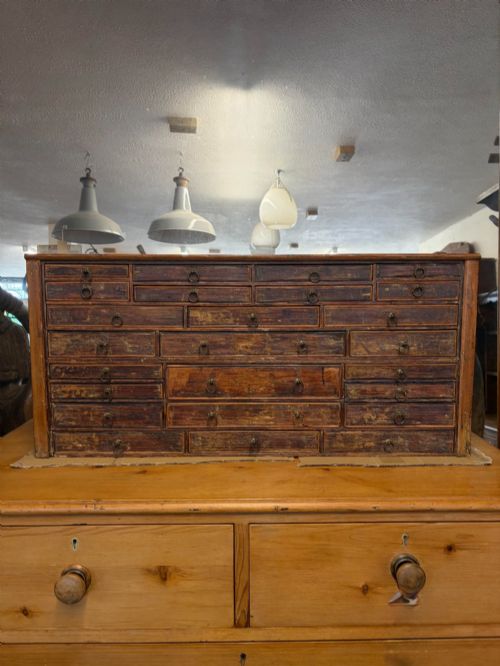


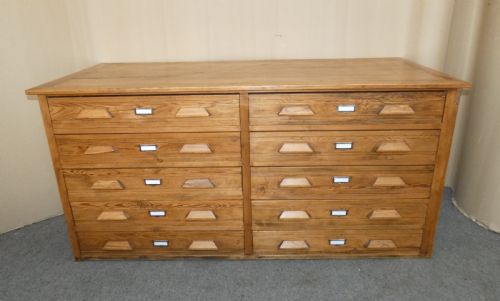


Pine Haberdashery Chest
A pine haberdashery chest is a practical storage piece built for commercial utility, offering multiple drawers that appeal to collectors seeking functional period character.
Pine Haberdashery Chest
A pine haberdashery chest brings industrial and commercial heritage directly into domestic spaces through multi-drawer configurations. These pieces originate primarily from the Victorian era and the early twentieth century, spanning dates from eighteen seventy to nineteen twenty.
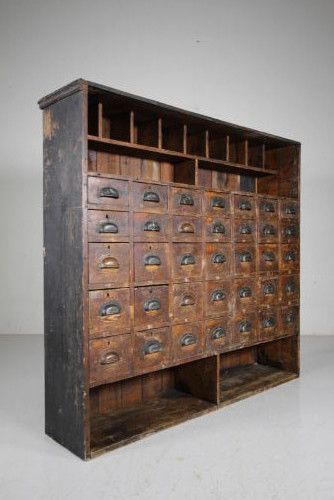
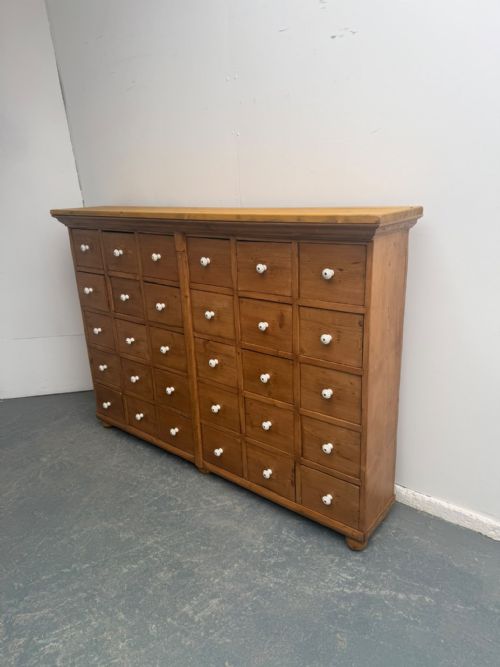
The primary forms take shape as banks of drawers, shop fittings, and collectors cabinets originating from English, French, and Hungarian sources. Such items served original functions in retail and trade environments, including use as ironmongers drawers, drapers drawers, and watchmakers boxes.
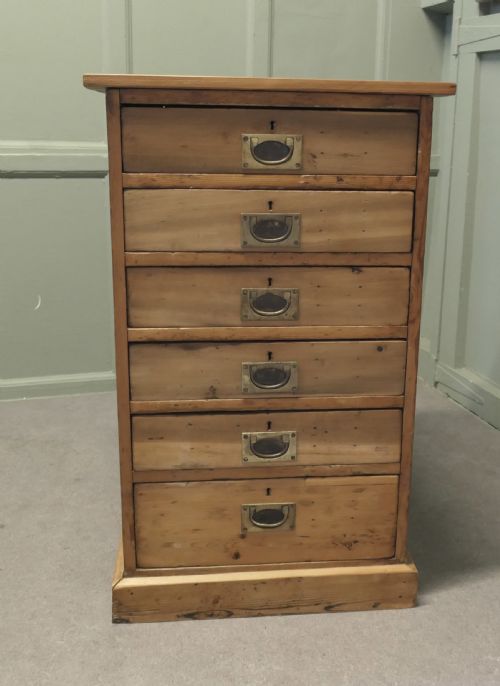
Buyers encounter variations ranging from shallow filing drawers and small collectors cabinets to substantial banks housing up to fifty drawers. The underlying framework remains grounded in utilitarian shop furniture designed for heavy commercial service.
How they were made
Construction relies primarily on solid pine and deal timber, often supplemented by pitch pine or stained deal variants. Joinery prioritises robust utility to withstand constant commercial handling in nineteenth and early twentieth century shops.
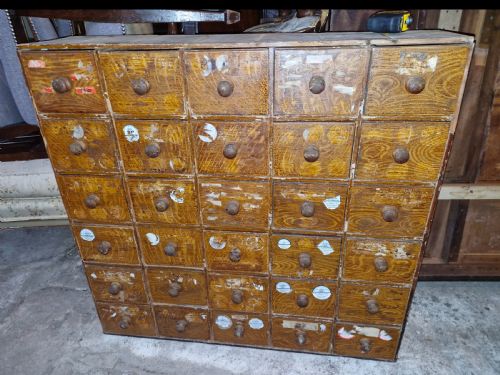
Metal hardware incorporates iron, brass, and cast iron elements for pulls, handles, and structural reinforcement. Original painted surfaces appear in white, cream, and light green finishes alongside natural waxed or stained wood states.
Pine Haberdashery Chest Retail Price Guide 2026
Typical asking prices for pine haberdashery chest among the pieces listed under this phrase on Sellingantiques today, from the lower quarter to the upper quarter. They describe what is for sale here now, not the wider market.
Geographic origins span English, French, and Hungarian workshops, showcasing diverse regional approaches to utilitarian shop fittings and multi-drawer storage.
What varies in quality
Quality differences stem from the scale of the piece and the complexity of its drawer arrangement, where multi-drawer formations demand precise carpentry to ensure smooth operation. Originality of paint finishes and surface patination heavily influence the character of each example.
The provenance and regional origin, whether English country workshop, French provincial trade, or Hungarian shop fitting, dictate structural nuances. Surviving original hardware and intact commercial labels or markings distinguish superior examples from altered pieces.
The Pine Haberdashery Chest Glossary
- Haberdashery chest
- A multi-drawer storage unit originally designed for holding sewing notions, ribbons, and small retail goods. These cabinets feature numerous shallow compartments.
- Bank of drawers
- A large assembly of multiple small drawers arranged in rows and columns. This configuration maximised storage capacity in nineteenth century retail environments.
- Shop fitting
- Fixtures and furniture built specifically for commercial retail spaces. These pieces were constructed for heavy daily use by merchants.
- Deal
- Softwood timber, specifically pine or fir, commonly used in nineteenth century cabinet making. It provided an economical yet sturdy material for utilitarian furniture.
- Collectors cabinet
- A specialised storage piece containing small drawers designed for sorting specimens or small objects. They often feature tight tolerances to protect contents.
Pine Haberdashery Chest: Frequently Asked Questions
How were haberdashery chests used originally?
Merchants used these multi-drawer cabinets in shops to organise small wares, threads, and haberdashery items for customers. The numerous shallow drawers allowed shopkeepers to display stock efficiently while keeping merchandise sorted by size and type.
Over time, these commercial fixtures migrated into domestic interiors as people recognised their utility for storing craft supplies, stationery, and small personal collections.
What periods do these chests date from?
The available pieces predominantly date from the Victorian era and the decades around nineteen hundred, spanning the late nineteenth century to the early twentieth century. Construction techniques and hardware styles reflect this period of industrial and commercial expansion.
Dates recorded in listings range from eighteen seventy through to nineteen twenty, capturing both utilitarian workshop furniture and specialised trade cabinetry.
How do I care for a painted pine chest?
Maintain original painted surfaces by dusting gently with a dry, soft cloth and avoiding harsh chemical cleaners or abrasive materials. Preserving the historic finish protects the underlying pine and retains the character developed through decades of commercial use.
Keep the furniture away from direct heat sources and extreme humidity fluctuations to prevent the timber from warping and to protect the stability of the multi-drawer structure.
What is the difference between a shop fitting and a bank of drawers?
A shop fitting generally refers to larger commercial inventory designed specifically as interior fixtures for retail environments, such as counters or multi-drawer display units. A bank of drawers is a descriptive term focusing on the stacked multi-drawer configuration itself.
Both forms overlap significantly in construction, utilising sturdy pine frames and numerous small compartments built for heavy mercantile service.