


Pine Fitted Cupboard
A pine fitted cupboard brings honest utility and warmth to a room, offering clever storage shaped by practical past lives.
Pine Fitted Cupboard
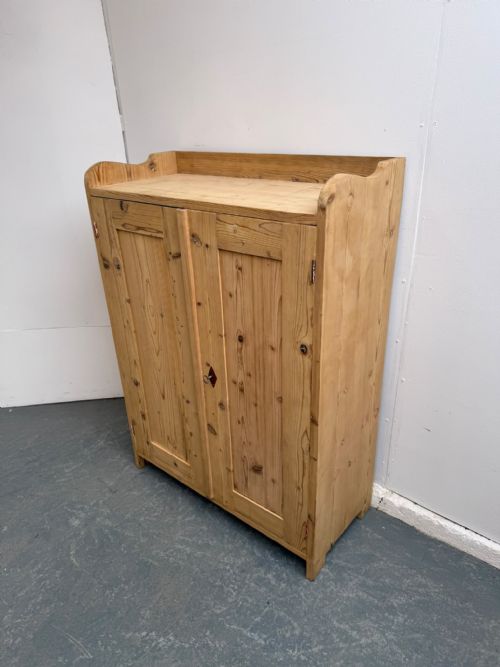
A pine fitted cupboard answers a demand for sturdy, room-specific storage, appearing in forms from expansive housekeepers' larders to compact alcove units. These pieces emerge across Georgian, Victorian, and early twentieth-century periods, reflecting the shifting domestic and commercial needs of their eras.
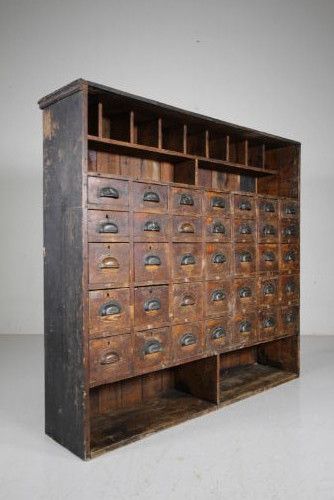
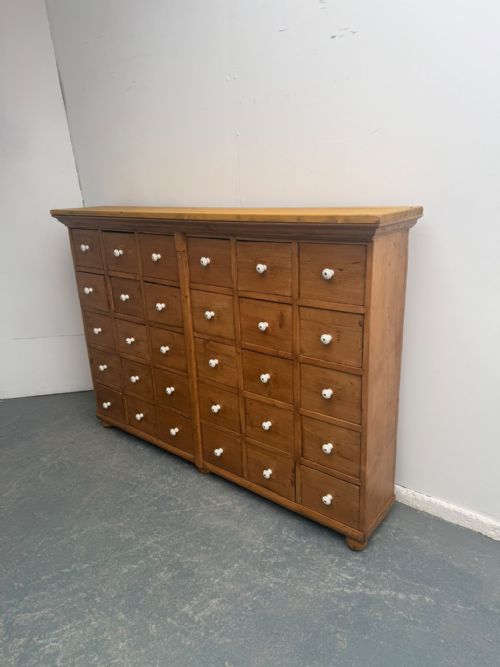
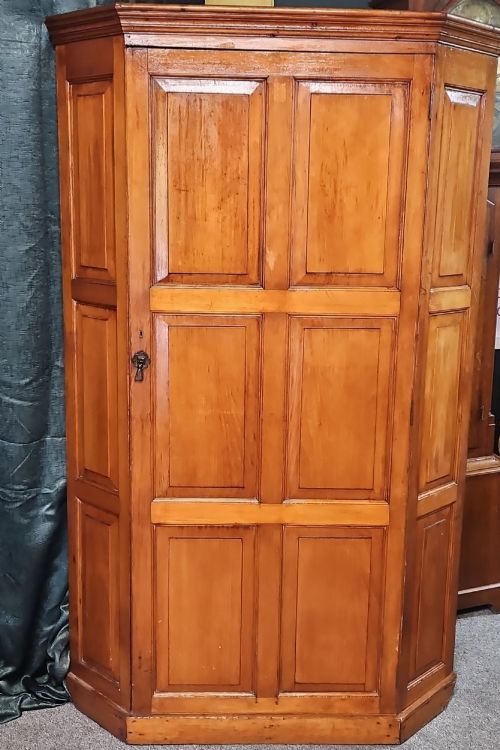
The variants seen here range from French and Hungarian shop fittings with multiple drawers to English country house scullery cupboards and corner wardrobes. Such diversity means buyers encounter both architectural built-ins and substantial freestanding units adapted for fitted interiors.
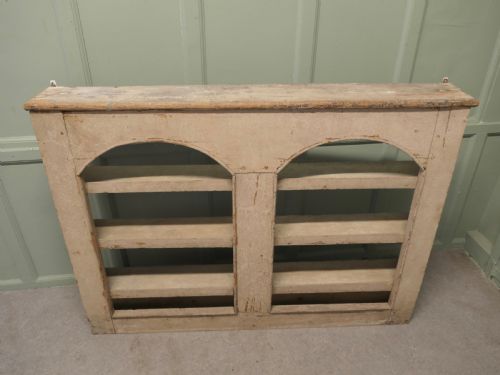
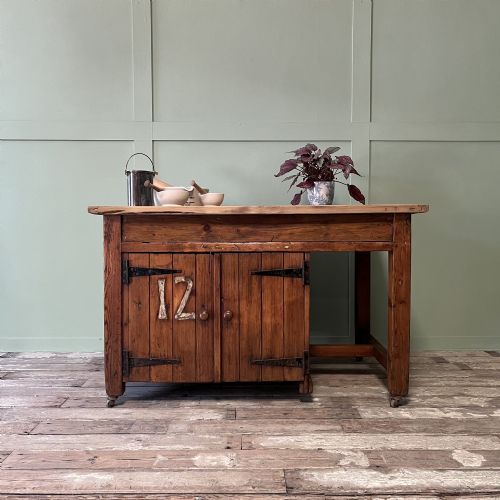
Plain pine construction underscores the utilitarian origins of these cupboards, whether left in a natural wax finish or retaining original layers of distemper paint. Their character stems directly from this unpretentious heritage and the honest wear of daily use.
Materials and construction methods
Makers relied primarily on solid pine and pitch pine for these cupboards, selecting timber for its accessibility and structural reliability. Metal hardware such as iron hinges, brass pulls, and cast iron fittings provided durable mechanical support for heavy doors and numerous drawers.
Surface treatments play a defining role in the construction record, encompassing natural waxed finishes alongside applied coats of paint and distemper. Scumbled panel techniques occasionally replicate graining like oak, adding a decorative layer to otherwise humble pine boards.
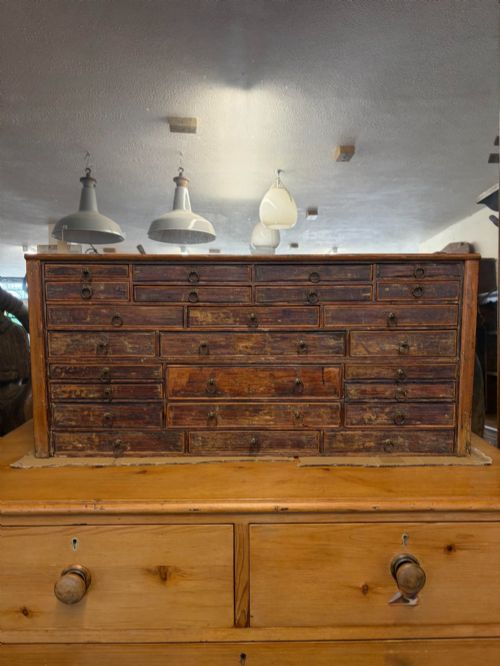
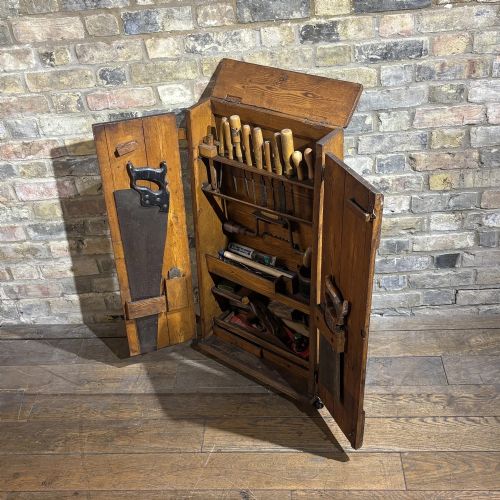
One portable tool cabinet proves that even a tradesman appreciated a well-fitted pine box.
Distinctions in quality and execution
Quality separates along the lines of original function and joinery ambition, moving from simple utility boxes to complex multi-drawer shop fittings and architectural cabinets. Pieces featuring internal pigeon holes, fitted shelving, and integrated wine racks demonstrate higher levels of interior planning.
The preservation of original surface finishes significantly shifts the standing of a piece, with surviving early paint layers holding greater historical integrity than later stripped surfaces. Substantial scale and architectural presence, such as carved dome tops, further distinguish the upper tier of these cupboards.
Luxmore's of Ilfracombe
The Pine Fitted Cupboard Glossary
- Distemper paint
- A water-based paint using a binder such as chalk and animal glue. This traditional medium creates a matte finish often found on early pine furniture.
- Pitch pine
- A dense, resinous softwood variety used for durability. It yields strong structural frames and portable tool cabinets.
- Scumble
- A decorative painting technique involving a translucent glaze dragged over a base colour. It mimics finer timbers like oak on plain pine surfaces.
- Housekeepers cupboard
- A large storage piece traditionally used in country houses for linen and dry goods. It frequently combines shelving with lower compartments.
- Shop fitting
- Commercial cabinetry designed for trade environments. Examples include multi-drawer banks utilised in apothecary or retail settings.
Pine Fitted Cupboard: Frequently Asked Questions
How were these cupboards used?
They served practical storage roles in domestic and trade settings, holding household linens, provisions, workshop tools, or shop inventory.
Larger versions organised sculleries and larders, while multi-drawer units sorted smaller commercial goods.
How do I live with one?
Integrate them into kitchens, pantries, or living spaces where their generous storage and honest timber surfaces provide functional utility.
They anchor modern rooms by introducing historical texture and warm, weathered pine tones.
How do I date a pine cupboard?
Dating relies on construction traits, hardware types, and stylistic markers aligning with Georgian, Victorian, or early twentieth-century periods.
Original paint layers and specific regional forms also help anchor a piece within its historical era.