
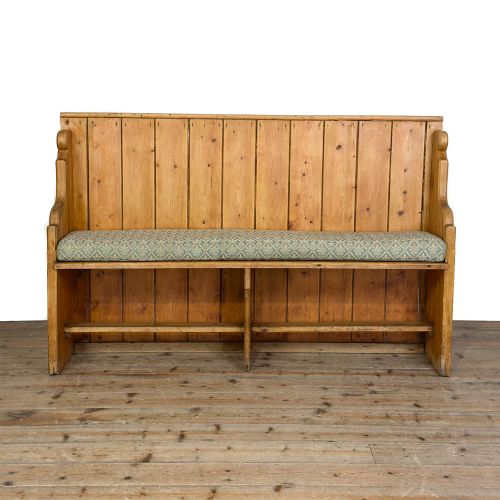
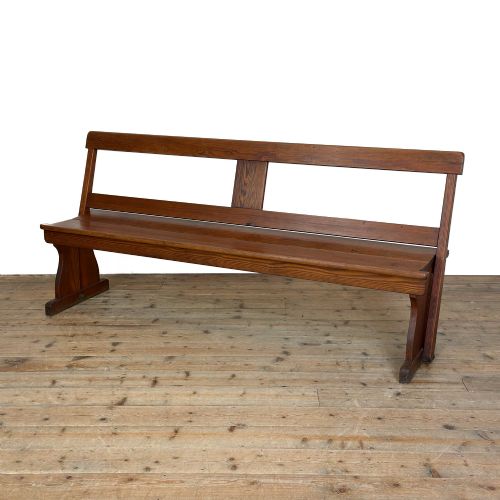
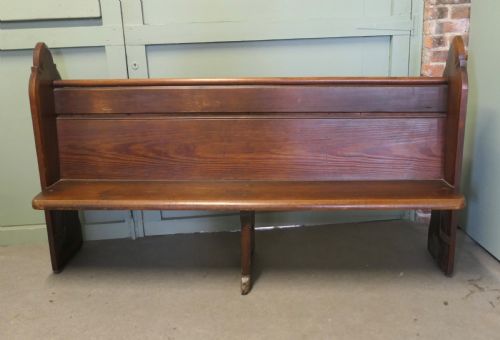
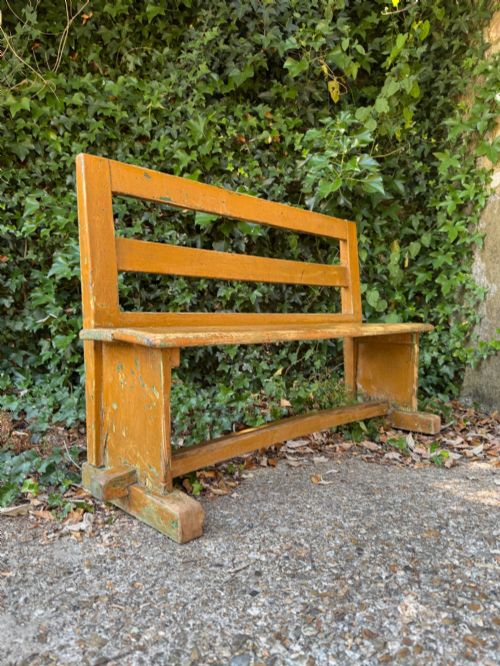
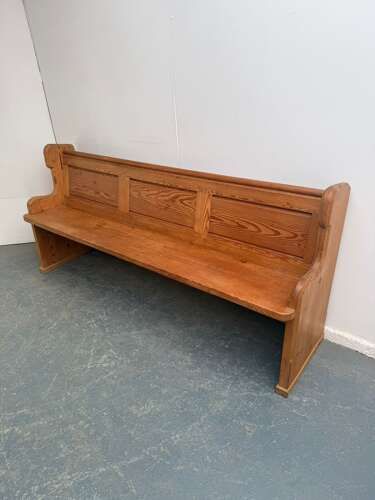


Pine Dining Benches
These pine dining benches bring honest utility and warmth to a room, offering sturdy seating built from robust softwood timbers.
Pine Dining Benches
When you search for pine dining benches, you encounter functional seating solutions rooted in domestic, ecclesiastical, and institutional settings. The selection ranges from 19th-century church pews and school seating to rustic farmhouse planks and Scandinavian painted examples. These pieces serve daily gatherings around the table while carrying the marks of decades of use.
You are most likely to meet 19th-century and Victorian iterations on this page, often shaped as long church pews, chapel benches, or paired kitchen seats. Forms extend from simple trestle-associated seating to deep-seated settles and flip-over designs. Their origins stretch across British, French, Scandinavian, and Austrian workshops, reflecting diverse regional vernaculars.
How they were made
Maker construction relies heavily on pine, pitch pine, and softwood timber planks joined to form enduring seats and backrests. Craftsmen utilised simple board-and-batten methods, dovetails, and pegged joints to ensure stability under heavy daily wear. Surfaces were either left bare to acquire a natural patina through scrubbing or sealed with protective wax.
Many examples display applied paint finishes, ranging from distressed green and original Austrian pigments to Scandinavian painted surfaces. Pitch pine versions utilise resinous heartwood for enhanced durability and distinct grain patterns. These honest construction methods prioritised structural utility over decorative veneer.
Listings feature 19th-century and early 20th-century periods, including Victorian, 1880, 1890, 1900, 1910, and 1920 dates.
What varies in quality
Quality in these benches rests in the integrity of the timber and the honesty of the underlying structure. Pieces retaining their original unstripped surfaces, whether scrubbed timber or authentic old paint, command greater interest than those heavily restored. The thickness of the seat boards and the survival of original joinery dictate the physical stature of the piece.
Proportions also determine distinction, with exceptionally long pairs or deep-seated forms offering greater utility around a dining table. The distinction lies between utilitarian institutional surplus and refined country vernacular pieces that retain their authentic domestic character. Subtle details like shaped ends and original surface patination elevate the standing of an individual bench.
The Pine Dining Benches Glossary
- Pitch pine
- A dense, resinous softwood timber yielding prominent grain patterns and high durability. It was frequently utilised for institutional and ecclesiastical seating.
- Settle
- A wooden bench with a high back, solid arms, and often a storage box beneath the seat. This form provided shelter from drafts in older interiors.
- Scrubbed
- A finish achieved through repeated vigorous cleaning with water and a brush, removing old finishes to leave bare timber. This process highlights the natural grain and texture of the softwood.
- Trestle
- A structural support consisting of a horizontal beam fixed to two splayed legs. This arrangement allows benches and tables to maximise legroom.
- Vernacular
- Architecture and furniture design created by local makers using traditional methods and regional materials. These objects reflect the practical needs of their specific geographic origin.
Pine Dining Benches: Frequently Asked Questions
How do I choose the right length?
Measure your dining table first to ensure the bench fits comfortably beneath or alongside the surface. Long pairs and single extended examples require adequate floor clearance for easy seating access.
Consider whether you want the bench to tuck completely under the table when not in use. Depth and overall width dictate how many diners can comfortably sit together.
Are these benches suitable for daily dining?
Most surviving examples were built precisely for communal use in schools, churches, or country kitchens. Their robust softwood construction handles regular domestic activity with ease.
Pairing them with a dining table brings an informal, social atmosphere to meal times. Their sturdy build ensures they withstand the demands of a busy household.
How do I care for waxed pine?
Keep waxed timber surfaces nourished by applying a traditional beeswax polish periodically. Avoid placing these seats near direct heat sources that might dry out the softwood.
Clean spills promptly with a dry or barely damp cloth to protect the historic patina. Gentle maintenance preserves the natural character built up over generations.
How do I identify a painted finish?
Examine the surface under good light to look for natural wear, crackleur, and multiple underlying layers of pigment. Original paint often shows softening around high-touch areas like edges and armrests.
Scandinavian and Austrian examples frequently showcase distinct regional colour palettes that help date the piece. Avoid assuming all painted surfaces are modern, as many retain their historic coatings.