

Pine Desk Table
A pine desk table brings honest, hard-wearing utility and warm grain to a room, bridging workspace and dining surface with practical charm.
Pine Desk Table
When searching for a pine desk table, buyers encounter versatile furniture pieces that move fluidly between writing desks, dressing tables, side tables, and kitchen work surfaces. These practical items serve everyday domestic life with straightforward utility.
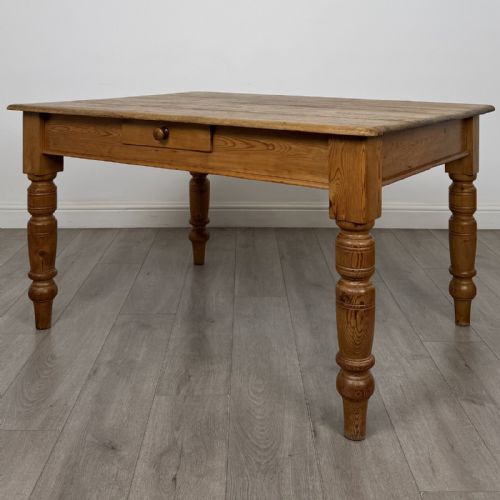
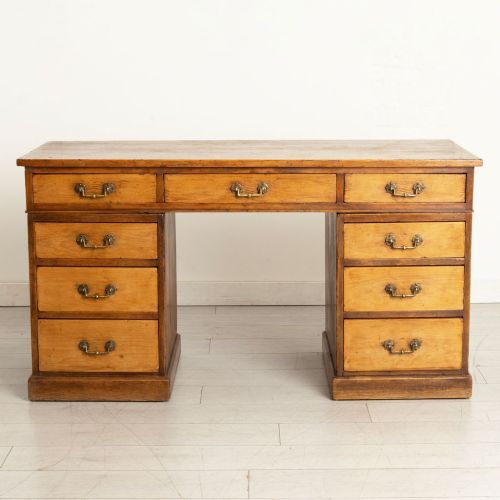
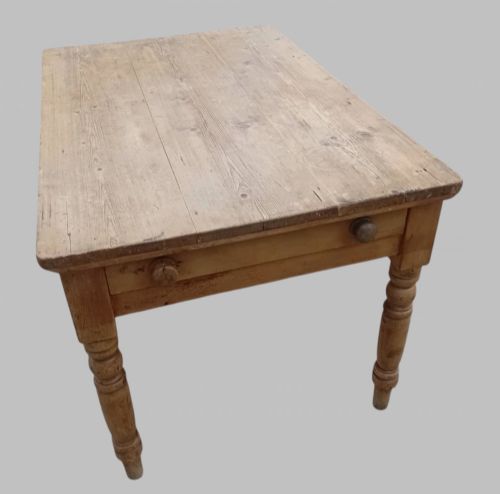
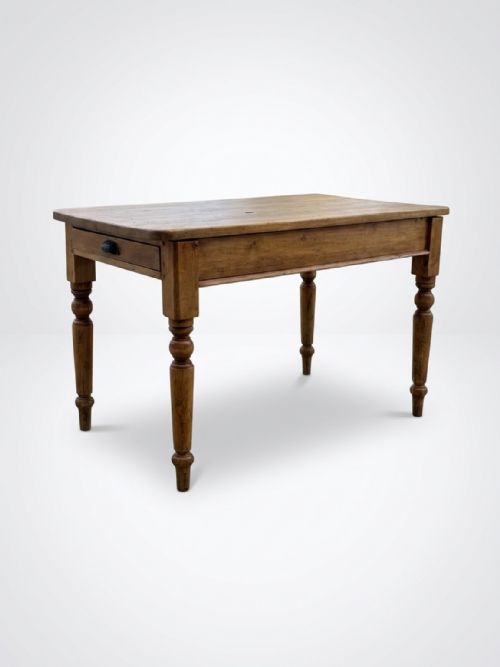
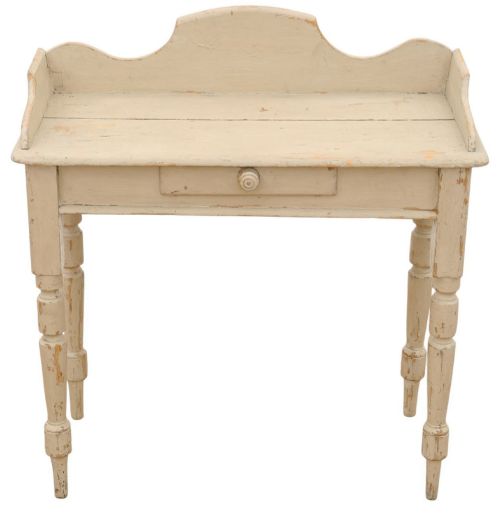
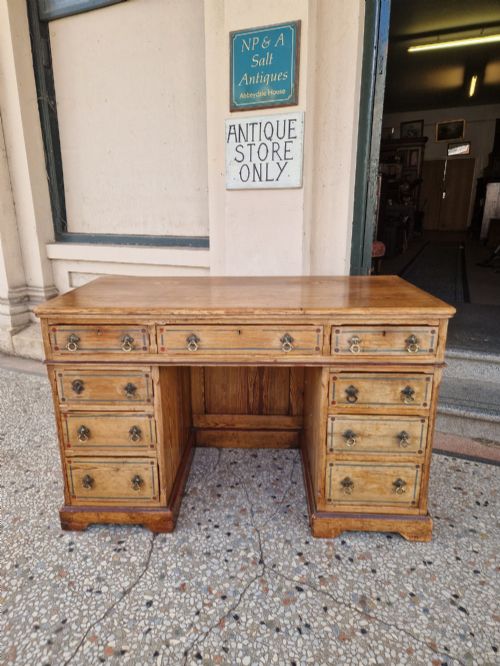
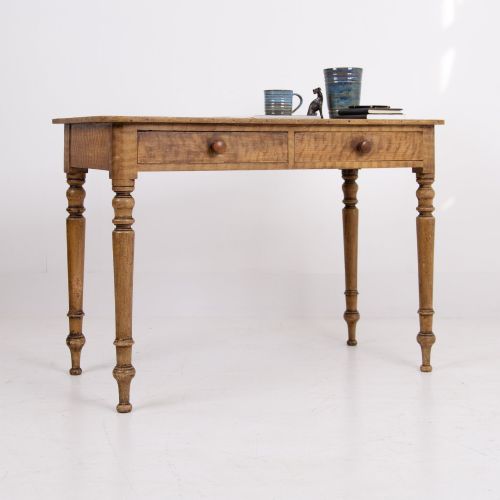
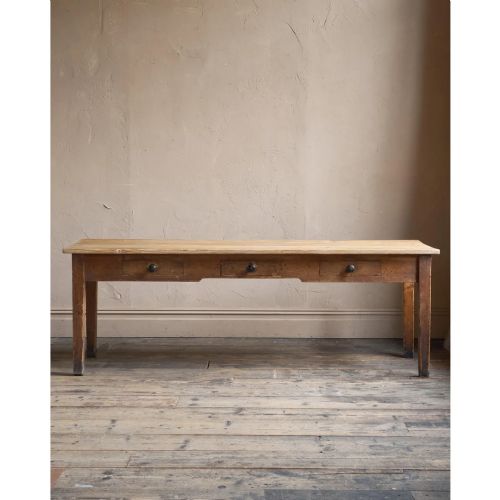
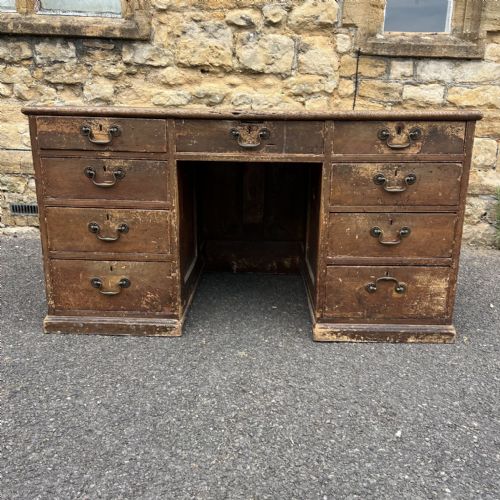
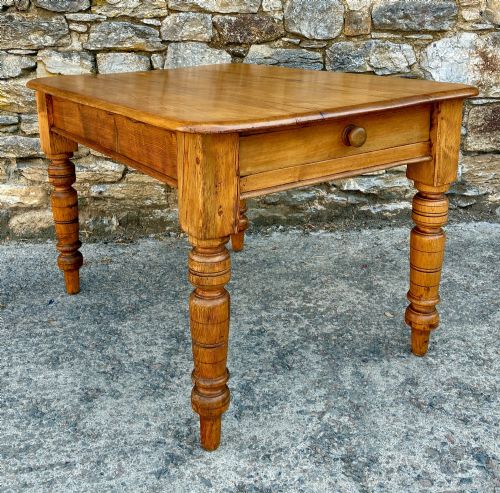
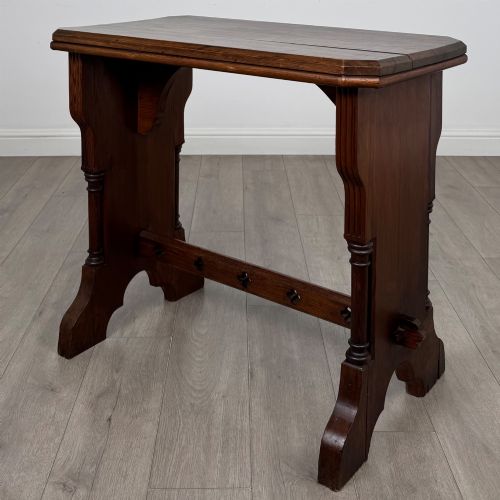
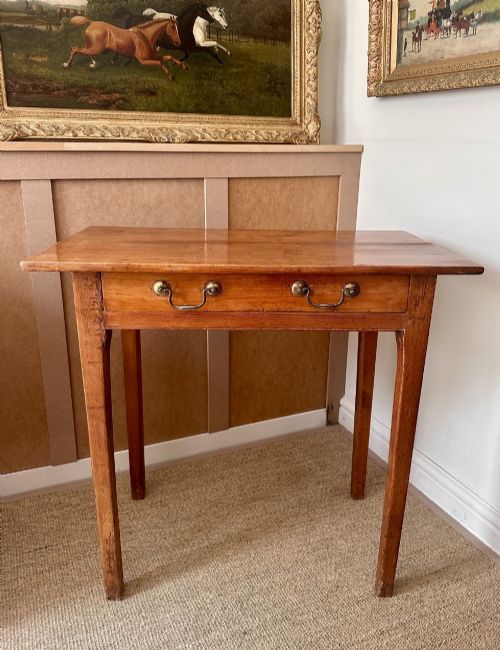
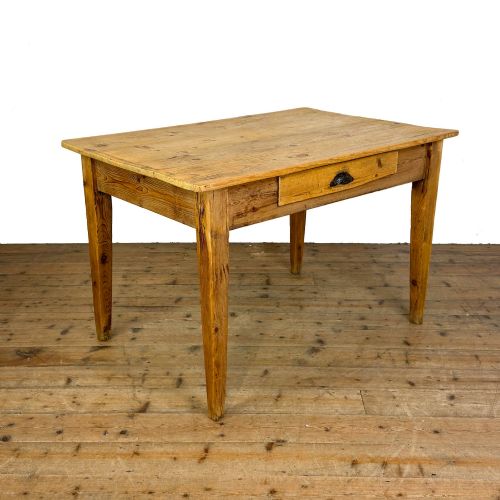
The pieces appearing on this page span the Victorian era, the Edwardian period, and Georgian times, alongside early twentieth-century examples. Common formats include single-drawer side tables, kneehole writing desks, and robust farmhouse kitchen tables repurposed for writing.
Originating largely from British and European domestic settings, these tables reflect regional traditions in country furniture. Their dual nature as writing surfaces and practical tables makes them adaptable additions to modern studies, bedrooms, and kitchens.
How they were made
Construction relies primarily on softwood timber, utilising standard pine alongside denser pitch pine for durability on working surfaces. Joinery techniques follow traditional cabinet-making methods, employing pegged joints and straightforward drawer construction.
Secondary materials appear where function demands, including oak for structural reinforcement, brass handles on drawer fronts, and cast iron bases on industrial variants. Painted finishes sit alongside stripped natural wood surfaces treated with wax.
Surfaces show the marks of daily use and preparation, from scrubbed tops to original painted legs. Construction balances structural stability with the functional needs of sculleries, dairies, and writing rooms.
Pine Desk Table Retail Price Guide 2026
Typical asking prices for pine desk table among the pieces listed under this phrase on Sellingantiques today, from the lower quarter to the upper quarter. They describe what is for sale here now, not the wider market.
Some tables retain flour dust and butter fat trapped in the grain from decades spent in rural dairies and sculleries.
What varies in quality
Quality separates through timber selection and the integrity of the original construction, distinguishing heavy pitch pine examples from lighter utilitarian boards. Superior pieces exhibit careful proportion, sound jointing, and well-balanced drawer arrangements within the frieze.
The preservation of original surface treatments - such as early paint layers or deep patinated wax over pine - defines the character of better examples. Unaltered hardware, including original brass knobs, adds to the coherence of a piece.
Proportion and scale dictate the success of these tables, where well-turned legs and harmonious drawer configurations elevate simple domestic furniture into refined examples of period craftsmanship.
The Pine Desk Table Glossary
- Pitch pine
- A dense, resinous softwood timber commonly utilised for heavy-use surfaces, known for its strong grain pattern and durability. It withstands scrubbing and daily wear better than standard softwood.
- Frieze
- The horizontal band beneath the tabletop that frequently houses one or more drawers. In these tables, the frieze depth determines storage capacity.
- Scrub-top
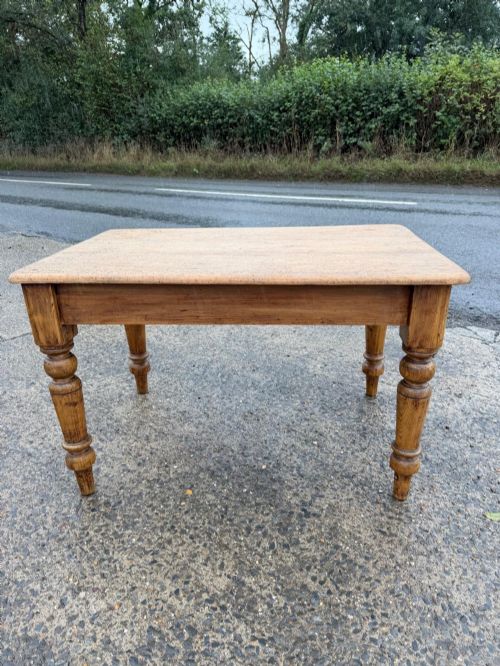
- A solid wooden top left bare to be scrubbed clean with water and sand in traditional kitchens and dairies. This finish results in a pale, weathered texture.
- Washstand
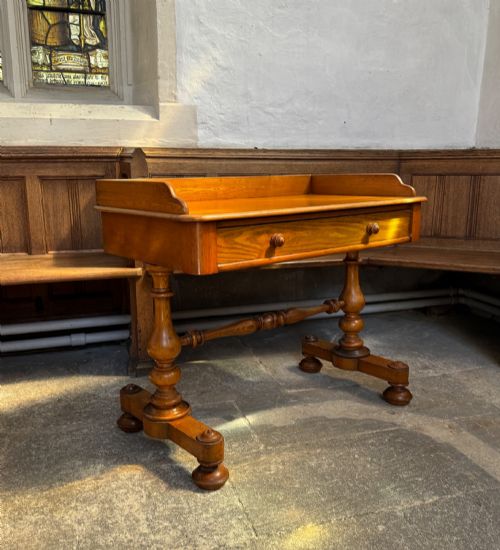
- A domestic table designed to hold a basin and jug, often sharing similar dimensions and drawer layouts with small writing desks. They frequently incorporate low galleries or splashbacks.
Pine Desk Table: Frequently Asked Questions
How do I use a pine desk table?
These versatile items function equally well as writing desks, hallway side tables, or compact kitchen dining surfaces. Their sturdy construction accommodates daily paperwork and laptop use while fitting comfortably into smaller rooms.
Position a kneehole or single-drawer variant in a study or bedroom to serve dual purposes as a dressing table or writing bureau. Their understated appearance allows them to blend easily into both traditional and contemporary interiors.
How do I tell Victorian from Georgian pine tables?
Georgian examples generally display lighter framing, finer mouldings, and simpler apron designs with attention to proportion. They often feature older painted finishes or early deal timbers.
Victorian pieces tend toward chunkier proportions, heavier turned legs, and more robust drawer configurations. Pitch pine usage also increases significantly during the Victorian and Edwardian periods.
Can I use a kitchen table as a desk?
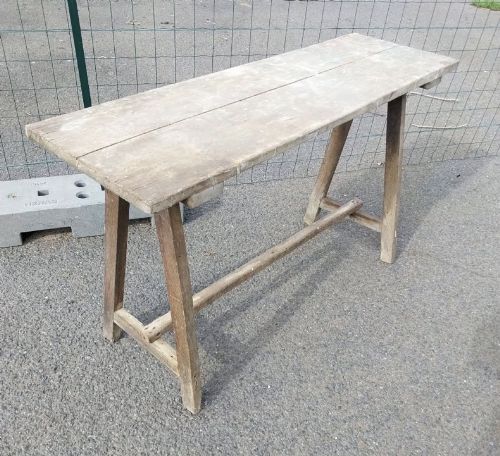
Many surviving pine tables blur the boundary between kitchen work surfaces and writing desks. Bakers prep tables, scullery tables, and farmhouse dining tables provide generous surface areas suited to spreading out papers.
Drawer layouts in the frieze make these tables practical for storing stationery and office supplies. Their sturdy legs and honest construction provide a stable platform for daily work.
How do I care for antique pine?
Maintain waxed pine surfaces with a quality beeswax applied sparingly to preserve the timber's natural grain and colour. Avoid placing these tables near direct heat sources or in damp conditions to prevent warping.
Clean painted or scrubbed tops with a dry or lightly dampened cloth rather than harsh chemical detergents. Regular gentle care maintains the historic patina developed over generations of use.