
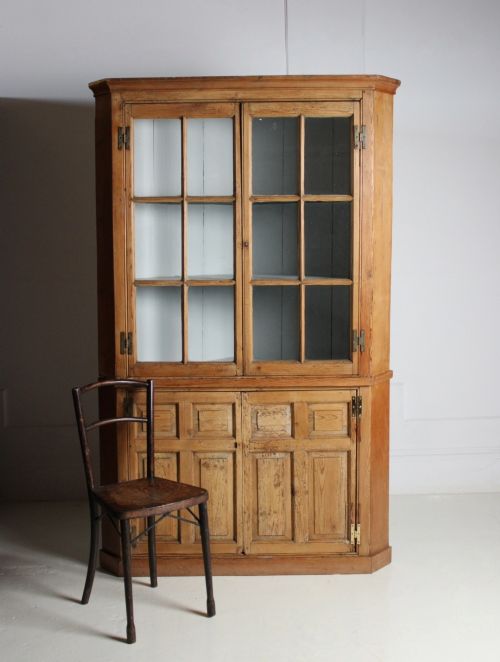
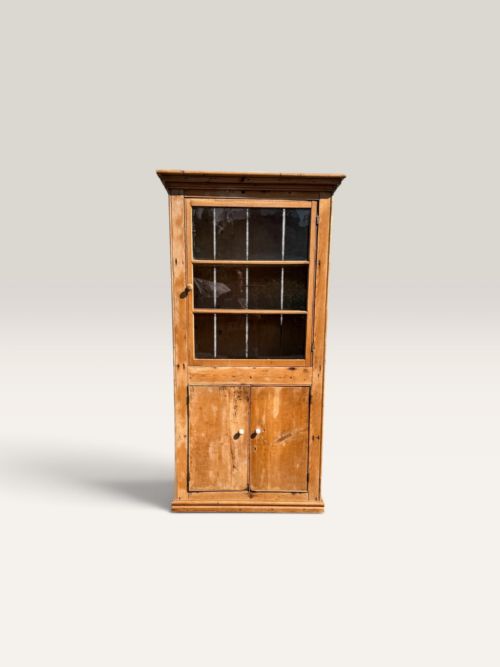
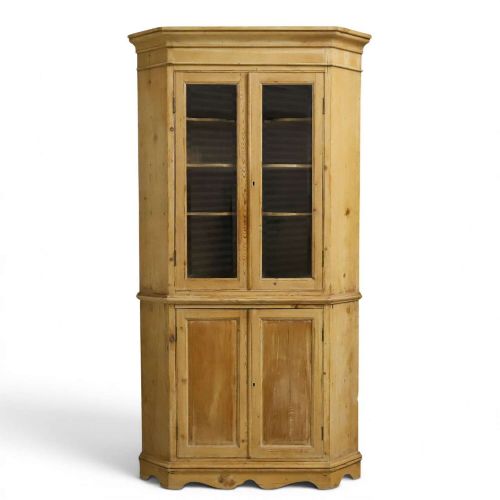
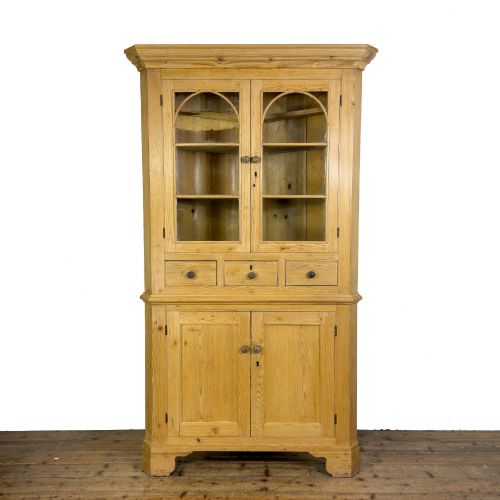


Pine Corner Display Cabinet
A pine corner display cabinet makes use of neglected space while framing glassware or pottery behind glass doors.
Pine Corner Display Cabinet
A pine corner display cabinet uses a triangular footprint to fit snugly into room junctions, turning awkward angles into storage. These pieces turn empty room corners into display areas for china, books, or glassware.
The selections here span the eighteenth and nineteenth centuries, taking forms that range from rustic farmhouse to refined Gustavian or Georgian iterations. Buyers frequently encounter single-door glazed cupboards alongside taller, two-part sectional units.
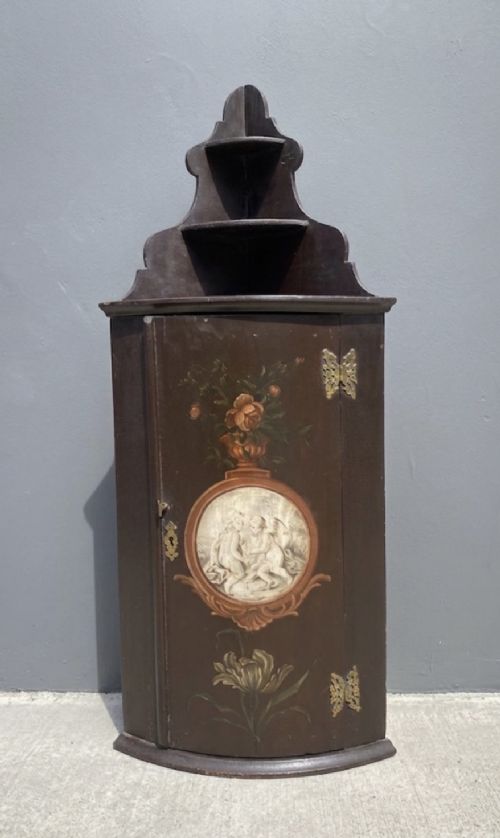
Origin points stretch from English workshops to Welsh kitchens and Scandinavian interiors. Pieces appear with stripped wood, painted finishes, or simulated oak graining depending on their regional provenance.
How they were made
Constructed primarily from solid pine or pitch pine, these cabinets utilise traditional timber framing techniques suited to domestic joinery. Carved details occasionally appear on eighteenth-century dome top examples to add architectural presence.
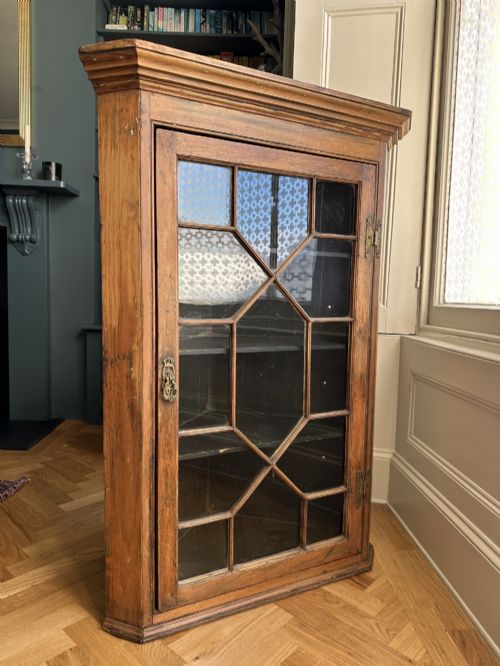
Glazing takes the form of glass doors, sometimes held by wooden astragals, allowing visibility into the shelved interior. Iron or brass hardware secures the doors, while surfaces often carry original paint or later stripped finishes.
Some nineteenth-century chemists utilised corner display cabinets for storing remedies, blending domestic joinery with apothecary storage.
What varies in quality
Construction methods dictate durability, distinguishing simple nailed farm furniture from sophisticated case work with dovetailed joints and panelled backs. The proportion of the glazing bars and the sophistication of any applied mouldings also separate basic regional boxes from finer urban commissions.
Surface treatment significantly influences character, as surviving original painted finishes or early simulated graining command greater interest than plain stripped timber. Interior arrangement, such as shaped shelves or fitted compartments behind barrel backs, elevates the utility and design merit.
The Pine Corner Display Cabinet Glossary
- Astragal
- A small convex moulding used to hold panes of glass within a sash. These narrow wooden bars divide the glazed door into smaller lights.
- Barrel back
- A cabinet interior featuring a curved, semicircular rear wall. This design softens the internal corners to echo the arched top of the case.
- Gustavian
- The Swedish interpretation of French neoclassical style, marked by restrained ornamentation and pale painted finishes. It developed during the reign of Gustav III.
- Two-part form
- A cabinet constructed in separate upper and lower sections stacked together. This method aided transport through narrow domestic doorways.
- Simulated oak
- A painted surface treatment designed to imitate the grain and colour of more expensive hardwood. Artisans used brushes and glazes over pine to achieve this decorative effect.
Pine Corner Display Cabinet: Frequently Asked Questions
How do I fit a corner cabinet?
Measure the wall angle carefully, as older buildings often deviate from a strict ninety degrees. Scribing the back edges may be necessary for a flush fit against uneven plaster.
Ensure the floor is reasonably level so the doors swing evenly. Securing the top of the cabinet to the wall stud provides stability, particularly with taller two-part units.
Are pine cabinets durable?
Pine is a softwood that responds well to everyday domestic use when properly seasoned. Older timber from eighteenth and nineteenth-century pieces is often stable and resilient.
Avoid placing these cabinets in damp environments or direct sunlight to prevent wood movement and finish degradation. Regular dusting keeps the surfaces in sound condition.
What is a two-part cabinet?
A two-part cabinet consists of a top display section resting on a lower cupboard base. This construction style appeared frequently in taller eighteenth and nineteenth-century pieces.
The separation into two modules made transportation much easier for makers and owners alike. When assembled, the join is often concealed by a moulded cornice or waist rail.
How do I identify a Gustavian piece?
Gustavian pieces display neoclassical symmetry combined with pale grey, white, or cream painted finishes. Carved fluting and urn motifs often appear in a subdued Swedish interpretation of French design.
Unlike heavier Victorian farmhouse pieces, these cabinets emphasise light proportions and understated elegance. The construction typically utilises Baltic pine painted during the nineteenth century.