






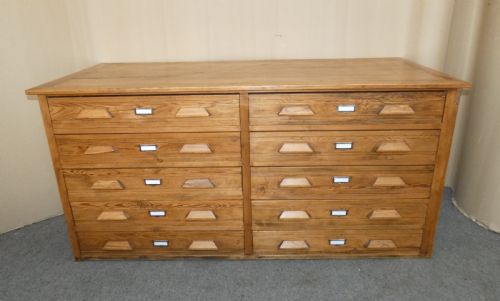


Pine Bank of Drawers
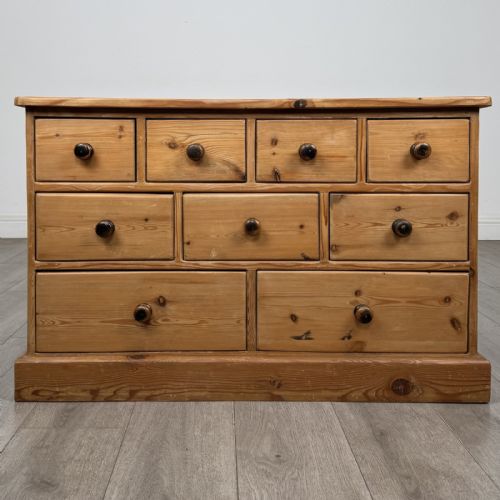
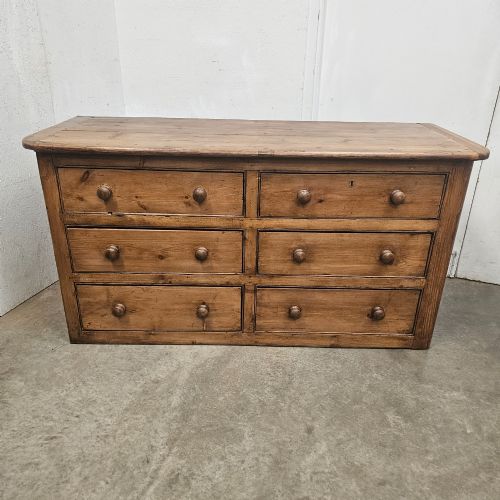
A pine bank of drawers brings sturdy utility and practical compartmentalisation to a room, offering numerous small compartments built for trade or office work.
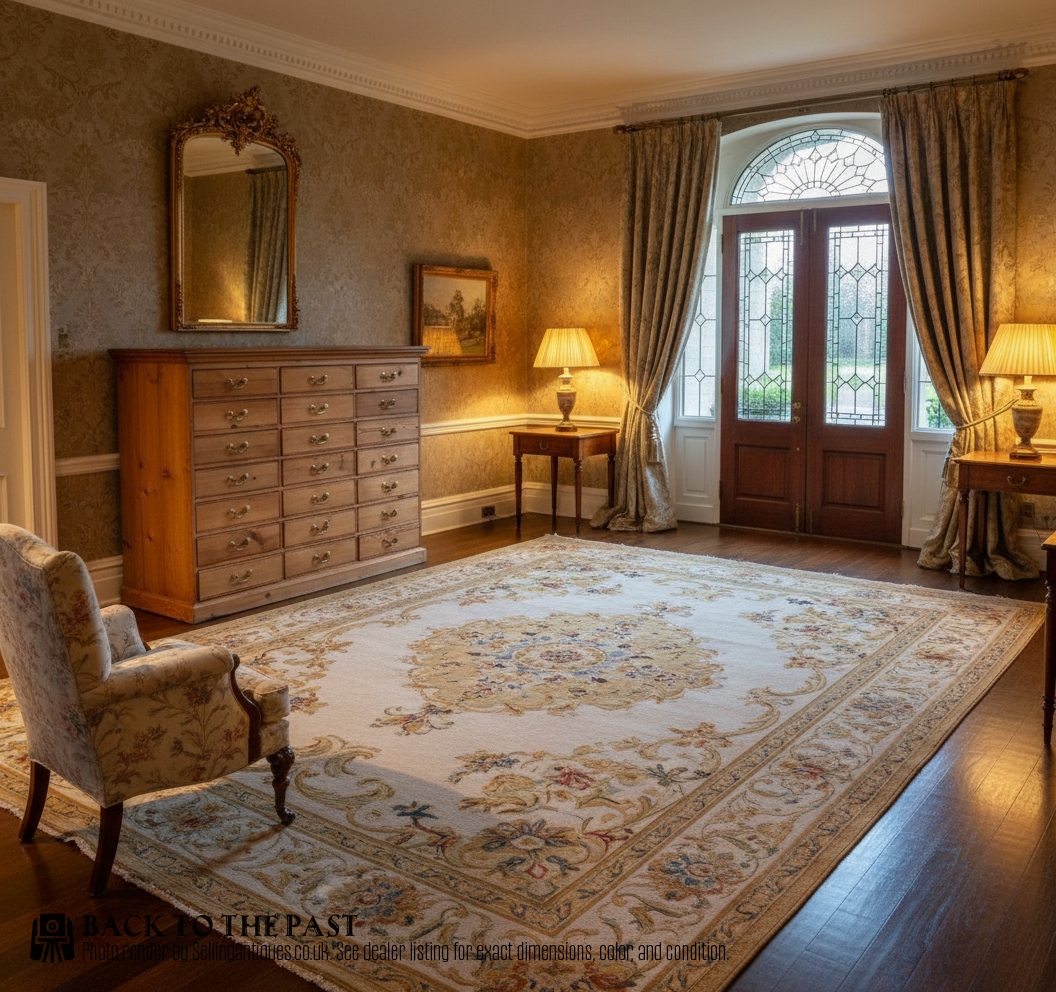
Pine Bank of Drawers
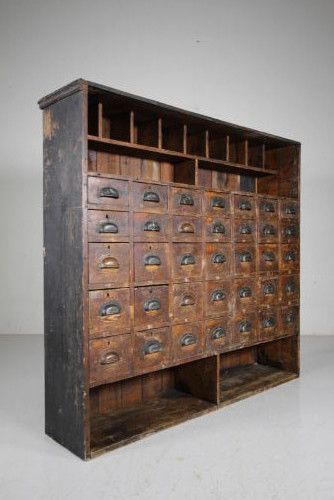
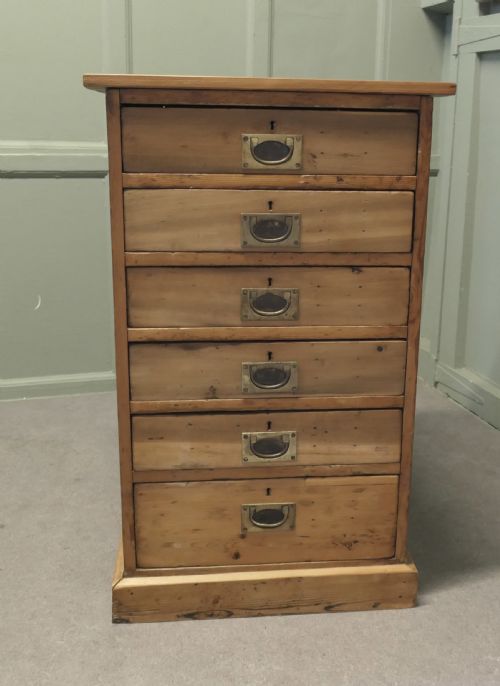
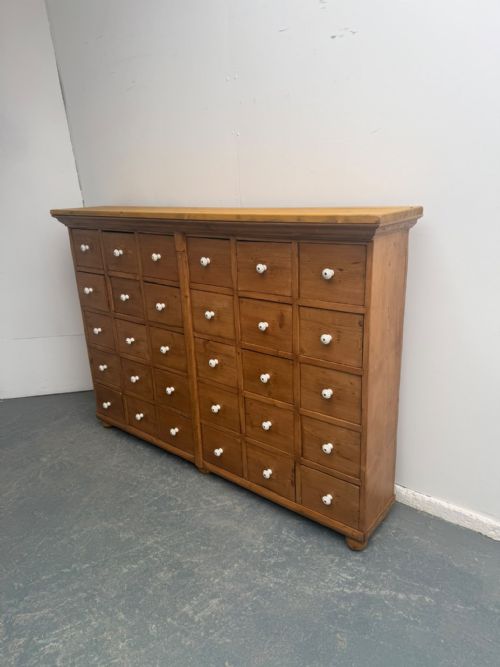
A pine bank of drawers provides practical storage through multiple small compartments designed for shop fittings, offices, or workshops. These multi-drawer units appear in various scales, from shallow filing chests to massive shop fittings containing dozens of compartments.
The pieces span periods from the eighteenth century through to the mid-twentieth century, with nineteenth-century and Victorian examples appearing most frequently. Originating in commercial, industrial, and domestic settings, they serve as utilitarian furniture adapted for modern storage.
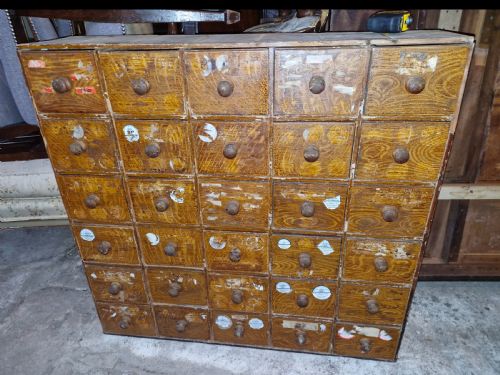
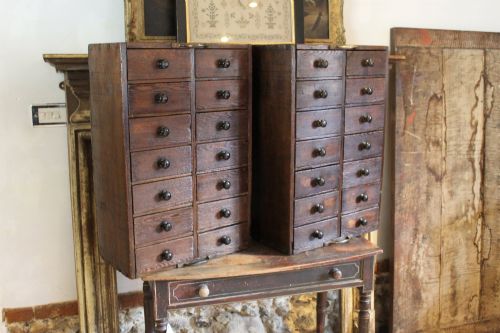
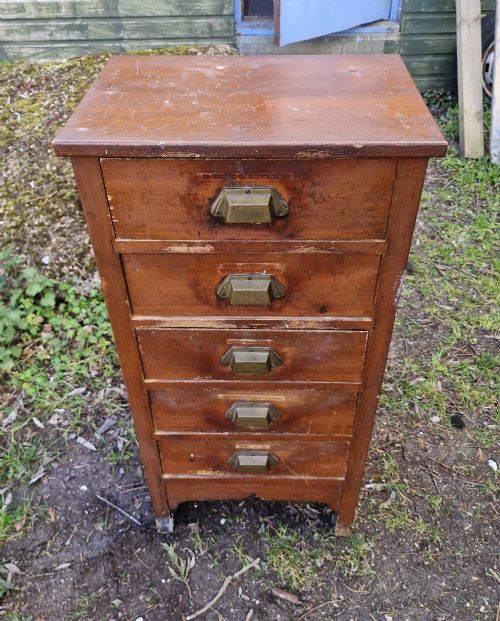
Forms include haberdashers' cabinets, apothecary chests, pharmacy drawers, and office filing units. Many examples retain their original painted surfaces, reflecting their working origins in shops and businesses.
How They Were Made
Construction relies primarily on pine timbers, sometimes paired with secondary woods like beech or mahogany for internal framing and drawer construction. Metal components such as brass, iron, and cast iron provide handles, label holders, and structural reinforcement.
Surfaces often display layers of original paint finishes, including white, cream, green, and red schemes applied during their commercial use. Alternatively, other examples appear stripped or waxed to reveal the natural grain of the timber.
Pine Bank of Drawers Retail Price Guide 2026
Typical asking prices for pine bank of drawers among the pieces listed under this phrase on Sellingantiques today, from the lower quarter to the upper quarter. They describe what is for sale here now, not the wider market.
Listings feature pine alongside iron, brass, and ceramic elements across Victorian and twentieth-century periods.
What Varies in Quality
The scale and capacity of a unit influence its character, with larger banks featuring numerous drawers commanding attention for their visual impact. The complexity of the internal arrangement, such as thirty or fifty individual compartments, demonstrates the original commercial purpose.
Survival of original surface treatments, including authentic period paintwork and matching metal hardware, distinguishes pieces that retain their untouched character from those altered later. The integrity of the timber framing and the smooth operation of numerous drawers indicate the standard of original construction.
The Pine Bank of Drawers Glossary
- Bank of drawers
- A multi-drawer storage unit containing numerous compartments arranged in tiers, built originally for commercial or office use.
- Shop fitting
- Fixtures and furniture built specifically for retail premises, including counters and multi-drawer storage units.
- Haberdashers drawers
- Shallow multi-compartment drawers originally utilised in drapers and outfitters shops for storing small items of clothing and ribbons.
- Apothecary chest
- A specialised storage cabinet with numerous small drawers designed for holding medicines, herbs, and dry ingredients.
- Pitch pine
- A durable, resinous variety of pine timber often utilised in nineteenth-century commercial furniture.
Pine Bank of Drawers: Frequently Asked Questions
What were pine banks of drawers originally used for?
These multi-compartment units served commercial and administrative purposes in shops, offices, and workshops. Businesses utilised them to organise small inventory, hardware, documents, and dry goods.
Trades such as drapers, pharmacists, and watchmakers relied on these banks to keep specialised tools and stock sorted. Their robust construction suited daily use in busy working environments.
How do I date a antique pine bank of drawers?
Dating relies on examining construction techniques, timber choice, and hardware styles across the piece. Nineteenth-century examples often display hand-cut dovetails and period metal pulls, while later twentieth-century versions show more standardised manufacturing.
Original paint finishes and associated business labels provide further clues to the era of manufacture. Comparing the drawer configuration to known shop fitting styles helps narrow down the period.
Are these drawers suitable for modern home interiors?
The high number of compartments makes these units practical for organising modern items like stationery, craft supplies, or small accessories. Their narrow proportions allow them to fit into hallways, kitchens, or studies without dominating the floor space.
Placing a large bank of drawers requires adequate wall space and a sturdy floor to support the substantial weight of the timber structure. They function well as standalone statement pieces that anchor a room's design.
What is the difference between stripped pine and painted pine?
Stripped pine furniture has had its surface coatings removed to expose the raw timber grain and natural colour of the wood. This finish highlights the knots and growth rings characteristic of nineteenth-century softwood.
Painted pine retains the historic layers of colour applied during the piece's working life in a shop or office. Original paint finishes offer historical context and visual texture that appealed to commercial users.