


Pierced Silver Plated Platter
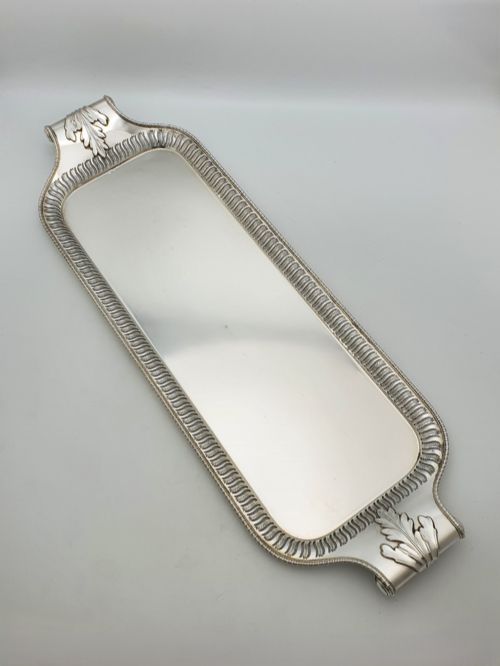
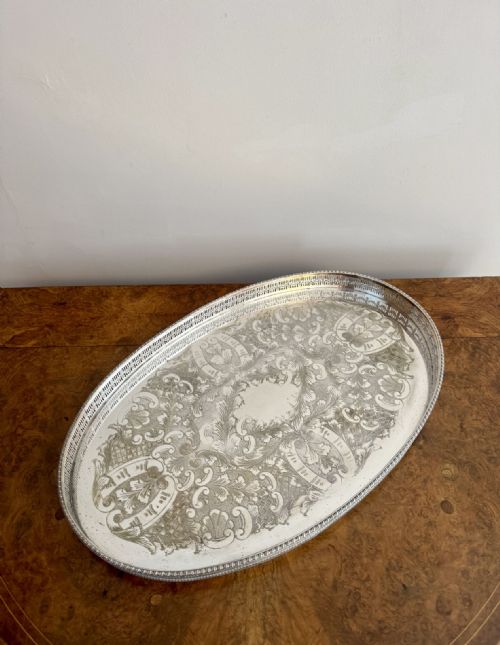
A pierced silver plated platter brings elegance to a table, offering an openwork border that lifts tea services, cocktails and roasts.
Pierced Silver Plated Platter
When you search for a pierced silver plated platter, you encounter serving trays, gallery trays and mazarine draining plates designed for formal presentation. These items originate predominantly from the Victorian and Edwardian periods, stretching from the late nineteenth century into the interwar Art Deco years.
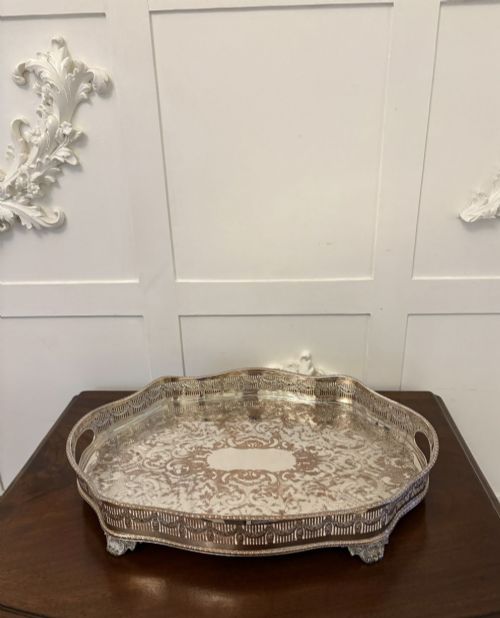
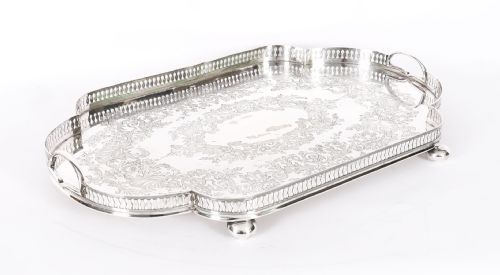
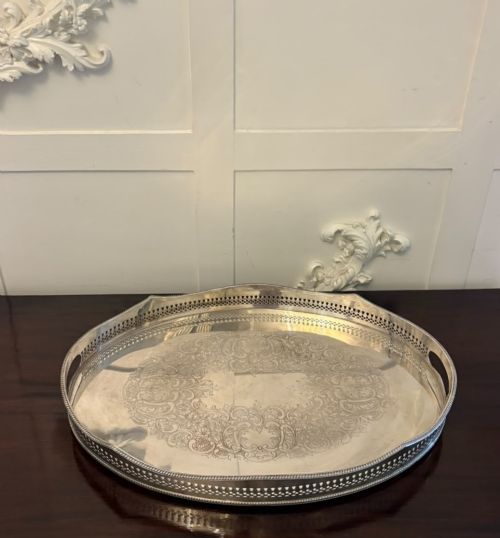
The form is most commonly an oval or circular serving tray featuring an openwork or pierced gallery border, alongside occasional hexagonal dishes and extending stands. Makers produced these pieces in England, France and Kashmir, utilising silver plate over copper, nickel silver or base metal.
How they were made
Makers formed the body of each piece using copper, nickel silver, or an oak base, applying silver plate or Sheffield plate to the surface. Artisans then pierced, reticulated, or embossed the metal borders with intricate scrolls and geometric patterns.
Techniques ranged from early Sheffield plating, where a sheet of silver was fused to a copper ingot, to later electroplated nickel silver and EPNS methods. Workshops finished these trays with engraved central fields and cast handles.
Current listings span the Victorian, Edwardian, and Art Deco periods, utilising materials such as silver plate, copper, oak, and Sheffield plate.
What varies in quality
The distinction between standard domestic wares and top-tier items lies in the crispness of the piercing and the weight of the base metal. Superior examples display deeply struck maker marks, robust handles securely joined to the body, and cleanly hand-pierced apertures rather than rudimentary machine stamping.
Engraving depth and clarity on the central field also separate grades, alongside the retention of the original silver plating over the underlying copper or nickel silver. Well-preserved makers' marks from firms such as Elkington, Mappin and Webb, or James Deakin indicate superior workshop origin.
James Deakin·Mappin and Webb·Christofle·John Collyer Birmingham·Lee and Wigfull·J.H. Potter·Elkington
The Pierced Silver Plated Platter Glossary
- Pierced
- Ornamented with small cut-out openings arranged in decorative patterns. This technique lightens the visual weight of the metal border.
- Silver Plate
- A thin layer of silver bonded to a base metal such as copper or nickel silver. It provides the appearance of solid silver at a lower cost.
- Sheffield Plate
- An early method of fusing a sheet of silver to a copper core before rolling. Older items often reveal traces of the underlying copper where the silver has worn thin.
- Gallery Tray
- A serving tray featuring an upright, pierced gallery wall surrounding the flat base. This design prevents decanters and glasses from sliding off during service.
- Mazarine
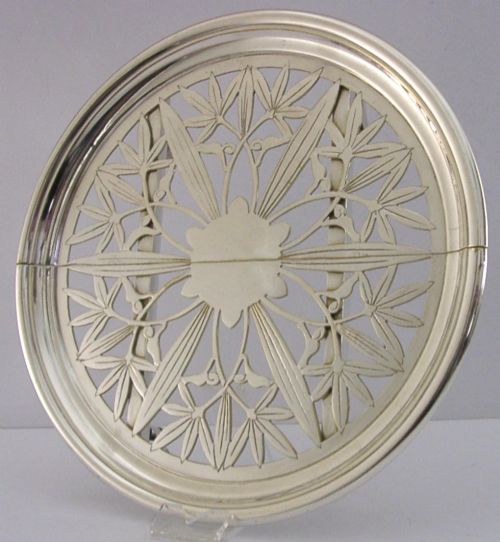
- A flat draining plate or dish pierced with holes or slots. These pieces sat inside larger platters to allow juices to drain away from meat.
- EPNS
- Electroplated Nickel Silver. A common base metal composition introduced in the nineteenth century for silver plating.
Pierced Silver Plated Platter: Frequently Asked Questions
What is a pierced silver plated platter used for?
These pieces function primarily as serving trays for tea services, cocktails, decanters, and roasted joints. The openwork borders allow servers to grip the edges securely while presenting food and drink.
Historically, variations like mazarine plates served to drain juices away from meats on the dining table. Today, owners frequently utilise them for display or home bar styling.
How do I clean and care for silver plate?
Maintenance requires gentle washing with warm soapy water and a soft cloth to preserve the thin silver layer. Avoid abrasive cleaners that strip the plating from the underlying copper or nickel.
Frequent, light polishing with a dedicated silver cream maintains the lustre without wearing down the delicate engraved details and pierced borders.
How can I tell old Sheffield plate from later electroplate?
Old Sheffield plate displays a sandwich effect where the copper base metal peeks through worn high points, revealing the fused manufacturing technique. This method predates the chemical baths used for electroplating.
Electroplated nickel silver, introduced later in the nineteenth century, shows a more uniform silver layer over a greyish base metal when worn.