

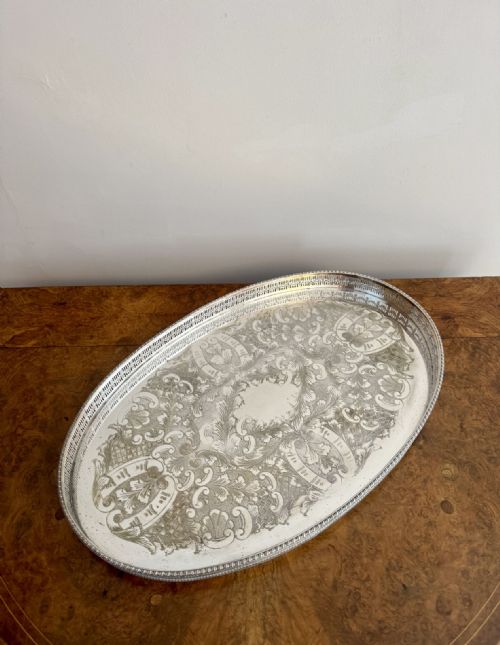


Pierced Silver Gallery Tray
A pierced silver gallery tray brings structure to a tabletop, offering a raised openwork border to contain decanters and glassware securely.

Pierced Silver Gallery Tray
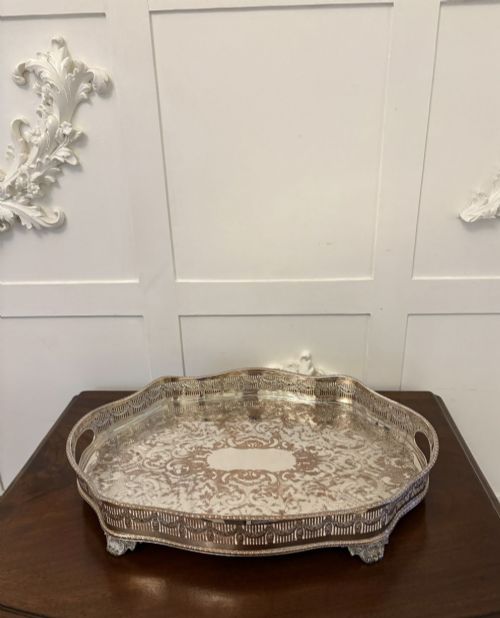
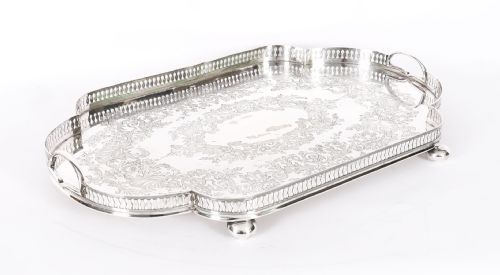
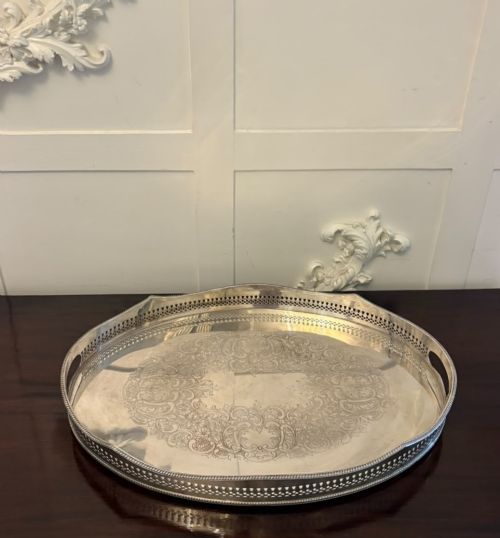
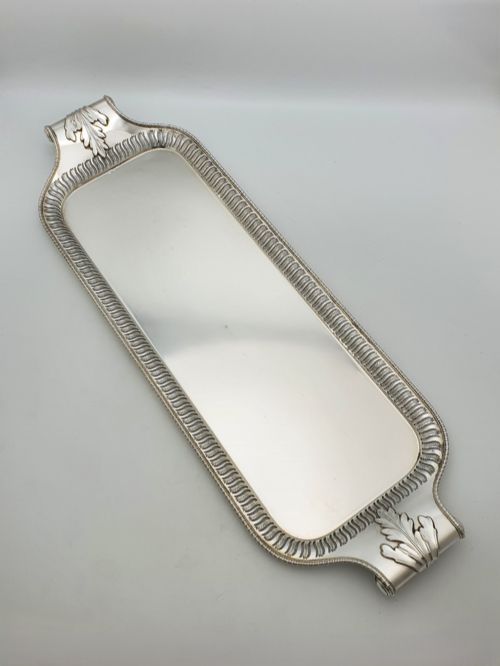
A pierced silver gallery tray is a serving piece defined by its raised openwork border, designed to keep glassware and decanters secure during use. The examples appearing on this page span the Victorian and Edwardian eras, alongside pieces from the eighteenth and twentieth centuries.
Most items encountered here utilise silver plate, electroplated nickel silver, or standard nickel silver rather than solid silver. They frequently take oval or circular forms, sometimes incorporating timber elements such as mahogany or oak within the base.
Materials and construction methods
Silversmiths constructed the primary body using base metals or copper coated in a layer of silver plate or electroplated nickel silver. Gallery borders were pierced or reticulated by hand or machine, then soldered to the base plate.
Selected pieces incorporate wooden bases made from mahogany or oak, fitted with protective felt on the underside. Handles and gallery rails were cast separately and attached firmly to the main tray body.
Several trays include hidden felt undersides designed to protect polished mahogany dining tables from silver-induced scratches.
Determinants of quality
Quality rests upon the crispness of the pierced gallery work and the depth of any engraved surface detailing. Heavier gauge metal plating resists wear and maintains the integrity of the raised border over decades of use.
Superior execution shows careful joining where the gallery meets the tray floor, alongside well-balanced handles that bear weight comfortably. The retention of the original silver plating without excessive base metal showing through marks the better specimens.
James Deakin·Mappin & Webb·Elkington·Lee & Wigfull·J.H. Potter
The Pierced Silver Gallery Tray Glossary
- Gallery
- A raised ornamental border surrounding the edge of a tray or table, often pierced or pierced-out to form an openwork pattern. This feature prevents items from sliding off the surface during service.
- Electroplated Nickel Silver
- A base alloy of copper, nickel, and zinc coated with a thin layer of pure silver through an electrolytic process. It served as a durable and affordable alternative to solid silver.
- Reticulated
- Describes metalwork patterned with a net-like arrangement of pierced openings. Such designs lighten the visual weight of the border.
- Sheffield Plate
- An early form of composite metal made by fusing a sheet of silver to a thicker copper ingot before rolling them into sheets. This technique predates modern electroplating.
- Chased
- Surface decoration worked by hammering tools into the metal from the front to push the material inward and create low-relief designs. It often appears alongside engraved patterns on tea trays.
Pierced Silver Gallery Tray: Frequently Asked Questions
How do I clean a silver plated gallery tray?
Use a soft cloth and a gentle silver cream formulated for plated items, applying light pressure to avoid removing the silver layer. Rinse with warm water and dry immediately with a clean cotton cloth.
Avoid abrasive brushes around the pierced gallery slots where polish residue can accumulate and harden in the openwork details.
Can I use these trays for daily serving?
These trays handle normal service of decanters, glasses, and teapots without difficulty. The raised gallery provides practical security for moving stemware across a room.
Protect the silver surface from prolonged exposure to moisture and acidic liquids to preserve the plating condition over time.
How do I distinguish Edwardian from Victorian trays?
Victorian pieces often display heavier proportions and dense, elaborate ornamentation influenced by nineteenth-century revival styles. Edwardian examples generally favour lighter construction and more restrained classical motifs.
Maker marks and registration numbers stamped on the underside frequently help narrow down the exact decade of manufacture.
What does EPNS stamped on the back mean?
EPNS stands for electroplated nickel silver, indicating the base metal beneath the silver coating. This stamp became common during the Victorian period as plating technology advanced.
Finding this mark confirms the piece is a plated item rather than solid silver, which requires different maintenance considerations.