

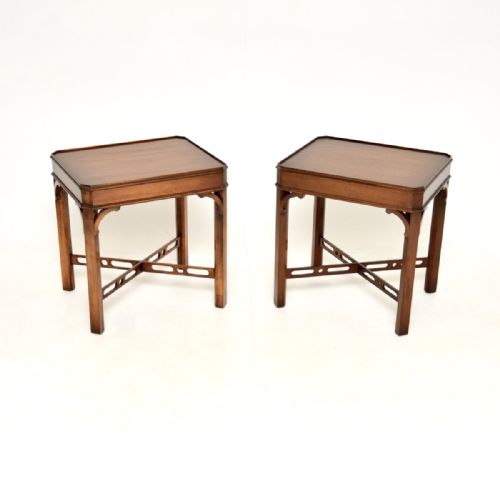
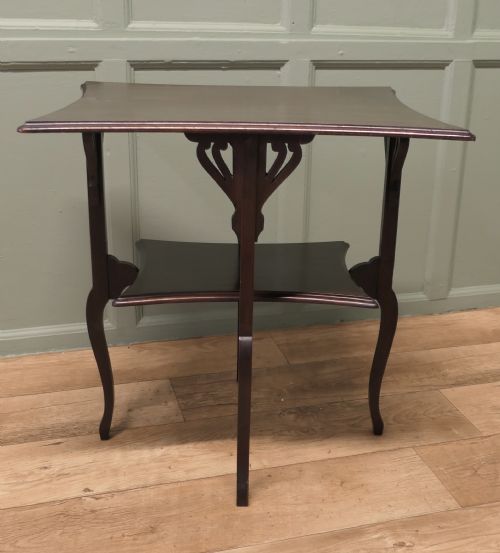
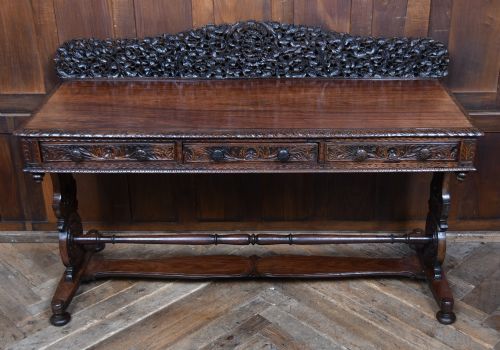
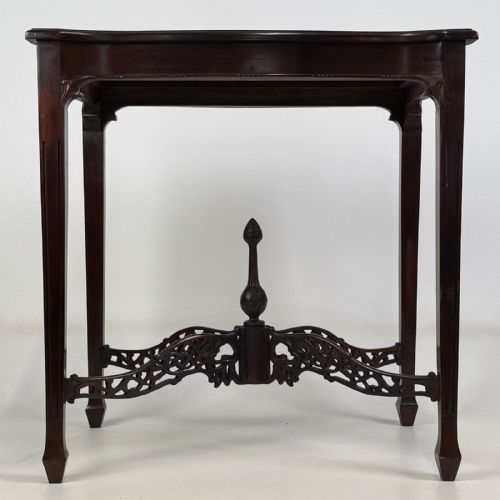


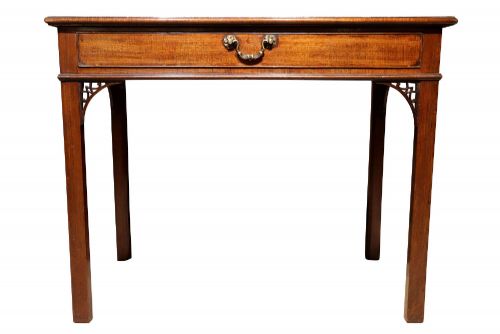
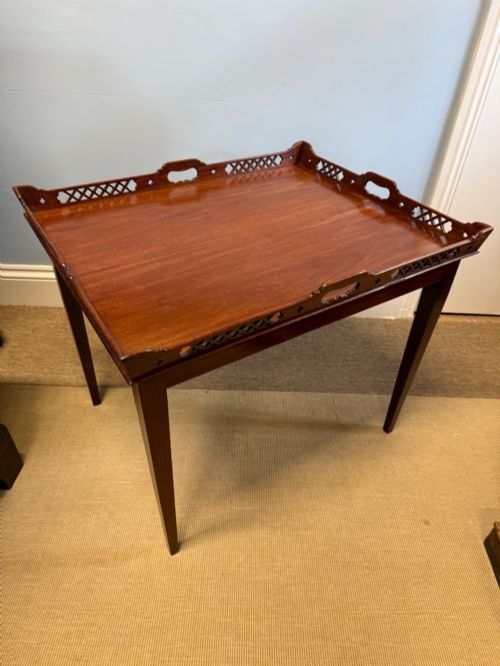
Pierced Mahogany Table
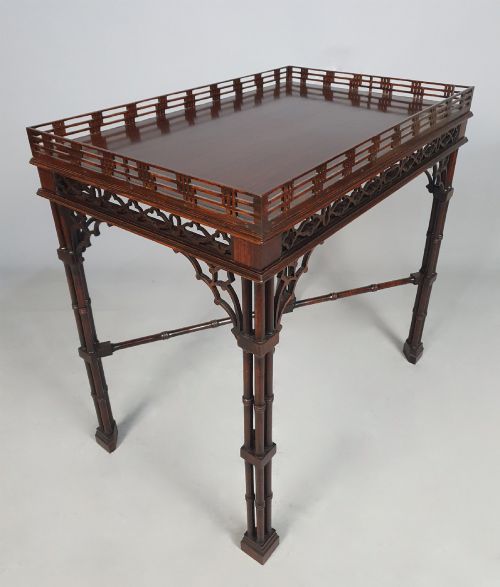
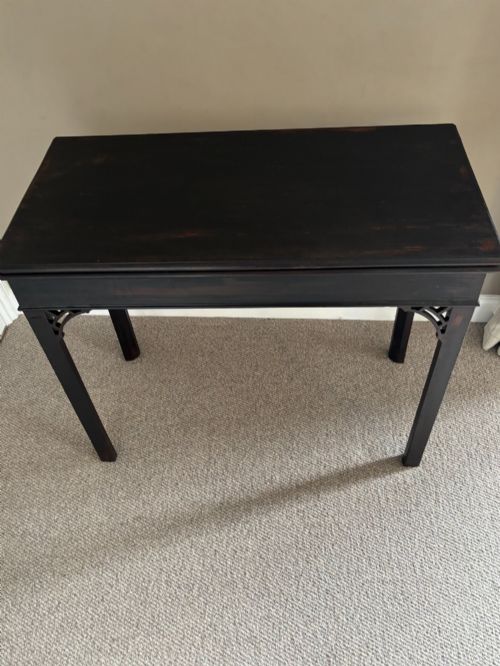
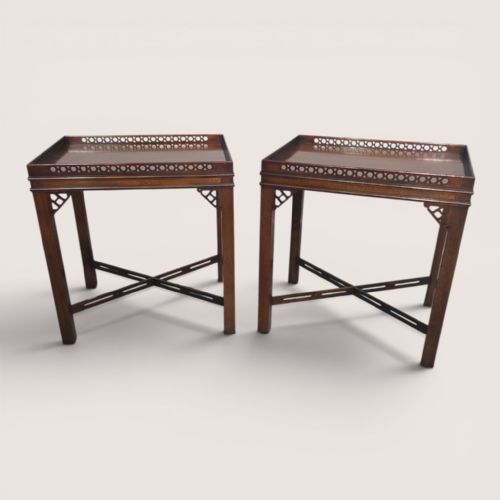
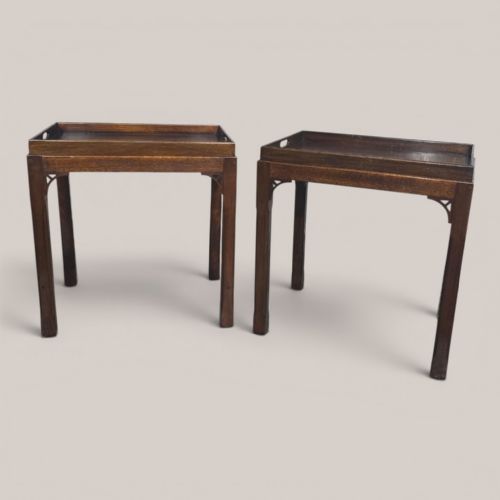
These pierced mahogany table pieces offer intricate fretwork and rich timber grain, bringing formal elegance to sitting rooms and halls.
Pierced Mahogany Table
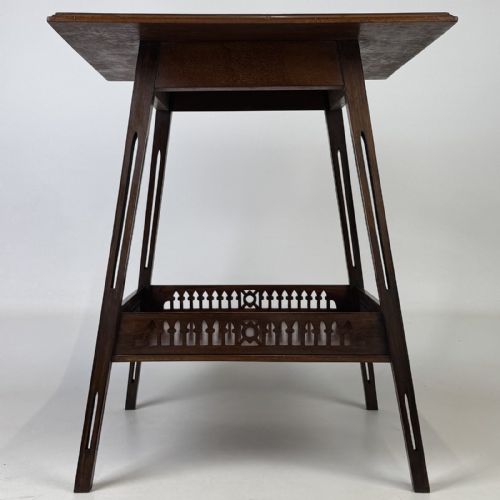
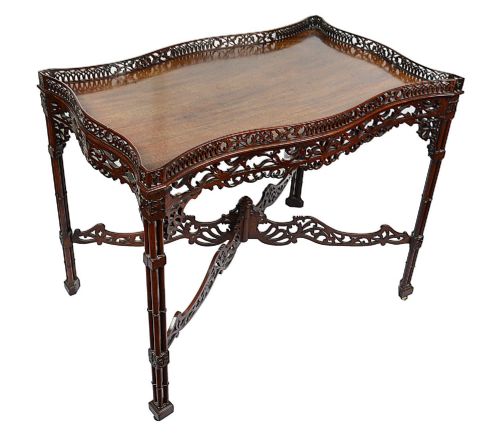
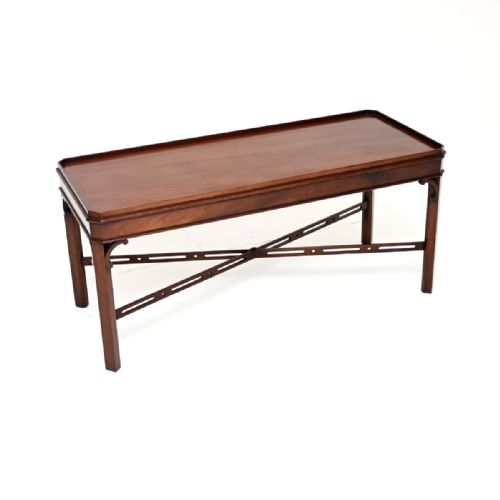
A pierced mahogany table incorporates open fretwork or galleried edges into timber furniture designed for display and service. When you search for a pierced mahogany table, you encounter forms ranging from silver tables and tray tops to tripod bases with fret-cut galleries.
The examples recorded here span the Georgian period through the Edwardian era, taking the shape of occasional tables, lamp tables, and bedside night tables. Many pieces reflect Chippendale and Chippendale Revival styles, alongside Gothic Revival influences.
Makers and cabinetmakers across the eighteenth and nineteenth centuries utilised dense tropical timber to create sturdy surfaces finished with intricate pierced brackets or brass gallery-edge tops.
Materials and construction
Mahogany forms the primary structural timber, chosen for its stability and deep reddish-brown grain, occasionally complemented by satinwood inlay or ormolu mounts. Workshops shaped this dense wood into delicate components like tripod bases, tray tops, and slender legs.
Piercing required careful hand-sawing and chiselling to produce openwork brackets, fret-cut galleries, and decorative motifs without weakening the weight-bearing joints. Brass fittings and ormolu accents frequently reinforced edges and supported revolving or folding mechanisms.
Pierced Mahogany Table Retail Price Guide 2026
Typical asking prices for pierced mahogany table among the pieces listed under this phrase on Sellingantiques today, from the lower quarter to the upper quarter. They describe what is for sale here now, not the wider market.
The listings span from the 18th Century through the Edwardian period, uniting solid mahogany and padauk construction with brass and ormolu hardware.
Evaluating craftsmanship
Quality rests in the precision of the fretwork and the integrity of the timber joinery. Sharp, clean-cut openings in brackets and galleries demonstrate superior hand tool proficiency compared to softer, less defined edges.
The selection of the mahogany timber itself dictates visual appeal, with well-figured grain patterns and harmonious colour distribution distinguishing finer production from plain stock. Original castors, undisturbed patination, and robust structural framing further elevate a piece.
The Pierced Mahogany Table Glossary
- Pierced gallery
- A raised border around the edge of a tabletop featuring cut-out openwork designs. This fretwork stopped items from sliding off while adding decorative lightness to heavy timber.
- Chippendale
- A style of eighteenth-century English furniture named after cabinetmaker Thomas Chippendale. Pieces in this tradition often display Gothic or Chinese-inspired pierced fretwork.
- Tripod base
- A support structure consisting of three curved legs radiating from a central pillar. These columns frequently carry tilt-top mechanisms or galleried surfaces.
- Silver table
- A formal display table with a raised gallery designed to hold silver tea services. They often feature pierced brackets beneath the frieze.
- Padauk
- A dense tropical hardwood with a reddish hue used in place of standard mahogany for certain cabinet pieces. Its natural oils permit fine detail carving and fretwork.
Pierced Mahogany Table: Frequently Asked Questions
What is a pierced mahogany table?
A pierced mahogany table is a wooden item of furniture featuring open fretwork, carved brackets, or a galleried edge around the surface. These pieces range from tripod wine tables to silver and occasional tables.
Cabinetmakers built them primarily during the Georgian, Victorian, and Edwardian periods, frequently drawing on Chippendale designs to create decorative display surfaces for the home.
How were these tables used?
Owners utilised these tables in reception rooms and parlours to serve tea, display silver objects, or hold lamps. The raised pierced borders prevented delicate items from falling off.
Bedside versions also functioned as night cupboards, providing concealed storage alongside sleeping quarters while maintaining a refined aesthetic.
How do I date a mahogany table?
Dating relies on examining construction methods, timber characteristics, and stylistic details such as leg shape and stretcher design. Georgian pieces often show hand-cut dovetails and denser timber patination.
Revival pieces from the Edwardian era emulate these earlier styles but frequently exhibit machine-assisted joinery and different secondary woods underneath.
How do I care for mahogany furniture?
Protect the timber by keeping tables away from direct heat sources and strong sunlight, which can dry out and fade the polish. Regular dusting with a soft, dry cloth maintains the surface sheen.
Avoid applying modern silicone sprays, relying instead on traditional beeswax formulations to nourish the grain periodically.