

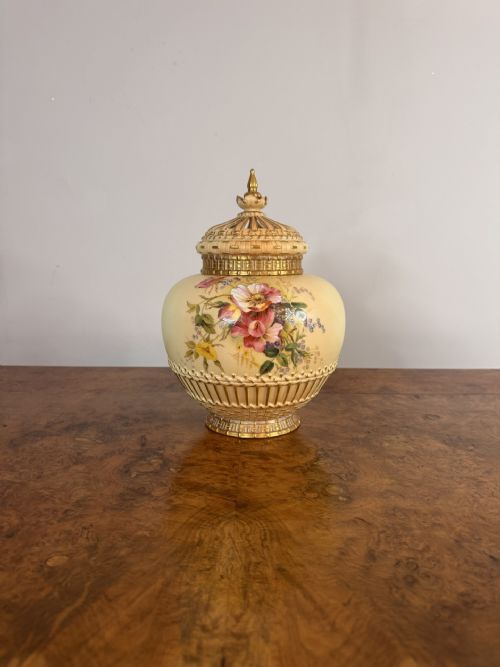


Pierced Lid Potpourri
These pierced lid potpourri vessels are decorative receptacles designed to diffuse dried herbs and flowers, offering both visual appeal and scent.
Pierced Lid Potpourri
A buyer examining pierced lid potpourri vessels encounters a range of forms spanning from the eighteenth century to the mid-twentieth century, including vases, urns, jars, boxes, and baskets. The selection draws on periods such as the Georgian, Victorian, and Edwardian eras, reflecting enduring domestic tastes.
Most examples found in these listings take the form of porcelain vases and lidded jars, alongside sterling silver boxes and baskets. Potpourri containers served a practical purpose in period interiors, releasing fragrance through perforated covers while acting as ornamental centrepieces.
Makers and factories represented across the items include Royal Worcester, Chamberlain Worcester, Derby, Mason's, Sitzendorf, and Herend. These pieces demonstrate varied stylistic influences, ranging from Rococo Revival and Chinoiserie to traditional Imari patterns.
How they were made
Porcelain and ironstone bodies form the foundation of most ceramic pieces, shaped into vases, urns, and jars using traditional moulding and throwing techniques. Skilled hands applied intricate hand-painted enamels, gilding, and gold leaf to decorate the surfaces.
Sterling silver alternatives utilise metalworking techniques such as piercing, stamping, and smithing to create lidded boxes and openwork baskets with perforated tops. These methods allow airflow for the scent while maintaining decorative structural integrity.
Pierced Lid Potpourri Retail Price Guide 2026
Typical asking prices for pierced lid potpourri among the pieces listed under this phrase on Sellingantiques today, from the lower quarter to the upper quarter. They describe what is for sale here now, not the wider market.
Some Victorian potpourri jars feature crowns on their covers, letting humble dried petals wear imaginary royalty.
What varies in quality
Quality in these vessels rests upon the crispness of the piercing in the lids and the finesse of the hand-painted or gilt decoration on the ceramic and silver bodies. Finer pieces exhibit superior control in enamel application and more delicate, well-defined perforation patterns.
The reputation of the manufactory, such as Royal Worcester or Derby, significantly influences the standing of a piece within the range. Better examples retain their original matching covers and show minimal wear to the gilding and surface ornamentation.
Royal Worcester·Chamberlain Worcester·Derby·Mason's·Sitzendorf·Herend
The Pierced Lid Potpourri Glossary
- Pierced lid
- A cover punctured with deliberate holes or openwork slots to allow the scent of dried botanicals to escape.
- Potpourri
- A mixture of dried petals and spices kept in a perforated container to freshen the air in a room.
- Blush ivory
- A soft, cream-coloured porcelain finish pioneered by Royal Worcester, often accented with gilt highlights.
- Imari
- A style of ceramic decoration featuring deep underglaze blue and iron red, frequently highlighted with gold.
- Frill vase
- A ceramic vessel ornamented with applied ruffled or crinoline-like porcelain details.
Pierced Lid Potpourri: Frequently Asked Questions
What is a pierced lid potpourri?
A pierced lid potpourri is a decorative container featuring a perforated cover designed to hold and scent a room with dried aromatic flowers and spices.
These vessels combine utility with ornamentation, appearing in ceramic, porcelain, ironstone, and silver across several centuries of design.
How do I use potpourri jars today?
You can fill the vessels with dried botanicals, rose petals, and spices to gently scent living spaces just as historical owners did.
Ensure the interior glaze remains intact if using damp or strongly scented oils to prevent permanent staining of porous ceramics.
How do I date an antique potpourri vessel?
Dating relies on identifying maker marks, factory stamps, and stylistic cues such as Rococo revival moulding or Edwardian silver hallmarks.
Comparing the paste, glaze characteristics, and painting techniques against known production periods helps narrow down the decade or century of origin.
Are porcelain and silver potpourri pieces fragile?
Ceramic and porcelain vessels require careful handling due to the delicate nature of applied frills, handles, and pierced lid structures.
Silver boxes and baskets offer more resilience but still benefit from gentle cleaning methods that preserve intricate pierced metalwork.