

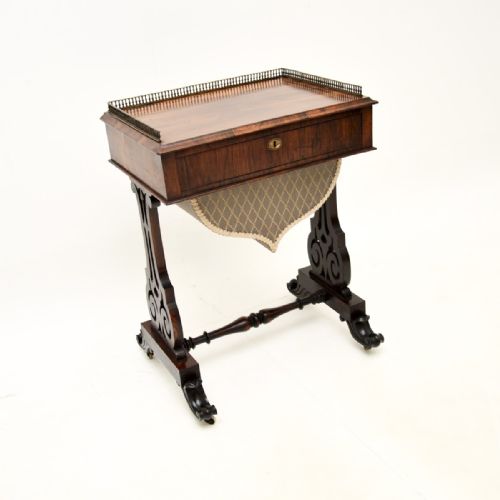
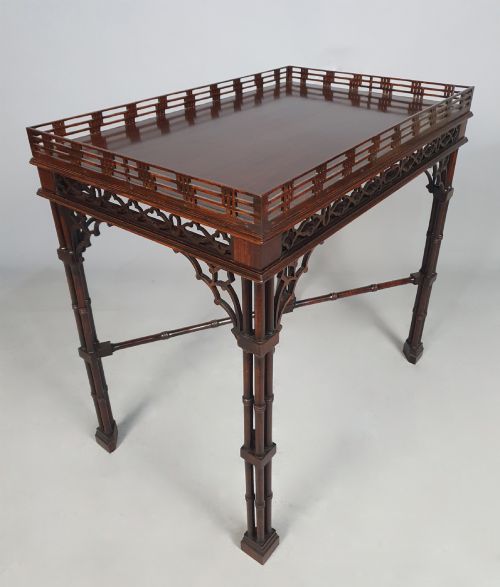
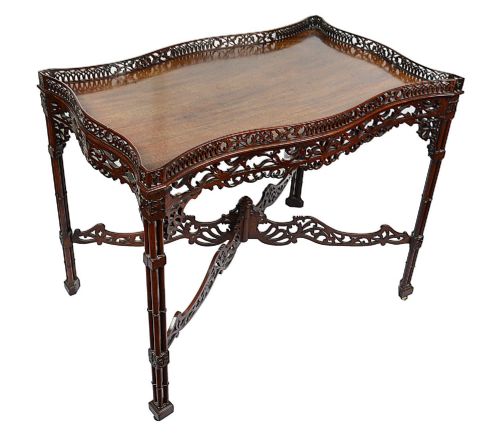
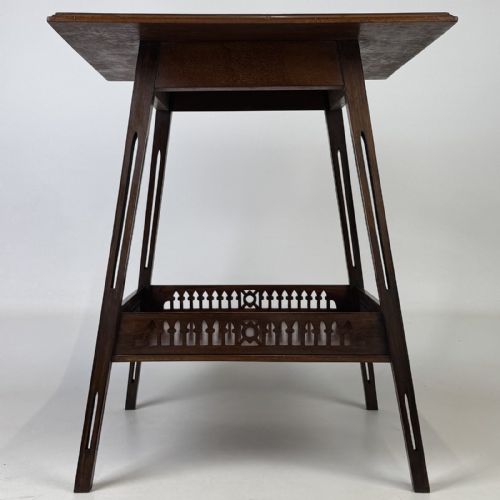


Pierced Leg Table
A pierced leg table brings architectural fretwork and open framework into domestic spaces, offering collectors a striking exercise in classical joinery.
Pierced Leg Table
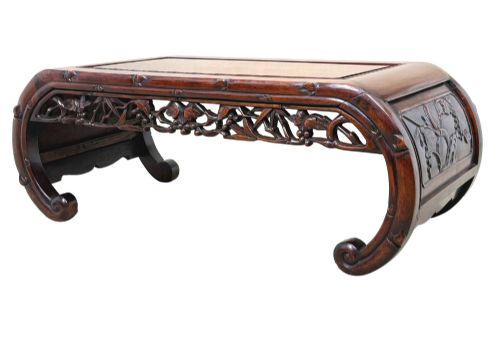
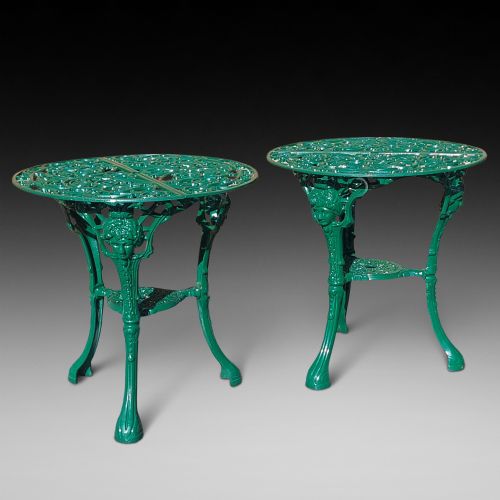
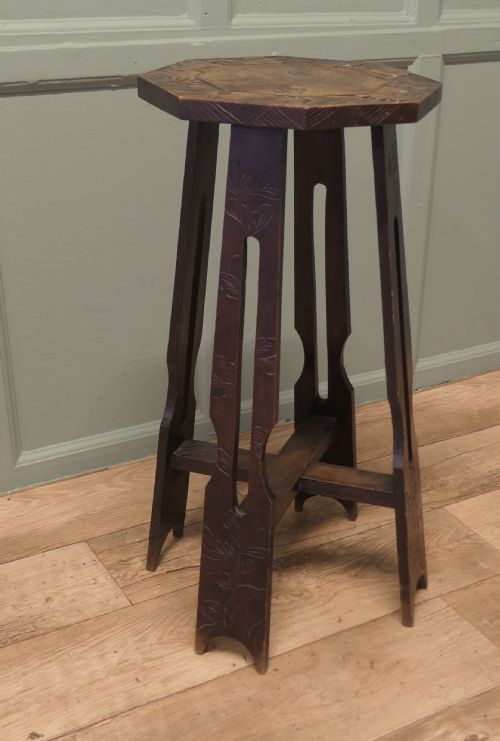
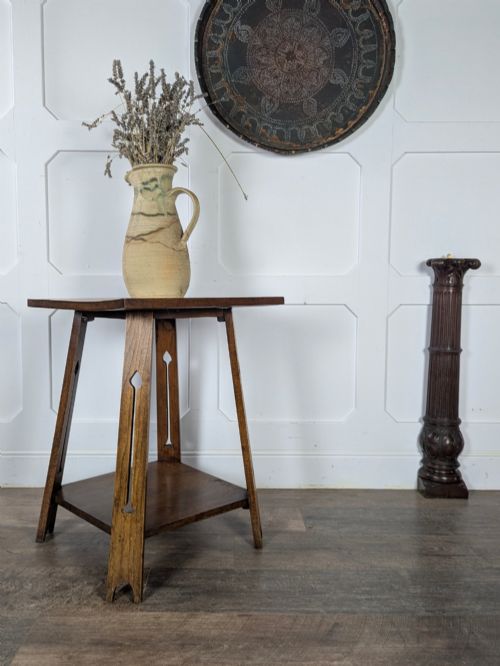
Buyers encounter forms ranging from Georgian mahogany silver tables to late Victorian cast iron garden pub tables and Arts and Crafts oak designs. The selection encompasses diverse functions, including lamp tables, wine tables, and writing tables.
Origins stretch from English workshops influenced by Chinese export styles to French kingwood side tables and Oriental hardwood pieces. This variety gives collectors access to both formal revival interpretations and regional vernacular examples.
Materials and construction
Mahogany and oak dominate the material record, supplemented by teak, elm, satinwood, and rosewood. Craftsmen utilised these dense timbers to support the intricate cutouts required for pierced legs and gallery edges without compromising structural integrity.
Joinery techniques combined traditional mortise and tenon framing with precise fret-sawing. Metal elements such as brass fixtures and cast iron appear alongside decorative inlays of lighter woods and pietra dura stone panels.
Pierced Leg Table Retail Price Guide 2026
Typical asking prices for pierced leg table among the pieces listed under this phrase on Sellingantiques today, from the lower quarter to the upper quarter. They describe what is for sale here now, not the wider market.
Judging quality and execution
Quality rests on the crispness of the pierced carving and the integration of the openwork with the main frame. Superior examples show clean, sharp fretwork edges free from splintering or heavy sanding that softens the design.
The choice of timber grain and the precision of inlaid details separate standard production pieces from finer workshop commissions. Stability in the open framework indicates careful timber selection and sound internal joinery.
Liberty & Co
The Pierced Leg Table Glossary
- Fretwork
- Open ornamental work carved or cut in relief on a solid board. This technique defines the visual lightness of pierced leg furniture.
- Chippendale Revival
- A late nineteenth and early twentieth century style replicating mid eighteenth century designs. It often incorporates elaborate pierced stretches and carved legs.
- Pietra Dura
- An artistic technique using cut and fitted polished coloured stones to create geometric or figurative images. It frequently decorates tabletop surfaces.
- Gallery
- A raised ornamental border surrounding the edge of a tabletop or shelf. It frequently utilises pierced woodwork or metal railings.
Pierced Leg Table: Frequently Asked Questions
What defines a pierced leg table?
A pierced leg table incorporates openwork carving, fretwork, or geometric cutouts directly into its supporting legs. This design creates an airy, decorative silhouette distinct from solid pillar or cabriole supports.
Such detailing appears across lamp tables, occasional stands, and serving tables from various historical periods.
How do I care for antique timber?
Protect antique wood surfaces by keeping them away from direct sunlight and maintaining stable indoor humidity levels. Dust regularly with a dry cloth and avoid silicone based polishes that damage aged finishes.
Applying natural wax occasionally helps nourish hardwoods like mahogany and oak without building up residue.
Where were these tables used?
These tables served primarily as display or utility surfaces in reception rooms, drawing rooms, and hallways. Smaller lamp and wine versions moved easily to hold drinks, books, or decorative plants.
Garden variants offered sturdy cast iron construction suitable for outdoor seating areas and hospitality spaces.
How do I distinguish revival periods?
Revival pieces draw on eighteenth century Chippendale motifs but typically reveal machine sawn fretwork and later nineteenth or twentieth century secondary timbers. Examining the underside and interior joints helps confirm the actual manufacturing era.
Original Georgian pieces exhibit hand cut joinery marks and timber oxidation consistent with earlier centuries.