





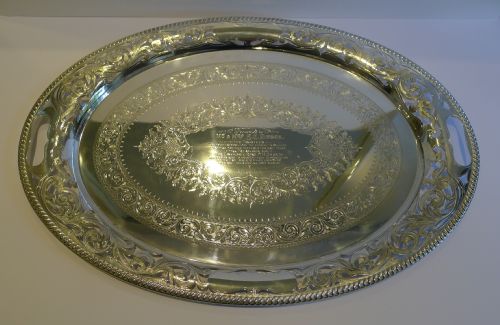
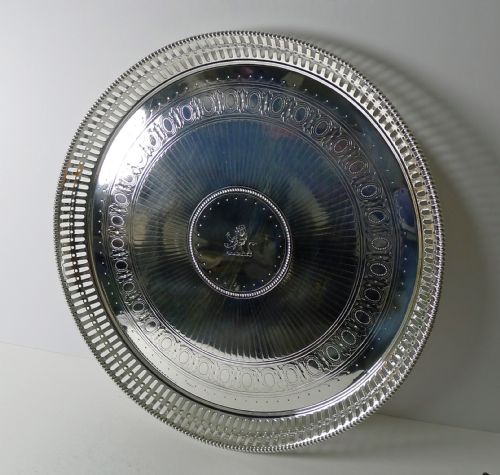
Pierced Gallery Tea Tray
A pierced gallery tea tray brings an elegant raised border and refined metallic sheen to any interior.
Pierced Gallery Tea Tray
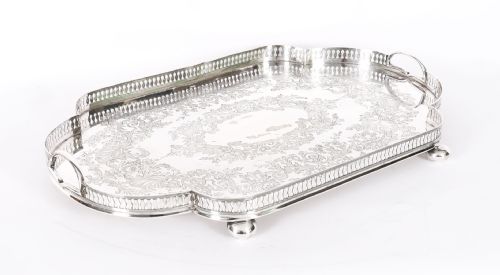
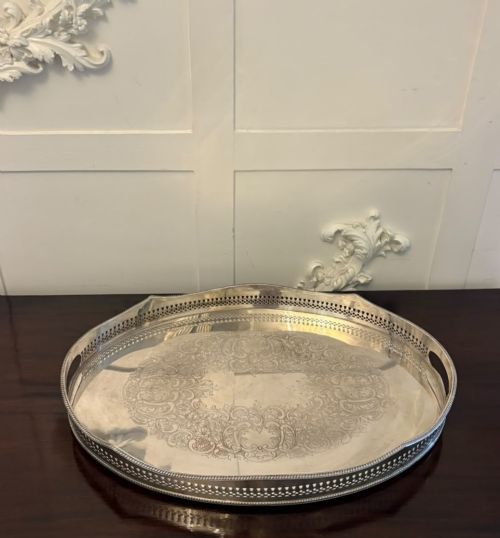
A pierced gallery tea tray combines a flat serving surface with a raised, openwork border designed to keep vessels secure. These pieces span the eighteenth century through the interwar period, encompassing both timber frames and silver-plated copper foundations.
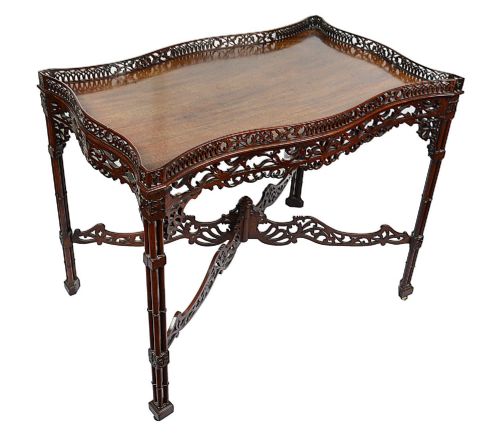
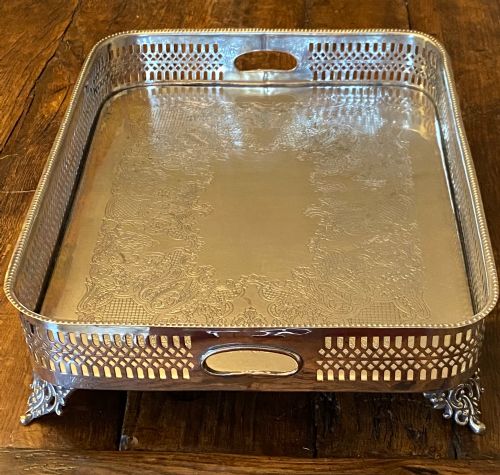
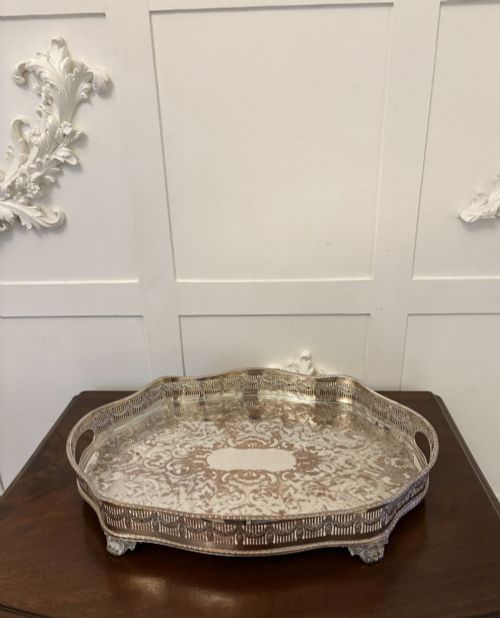
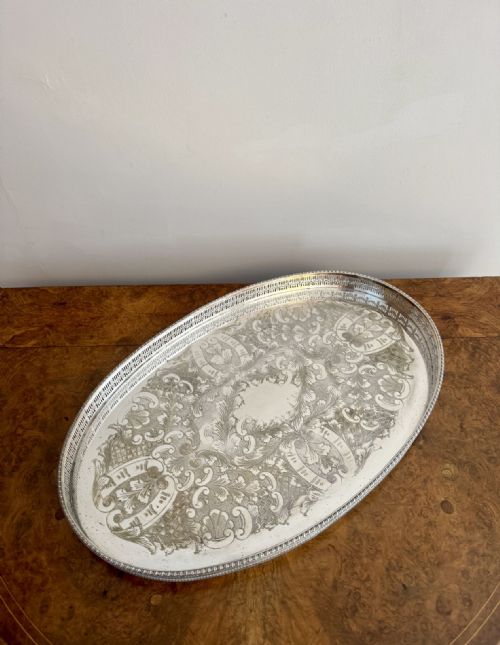
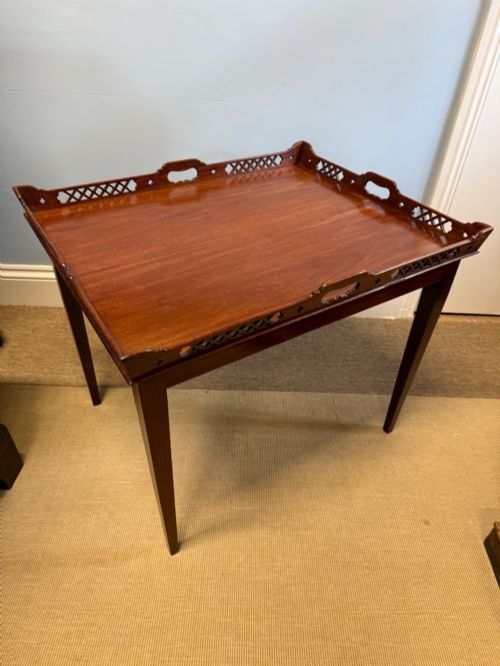
Edwardian silver-plated examples dominate the current selection, frequently featuring engraved central fields and pierced or reticulated metal galleries. Buyers also encounter Victorian and nineteenth-century iterations alongside mahogany tray tables and occasional furniture.
Makers utilised various base metals beneath the plating, including electroplated nickel silver and copper. Wooden variants in mahogany and oak provide an alternative aesthetic, often incorporating raised galleries for functional service.
Construction and Metalwork Techniques
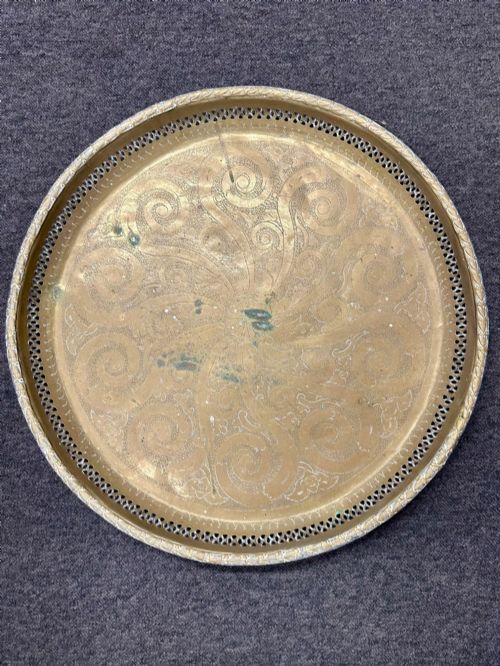
Silversmiths employed silver plating over copper or nickel silver foundations, applying heavy coats that withstood decades of polishing. Pierced galleries were cut or pierced by hand or machine to create openwork geometric or scroll patterns along the raised rim.
Wooden trays relied on joined mahogany or oak timber, sometimes incorporating gallery rails fitted around the perimeter. Pontypool toleware pieces utilised japanned metal finished with hand-painted decoration and protective lacquers.
Pierced Gallery Tea Tray Retail Price Guide 2026
Typical asking prices for pierced gallery tea tray among the pieces listed under this phrase on Sellingantiques today, from the lower quarter to the upper quarter. They describe what is for sale here now, not the wider market.
Victorian cocktail hours required resilient metalwork to survive enthusiastic hosts pouring spirits from heavy decanters.
Assessing Craftsmanship and Condition
Quality rests upon the crispness of the piercing in the gallery and the depth of the engraving across the centre surface. Finer specimens display precise hand-piercing and substantial weight in the underlying metal rather than thin pressed sheet.
The integrity of the silver plating dictates longevity, where heavy plating prevents the base metal from showing through high-wear areas. Maker marks from established Sheffield and Birmingham firms also distinguish standard production from superior workshops.
James Deakin·Mappin & Webb·Elkington·Lee & Wigfull·J.H. Potter
The Pierced Gallery Tea Tray Glossary
- Sheffield Plate
- An early method of fusing a thin sheet of silver to a thicker copper base before rolling them together. This technique predates modern electroplating.
- EPNS
- Electroplated Nickel Silver, a composite material widely used in nineteenth and twentieth-century metalware. A layer of pure silver is deposited onto a nickel silver alloy via electrolysis.
- Toleware
- Japanned or enamelled metalware produced in Pontypool and other centres, often decorated with hand-painted motifs. The technique creates a durable, glossy surface finish.
- Reticulated
- Decorated with a network of open lines or interlaced framing resembling a net. This ornamental piercing appears frequently on metal galleries.
Pierced Gallery Tea Tray: Frequently Asked Questions
How do I clean silver plated trays?
Use a soft cloth and a gentle silver polish formulated to protect plated surfaces from excessive abrasion. Avoid harsh scrubbing compounds that wear through the top silver layer.
Store the piece in a dry environment to minimise tarnishing between uses. Regular dusting helps maintain the polished finish without requiring frequent deep cleaning.
What is a gallery tray used for?
A gallery tray serves drinks and tea sets while the raised border prevents decanters and cups from sliding off during transit. The structural railing provides both security and a distinct decorative silhouette.
These pieces also function as decorative table displays for glassware and cocktail accessories. Their sturdy construction supports regular movement around the home.
How do I tell Sheffield plate from electroplate?
Sheffield plate often reveals a thin line of copper showing along exposed edges where the fused silver layer has worn away through age. Electroplated nickel silver shows a greyish nickel or brassy base metal underneath worn spots rather than copper.
Examining the weight and manufacturing clues helps distinguish the earlier fused metal technique from later nineteenth-century galvanic deposition processes.
Can I use these trays on wooden furniture?
Placing felt pads or protective feet underneath the base prevents metal or timber edges from scratching polished tabletops. Ensuring the bottom surface remains clean avoids transferring residual tarnish or dirt to furniture finishes.
Regularly lifting the tray rather than sliding it across a surface protects both the tray base and the table underneath from friction wear.