


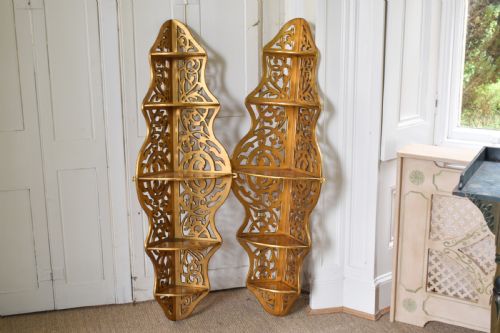
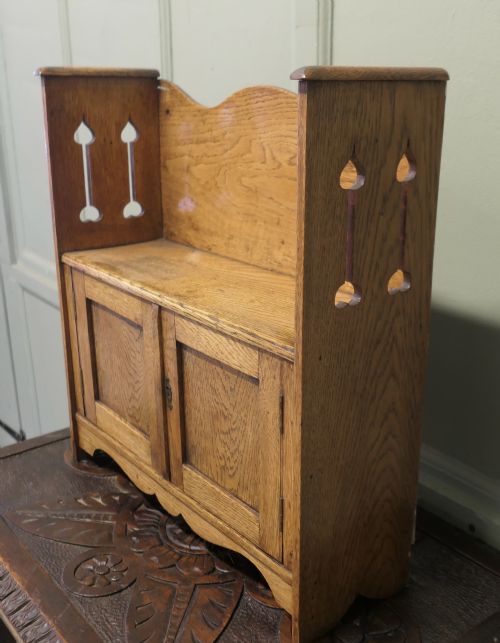
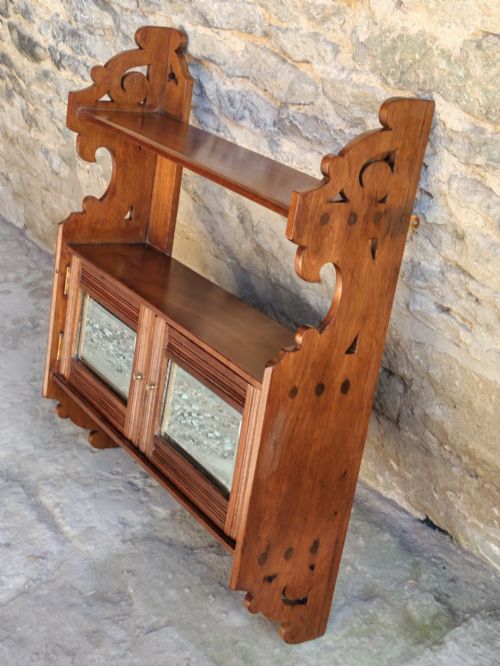


Pierced Carved Shelf
A pierced carved shelf brings intricate wooden fretwork and practical display space into a room.
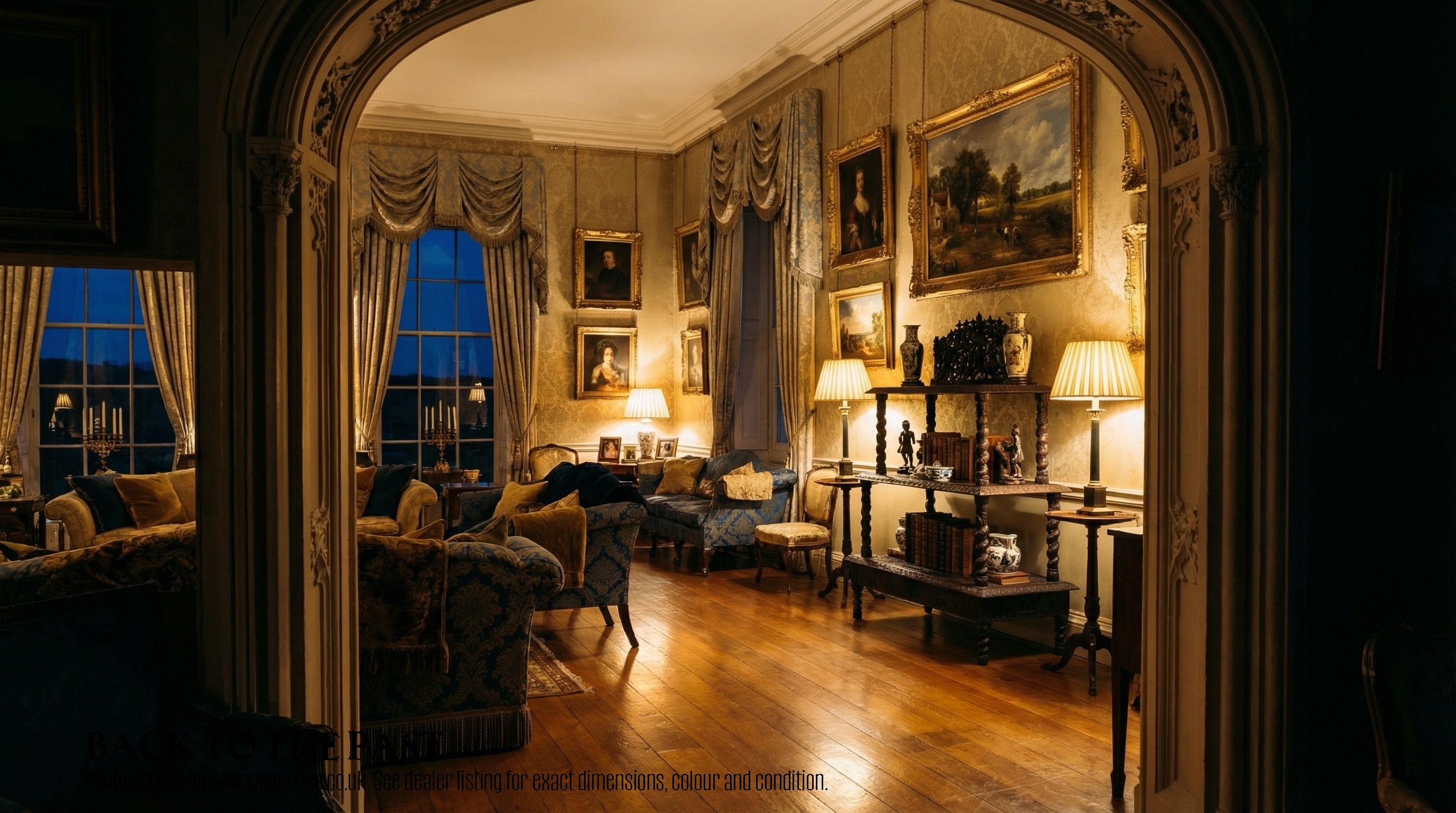
Pierced Carved Shelf
When you search for a pierced carved shelf, you are looking at wall-mounted or freestanding shelving units defined by openwork carving and fretwork decoration. These pieces serve to display books and decorative objects while adding architectural detail to domestic interiors.
The versions you are most likely to meet on this page hail primarily from the Victorian and Edwardian eras, spanning the mid-nineteenth century through to the early twentieth century. They manifest in forms such as corner shelves, wall cabinets, whatnots, and bookcases.
Makers of these items drew upon diverse stylistic influences, ranging from Victorian Gothic and Arts and Crafts to Anglo-Indian, Burmese, and Chinese traditions. This global reach means you will encounter dark oak and burr walnut alongside exotic teak and limewood.
Materials and construction
Cabinetmakers utilised a variety of dense hardwoods, predominantly oak, walnut, and burr walnut, alongside mahogany, limewood, and teak. These timbers provided the structural integrity required to support protruding brackets and suspended tiers.
Piercing and fret-cutting techniques were employed to create intricate openwork patterns across the panels and galleries of the shelves. Carpenters also incorporated elements like brass fittings, glass panels, and gesso details to finish the surfaces.
Pierced Carved Shelf Retail Price Guide 2026
Typical asking prices for pierced carved shelf among the pieces listed under this phrase on Sellingantiques today, from the lower quarter to the upper quarter. They describe what is for sale here now, not the wider market.
Cabinetmakers occasionally borrowed from Burmese and Chinese carving styles, giving Victorian corners an unexpected global twist.
Judging the standard of manufacture
The division between standard items and superior examples lies in the crispness and depth of the openwork carving. Fret-cut panels executed with sharp internal corners and balanced symmetry demonstrate a higher level of workshop skill.
Selection of timber significantly elevates a piece, particularly when cabinetmakers chose highly figured burr walnut or richly grained oak. The integration of structural joinery that conceals fixings while maintaining stability separates superior wall furniture from simpler utilitarian items.
The Pierced Carved Shelf Glossary
- Fret-cut
- Woodworking technique where a fine-bladed saw cuts intricate decorative patterns through a thin board. This creates openwork designs characteristic of light shelving units.
- Whatnot
- A freestanding piece of furniture consisting of a series of open shelves supported by pillars or columns. Used for displaying ornaments and small objects.
- Burr walnut
- Timber taken from the wart-like growths on walnut trees, yielding complex swirling grain patterns. Highly prized for decorative furniture veneers.
- Giltwood
- Timber that has been coated with a thin layer of gold leaf or gold paint. Often applied to decorative mouldings and frames.
- Gesso
- A plaster-like mixture applied to wood surfaces as a base for paint or gilding. It provides a smooth ground for decorative relief work.
Pierced Carved Shelf: Frequently Asked Questions
What is a pierced carved shelf?
A pierced carved shelf is a wall-hanging or freestanding display unit featuring decorative openwork timber. These items were designed to hold books, ceramics, and small ornaments.
They appear in various styles from the nineteenth and early twentieth centuries, reflecting both domestic British tastes and international design influences.
How were these shelves used?
Owners mounted these shelves on walls or placed them in corners to maximise vertical storage space in Victorian and Edwardian rooms. They functioned as display areas for prized collections rather than heavy utility storage.
Their open designs allowed light to pass through while framing the objects placed upon them.
How do I date a shelf?
Dating relies on identifying the timber, construction methods, and stylistic cues present in the woodwork. Victorian pieces often display dark oak, walnut, or heavy Gothic influences, while later Edwardian items tend toward lighter oak.
Fretwork patterns and hardware such as brass fixings also offer clues to the decade of manufacture.
Where should I hang one?
These shelves suit studies, living rooms, and hallways where wall space permits a decorative focal point. Secure wall fixings are essential due to the weight of the hardwood.
Pairing a corner shelf with matching cabinetry helps unify the interior scheme.