
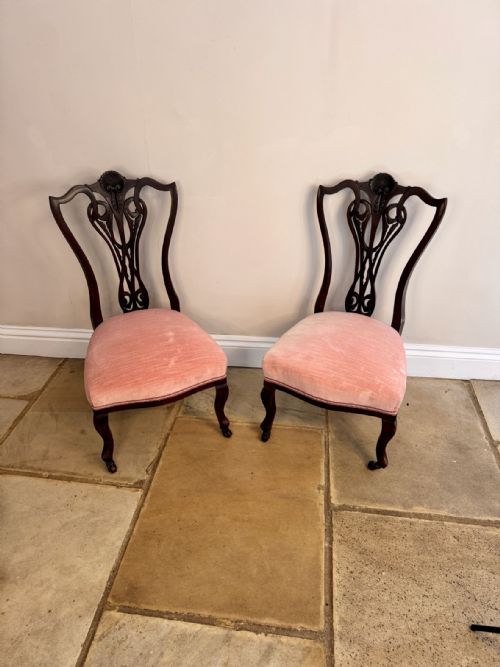
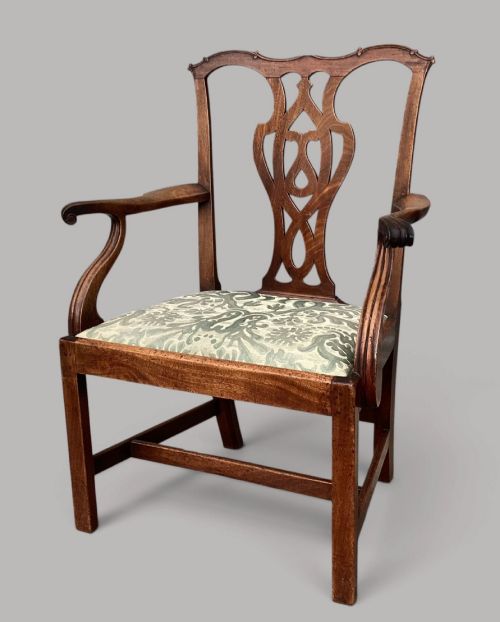
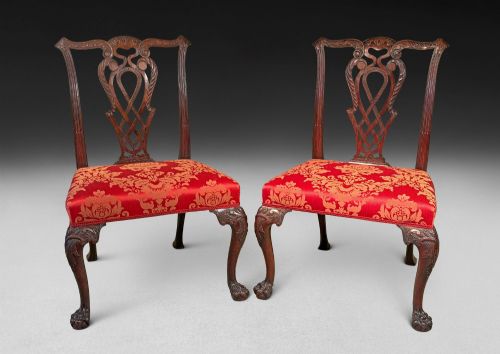
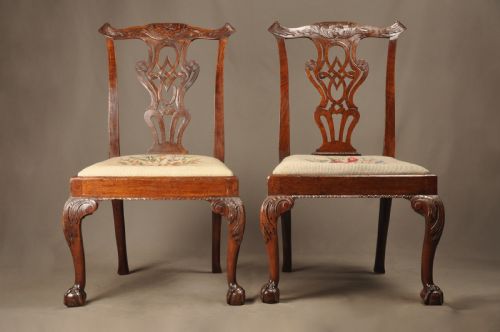
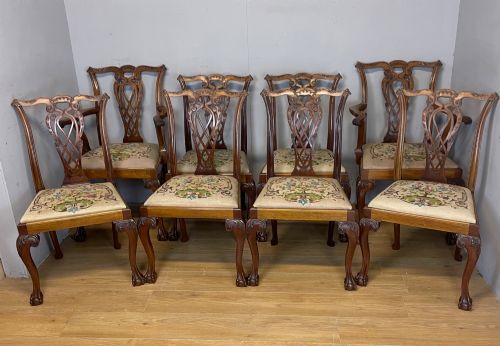
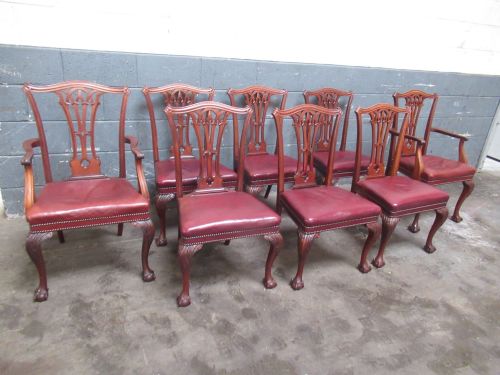
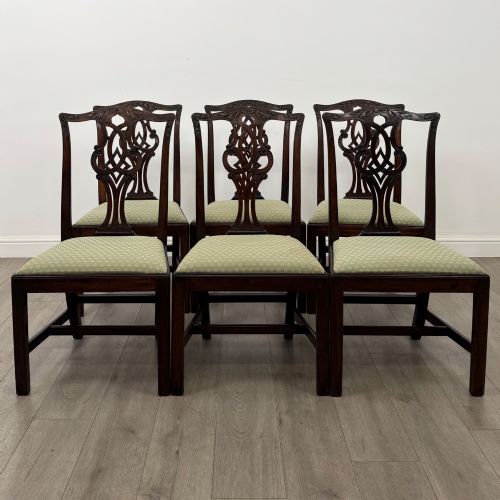
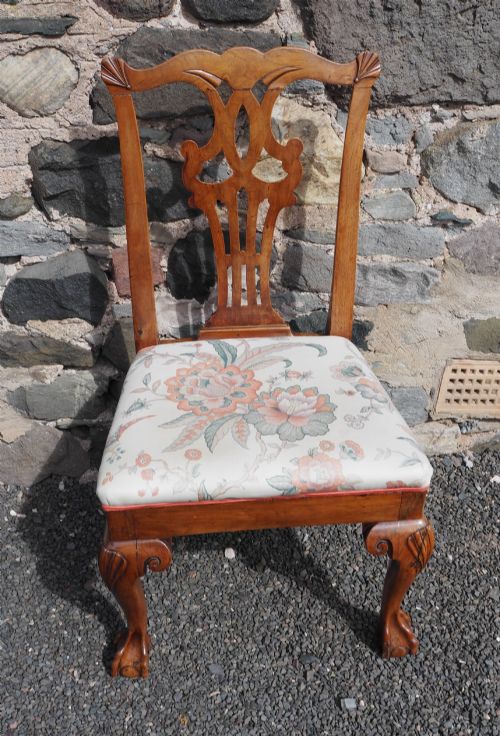

Pierced Carved Dining Chair
A pierced carved dining chair brings tactile warmth and classical design to a room, offering robust seating shaped by skilled hands.
Pierced Carved Dining Chair
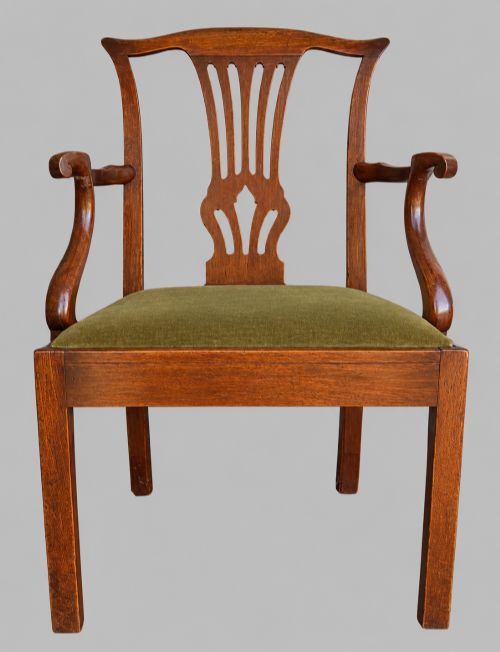
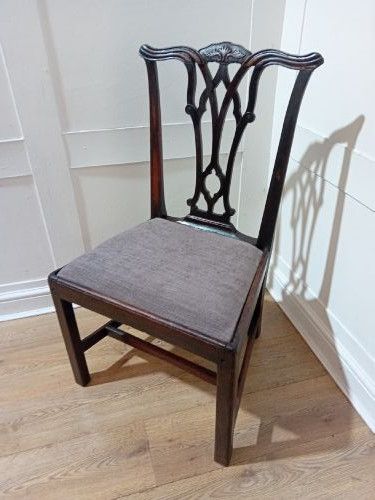
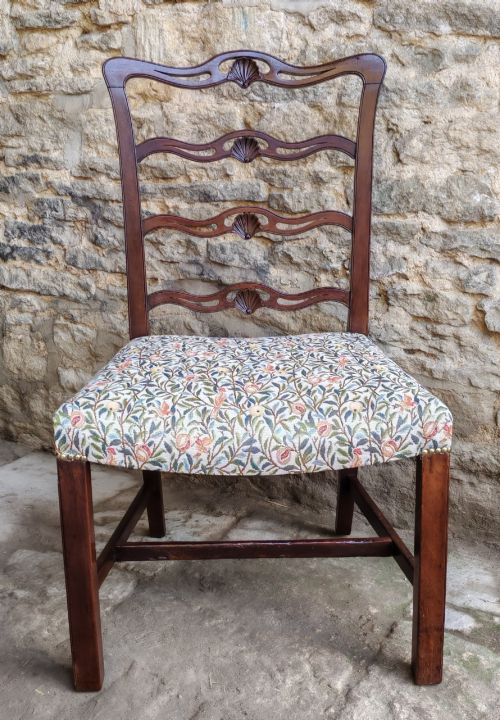
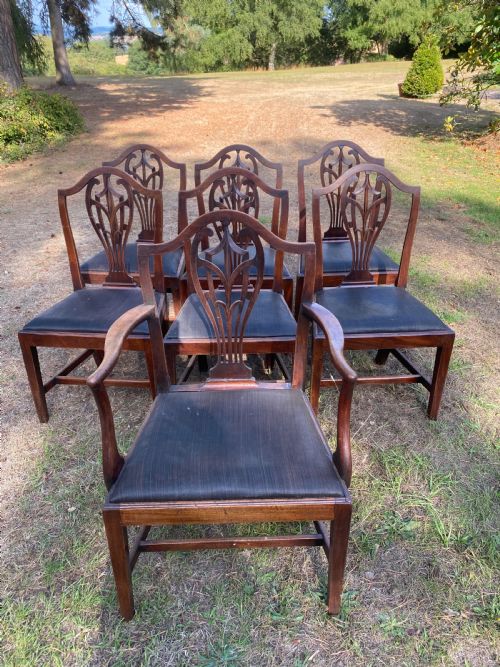
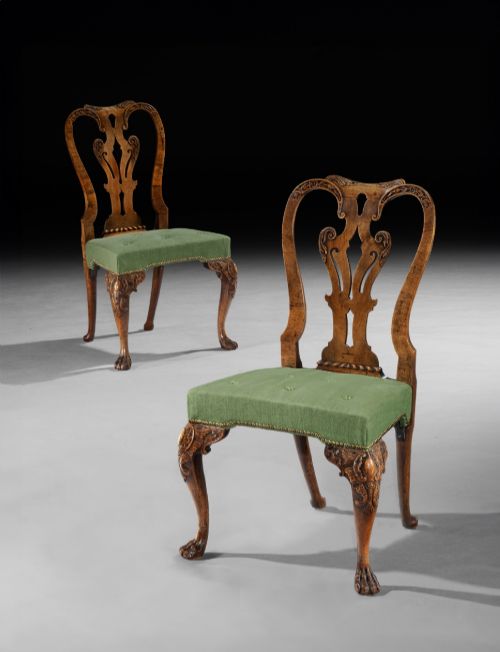
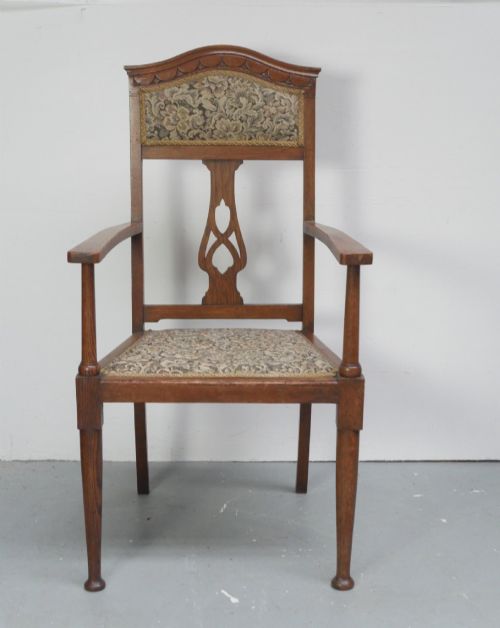
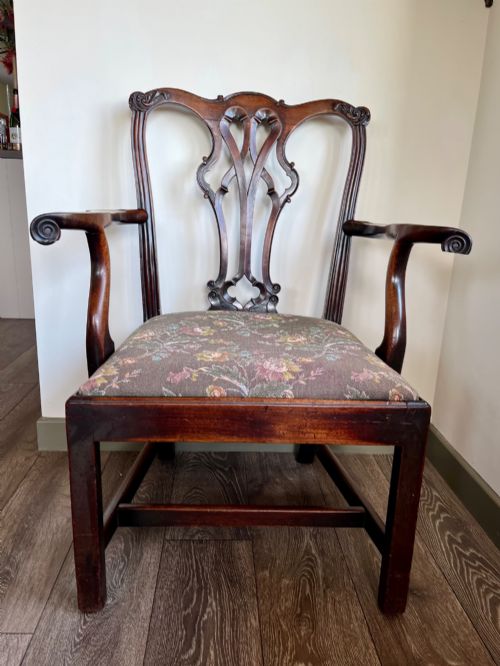
A pierced carved dining chair displays an openwork back splat shaped through intricate fretwork or carved wooden patterns. These seating pieces appear frequently in mahogany and walnut, spanning periods from the eighteenth century through the Edwardian era and revival decades.
Most examples found on this page date from the Georgian period up to the early twentieth century, taking the form of dining chairs, side chairs, armchairs, and occasionally larger dining sets. The designs often follow Chippendale, George II, or Hepplewhite traditions, combining structural rigidity with ornamental back splats.
Buyers look for these chairs to anchor a dining table or to serve as singular desk and side chairs in a study or hallway. The pierced back remains the defining visual anchor across all styles, catching the light and showing the grain of the underlying timber.
Materials and construction methods
Makers relied principally on dense timbers such as mahogany and walnut, which permitted deep carving without splintering along the grain. Selected pieces also incorporated oak or padauk depending on their regional origins.
Joinery combined pegged mortise and tenon frames with hand-carved decorative elements applied to splats, rails, and cabriole legs. Drop-in seats or upholstered pads finished the construction, often covered in fabric, leather, or tapestry.
Several chairs include secret initials carved beneath the drop-in seat frames by bygone makers.
Markers of distinction in carved seating
Quality rests upon the depth, sharpness, and symmetry of the carved ornament on the splat and legs. Crisp relief work executed directly from the solid timber indicates superior craftsmanship compared to shallow or heavy-handed moulding.
The choice of timber grain and the integrity of the underlying frame joints dictate durability and visual harmony. Original upholstery webbing and intact structural members preserve the historical integrity of the piece.
Warings·Wheelers of Arncroach
The Pierced Carved Dining Chair Glossary
- Splat
- The vertical central strip of wood in the back of a chair. It receives the pierced and carved detailing that defines the style.
- Cabriole leg
- A furniture leg that bends outward at the knee and tapers inward toward the foot, often ending in a pad or claw.
- Drop-in seat
- A removable wooden frame upholstered separately and dropped into the seat rail rebate.
- Carver
- A term for an armchair, traditionally used at the head of a dining table.
- Fretwork
- Ornamental work consisting of interlaced or perforated patterns cut from thin wood.
Pierced Carved Dining Chair: Frequently Asked Questions
How do I identify a true Georgian chair?
Examine the timber density, hand-cut joinery marks, and the proportion of the splat and legs. Eighteenth-century examples display patination earned through decades of use.
Compare the carving style against known regional patterns from the period to confirm its era.
Can these chairs be used daily?
Solid mahogany and walnut frames offer strong structural integrity suitable for regular seating. Ensure joints remain firm before heavy use.
Protect the finish from direct heat and moisture to preserve the wood.
What is a Chippendale revival chair?
Revival pieces are later interpretations, often made during the Victorian or Edwardian eras, copying eighteenth-century Chippendale designs. They utilise period methods adapted to contemporary tastes.
These chairs offer classical aesthetics with the sturdiness of later nineteenth or twentieth-century workshop production.
How do I care for antique wood?
Apply traditional beeswax sparingly and buff gently with a soft cloth to nourish the timber grain. Avoid modern silicone sprays that build up residue.
Keep the chairs away from direct sunlight and radiators to prevent timber splitting.