
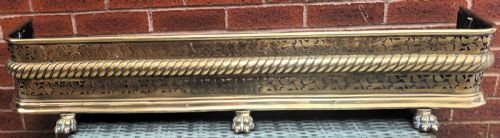
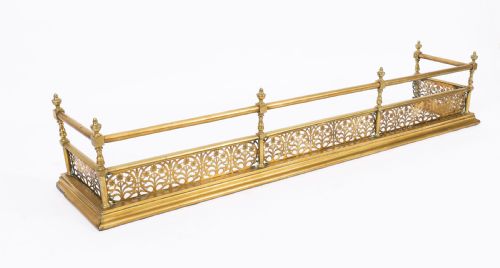

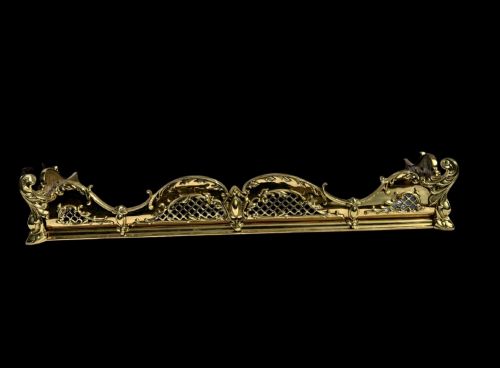


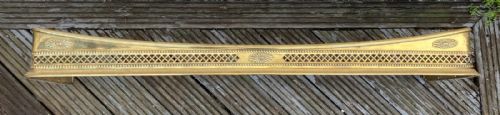
Pierced Brass Hearth Fender
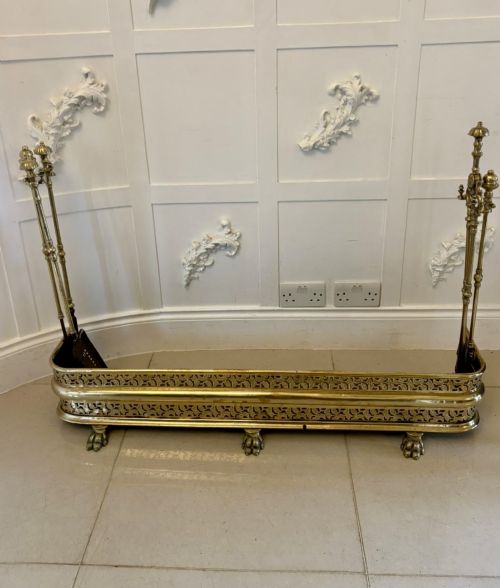
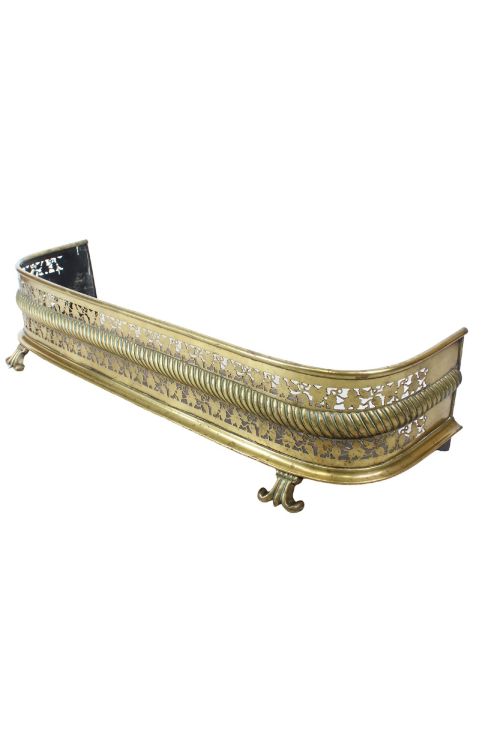
A pierced brass hearth fender frames an open fire, combining safety with the bright warmth of polished metal.
Pierced Brass Hearth Fender
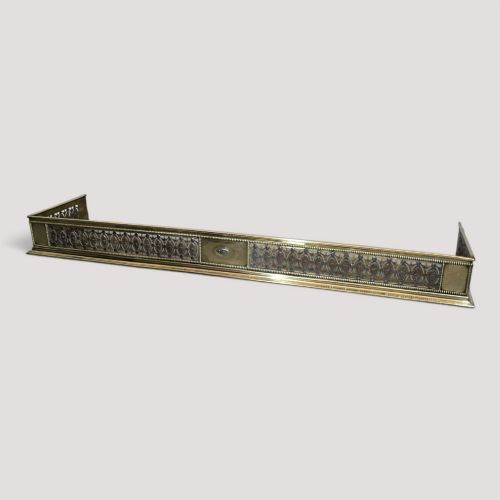
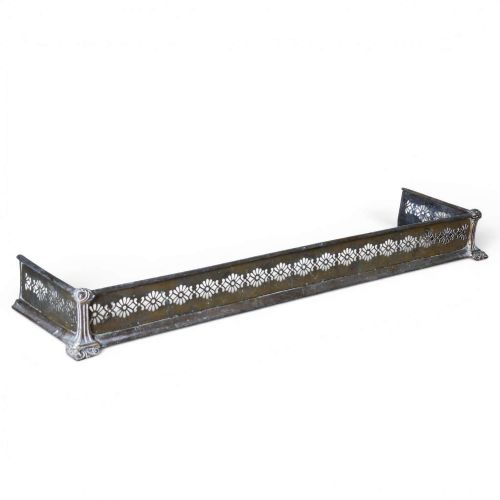
A pierced brass hearth fender sits directly on the floor around an open fireplace to contain embers and ash while defining the hearth space. These pieces arrive from various periods including the Georgian, Regency, William IV, and Victorian eras.
The most common examples encountered here date from the nineteenth century, often featuring intricate pierced brass work alongside iron or steel components. They serve both a practical boundary function and a decorative role in the reception room.
How they were made
Maker's workshops combined sheet brass with cast iron or polished steel, utilising structural iron cores to provide weight and rigidity. The decorative pierced patterns were punched or cut directly into the brass plates.
Surfaces were finished with polishing or patination techniques that highlighted the contrast between the bright brasswork and the darker iron or cut steel details.
Current listings span the Georgian, Regency, William IV, and Victorian periods, utilising brass, iron, steel, and cut steel.
What varies in quality
Quality rests in the crispness of the piercing and the thickness of the metal used for the body. Superior examples display precise geometric or floral piercing without distortion along the main rail.
The choice of secondary metals matters significantly, as pieces incorporating cut steel or substantial cast iron frames demonstrate a higher grade of construction than simpler folded sheet designs.
The Pierced Brass Hearth Fender Glossary
- Kerb
- An alternative spelling for curb, referring to the low barrier placed around a hearth. This boundary keeps stray coals contained upon the floor.
- Cut steel
- Small faceted steel studs riveted to a metal backing to create sparkling decorative highlights. This material appears on finer hearth furniture from the Georgian and Victorian periods.
- Patina
- The surface sheen and colour developed through age and regular polishing. A desirable finish shows gentle variation rather than a uniform factory shine.
- Piercing
- The technique of cutting decorative apertures through sheet metal. In these pieces, the pierced motifs allow firelight to reflect through the brass border.
Pierced Brass Hearth Fender: Frequently Asked Questions
How do I measure for a fender?
Measure the width and depth of your fireplace opening, then add sufficient clearance for the hearth stone and fire irons.
Ensure you account for any protruding hearth surrounds or uneven flooring before selecting a specific width.
Can I polish antique brass?
Gentle cleaning with appropriate metal polish maintains the brightness of the brass without wearing down the underlying detail.
Avoid abrasive compounds that can strip away the aged character accumulated over the centuries.
What is the difference between brass and steel fenders?
Brass fenders feature a warm golden metal body, whereas steel versions offer a bright silvery reflection or a dark industrial finish.
Many period examples combine both materials, using brass for the decorative pierced front and steel for the internal structure.
How do I date an antique fender?
Dating relies on stylistic clues such as the Regency curve, Victorian Gothic motifs, or Art Nouveau linear patterns.
The weight of the iron core and the method of joining the metal corners also indicate the period of manufacture.