




Pierced Brass Handles
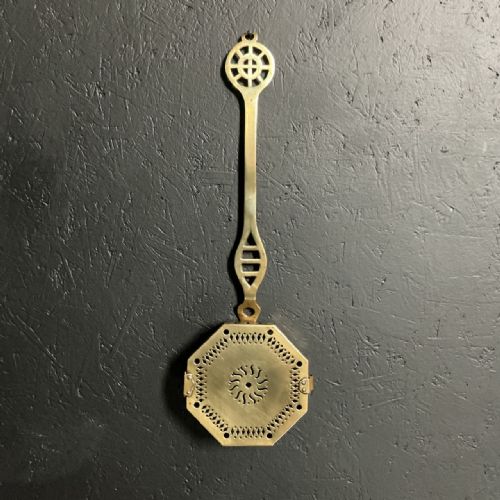
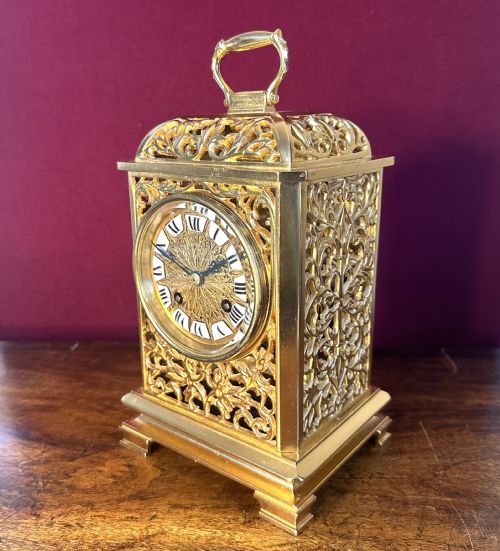
Pierced brass handles are decorative hardware fittings found on period furniture and hearth equipment that bring tactile warmth to timber and iron.
Pierced Brass Handles
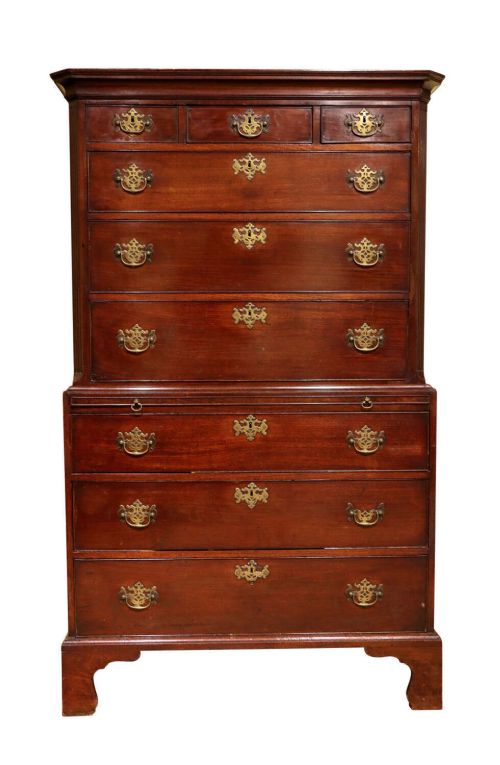
When you search for pierced brass handles, you are looking at functional metalwork designed to lift and pull doors, drawers, and heavy fireplace furniture. These mounts appear most frequently attached to eighteenth-century chests of drawers and nineteenth-century hearth accessories.
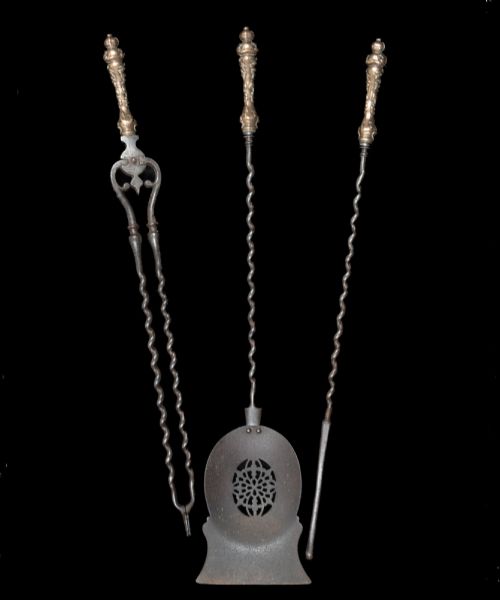
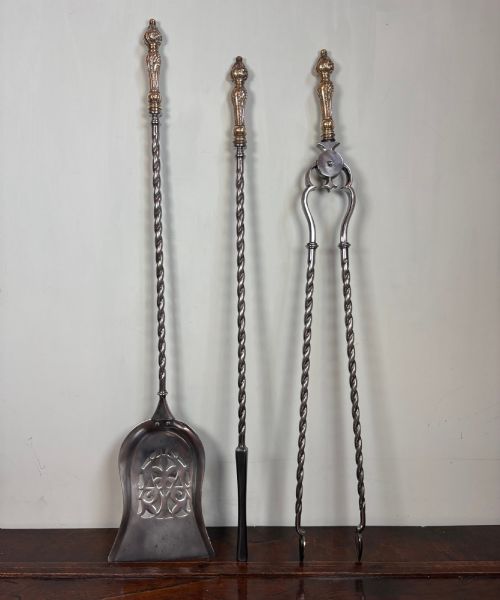
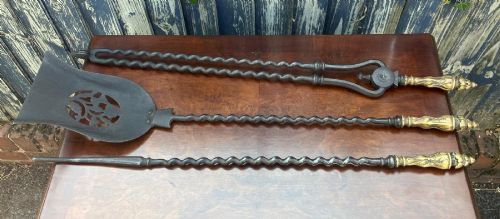
The versions you are most likely to meet on this page adorn mahogany and oak cabinetry, or accompany steel fire irons and chestnut roasters. They range from formal Georgian drawer plates to the robust hardware of Victorian utility pieces.
How they were made
The production of these handles relies primarily on cast and pierced brass, often paired with steel or iron components in fireplace sets and tool handles. Molten metal is poured into moulds before artisans cut and file the openwork patterns through the brass plate.
Makers secure these mounts to timber furniture using drop handles suspended from decorative backplates, or fix them directly as rigid pulls on utilitarian kitchen and hearth objects.
Pierced Brass Handles Retail Price Guide 2026
Typical asking prices for pierced brass handles among the pieces listed under this phrase on Sellingantiques today, from the lower quarter to the upper quarter. They describe what is for sale here now, not the wider market.
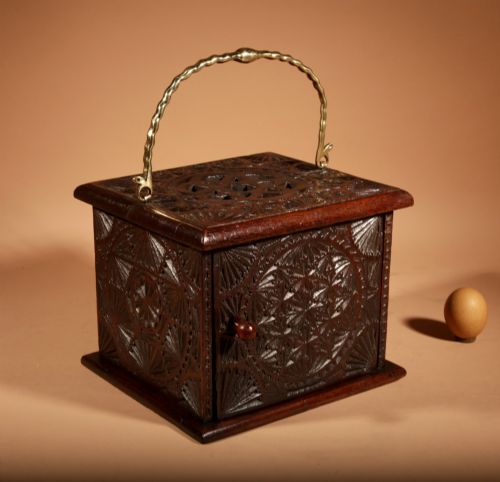
Among the hardware and tools, a solitary foot stove survives to warm chilly floors.
What varies in quality
The distinction between ordinary and superior examples lies in the crispness of the openwork piercing and the harmony between the metal mount and the underlying wood. Finer brasswork displays sharp, clean internal apertures and balanced proportions that complement the grain of mahogany or oak.
Subtleties in the finishing of the metal surface and the integrity of the original fixings dictate the standing of a piece within its period. Better items retain their original metalwork intact, showing natural patination without excessive thinning from centuries of polishing.
The Pierced Brass Handles Glossary
- Piercing
- The technique of cutting openwork patterns through a sheet of metal to create decorative negative space. This method defines the characteristic look of these handles.
- Backplate
- The flat sheet of brass that sits flush against the drawer front, pierced to receive the drop handle loops. It distributes the pull pressure across the timber.
- Patina
- The surface sheen and darkening developed by brass and timber over long periods of handling and exposure. It serves as an indicator of genuine age.
- Chest on chest
- A tall two-part storage furniture form comprising one case stacked directly upon another. These pieces frequently carry the finest brass hardware.
- Fire irons
- A matched set of domestic hearth tools, typically including tongs, a poker, and a shovel. Their handles often incorporate brass elements to match surrounding fire furniture.
Pierced Brass Handles: Frequently Asked Questions
What furniture has pierced brass handles?
These handles typically appear on eighteenth-century case furniture such as mahogany chests of drawers and tall chests on chests.
They are also found on various utilitarian and decorative hearth objects from the nineteenth century.
Are these handles original to the furniture?
Assessing originality involves looking closely at the fit of the brass backplate against the timber grain and checking for filled screw holes underneath.
Period pieces often retain their original mounts, though replacements in matching brass styles do occur.
How do I clean antique brass?
Antique brass requires gentle treatment to preserve the deep patination accumulated over centuries of use.
Avoid harsh modern chemical cleaners that strip away the historical surface character and leave the metal unnaturally bright.
What periods do these pieces span?
The items featuring this hardware extend from the Georgian and Regency eras through the Victorian period up to nineteen hundred.
Each era brings distinct stylistic touches to the metalwork, shifting from formal rococo-influenced piercing to simpler Victorian utility designs.