




Pierced Brass Curb
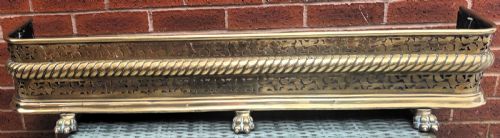
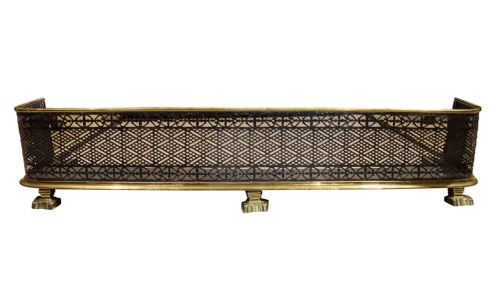
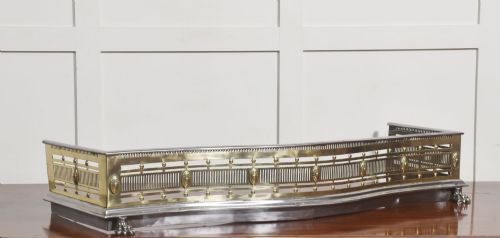
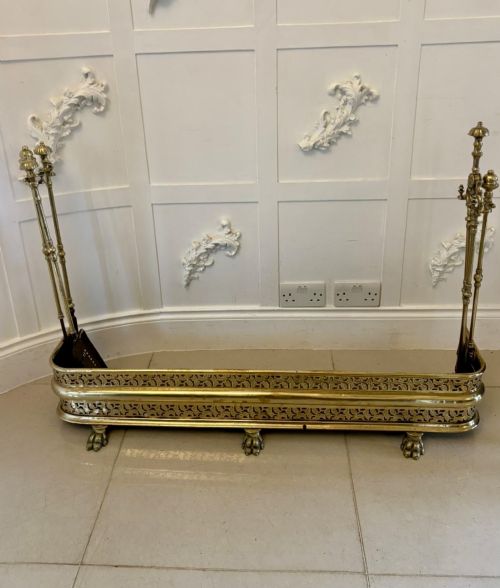
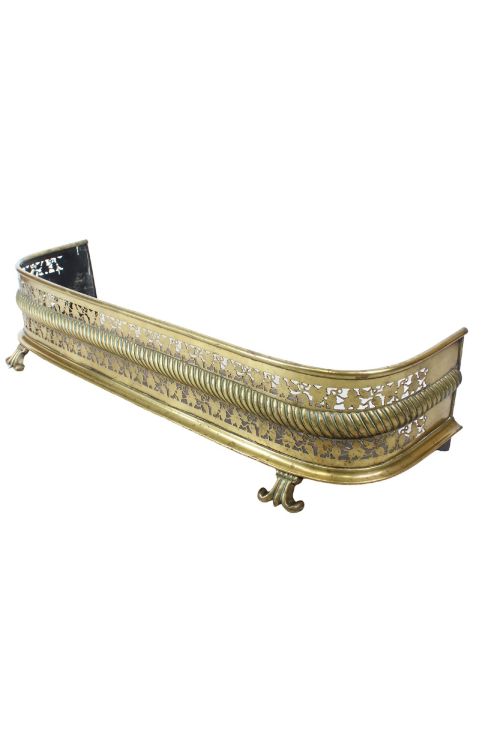
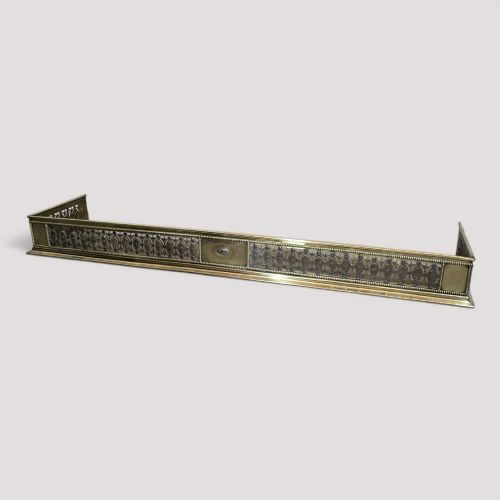
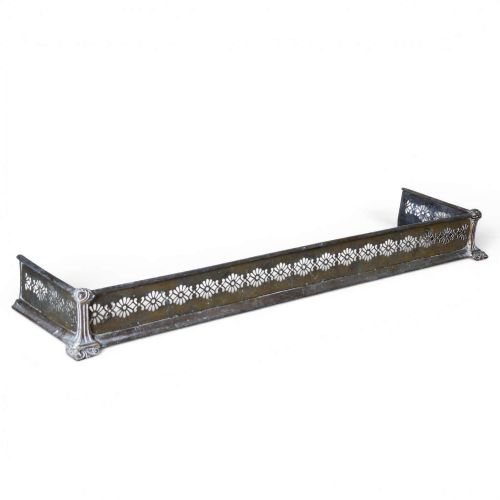
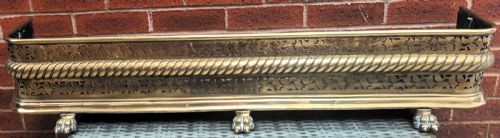
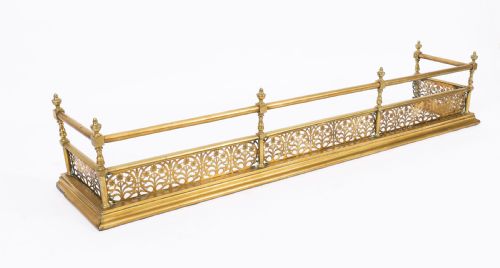
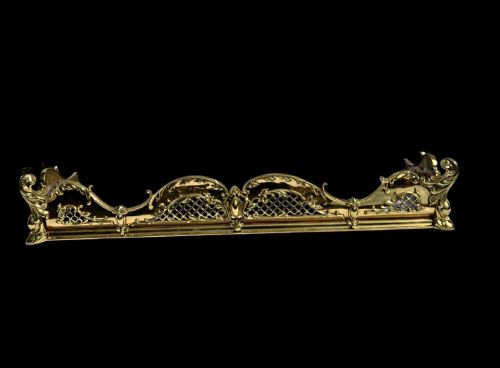
These pieces of pierced brass curb provide a functional and decorative boundary to the hearth, framing the fireplace with pierced metalwork.
Pierced Brass Curb
A pierced brass curb guards the hearth, keeping stray embers contained while completing the fireplace arrangement. The examples found here span the Georgian, Regency, William IV, and Victorian periods, reaching into the late nineteenth century.
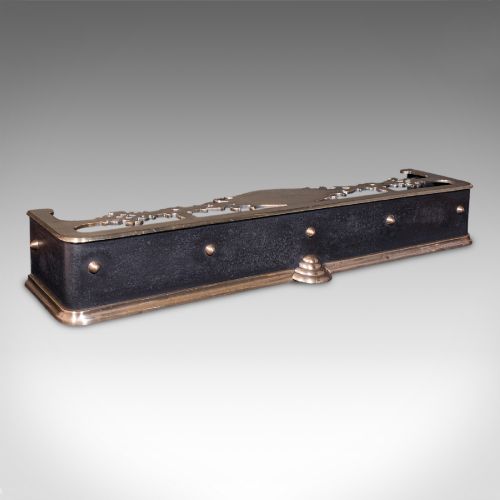
Most pieces encountered on this page take the form of fireplace fenders or kerbs, frequently combining brass with iron or cut steel. They range from small Victorian designs to large Georgian models, sometimes accompanied by original fire irons.
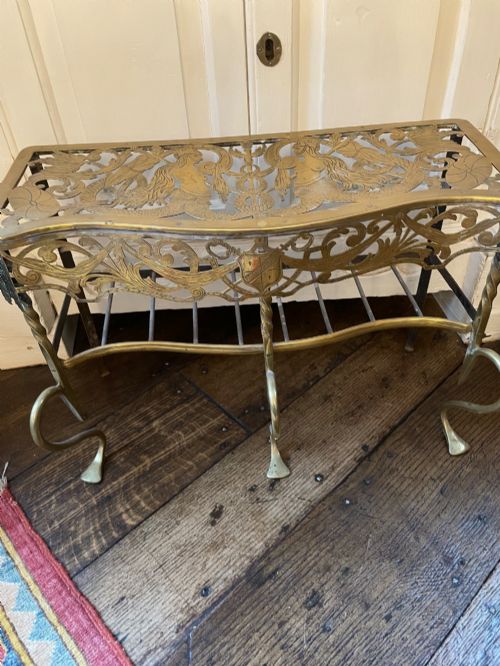
Makers and designers produced these items in various styles, including Art Nouveau and Gothic influences, alongside simple industrial looks. The primary material is brass, often polished or finished with contrasting blackened steel elements.
Materials and construction
The construction relies heavily on brass, cast brass, and polished or cut steel, assembled to form sturdy hearth guards. Piercing techniques create intricate patterns in the metal plate, allowing light from the fire to reflect through the perforations.
Iron and cast iron provide structural weight and support, particularly in larger nineteenth-century models designed for heavy daily use. Combinations of brass and steel create a dual-tone appearance that defines many Regency and Victorian pieces.
Pierced Brass Curb Retail Price Guide 2026
Typical asking prices for pierced brass curb among the pieces listed under this phrase on Sellingantiques today, from the lower quarter to the upper quarter. They describe what is for sale here now, not the wider market.
Several items include an industrial look, proving that nineteenth-century domestic hearths appreciated a bit of heavy-duty grit alongside their polished brass.
Distinctions in quality
Quality rests on the crispness of the piercing work and the thickness of the brass sheet or casting used for the body. Superior examples maintain structural rigidity and retain well-defined ornamentation without excessive wear to the pattern.
The integration of steel components, such as cut steel studs or polished steel bases, marks the difference between standard production and finer workshop output. Original finishes and honest patination further separate notable pieces from later replacements.
The Pierced Brass Curb Glossary
- Pierced brass
- Sheet brass perforated with decorative patterns. This technique allows light to pass through and creates intricate designs along the front rail.
- Fender
- A low metal guard placed around the hearth. It prevents hot coals and embers from rolling onto the carpet or wooden flooring.
- Kerb
- An alternative spelling for curb used in nineteenth-century descriptions. It refers to the barrier enclosing the fireplace hearth.
- Cut steel
- Small facets of steel riveted to a backing plate. These sparkle in firelight and appear on finer Regency and Georgian examples.
- Fire irons
- Matching tools such as pokers, tongs, and shovels. They are occasionally found grouped together with the fender.
Pierced Brass Curb: Frequently Asked Questions
How do I measure for a fender?
Measure the width and depth of your fireplace opening and hearth space to ensure the guard fits comfortably between the walls or surround. Allow a small clearance so the piece rests squarely on the floor without crowding the fire.
Take note of the internal and external dimensions given in listings, as some curbs feature curved corners or protruding feet that alter the footprint.
What is the difference between a fender and a curb?
There is no functional difference between the two terms, as both describe the metal barrier placed in front of the fireplace. Nineteenth-century makers and retailers used both spellings interchangeably.
Today, listings may use either word depending on the original description or the cataloguing style of the individual dealer.
Can I polish brass and steel parts?
Brass components respond well to gentle cleaning with standard metal polish to restore their brightness. Take care to avoid abrasive cloths that might soften the edges of pierced patterns.
Steel parts require different handling, particularly if they feature an older blackened finish or cut steel studs that can loosen with harsh scrubbing.
How do I date an older fender?
Dating relies on stylistic clues such as the geometry of Regency designs, the heavy proportions of Victorian pieces, or the flowing lines of Art Nouveau elements. Construction methods, including the type of screws and fixings, also offer guidance.
Comparing the piercing motifs and material combinations against documented pieces from the same period helps narrow down the decade of manufacture.