
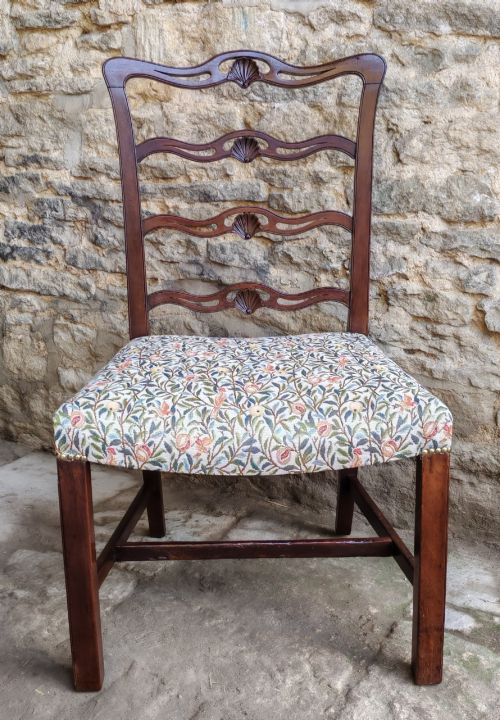
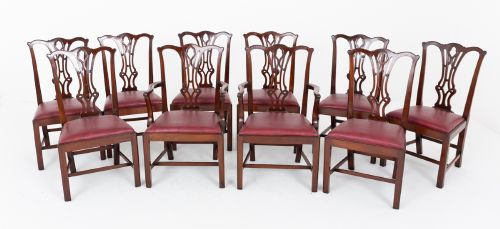
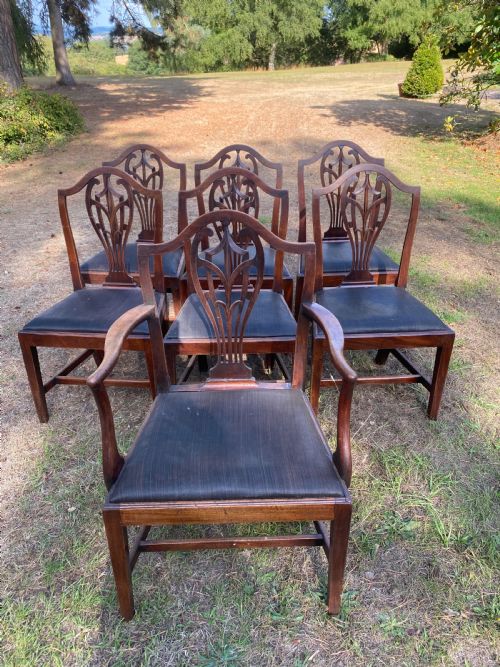
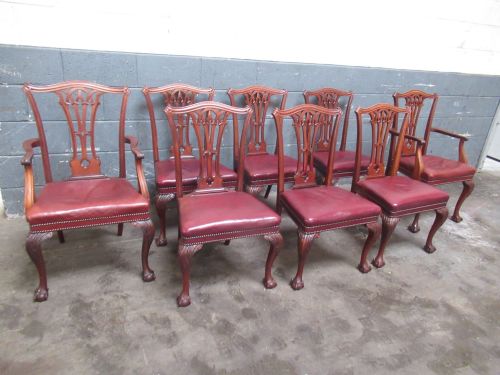

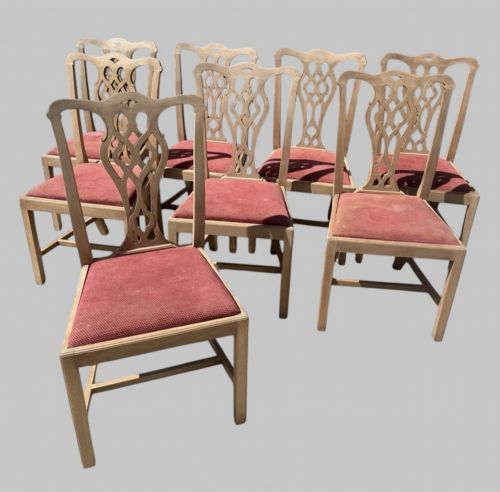
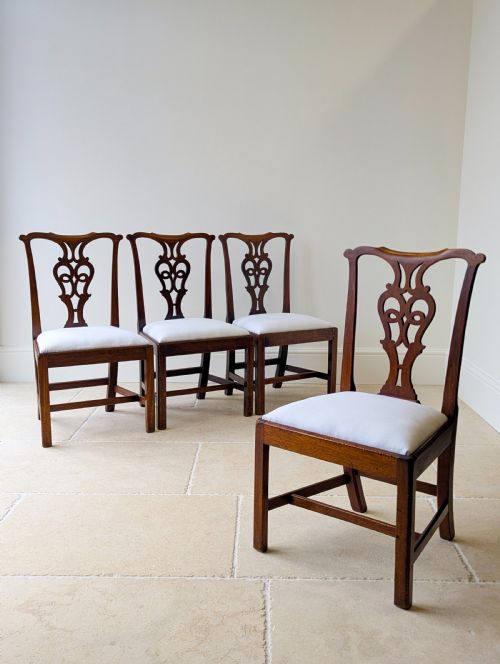
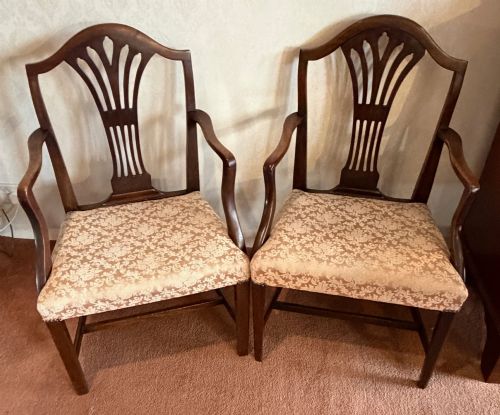
Pierced Back Mahogany Chair
When you search for a pierced back mahogany chair, you seek timber joinery and carved splats designed for dining rooms and parlours across several centuries.
Pierced Back Mahogany Chair
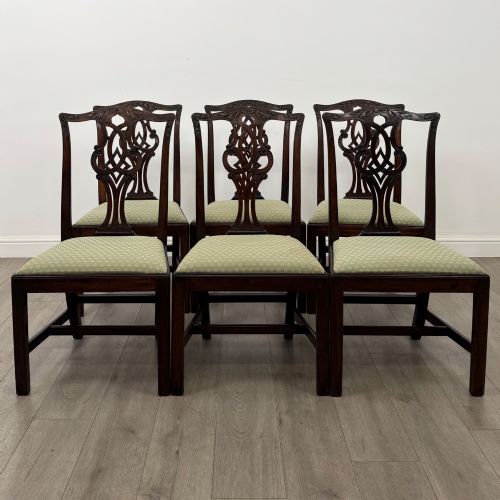
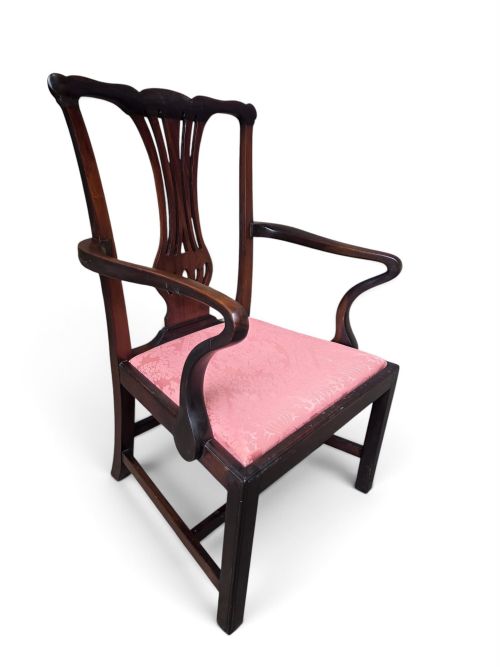
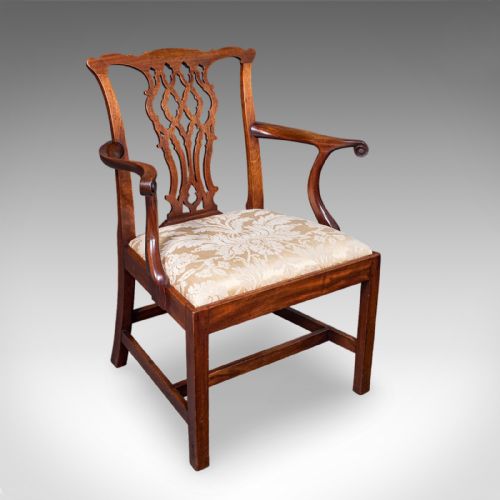
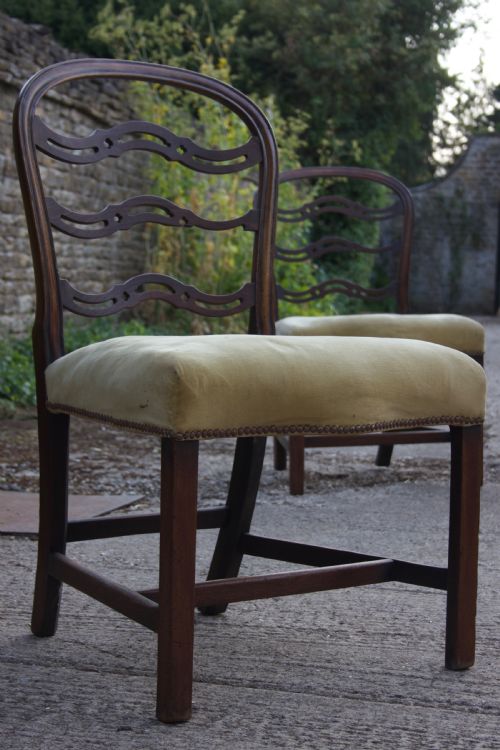
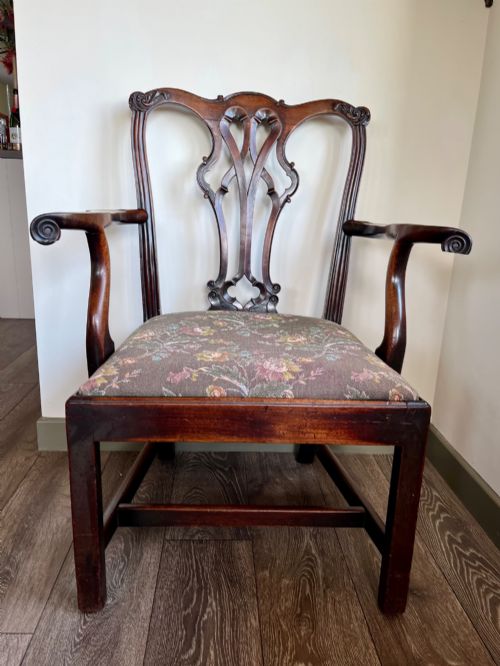
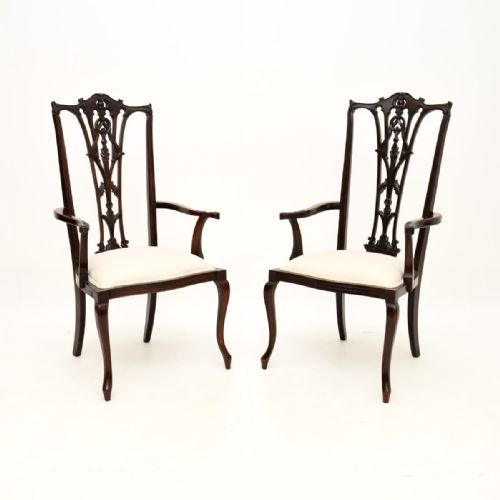
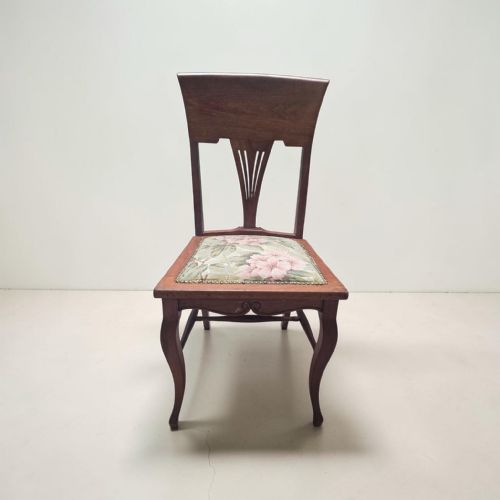
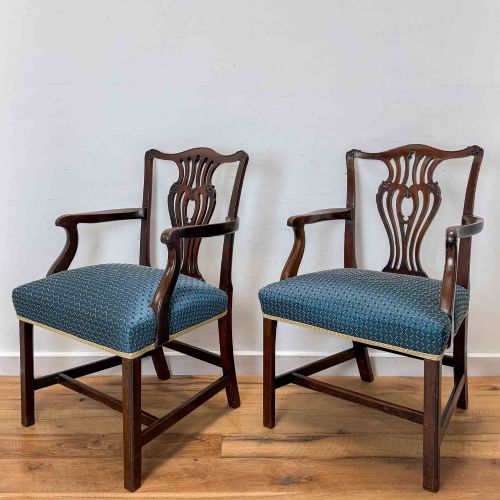
A pierced back mahogany chair is a seat constructed from dense tropical timber with an openwork splat or ladder design forming the centre of the backrest. The pieces appearing on this page span the Georgian era through to the Edwardian period and the early twentieth century, taking forms such as dining chairs, armchairs, side chairs, and settees.
Buyers most frequently encounter dining chairs offered in sets, alongside individual armchairs and salon seats. The stylistic lineage draws heavily on Chippendale and Georgian traditions, supplemented by revival interpretations from the nineteenth and twentieth centuries.
The functional roles of these chairs extend from formal dining arrangements to desk use, hall seating, and parlour placement. Regional variations such as Irish forms also emerge alongside standard English workshops.
How they were made
Makers utilised solid mahogany for the structural frames, legs, and intricately carved back splats, often combining the timber with fabric, leather, brass, velvet, and tapestry for the drop-in or upholstered seats. String inlay appears on specific Edwardian salon variants to decorate the mahogany surfaces.
Joinery techniques relied on mortise and tenon construction to join the uprights, rails, and seat frames securely. Carvers shaped the splats by hand, piercing the timber to create lattice, ladder, and interlaced patterns characteristic of the period styles.
One unexpected variant serves as an end-of-bed seat, turning a traditional chair back into a low bedroom bench.
What varies in quality
The distinction between tiers of work rests on the crispness of the hand carving within the pierced splat and the weight and grain of the mahogany timber. Superior examples display deep, sharp relief work on the top rail and cabriole legs, whereas lesser pieces show shallower, softer detailing.
Proportion and structural integrity dictate the standing of a chair, with robust joinery and balanced scaling separating standard commercial production from finer cabinet maker output.
Thomas Chippendale·Wheelers of Arncroach
The Pierced Back Mahogany Chair Glossary
- Pierced splat
- The central vertical slat of a chair back that is pierced or cut through to create an openwork decorative pattern. This feature defines the visual character of the chair.
- Chippendale style
- A furniture design vocabulary inspired by the mid-eighteenth-century pattern books of Thomas Chippendale. It incorporates carved ribbon backs, interlaced splats, and cabriole legs with ball and claw feet.
- Carver chair
- An armchair, typically designed as part of a dining set to sit at the head of the table. These pieces match the smaller side chairs in the set.
- Drop-in seat
- A removable seat frame upholstered over webbing or canvas that drops into the wooden rebate of the chair frame. It allows for straightforward reupholstery without dismantling the chair joints.
Pierced Back Mahogany Chair: Frequently Asked Questions
How do I date a mahogany chair?
Dating relies on examining the construction methods, timber characteristics, and stylistic traits aligned with periods from the eighteenth century to the early twentieth century.
Secondary woods, tool marks, and upholstery methods provide further clues to the decade of manufacture.
Were these chairs used only for dining?
While the majority function as dining chairs in sets of various sizes, many serve as desk chairs, hall chairs, or elbow chairs in morning rooms and bedrooms.
Individual salon chairs and settees were intended for reception rooms and parlours rather than dining tables.
What is the difference between Georgian and revival pieces?
Original Georgian pieces date from the eighteenth and early nineteenth centuries and show the wear and patina of active use over generations.
Revival pieces, produced during the Victorian and Edwardian eras, imitate these earlier styles using period machinery and nineteenth-century workshop practices.
How should I care for mahogany and upholstery?
Maintain the timber by avoiding direct sunlight and excessive heat, applying appropriate wax feeds sparingly to preserve the polish and grain.
Upholstery fabrics, leather, and tapestry require gentle vacuuming and professional cleaning to protect the textiles and internal stuffing.