
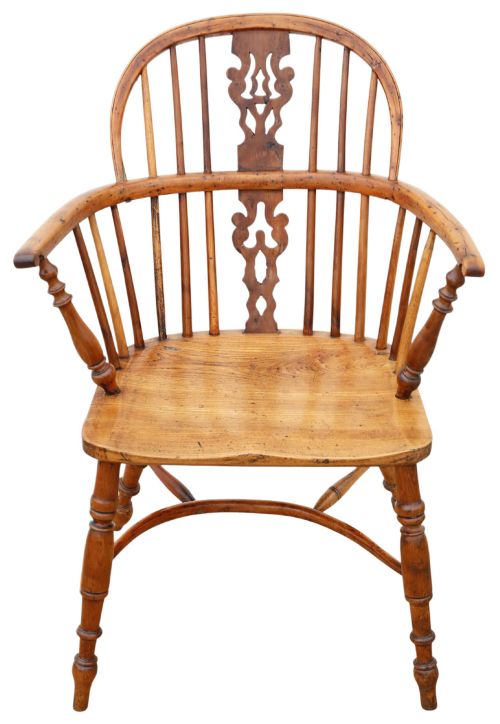
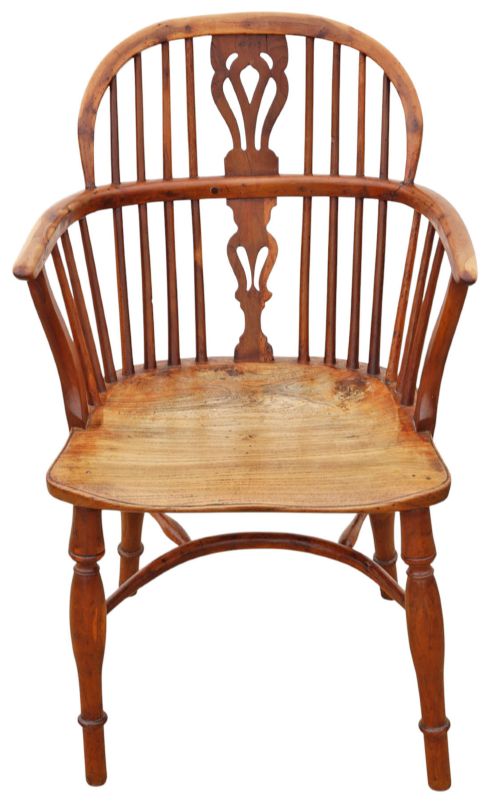
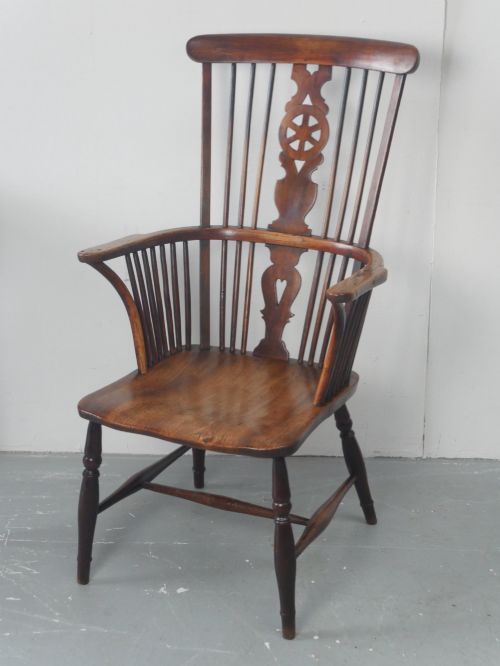
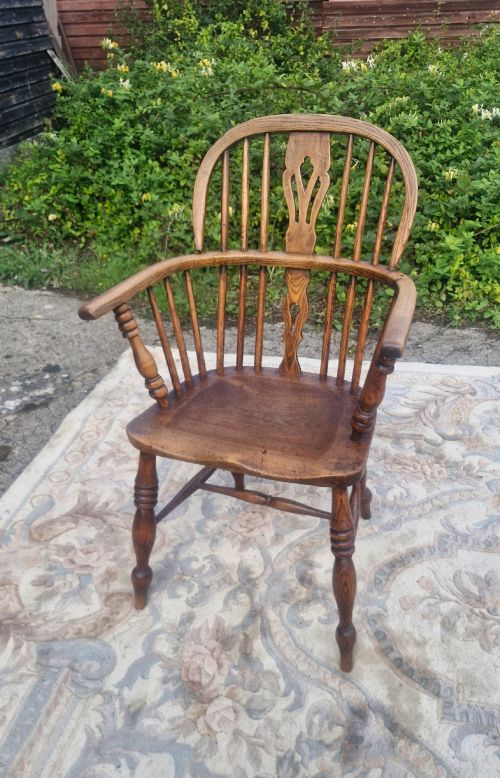


Pierced Back Desk Chairs
Pierced back desk chairs combine structural support with refined woodwork, offering practical seating suited to traditional writing spaces.
Pierced Back Desk Chairs
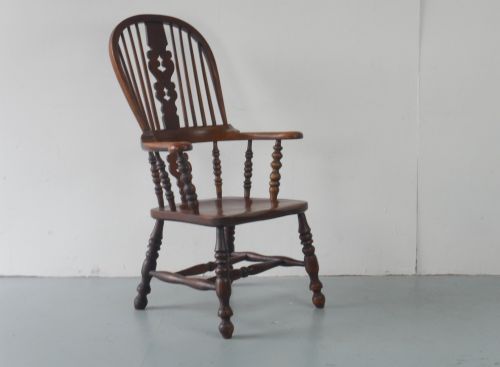
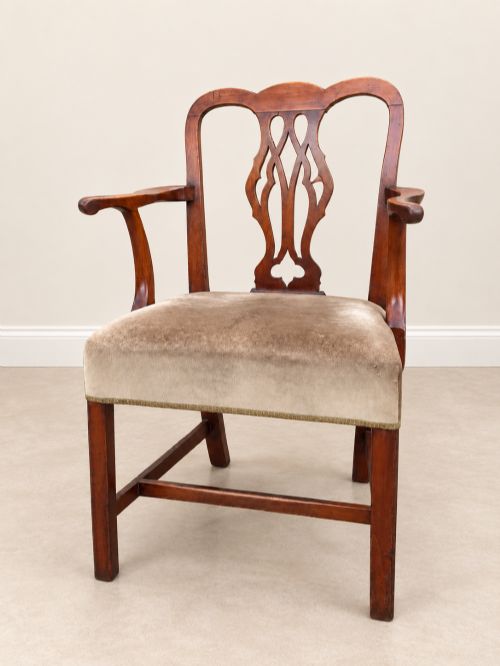
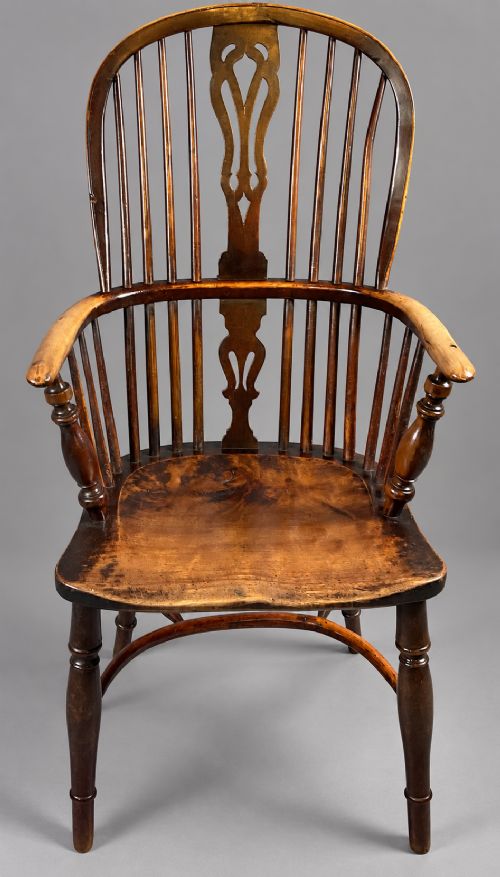
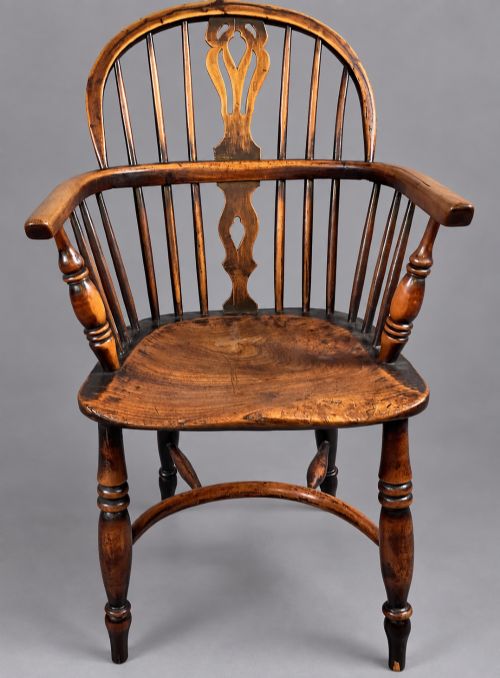
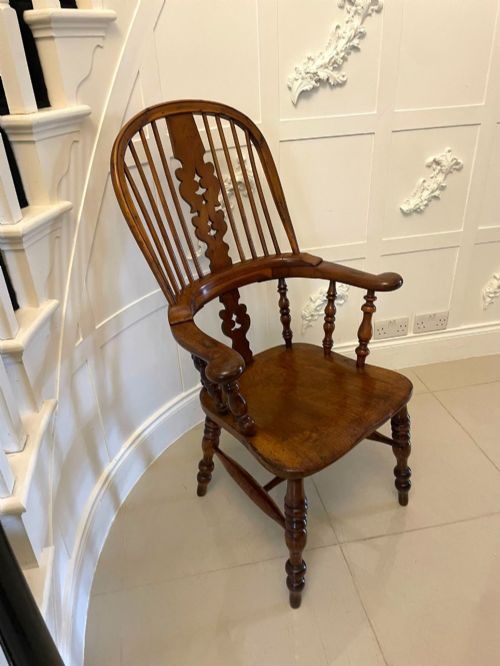
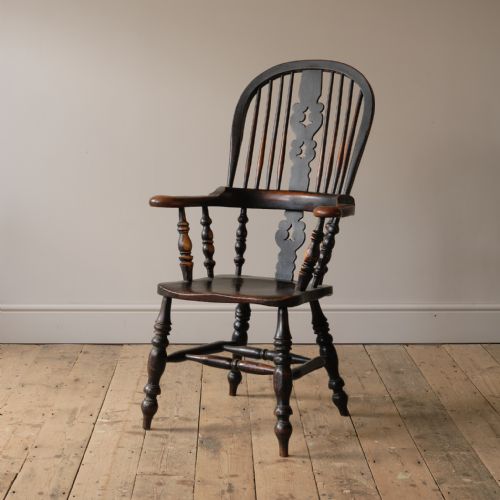
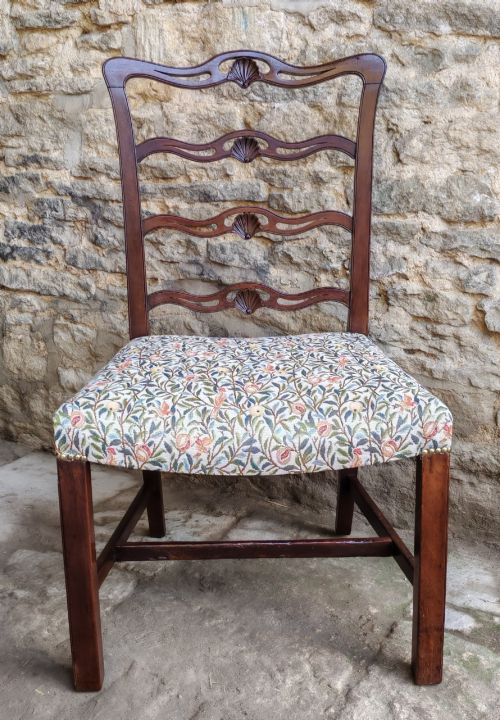
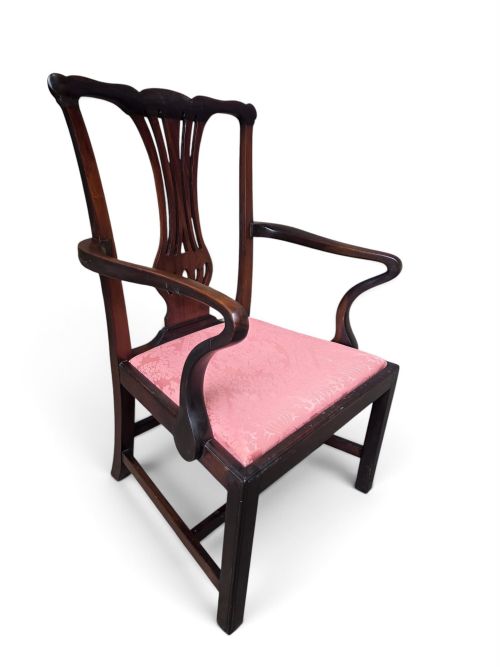
Pierced back desk chairs encompass a variety of seating forms, most frequently appearing as Windsor chairs and open armchairs originating from the eighteenth and nineteenth centuries. These include regional vernacular designs alongside formal styles influenced by Georgian and Chippendale aesthetics.
Originating from English country houses and workshops, these chairs serve as both functional desk seating and decorative antique furnishings. The forms span from simple spindle-back variants to elaborate wheel-back and comb-back constructions.
How they were made
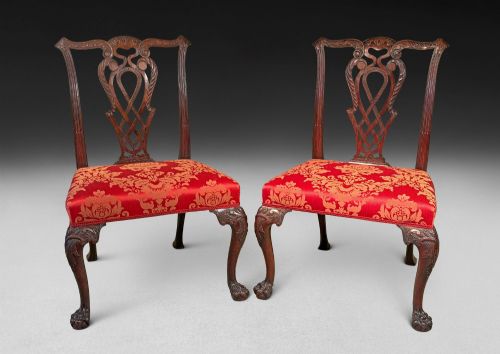
Makers utilised native timbers such as elm for solid seats, yew for striking grain patterns and bendable growth, and ash or beech for structural spindles and legs. Mahogany and walnut appeared in more formal urban workshops, shaped into carved ladderbacks and pierced splats.
Construction methods combined traditional joinery with Windsor framing techniques, where turned legs and back spindles locked directly into thick solid timber seats. Steam bending formed the continuous hooped backs and arm rails characteristic of vernacular seating.
Certain nineteenth-century workshop chairs retain visible adze marks on the underside of the seat, left by the maker's shaping tool.
What varies in quality
Quality rests upon the selection of timber, particularly the figuring in yew wood and the soundness of elm seats. Superior examples display crisp carving on pierced splats and well-proportioned turnings on legs and stretchers.
Structural integrity and originality dictate overall standard, distinguishing chairs retaining their original components from those altered or heavily restored over generations of use.
Gabbitass Worksop maker
The Pierced Back Desk Chairs Glossary
- Splater
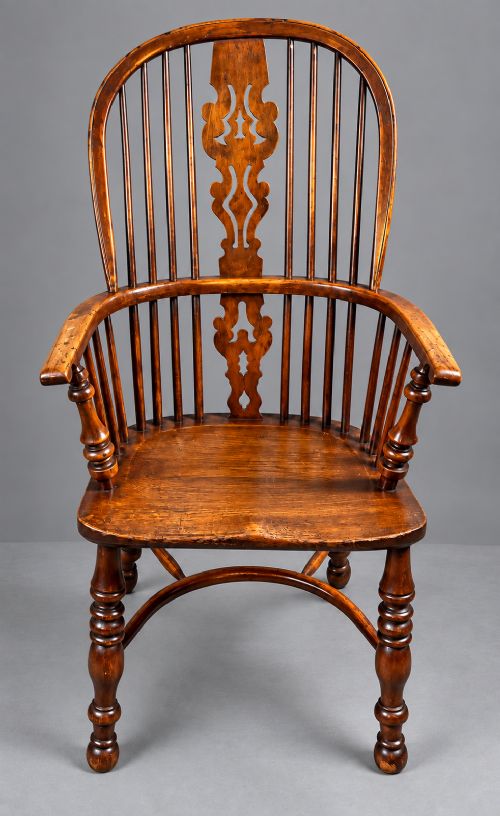
- The vertical central slat in a chair back, frequently pierced or carved into ornamental shapes.
- Windsor chair
- A chair built with a solid wooden seat into which the legs and back spindles are separately inserted.
- Comb back
- A Windsor chair variation where the top rail resembles a traditional hair comb, supported by vertical spindles rising from the arm rail.
- Crinoline stretcher
- An arched or bowed stretcher connecting the legs of a Windsor chair, providing lateral stability.
- Elbow chair
- An armchair designed with low arms, historically placed in parlours, bedrooms, or writing rooms.
Pierced Back Desk Chairs: Frequently Asked Questions
What is a pierced back desk chair?
A pierced back desk chair is a seating piece featuring a carved or cut-out wooden splat in the backrest, designed for use at a writing table or desk. These pieces span formal mahogany designs and vernacular wooden armchairs.
They combine decorative woodwork with practical ergonomics, offering sturdy support for daily writing tasks while displaying period craftsmanship.
How do I identify a Windsor chair?
Windsor chairs are defined by their construction method, having legs and back spindles fitted directly into a thick sculpted wooden seat rather than a traditional frame. They often feature bentwood hoops and turned components.
Materials commonly include elm seats paired with yew, ash, or beech for the upper framework and spindles.
Are these chairs comfortable for daily use?
These chairs provide supportive seating through ergonomically sculpted wooden seats and supportive back rails. Many vernacular examples were built specifically for prolonged sitting in studies and country houses.
Adding a loose pad or cushion can enhance comfort for modern desk use while preserving the antique timber surface.
How do I date an antique wooden chair?
Dating relies on identifying timber combinations, tool marks, construction techniques, and stylistic markers such as pierced splat designs or stretcher arrangements. Eighteenth-century models often feature finer mahogany carving, whereas nineteenth-century vernacular pieces utilise regional woods like elm and yew.
Examining the wear patterns on the seat and foot base helps confirm the age of the piece.