

Piecrust Top Occasional Table
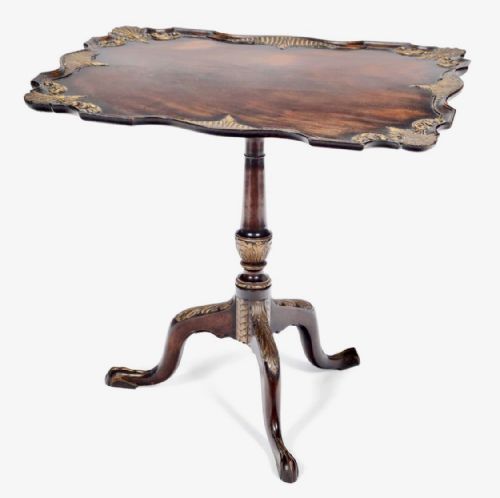
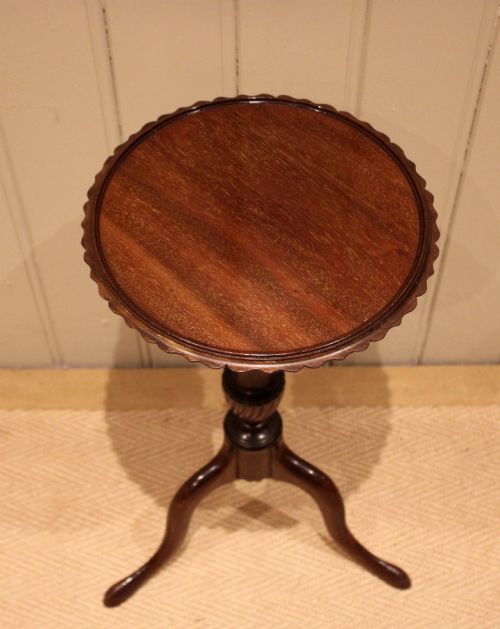
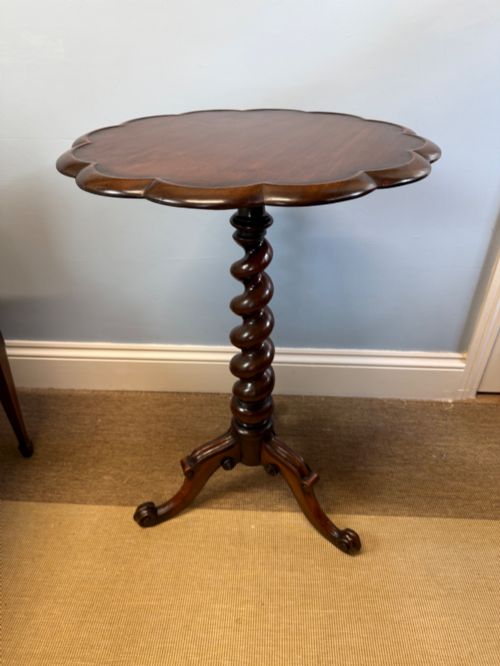
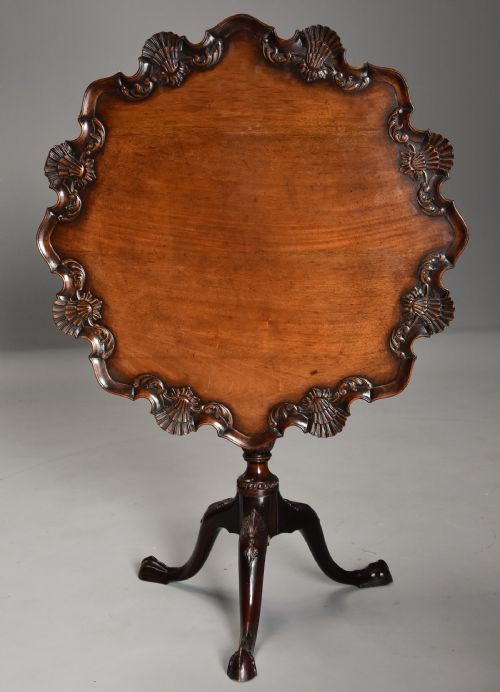
A piecrust top occasional table brings sculptural mahogany and carved edges to a room, offering a functional surface with distinctive period character.
Piecrust Top Occasional Table
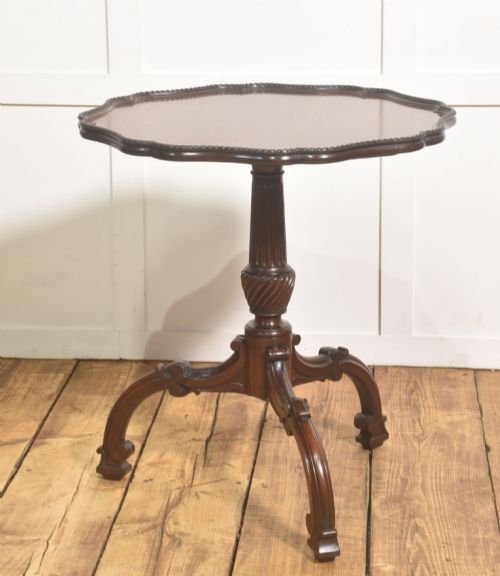
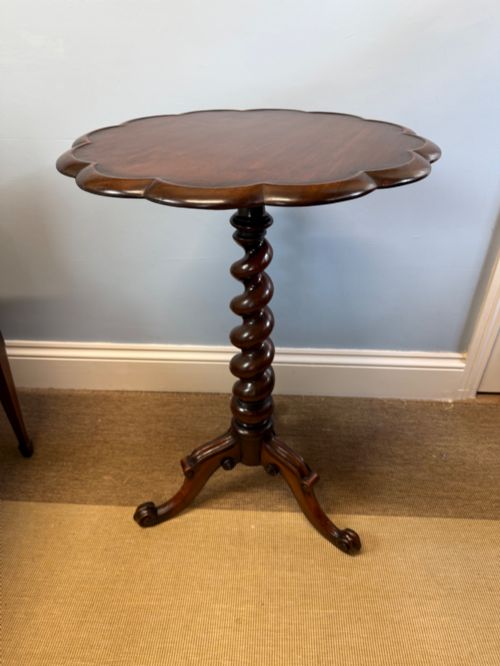
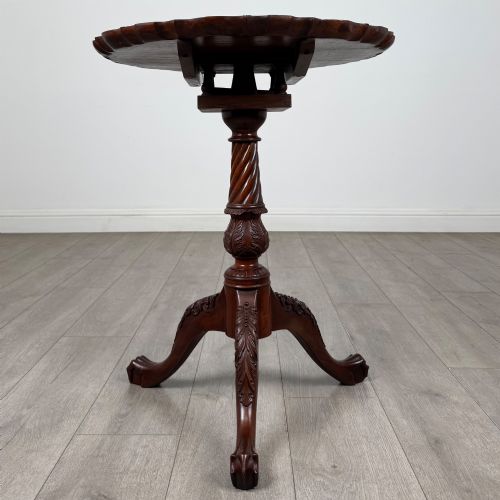
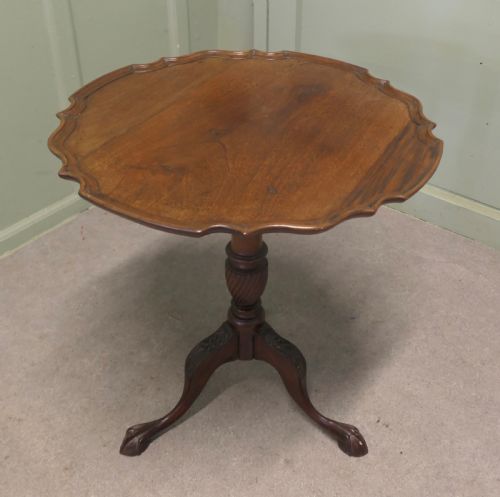
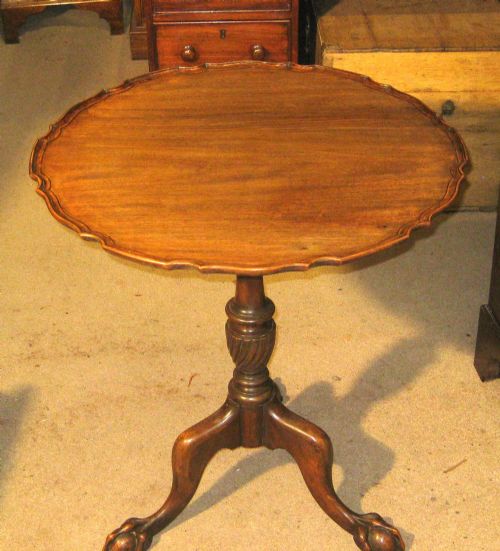
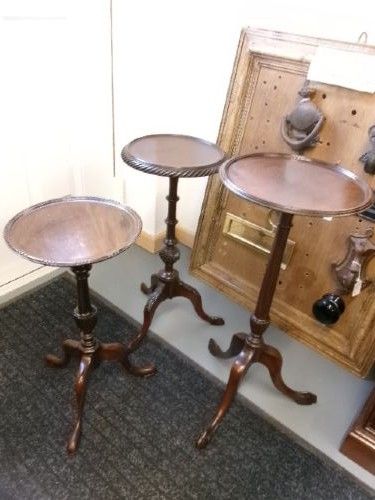
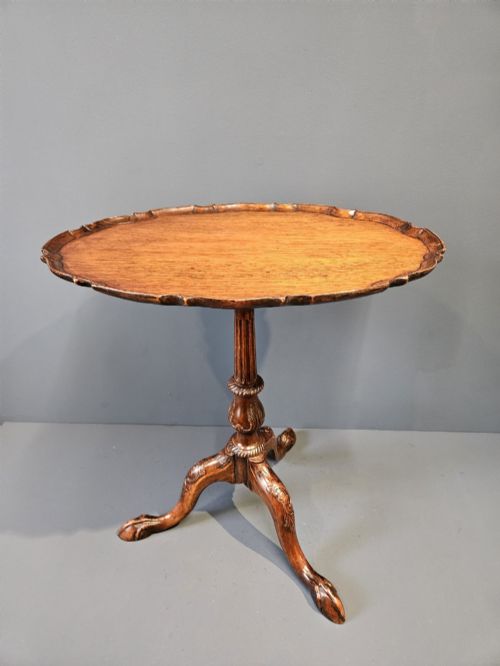
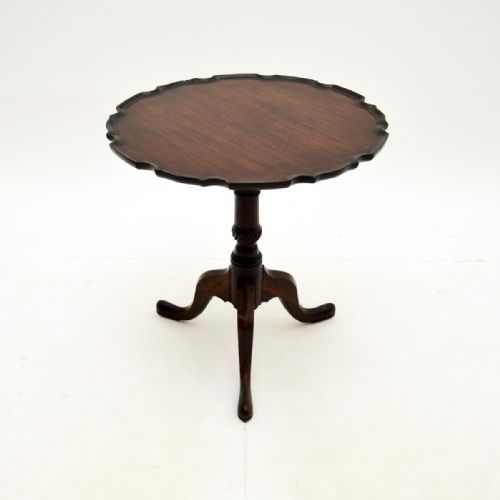
A piecrust top occasional table is a compact form designed for portability and display, appearing across 18th Century, Georgian, Victorian, and Edwardian periods. These pieces frequently function as wine tables, lamp tables, or tripod tables, supported by a central pillar above three cabriole legs.
Originating in earlier centuries and revived through Victorian and Edwardian periods, these occasional tables balance decorative carving with practical utility. Buyers find both authentic 18th Century George III pieces and later Chippendale style revivals sharing the same traditional silhouette.
Materials and construction methods
Makers primarily utilised solid mahogany and flame mahogany veneer, supplemented by burr walnut, oak, satinwood, and occasional parcel gilt highlights. The distinctive raised edge was traditionally carved directly from a thick solid timber blank rather than applied as a separate moulding.
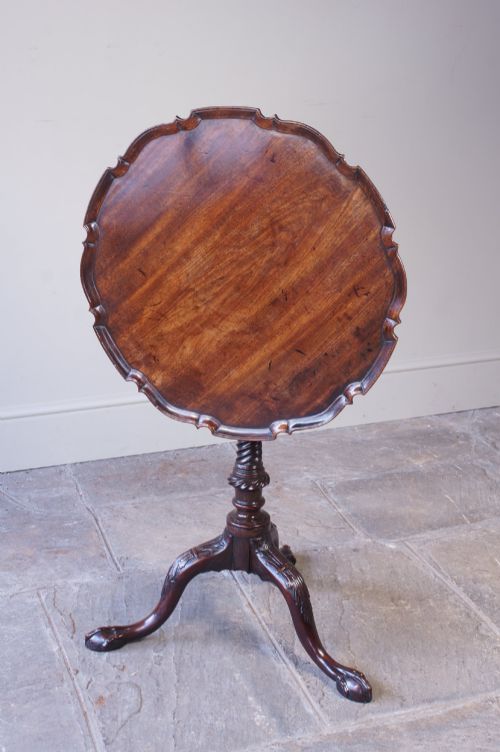
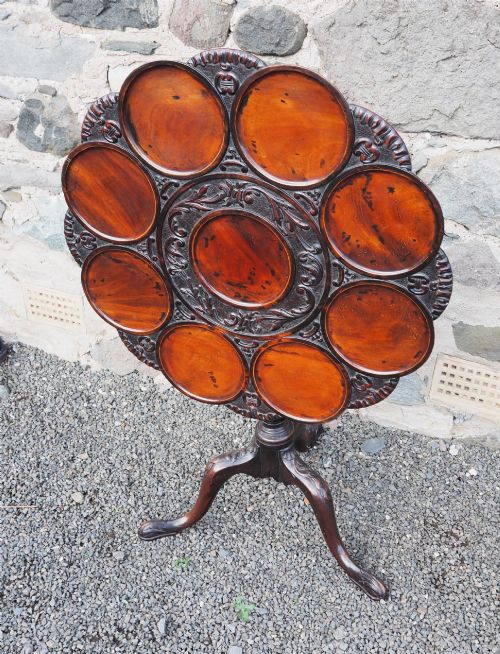
Tripod bases are joined to the central column using traditional cabinetry joints, while tilt-top examples often employ a wooden birdcage mechanism of pivoting blocks and a rotating catch. Brass fittings appear on specific mechanisms and castors, securing the moving parts of the table.
Listings feature examples spanning from George II and George III periods through Victorian, Edwardian, and early 20th Century revivals in mahogany, walnut, and oak.
Distinctions in construction and finish
Quality rests in the crispness of the carved edge and the depth of the timber's natural patina, distinguishing finely hand-carved 18th Century examples from later production. The proportion between the slender central column, the sweep of the tripod legs, and the top dictates the visual balance.
The precision of the tilt-top or birdcage mechanism determines mechanical integrity, ensuring the surface rests flat and locks securely without wobble. Superior pieces display carefully matched mahogany grain across the circular top and smooth articulation in every moving joint.
S & H Jewell London
The Piecrust Top Occasional Table Glossary
- Piecrust edge
- A raised, scalloped border carved around the perimeter of a tabletop in imitation of pastry crimping. This decorative moulding requires skilled hand-chiselling from the solid timber of the top.
- Tripod table
- A small freestanding table supported by a central pillar resting on three spreading legs. This form provides stable placement on uneven floors.
- Tilt-top mechanism
- A hinged joint beneath the tabletop allowing the surface to pivot upright for compact storage against a wall. It frequently pairs with a birdcage rotating block.
- Birdcage mechanism
- A box-like wooden frame beneath the tabletop containing rotating pivots and a catch. It allows the surface to both tilt and rotate independently of the column.
- Patina
- The deep surface sheen and mellow colour developed by aged wood through decades of handling and polishing. Original untouched surfaces display the most desirable depth.
Piecrust Top Occasional Table: Frequently Asked Questions
What is a birdcage mechanism on a table?
A birdcage is a small wooden assembly beneath the tabletop that permits the surface to both rotate horizontally and tilt vertically. This clever engineering allowed the table to be stored flat against a wall when not in use.
In period pieces, this mechanism operates smoothly using pegged joints and small wooden catches. It remains a hallmark of better-quality 18th Century and revival tripod tables.
How are piecrust edges made?
The scalloped border is painstakingly carved by hand from the solid timber of the tabletop rather than glued on in sections. Craftsmen use gouges and chisels to shape the undulating rim following the natural grain of the wood.
This labor-intensive technique results in crisp, individual curves that differ from machine-routed edges found in later reproductions. The depth of the carving varies according to the period and skill of the cabinetmaker.
Where should I place a wine table?
These compact pieces fit easily beside a reading chair, sofa, or in an empty corner where a larger surface would crowd the room. Their small footprint makes them ideal for holding a lamp, a glass, or a small decorative object.
Because many feature tilt-top mechanisms, you can also display the decorative carved top flat against a wall when the table is not actively holding items.
How do I tell an 18th Century table from a revival?
Dating relies on examining the timber species, construction joints, tool marks on the underside, and the quality of the hand-carving. Georgian pieces often show subtle asymmetries and shrinkage patterns consistent with aged mahogany.
Revival pieces from the Edwardian period or the early 20th Century adopt Chippendale styling with cleaner machine assistance and more uniform timber selection. Both hold distinct appeal depending on whether you seek historical age or decorative durability.