

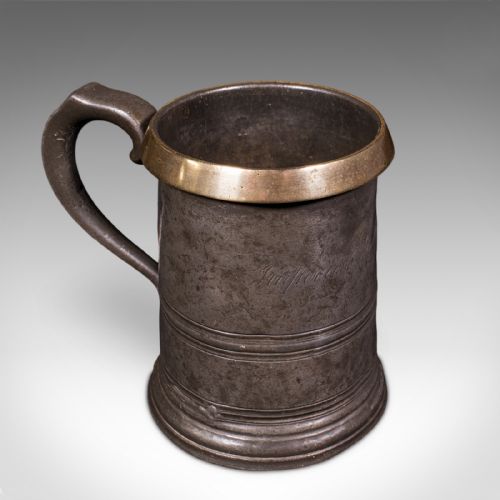
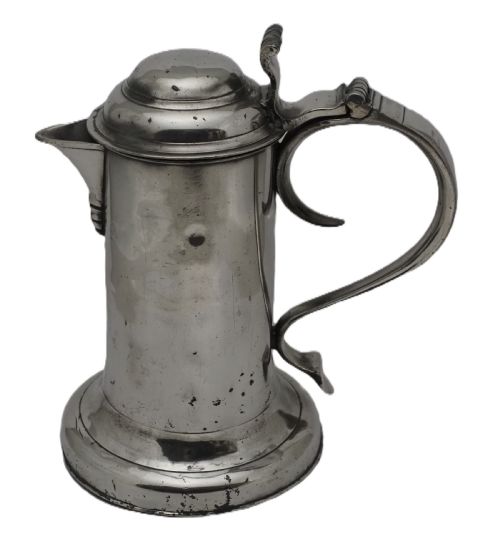


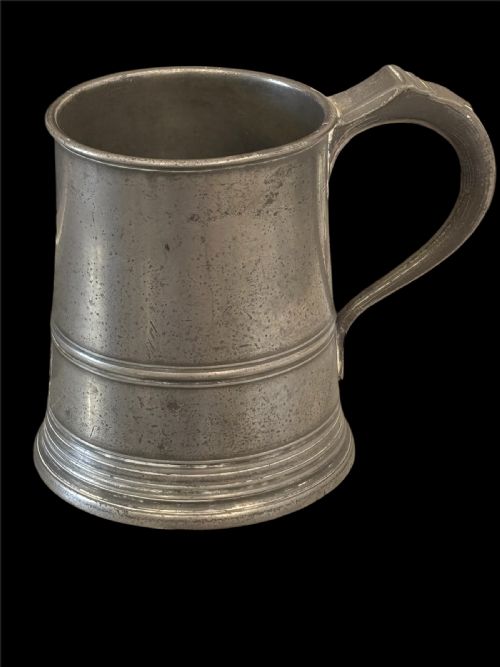


Pewter Tankard Vessel
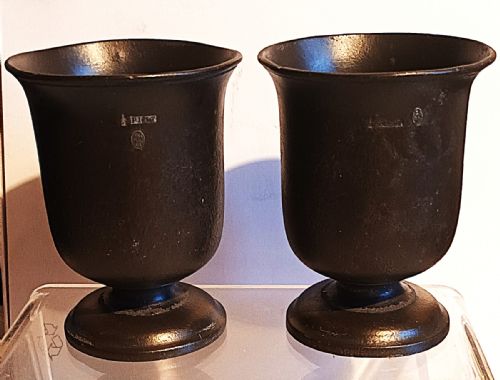
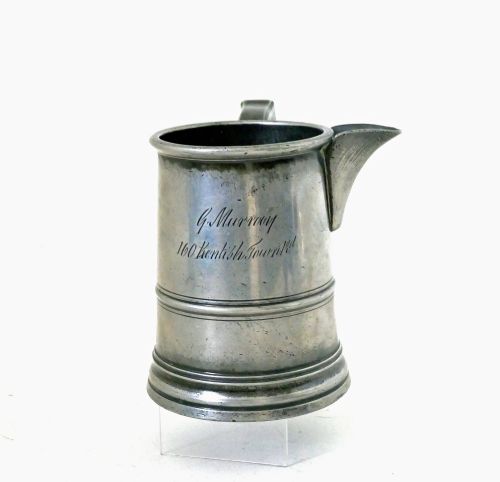
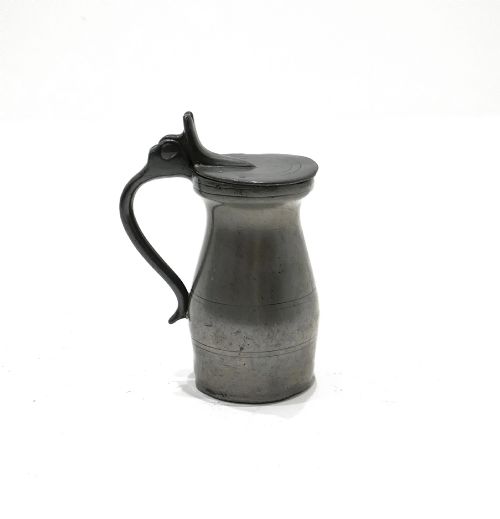
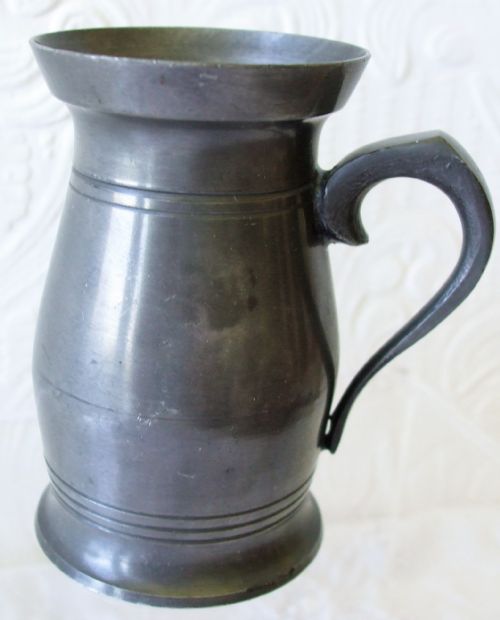
These pewter tankard vessel selections range from heavy Georgian pub quarts to slender Arts & Crafts designs.
Pewter Tankard Vessel
A pewter tankard vessel is a historic drinking vessel or measure designed for ale, spirits, and church services. When exploring these selections, you encounter forms spanning the eighteenth and nineteenth centuries.
The most common versions on this page are English and Irish tavern tankards, spirit measures, and church flagons. These pieces display periods from the Georgian era through to Edwardian Arts & Crafts designs.
Makers shaped these utilitarian containers with flat lids, dome lids, or spired profiles. Alongside standard pewter, the selections include pieces fashioned in Old Sheffield Plate and salt-glazed stoneware.
Materials and construction
Metalworkers formed these items primarily from pewter, incorporating copper, brass, and silver plate in specific designs. Craftsmen utilised casting and hammering techniques to build durable tavern and household containers.
Certain examples integrate salt-glazed stoneware bodies with applied cobalt decoration. Plated pieces combine base metals with fused silver sheets to achieve a polished finish.
Pewter Tankard Vessel Retail Price Guide 2026
Typical asking prices for pewter tankard vessel among the pieces listed under this phrase on Sellingantiques today, from the lower quarter to the upper quarter. They describe what is for sale here now, not the wider market.
Listings span the 18th century, 19th century, Georgian, Victorian, Edwardian, and 1900 periods, featuring pewter, copper, Old Sheffield Plate, brass, and stoneware.
Indicators of distinction
The standard of a pewter tankard vessel rests upon the crispness of its maker marks, the integrity of its soldering, and the weight of the metal. Heavier quart and pint jugs demonstrate substantial construction intended for rigorous public house use.
Artistic execution elevates specific pieces, particularly when prominent designers and silversmiths apply Celtic motifs, hops decoration, or precise engraving. The retention of original lids and measures preserves the historical utility of each item.
John Heaney of Dublin·Richard Morton·Archibald Knox for Liberty & Co·Robert Iles of London·Burgum & Catcott of Bristol
The Pewter Tankard Vessel Glossary
- Flagon
- A large drinking vessel or church vessel with a handle and lid. These containers frequently hold larger capacities such as pints, quarts, or half gallons.
- Spirit Measure
- A small vessel utilised for measuring alcoholic spirits accurately. These items often display pre-imperial capacities.
- Old Sheffield Plated
- A composite material created by fusing a thin layer of silver onto a copper base. This technique produced tableware mirroring solid silver items.
- Spire Flagon
- A tall vessel featuring a distinctive tapering lid profile. These items date predominantly to the eighteenth century.
Pewter Tankard Vessel: Frequently Asked Questions
How do I date an old pewter tankard?
Dating relies upon stylistic markers such as lid shapes, capacity stamps, and maker marks stamped into the metal.
Changes in handle design and body proportions across the eighteenth and nineteenth centuries further help place pieces into periods like the Georgian era.
What capacity did these vessels hold?
These drinking vessels and measures were produced in various sizes including half gills, pints, quarts, and half gallons.
Some pieces bear pre-imperial capacity markings relating to specific regional measurement standards.
Where were these metal vessels made?
The pieces originate primarily from English, Irish, and German workshops and foundries.
Urban centres such as London, Bristol, and Dublin produced many of the tavern tankards and church flagons seen here.
How were church flagons used?
Church flagons served to hold sacramental wine during ecclesiastical services in parish settings.
These large vessels often featured spired lids and substantial handles for pouring into smaller chalices.