


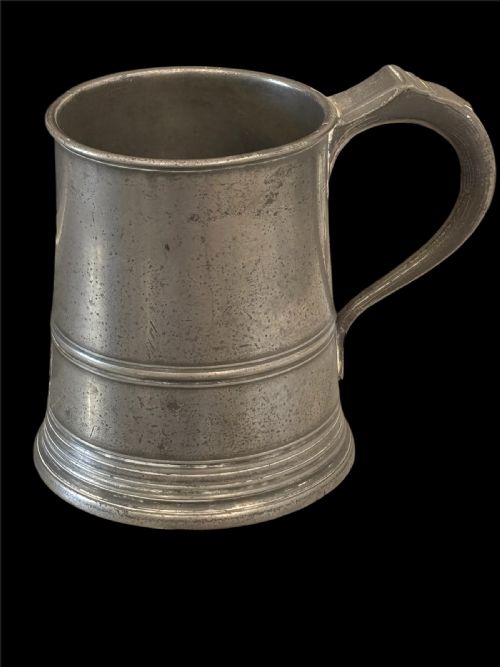

Pewter Ale Tankard
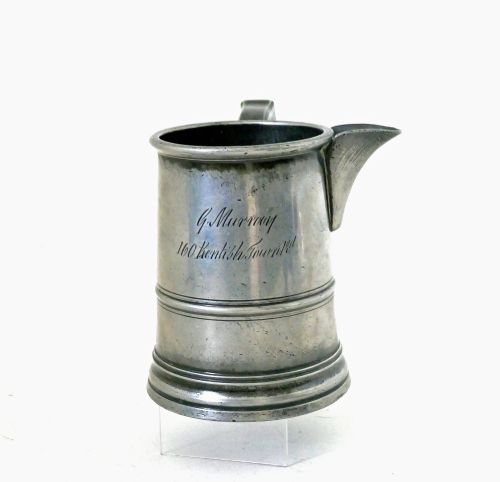
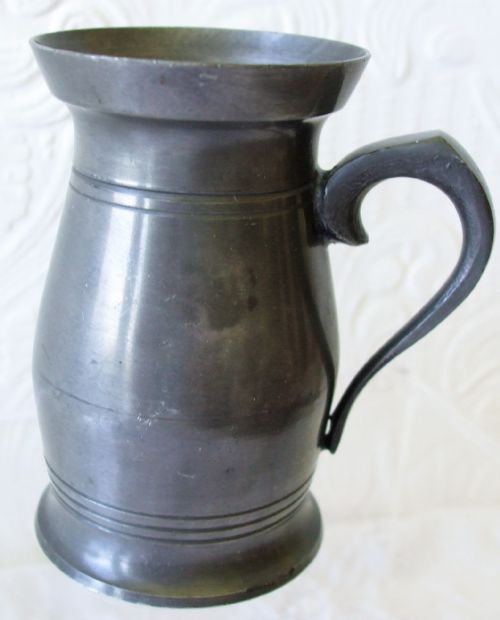
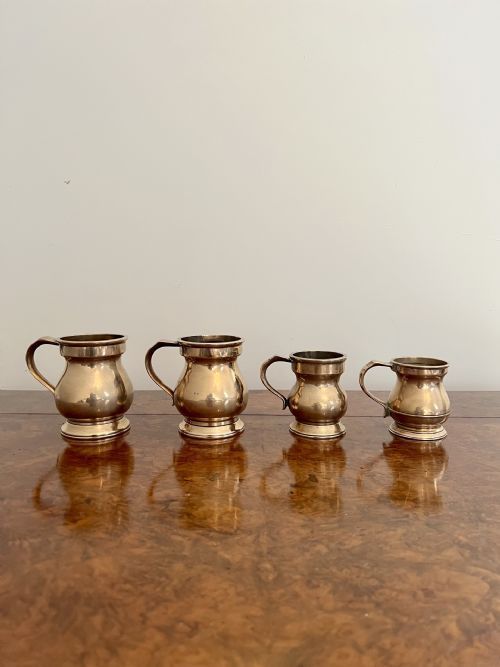
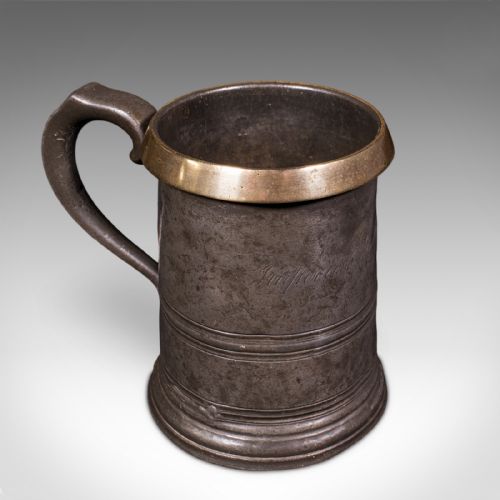
These pewter ale tankard examples range from tavern measures to heavy Georgian vessels, offering a direct connection to historic drinking customs.
Pewter Ale Tankard
A pewter ale tankard is a drinking vessel designed for serving and consuming beer, typically featuring a sturdy body, handle, and sometimes a lid. These items appear across several centuries, including Georgian and Victorian eras, reflecting the changing drinking habits of public houses and private homes alike.
The most common version met on this page is the English or Scottish measure, often stamped with capacity marks such as pint or quart. Alongside traditional tankards, related forms like gill measures, spouted spire flagons, and bell-shaped vessels appear frequently.
Origins vary from English workshops to Scottish foundries, with occasional German faience and Old Sheffield Plated alternatives appearing in the selection. Buyers will encounter both plain tavern workhorses and engraved pieces bearing personal names or public house details.
How they were made
Pewter forms the primary material of these vessels, alloyed mainly from tin with proportions of lead, copper, or antimony to achieve the right balance of malleability and strength. Metalworkers shaped these sheets and castings by hand or lathe, soldering components together to form the body and handle.
Alternative materials in the evidence include Old Sheffield Plate, copper, brass, and tin-glazed earthenware, each requiring distinct smithing or ceramic techniques. Plated pieces combine a copper base fused with a thin sheet of silver, while earthenware versions involve high-temperature kiln firing and polychrome glazing.
Object types range from standard pint and quart tavern measures to spouted spire flagons and Scottish tappit hens.
What varies in quality
Subtleties of gauge and weight distinguish superior vessels from lesser ones, with heavier metal thickness providing structural integrity and longevity. Master makers imparted balanced proportions and clean lines that remain pleasing to the eye, whereas hurried production yields clumsy joins and awkward proportions.
Crispness of touchmarks and capacity stamps indicates the standard of the workshop that produced the vessel. Engraved decoration also varies significantly in execution, ranging from deeply cut initials to shallow, mechanical scratch work.
Frederic Sanders·Thomas Phillips I·Watts and Harton·Richard Morton
The Pewter Ale Tankard Glossary
- Pewter
- A malleable metal alloy consisting principally of tin, historically used for tableware and drinking vessels. Its low melting point made it ideal for casting and shaping.
- Quart
- A unit of liquid capacity equal to two pints, frequently stamped on public house tankards. Quart vessels provided substantial service in busy taverns.
- Old Sheffield Plate
- A material made by fusing a thin sheet of silver to a thicker copper base under heat. This technique predates modern electroplating and produces a rich, warm surface.
- Touchmark
- An official stamp or signature pressed into metalwork by a maker or guild to guarantee standard and origin. These marks help historians attribute pieces to specific workshops.
- Tappit Hen
- A traditional Scottish form of pewter measure with a specific bulbous body and a lid topped by a knob. They held considerable volumes of ale.
Pewter Ale Tankard: Frequently Asked Questions
What is a pewter ale tankard?
A pewter ale tankard is a historic drinking vessel made primarily from a tin alloy, designed for holding and serving beer. These vessels were everyday utensils in homes and public houses.
They often feature specific capacity markings and sturdy handles for regular use.
How were capacity marks used?
Capacity marks like pint or quart ensured customers received accurate measures of ale in busy taverns. Inspectors stamped these vessels to guarantee honesty in trade.
Crown stamps and verification letters help modern buyers date the period of use.
Can I drink from a pewter ale tankard?
Many historic vessels contain lead in the pewter alloy, which can leach into acidic liquids like beer over time. Modern food safety standards advise caution with antique metalware.
Displaying them as decorative antiques remains the safest approach for older pieces.
How do I care for pewter?
Pewter requires gentle cleaning with mild soap and warm water, followed by immediate drying to prevent spotting. Harsh abrasives will scratch the soft metal surface and ruin the patina.
Natural oxidation often enhances the appearance and should not be aggressively scrubbed away.