



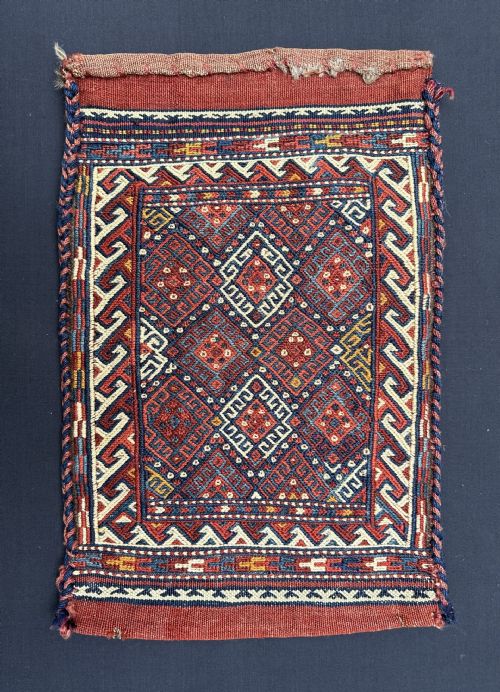
Persian Tribal Bagface
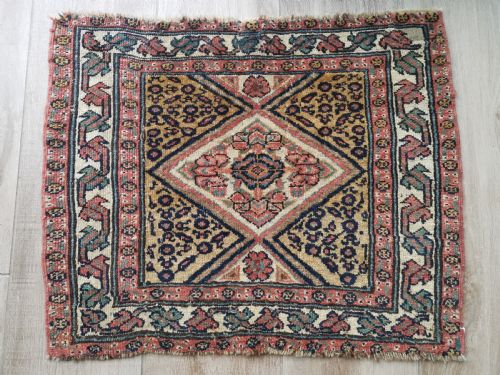
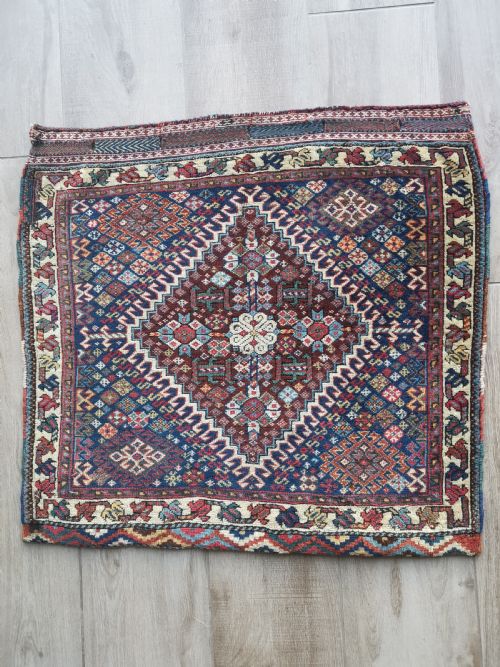
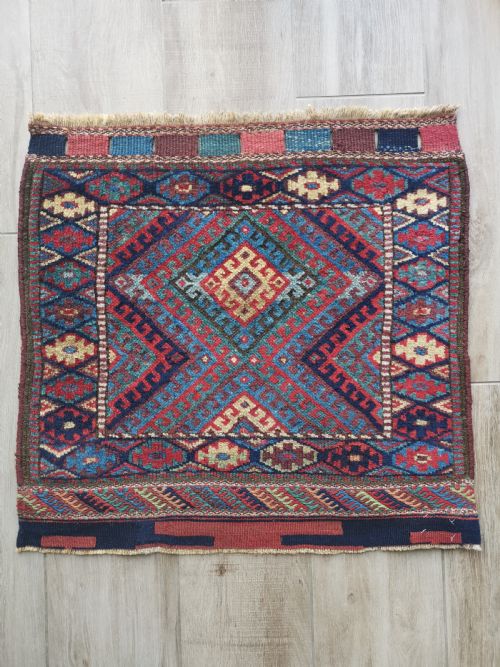
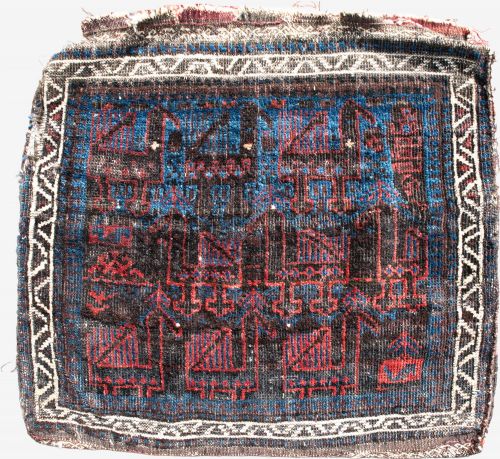
These persian tribal bagface textiles are woven fronts of nomadic pouches, prized for their bold wool knotting and authentic village character.
Persian Tribal Bagface
A persian tribal bagface represents the surviving front panel of a larger nomadic storage pouch or saddlebag, retaining the dense pile and original design intended for daily utility. These portable textiles reflect the weaving traditions of various tribal groups moving across the region, from western valleys to north-eastern provinces.
Most examples found on this page date from the nineteenth century up to the early twentieth century, spanning periods such as 1890, 1900, and 1920. Collectors encounter specific regional forms including Qashqai, Baluch bird bags, Jaf Kurd pieces, Khamseh saddlebags, and Kurdish tubreh from Khorassan.
Makers fashioned these works as functional objects for camp storage and transport before separating the decorative faces for preservation as independent decorative textiles. The formats range from square panels to double-faced saddle bags and adapted cushions.
Materials and construction
Weavers utilised hand-spun wool and standard wool pile knotted onto sturdy cotton or wool foundations, often framing the edges with goat hair for added durability. Natural dyes provide the enduring palette of these nomadic weavings, developing rich patinas over generations.
The construction relies on tight hand-woven knotting techniques executed on portable horizontal looms set up in nomadic camps. Artisans incorporated structural elements like reinforced selvedges and flat-woven backs to withstand the rigours of transport and daily camp life.
Persian Tribal Bagface Retail Price Guide 2026
Typical asking prices for persian tribal bagface among the pieces listed under this phrase on Sellingantiques today, from the lower quarter to the upper quarter. They describe what is for sale here now, not the wider market.
Listings feature periods from the nineteenth century through to 1920, utilising wool, cotton, goat hair, and natural dyes.
Assessing quality and character
The standard of a persian tribal bagface depends on the crispness of the tribal motifs, the saturation of the natural dyes, and the fineness of the wool knotting. Superior pieces display balanced tribal iconography, such as bird or geometric motifs, executed with precise hand-spun materials.
Integrity of the surviving structure separates standard fragments from exceptional complete faces. Better examples retain their original borders and robust pile without heavy intervention, while lesser specimens show significant loss to the foundational weave.
The Persian Tribal Bagface Glossary
- Bagface
- The decorative front panel of a nomadic storage pouch or saddlebag. This section preserves the primary knotted-pile design while the plain-weave back and sides are typically lost.
- Tubreh
- A traditional Persian term for a small bag or wallet used by pastoral tribes. These portable carriers served practical storage functions during seasonal migrations.
- Natural Dyes
- Colourants derived from plants, insects, and minerals utilised before synthetic alternatives became widespread. They yield complex, shifting tones that age gracefully over time.
- Khamseh
- A confederation of five distinct tribes in south-western Persia known for distinctive dark wool foundations and bold geometric compositions. Their textiles bridge Persian and tribal aesthetic traditions.
Persian Tribal Bagface: Frequently Asked Questions
What is a persian tribal bagface?
A persian tribal bagface is the surviving decorative front panel of a nomadic utility pouch or saddlebag. These pieces were separated from their original plain-weave backs to be used as small wall hangings or decorative mats.
Nomadic weavers created them for personal camp use rather than export, resulting in authentic, uncompromised designs reflecting specific tribal traditions.
How were these bags used originally?
Pastoral nomads utilised these pouches for storing household goods, grains, and personal possessions during seasonal migrations. They were mounted on pack animals or hung inside tents as durable containers.
Over time, heavy wear on the back sections led to the retention and preservation of the sturdy knotted-pile fronts as independent textile art.
How do I care for a tribal textile?
Protect these wool textiles from direct sunlight to prevent natural dye fading and vacuum them gently with a mesh screen covering the nozzle. Avoid abrasive cleaning methods and keep the pieces in stable, dry environments.
Professional textile conservation is recommended for any major structural support or deep cleaning needs.
How are different tribal origins identified?
Identification relies on observing specific wool types, knotting structures, colour palettes, and characteristic tribal motifs. For instance, pieces from north-eastern regions like Khorassan exhibit different structural traits compared to south-western Qashqai or Khamseh works.
Comparing border designs and secondary foundation colours helps confirm the specific group of origin.