


Persian Tree of Life Rug
A persian tree of life rug brings centuries of symbolic botanical weaving into your home, offering rich narrative scenes rendered in wool, cotton and silk.
Persian Tree of Life Rug
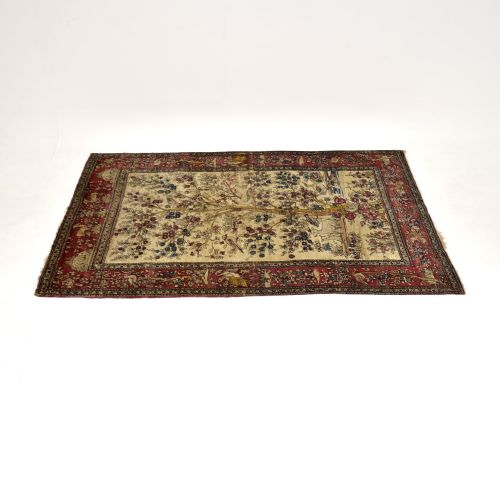
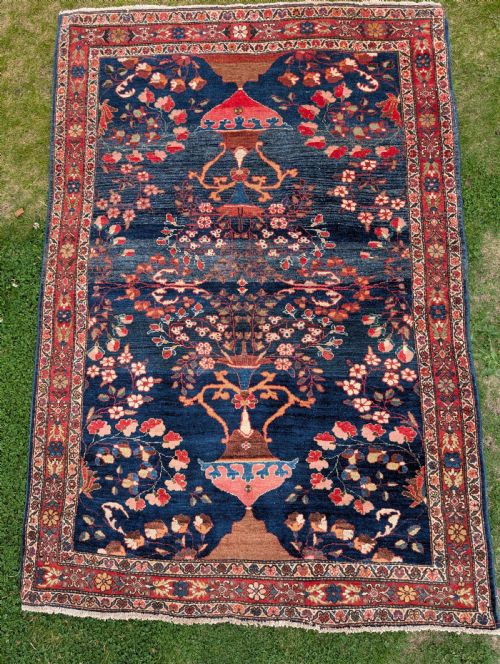
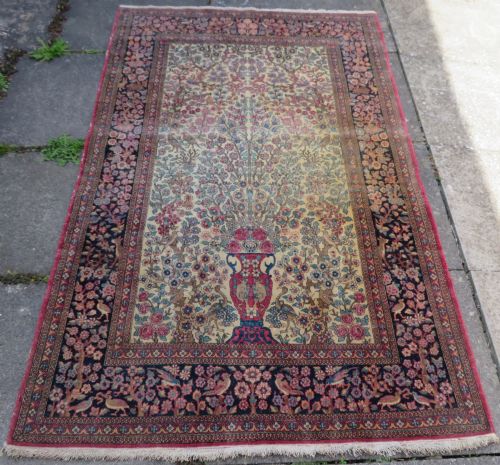
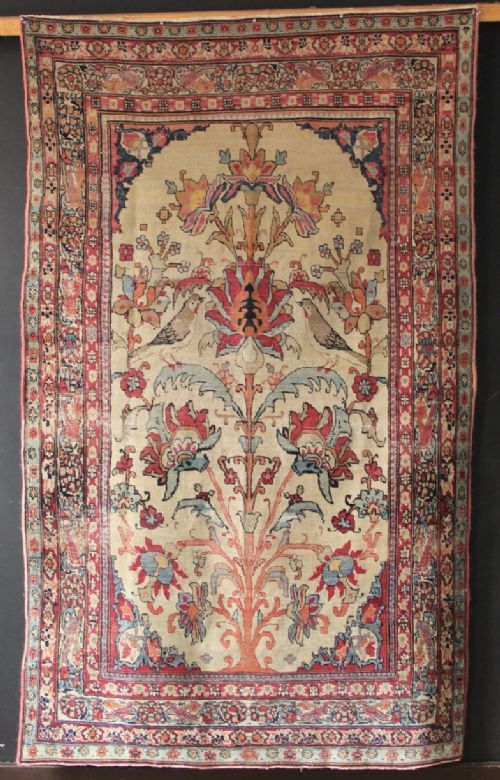
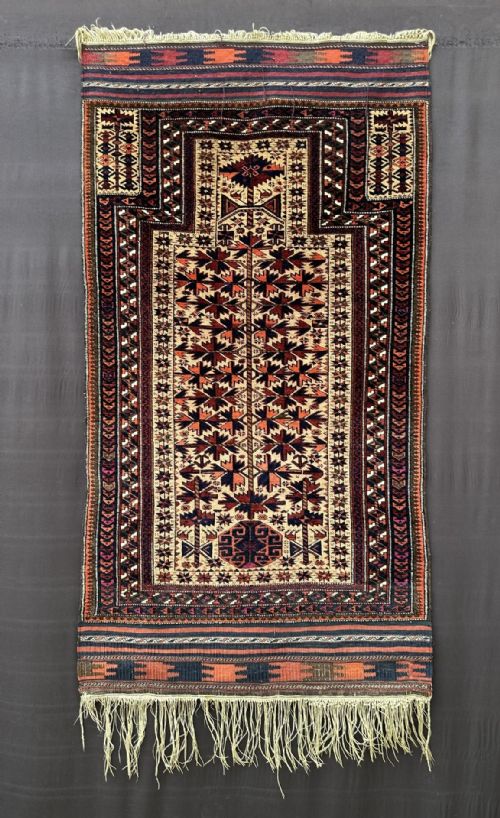
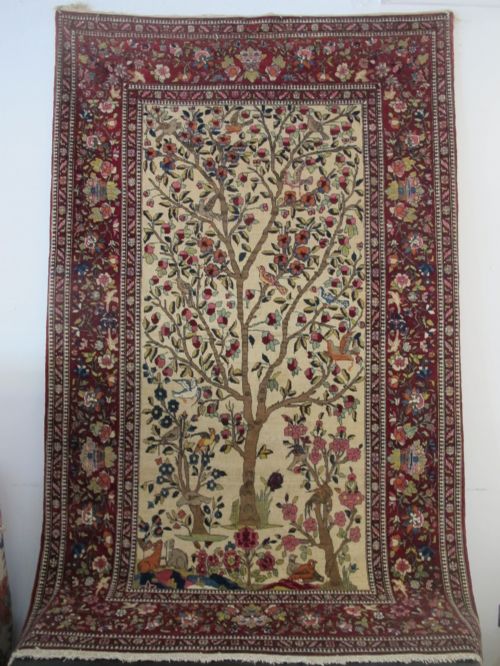
The persian tree of life rug centres on an arboreal motif symbolising growth, eternity and paradise, frequently populated by birds, floral vases and intricate branches. These pieces span production years from the late nineteenth century through to the early decades of the twentieth century, capturing regional weaving traditions across Persia.
You will encounter various forms on this page, including country house Isfahan carpets, Baluch examples from East Persia, Kirman carpets, Neyriz rugs and Kashan prayer rugs. Regional aesthetics dictate whether a piece leans towards tribal simplicity or refined pictorial detail.
The scale ranges from intimate village formats like the Baluch rug to larger country house proportions. Each format serves different spatial requirements while maintaining the core arboreal symbolism.
Materials and construction
Weavers construct these textiles using wool, cotton and silk, combining flexible foundations with resilient pile. Hand-weaving techniques allow for complex curvilinear and geometric interpretations of the central botanical theme.
Natural fibres absorb dyes unevenly over time, creating abrash and subtle tonal shifts across the field. Foundation warps of cotton or wool provide structural stability for the detailed pictorial designs.
Persian Tree of Life Rug Retail Price Guide 2026
Typical asking prices for persian tree of life rug among the pieces listed under this phrase on Sellingantiques today, from the lower quarter to the upper quarter. They describe what is for sale here now, not the wider market.
The listings show production dates spanning from eighteen seventy to nineteen thirty, utilising wool, cotton and silk.
Distinctions in quality
Quality reveals itself in the density of the knotting and the precision of the pictorial rendering, particularly in how sharply the branches and floral motifs resolve against the ground. Finer urban workshops achieve greater illustrative clarity than simpler village or tribal counterparts.
The nuance of the dye palette and the integrity of the material handle separate the standard output from exceptional pictorial and prayer rugs. Superior pieces retain crisp compositional balance and harmonious colour saturation throughout the field.
The Persian Tree of Life Rug Glossary
- Abrash
- Natural variations in rug pile colour caused by shifts in dye batches during production. This irregularity is a hallmark of hand-dyed traditional textiles.
- Prayer rug
- A small textile featuring a mihrab or niche design, traditionally used for daily devotions. The design directs the eye towards a focal point.
- Pile
- The upright yarn loops or tufts that form the usable surface of the carpet. The height and density determine the tactile feel.
- Warp
- The stationary vertical threads stretched across the loom that form the structural skeleton of the rug. Wefts are interwoven across these threads.
Persian Tree of Life Rug: Frequently Asked Questions
What is a tree of life design?
The tree of life is an ancient symbolic motif representing creation, fertility and the connection between earth and heaven. In these textiles, it manifests as a central branching tree often surrounded by floral or faunal elements.
Weavers across different regions interpret the motif through their local artistic lens, ranging from stylized tribal geometry to highly detailed pictorial representations.
How do I care for an old rug?
Protect the textile by placing it in low-traffic areas away from direct sunlight to prevent fibre degradation and fading. Vacuum gently with suction only, avoiding the rotating brush bars that can damage old pile.
Professional cleaning tailored to antique natural fibres ensures the wool, cotton or silk remains supple without stripping the historical dyes.
Where were these rugs made?
Production spans various Persian centres and regions, including Isfahan, Kirman, Neyriz, Kashan and East Persia. Each area developed distinct weaving characteristics based on local materials and cultural influences.
Urban workshops focused on refined pictorial detail, whereas tribal groups such as the Baluch produced more geometric and direct interpretations.
How do I date these pieces?
Dating relies on stylistic analysis, material assessment and structural examination rather than single indicators. Pieces on this record date from the late nineteenth century through the early decades of the twentieth century.
Changes in synthetic versus natural dye use, weave density and regional design evolution help narrow down the period of manufacture.