








Persian Serapi Carpet
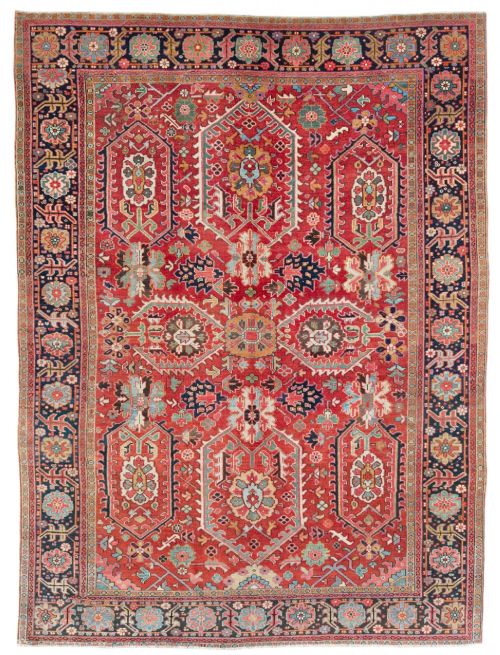
These heavy hand-knotted floor coverings offer bold geometric medallion patterns designed to anchor a room.
Persian Serapi Carpet
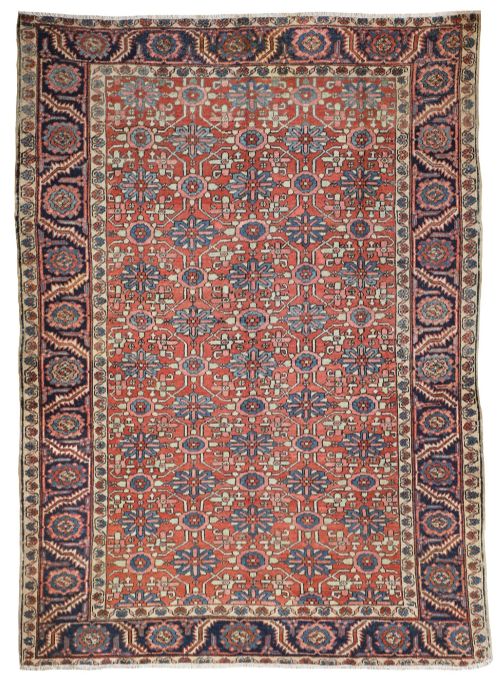
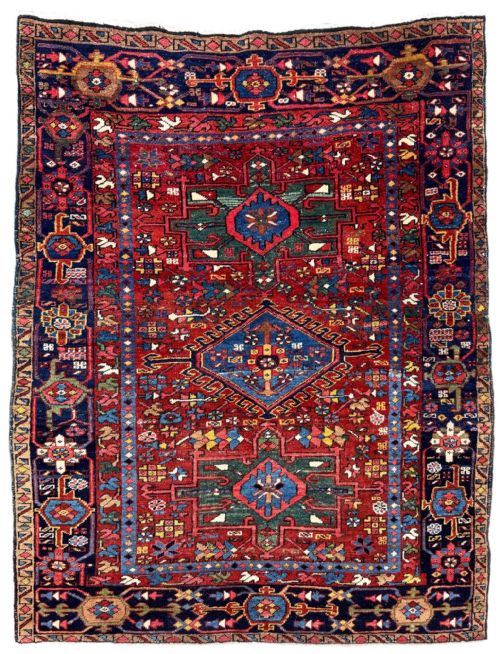
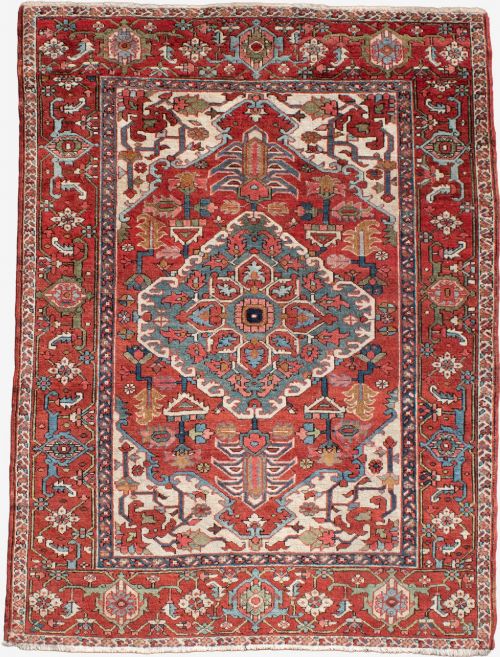
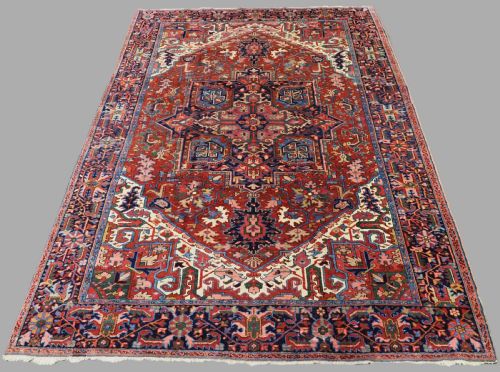
A persian serapi carpet is a distinct type of large-scale woven floor covering originating from the Northwest Persian region of Heriz, frequently catalogued under traditional Persian styles. These pieces range from substantial gallery carpets down to smaller area rugs and hallway runners, spanning production dates from the mid-nineteenth century through the early twentieth century.
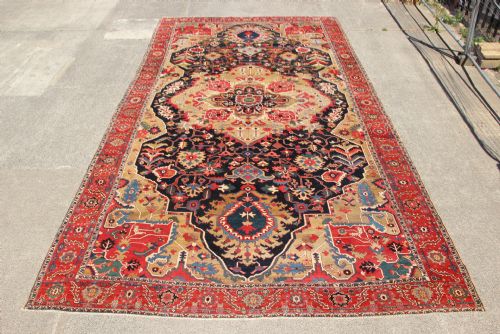
Buyers browsing this selection will encounter numerous examples simply titled as Heriz alongside specific Serapi pieces, reflecting the close stylistic overlap between the two village traditions. The forms include grand room-sized carpets measuring over six metres alongside narrow runners and square formats, all sharing the characteristic tribal and geometric composition associated with the region.
How they were made
The construction relies upon sturdy cotton foundations for the warps and wefts, providing the dimensional stability required for room-sized carpets. Thick wool is then hand-knotted onto this grid to form the dense pile, ensuring durability under heavy foot traffic.
Weavers utilised natural dyes to achieve the characteristic rich colour palette seen across these nineteenth and early twentieth-century pieces, building up geometric motifs and central medallions through traditional village techniques.
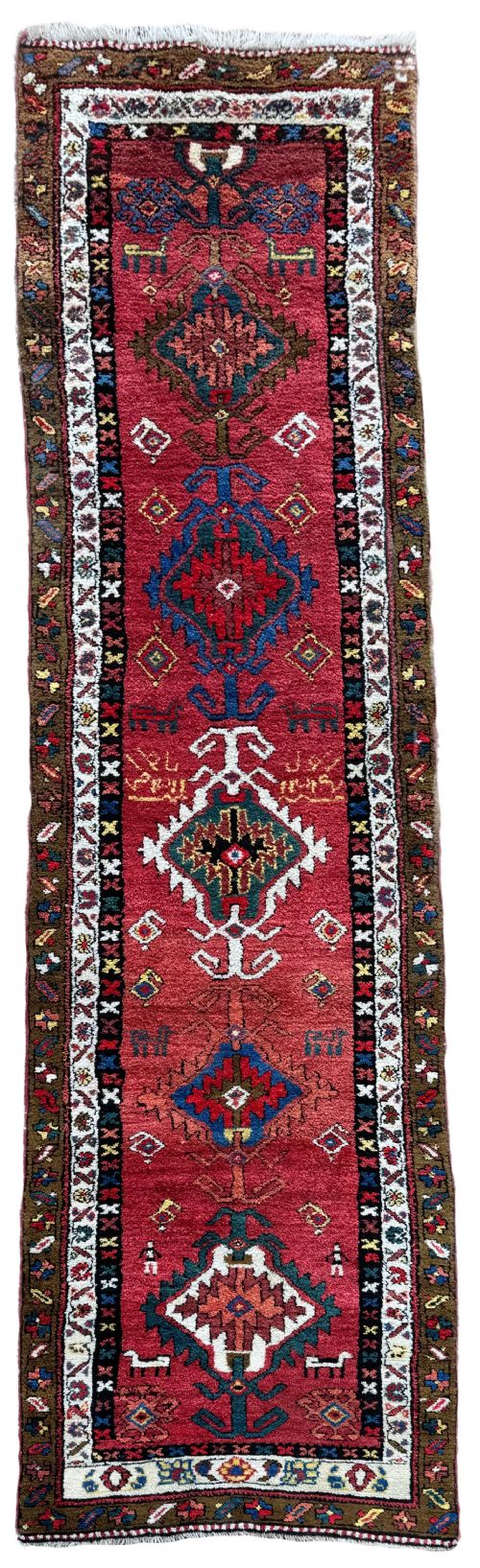
Village weavers frequently incorporated spontaneous animal and human figures into the geometric margins of their carpets.
What varies in quality
The fineness of the knot count and the precision of the geometric drawing dictate the baseline quality of each weaving, separating standard village production from exceptionally fine work. Better examples maintain crisp lines within the large medallions and corners without distortion across the field.
The preservation of the original wool pile and the integrity of the cotton foundation determine the physical grade of a surviving piece. Carpets retaining their original outer borders and even pile wear demonstrate superior initial materials and careful subsequent use.
The Persian Serapi Carpet Glossary
- Medallion
- The prominent central ornamental design motif placed in the middle of the carpet field. It draws the eye and anchors the overall geometric symmetry of the composition.
- Runner
- A long, narrow carpet format specifically proportioned for hallways, corridors and staircases. These pieces measure significantly longer than they are wide.
- Warp
- The vertical foundation threads stretched lengthwise on the loom before knotting begins. Cotton is standard for this structural element in these regional Persian pieces.
- Weft
- The horizontal threads passed back and forth across the warp threads after each row of knots. This locks the wool pile firmly into position.
- Pile
- The dense upper surface of cut wool yarn standing upright from the woven foundation. The depth and density of this layer determine the tactile feel underfoot.
Persian Serapi Carpet: Frequently Asked Questions
Where were these carpets made?
These pieces originated in the Heriz district of Northwest Persia, encompassing specific village workshops and surrounding settlements.
The weavers produced these heavy floor coverings using locally sourced materials and traditional geometric design vocabularies passed down through generations.
How do I clean a wool carpet?
Regular gentle vacuuming without a rotating power brush removes surface dust before it settles into the wool pile. Professional specialist cleaning remains necessary for deeper maintenance to protect the natural dyes and cotton foundations.
Harsh chemical detergents or excessive moisture will damage the fibres and alter the historical colour balance built up over a century.
How do I date a carpet?
Dating relies on stylistic indicators such as the geometry of the central medallion, the complexity of the corner spandrels, and the specific tones of the wool. Comparing the structural weave density and edge finish against documented examples helps narrow the period of production between eighteen-sixty and nineteen-thirty.
Archive records and past sales provide comparative benchmarks for pieces sharing similar Northwest Persian village characteristics.
Can I place these in a hallway?
Long hallway runners and gallery formats are specifically proportioned for corridors and high-traffic transitional spaces. Their sturdy cotton and wool construction stands up well to regular foot movement when laid over a secure underlay.
Rotated periodically, these carpets distribute wear evenly across the surface over decades of domestic use.