





Persian Nomad Bag
These persian nomad bag pieces are genuine tribal weavings that bring authentic nomadic craftsmanship and rich historical character straight into a modern interior.
Persian Nomad Bag
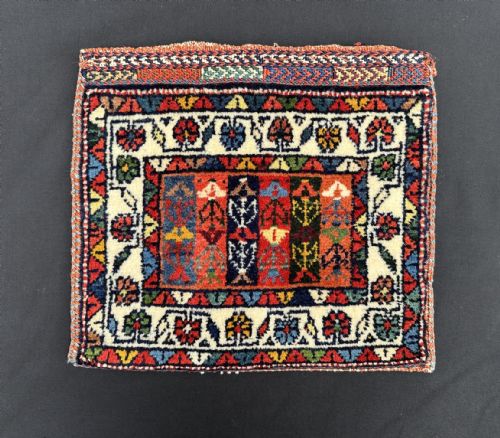
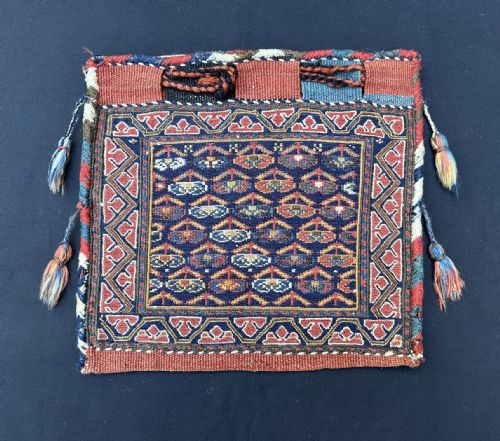
The objects on this page span the mid-nineteenth century through the early twentieth century, reflecting the functional output of nomadic weavers from regions like Kerman, Fars, Luristan, and Azerbaijan. Most examples survive as complete pouches, bag faces, or panels that illustrate the specific domestic and pastoral needs of tribal life.
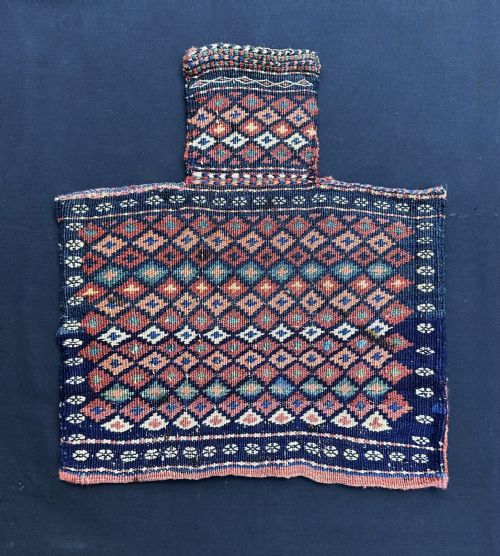
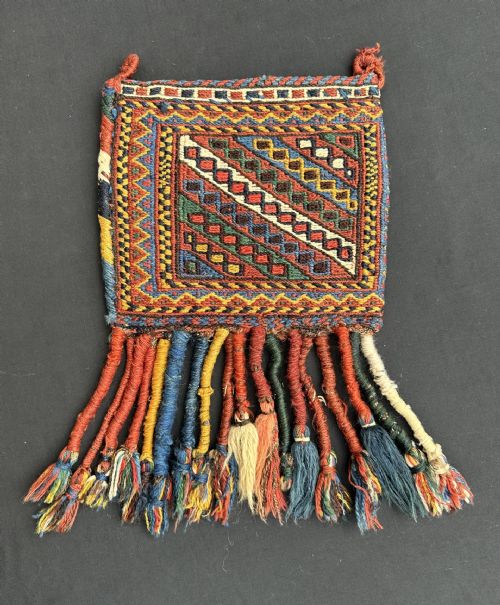
Forms vary from miniature saddle-bags and salt bags to specialised vanity bags and storage pouches, each tailored to specific loads carried on animals or hung within tribal tents. These textiles demonstrate the direct intersection of daily utility and traditional design handed down through generations of nomadic makers.
Assessing Quality and Execution
Quality in these tribal weavings rests on the tightness of the weave, the handling of the hand-spun wool, and the complexity of the traditional tribal motifs executed by the weaver. Finer pieces demonstrate precise structural integrity, particularly along the borders and flat-woven sections like soumak panels.
The depth and brilliance of the natural dyes also dictate the visual standing of a piece, distinguishing standard utility items from exceptionally vibrant works. Preservation of the original structure, whether a full salt bag or a surviving saddle-bag face, directly influences the piece's integrity.
Persian Nomad Bag Retail Price Guide 2026
Typical asking prices for persian nomad bag among the pieces listed under this phrase on Sellingantiques today, from the lower quarter to the upper quarter. They describe what is for sale here now, not the wider market.
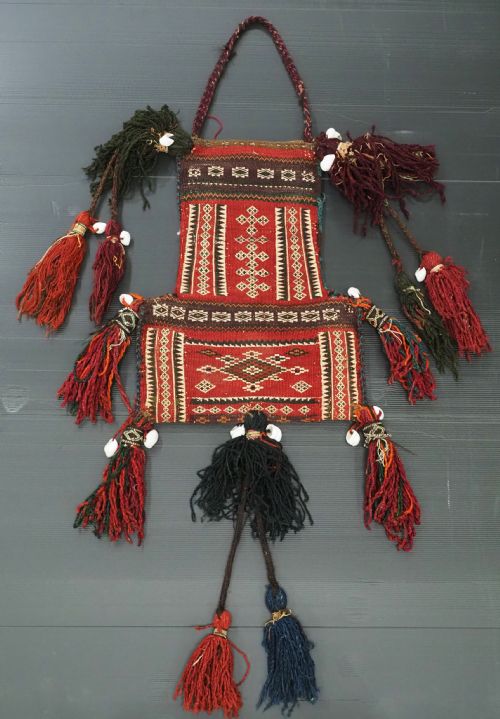
Several antique storage pouches proudly incorporate cowrie shells, offering a tangible touch of good fortune woven directly into the nomad's luggage.
The Persian Nomad Bag Glossary
- Namakdan
- A traditional Persian salt bag woven by nomads to hold rock salt for livestock. These bags typically feature a narrow neck and a flared base.
- Khorjin
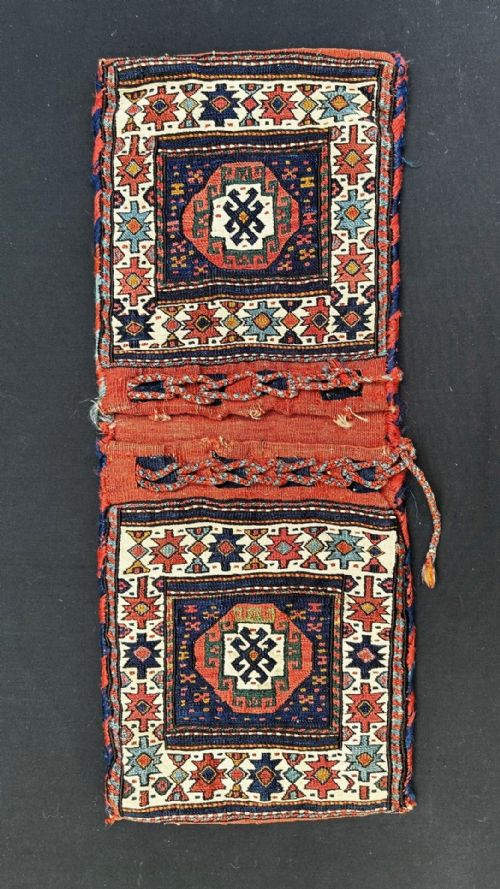
- The Persian term for a double saddle-bag used for transport on animals during migrations. Surviving examples often appear as half-khorjin or separate bag faces.
- Soumak
- A flat-weave technique where coloured weft threads are wrapped alternately over and under warp threads. This method creates a durable, slightly raised pattern resembling embroidery.
- Afshar
- A nomadic and settled Turkic tribe residing largely in southern Persia, known for distinct geometric designs and rich blue and red colour palettes.
- Shahsevan
- A confederation of nomadic tribes originating from northwestern Persia and Azerbaijan, celebrated for finely structured panel work and salt bags.
Persian Nomad Bag: Frequently Asked Questions
What were nomad bags used for?
These woven pouches served vital practical roles in nomadic daily life, containing household salt, personal vanity items, or provisions transported during seasonal migrations. Families hung them inside tents or strapped them across pack animals to organise belongings.
Their robust construction of wool, cotton, and goat hair ensured protection for contents against harsh travel conditions while displaying tribal identity through traditional patterns.
How do I care for a textile bag?
Protect antique wool and cotton weavings by keeping them out of direct sunlight to prevent natural dye fading. Gentle vacuuming through a mesh screen helps remove dust without disturbing fragile hand-spun fibres.
Avoid hanging heavy bags by their narrow necks or loops to prevent structural strain on the old weave. Professional textile conservators should handle any necessary cleaning.
How do I distinguish different tribal styles?
Tribal attribution relies on specific structural formats, regional colour combinations, and characteristic geometric or animal motifs unique to groups like the Afshar, Qashqa'i, or Baluch. For instance, Shahsevan pieces often show crisp Soumak work from Azerbaijan, while Lori-Bakhtiari examples reflect the Chahar Mahal region.
Comparing the border arrangements and foundation materials helps pinpoint the likely origin of nineteenth-century pieces.
Are these complete bags or fragments?
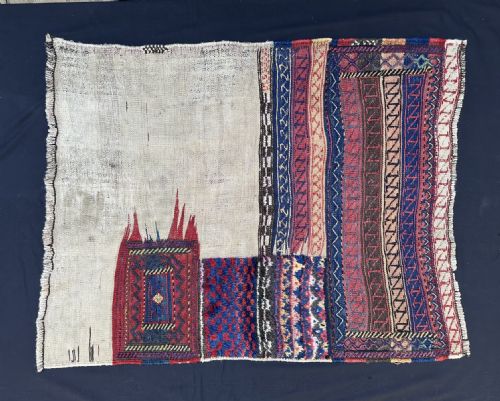
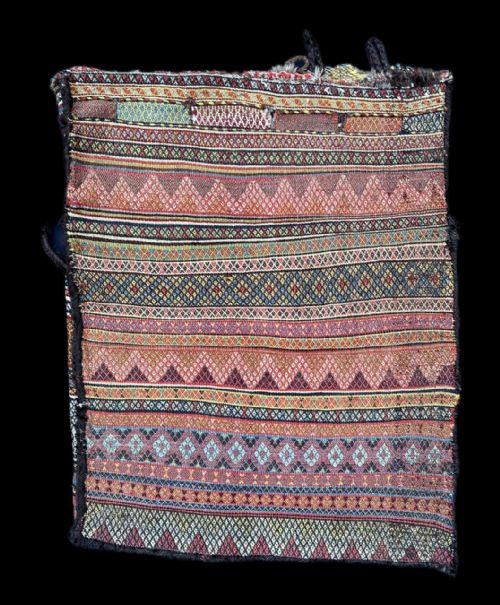
The selection includes both fully intact storage pouches with original backs and reduced bag faces that were separated from their paired counterparts over time. Complete pieces like salt bags retain their original shape and hanging loops, while saddle-bag faces are often mounted flat for display.
Each listing specifies whether the item is a complete pouch, a half-khorjin, or a decorative panel.