


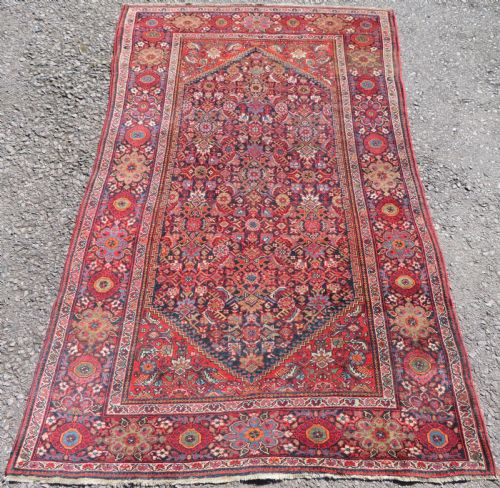


Persian Malayer Runner
These persian malayer runner pieces are hand-knotted room lengths from western Persia that bring distinctive village geometry and exceptional character to long corridors.
Persian Malayer Runner
A persian malayer runner is a long, narrow floor covering originating from the Malayer region of Persia, designed specifically to fit hallways, corridors and gallery spaces. You encounter these pieces in formats ranging from modest lengths to exceptionally long formats exceeding twelve metres.
The designs span traditional Persian layouts, including all-over lattice patterns and specific decorative elements such as ivory grounds adorned with butterflies. These runners date primarily from the late nineteenth century through to the early decades of the twentieth century, specifically between 1890 and 1920.
Materials and Construction
These textiles are built using traditional village weaving techniques, combining durable wool pile on cotton foundations to ensure both flexibility and structural integrity along the length of the runner.
The weavers utilised locally sourced materials to knot dense pile surfaces that could withstand heavy hallway foot traffic while retaining soft texture and rich visual depth.
Persian Malayer Runner Retail Price Guide 2026
Typical asking prices for persian malayer runner among the pieces listed under this phrase on Sellingantiques today, from the lower quarter to the upper quarter. They describe what is for sale here now, not the wider market.
Qualities That Separate Examples
The distinction between standard examples and the finest pieces lies in the crispness of the design execution, particularly in how lattice networks and decorative motifs are balanced across the narrow field.
Colour saturation and the visual harmony of the palette play a significant role, with well-preserved dyes and unusual ground colours such as ivory elevating the presence of the runner.
The Persian Malayer Runner Glossary
- Malayer
- A rug-producing region in western Persia known for distinctive village weaving traditions and varied geometric or floral layouts. Pieces from this area often bridge fine city design with rural spontaneity.
- Runner
- A long, narrow carpet format intended for hallways, stairs and narrow passages. This shape requires specific proportions that maintain balance across an extended length.
- Kelleh
- A rectangular rug format that is longer than it is wide, though typically broader than a standard runner. It serves as an intermediate size between area carpets and long corridors.
- Lattice design
- A repeating geometric grid pattern spread across the field of the rug. This framework often encloses floral motifs or stylized botanical elements.
Persian Malayer Runner: Frequently Asked Questions
Where should I place a runner?
These long formats suit narrow hallways, entryways and gallery spaces where their extended proportions draw the eye down the corridor.
They also function well in long transitional spaces between rooms where a narrow floor covering adds warmth and texture.
How do I date these rugs?
Dating relies on stylistic indicators, structure and material ageing observed across examples from the late nineteenth and early twentieth centuries. Comparing design elements like lattice work helps place pieces within this era.
Most surviving examples from this specific tradition date from around 1890 to 1920.
What materials were used?
Authentic pieces utilise wool for the soft upper pile and cotton for the underlying structural foundation. This combination provides the necessary flexibility for rolling while maintaining durability.
Natural fibres absorb traditional dyes in ways that create subtle variations in tone across the length of the rug.
Are these runners durable?
Village-knotted carpets from this region were made for everyday use, combining sturdy foundation threads with dense wool pile. They handle normal domestic foot traffic well when supported by an appropriate underlay.
Proper placement away from excessive moisture ensures these antique textiles remain functional home furnishings.