




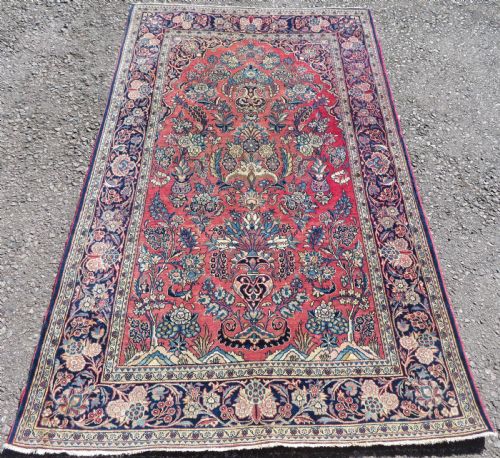


Persian Kashan Wool Carpet
A Persian kashan wool carpet brings intricate floral motifs and rich natural dyes from central Persia into a room.
Persian Kashan Wool Carpet
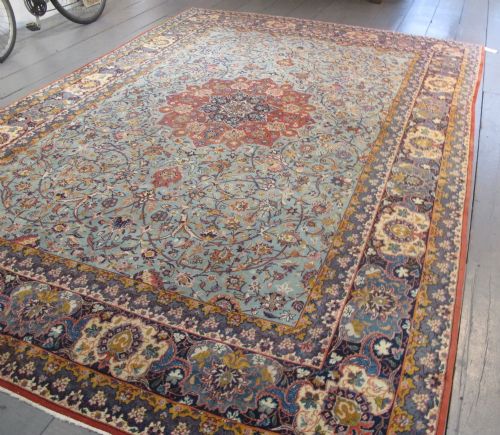
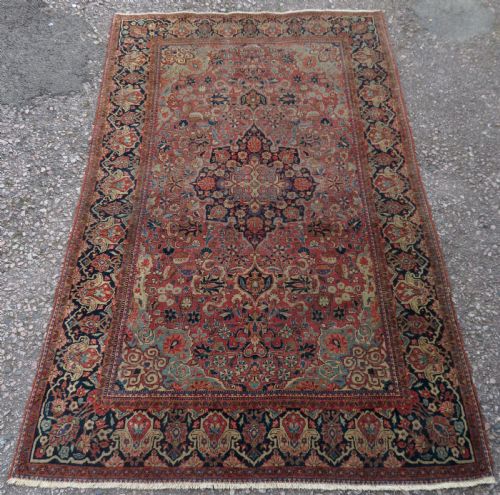
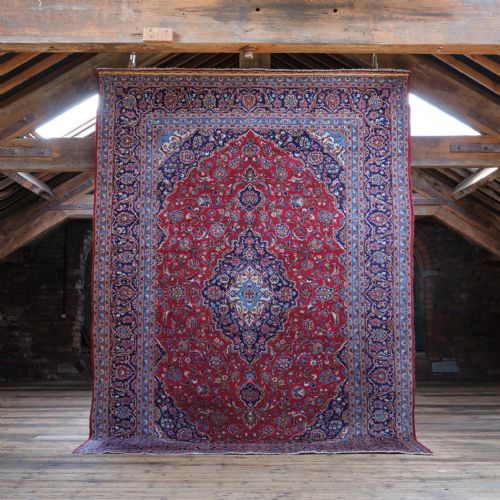
A Persian kashan wool carpet represents a distinct weaving tradition originating from the city of Kashan in north-west central Persia. The pieces available here span from the nineteenth century through the Edwardian era up to the 1940s, encompassing standard area rugs, large carpets, prayer rugs, and pictorial formats. Buyers most frequently encounter early twentieth-century examples featuring classic medallion or all-over floral layouts.
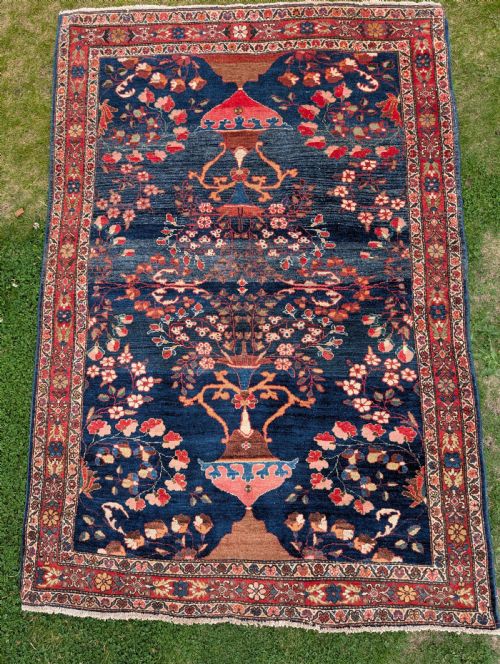
The format ranges from intimate area rugs to massive palace-size carpets exceeding five metres in length. Specialised forms include prayer rugs with vase designs and pictorial rugs depicting historical figures such as Ahmad Shah Qajar or Kaiser Wilhelm II. Traditional Persian styles dominate, alongside specific workshops associated with master weavers.
Originating from established Persian weaving centres, these floor coverings demonstrate classic design structures involving central medallions, elaborate corner pieces, and dense floral borders. The evidence shows pieces attributed specifically to Kashan alongside regional variants labelled as Indo-Persian.
Materials and Techniques
Production relies on hand-knotted techniques executed on cotton foundations using wool pile. Artisans select soft wool, cork wool, and kurk wool for the pile to achieve a dense and durable surface texture.
Certain examples incorporate silk elements alongside wool to highlight specific details within the intricate floral design. Traditional dyeing methods produce the characteristic red grounds and rose pink colourways seen across the collection.
Persian Kashan Wool Carpet Retail Price Guide 2026
Typical asking prices for persian kashan wool carpet among the pieces listed under this phrase on Sellingantiques today, from the lower quarter to the upper quarter. They describe what is for sale here now, not the wider market.
Listings feature pieces spanning from the nineteenth century and the Edwardian era through to the 1940s, utilising wool, silk, and cotton.
Assessing Quality and Execution
Knot density and precision of execution dictate the refinement of the pile surface. Tighter knots allow for sharper definition within complex floral and pictorial compositions.
The choice of fibre influences handle and drape, with fine cork wool and part-silk additions yielding a softer texture compared to standard wool carpets.
Mohtasham·Haroon·Mokhtashem
The Persian Kashan Wool Carpet Glossary
- Kashan
- A historic city in central Persia renowned for producing finely knotted wool and silk carpets with elaborate floral designs.
- Cork wool
- High-grade fleece taken from the neck and shoulders of sheep, prized for its soft handle and durability in pile carpets.
- Prayer rug
- A smaller format rug featuring a mihrab or niche design, traditionally used for personal devotion.
- Pictorial rug
- A woven textile depicting recognizable human figures, portraits, or narrative scenes rather than purely geometric or floral patterns.
- Hand-knotted
- A construction method where individual strands of wool are tied by hand onto a cotton warp and weft foundation.
Persian Kashan Wool Carpet: Frequently Asked Questions
How do I care for a wool carpet?
Vacuum gently without a beater bar and keep the textile away from direct sunlight to preserve the dyed wool.
Professional cleaning is recommended every few years to remove embedded dust without damaging the cotton foundation.
Where were these carpets made?
Most examples originate from Kashan in central Persia, while others reflect traditional Indo-Persian workshop influences.
Production dates span from the nineteenth century through the Edwardian period and into the mid-twentieth century.
What is a pictorial rug?
A pictorial rug departs from standard floral medallions to depict specific portraits, historical figures, or narrative scenes.
Examples from this tradition portray rulers and dignitaries woven directly into the wool pile.
How do I identify a prayer rug?
Prayer rugs feature a distinct architectural niche or arch motif, known as a mihrab, pointing toward Mecca.
These smaller formats were traditionally used for individual prayer rather than floor coverage in large reception rooms.