




Persian Heriz Hallway Rug
A persian heriz hallway rug brings geometric strength and enduring floor coverage to long domestic spaces through traditional North West Persian weaving.
Persian Heriz Hallway Rug
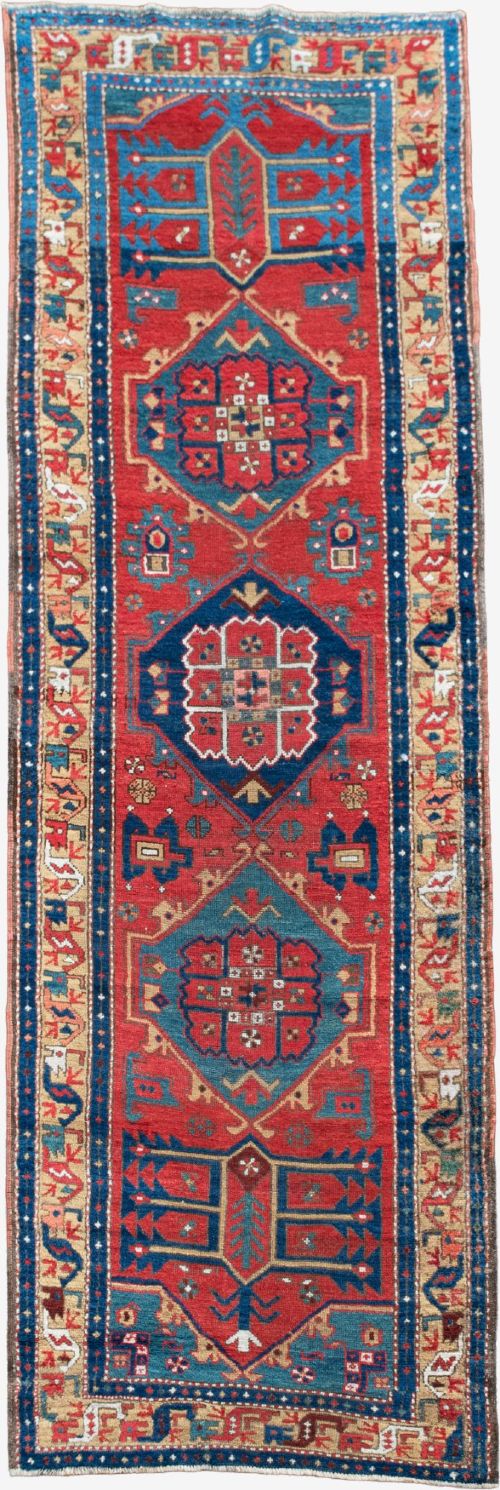
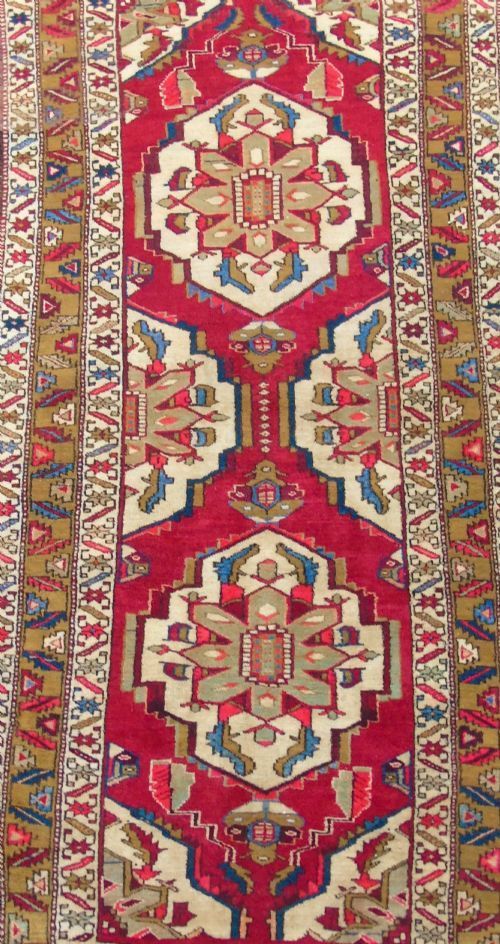
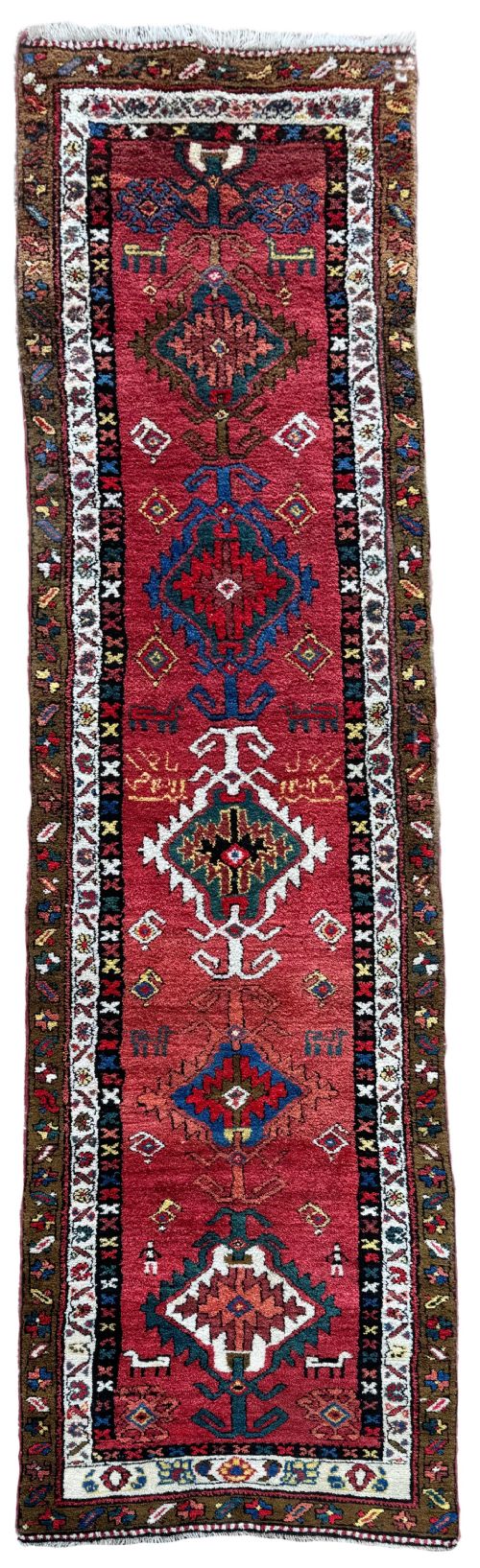
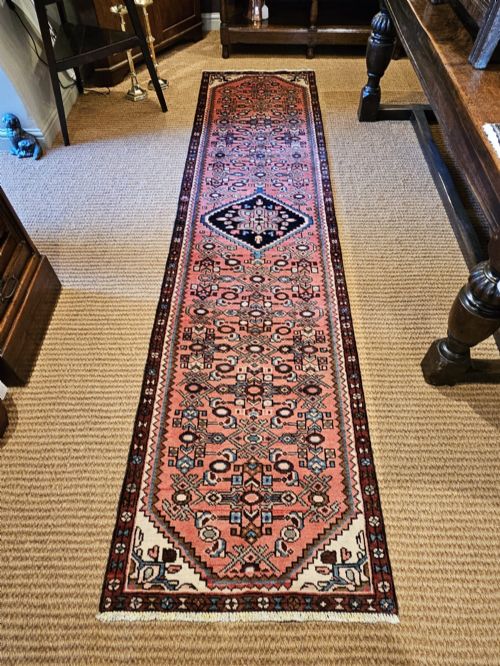
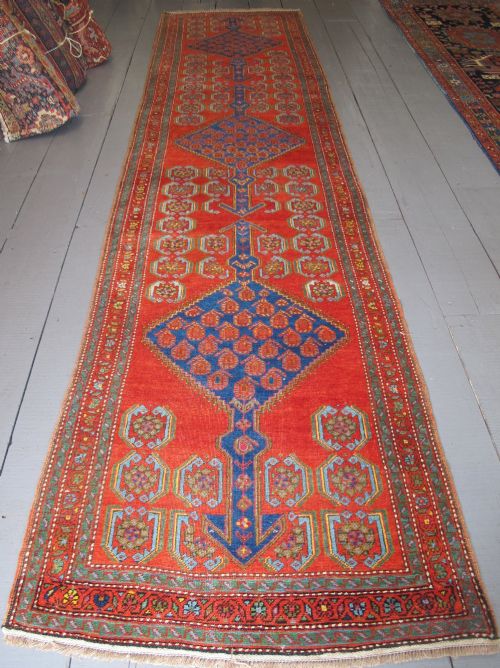
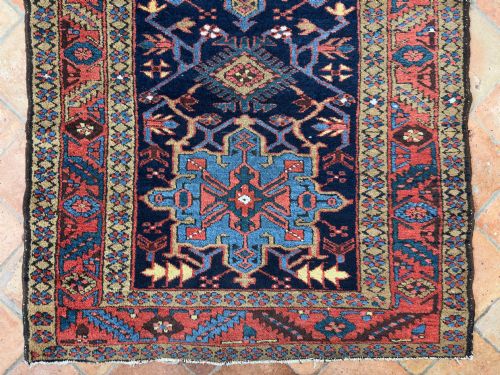
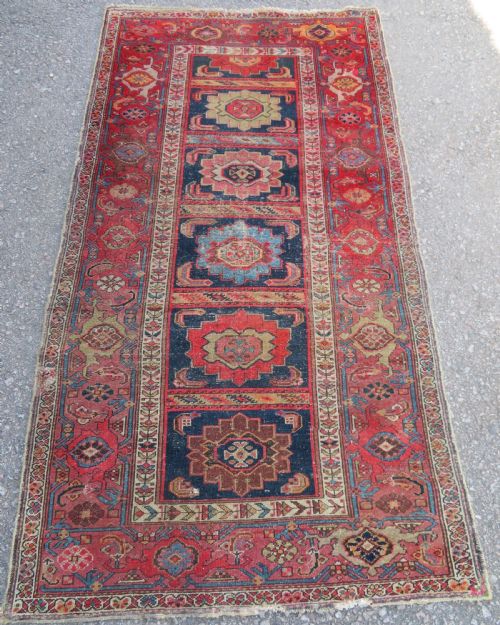
A persian heriz hallway rug is a long, narrow format textile designed specifically for corridors and extended walkways. These pieces originate from North West Persia, encompassing related regional weaving styles such as Karaja, Gorevan, Serapi, Bakshaish, and Hastrud alongside Heriz itself.
The format is predominantly encountered as a runner, stretching to several metres in length whilst maintaining a narrow width suitable for hallways. Dating spans across the late nineteenth century into the early decades of the twentieth century, specifically between 1880 and 1930.
The visual vocabulary typically relies on bold geometric medallions and traditional tribal motifs rather than delicate curves. These rugs provide robust utility for heavy foot traffic whilst displaying the distinctive aesthetic of North West Persian workshops and villages.
Materials and construction
Construction relies on natural materials, utilising durable wool for the pile and cotton for the foundational warp and weft threads. This combination provides the structural stability required for long, narrow floor coverings subjected to daily walking.
Weavers in the region employed sturdy knotting techniques to anchor the wool pile securely to the cotton base. The resulting fabric is dense and resilient, capable of withstanding decades of use in high-traffic corridors.
Persian Heriz Hallway Rug Retail Price Guide 2026
Typical asking prices for persian heriz hallway rug among the pieces listed under this phrase on Sellingantiques today, from the lower quarter to the upper quarter. They describe what is for sale here now, not the wider market.
Some narrow runners are built so slender they feel like walking a geometric tightrope down your corridor.
Distinctions in quality
Quality in these long formats is largely determined by the precision of the geometric layout and the balance of the central medallion design. Tighter knot density and cleaner definition in the tribal motifs separate finer examples from standard village production.
Proportion also dictates the character of the piece, with particularly narrow widths requiring careful scaling of the traditional patterns. The integrity of the wool pile and the uniformity of the weave along the full length of the runner distinguish the upper tier of pieces.
Waring and Gillow
The Persian Heriz Hallway Rug Glossary
- Runner
- A long, narrow carpet format intended for corridors, hallways, and stairs. These pieces measure significantly longer than they are wide.
- Medallion
- A large, central ornamental motif placed in the middle of the field. In these rugs, this shape is typically geometric rather than floral.
- Warp
- The vertical foundation threads stretched lengthwise on the loom before knotting begins. Cotton is standard for this structural element.
- Weft
- The horizontal threads passed across the warp threads between rows of knots to bind the structure. This material works with the warp to form the grid.
- Pile
- The cut surface of yarn that forms the upper texture of the rug. Pure wool is used to create this soft, durable wearing layer.
Persian Heriz Hallway Rug: Frequently Asked Questions
What is a persian heriz hallway rug?
A persian heriz hallway rug is a durable, narrow floor covering originating from North West Persia between 1880 and 1930. These pieces are specifically proportioned for corridors and long entryways.
They utilise traditional geometric patterns and bold central medallions woven in wool over a cotton foundation. Their robust construction was designed to handle heavy domestic foot traffic.
How do I measure for a runner?
Measure the clear floor space of your hallway, leaving an equal margin of bare flooring exposed around the perimeter of the rug. Ensure doors can swing freely over the thickness of the wool pile.
Account for any radiators, skirting boards, or fixed furniture that might obstruct a straight run. Long runners should ideally anchor the visual path of the corridor without crowding the walls.
How do I care for antique wool runners?
Vacuum the rug regularly using low suction without a rotating brush roll to protect the wool pile. Keep the runner out of direct, intense sunlight to prevent fading of the natural dyes.
Rotate the piece periodically to ensure even wear across the length from foot traffic. Professional cleaning should be undertaken sparingly by specialists experienced in antique Persian textiles.
How do I distinguish regional types like Karaja and Serapi?
Regional attribution relies on design nuances, colour palettes, and structural characteristics within the North West Persian tradition. Serapi carpets often feature more open, spacious compositions with a refined aesthetic.
Karaja and Heriz runners typically display denser geometric patterning and robust medallion structures. Comparing the specific motif handling and proportions helps clarify the exact origin.