
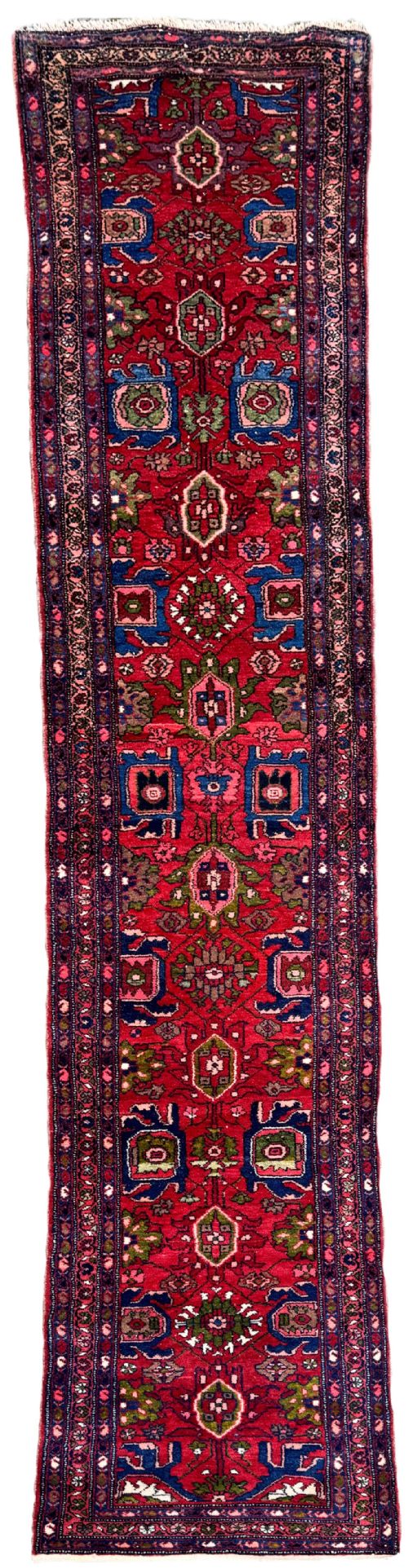
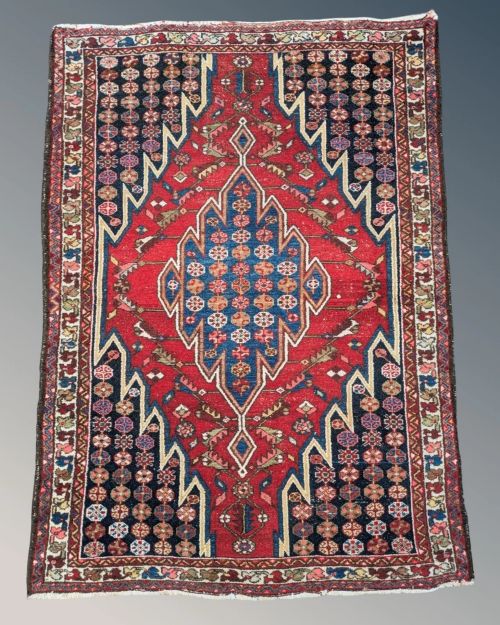
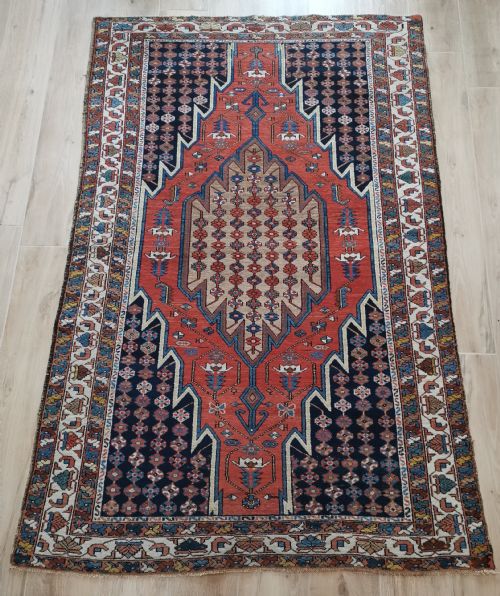
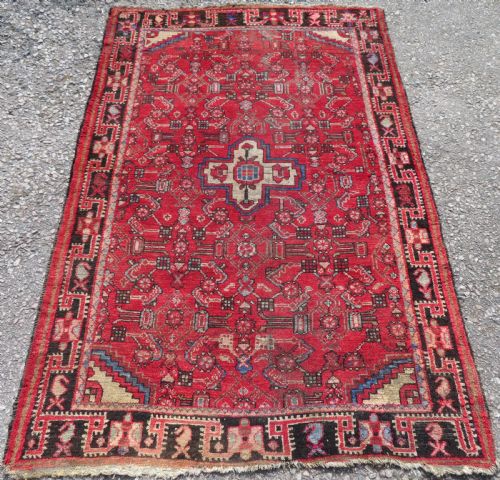
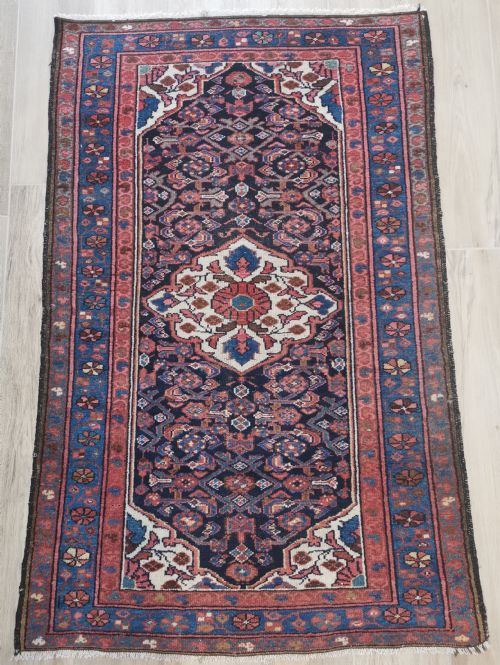
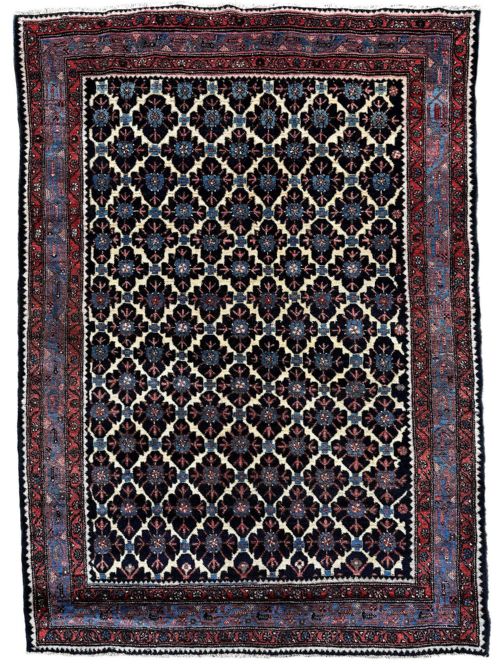


Persian Hamadan Runner Carpet
A persian hamadan runner carpet brings genuine village character and dense wool warmth to long hallways and narrow corridors.
Persian Hamadan Runner Carpet
A persian hamadan runner carpet originates from the wide network of weaving villages surrounding the western Iranian hub of Hamadan. Buyers searching this phrase typically encounter elongated formats designed specifically for narrow spaces, alongside broader village carpets.
The available selection spans from the late nineteenth century through to the 1930s, reflecting traditional Persian tribal aesthetics. These floor coverings are practical products of village life rather than formal court workshops.
Makers in various regional pockets, including Mazlaghan, Sanjan, and Borodjert, contribute distinct local variations to the broader Hamadan grouping. Kurdish weavers also produced notable long rugs and runners within this geographic sphere.
How they were made
Weavers constructed these pieces using a sturdy foundation of natural cotton warps and wefts, which provides structural stability for heavy daily use. Dense wool pile was knotted onto this framework by hand in village homes and small community workshops.
Natural dyestuffs yielded the characteristic deep tones that ground these floor coverings, combined with hand-spun wool fibres to create substantial physical weight. The resulting textile handles both foot traffic and the passage of decades with robust physical resilience.
Early village weavers occasionally incorporated tiny stray animal motifs or floating geometric amulets into the runner field as playful personal signatures.
What varies in quality
Quality rests in the precision of the village knotting and the crispness of the geometric or floral lattice design. Tighter pile density and better-preserved edge bindings separate finer examples from heavily worn country house pieces.
The depth and clarity of the original wool dyes dictate visual distinction across the range, with superior pieces retaining vibrant saturation. Consistency in width along long corridor formats also marks the more accomplished village weaver's work.
The Persian Hamadan Runner Carpet Glossary
- Hamadan
- A major trading centre in western Persia that serves as the collective marketplace for carpets woven by surrounding villages. It gives its name to a diverse group of runner rugs sharing regional wool and design traits.
- Mazlaghan
- A specific village subset known for distinct medallion formats and contrasting field colours. Pieces from this origin often show crisp geometric framing within the broader regional style.
- Kelleh
- A large-sized rectangular carpet format that sits between standard area rugs and long hallway runners. These proportions suit principal rooms rather than narrow corridors.
- Serab
- A northern region near Hamadan famous for camel-hair wool and understated neutral tones in runner formats. Weaving from this area brings subtle textural variation to the broader category.
Persian Hamadan Runner Carpet: Frequently Asked Questions
Where were these runners made?
These textiles were produced in domestic village households and small regional centres across western Persia. Local weavers utilised traditional motifs passed down through generations.
Communities such as Borodjert and Sanjan contributed specific stylistic touches to the wider Hamadan output, creating distinct local identities.
How do I place a long runner?
Long runners are proportioned for corridors, hallways, and narrow passage spaces where a sturdy floor covering softens footfall. Their substantial wool pile absorbs heavy traffic while anchoring the room visually.
Allowing bare floorboards to show around the edges lets the geometric borders frame the corridor effectively.
How do I identify a village weave?
Village pieces display asymmetrical geometric patterns, recurring tribal motifs, and robust wool construction rather than court symmetry. Kurdish weavers and local artisans relied on memory and regional tradition.
Slight irregularities in width and motif placement confirm the hand-knotted village origin of these antique runners.
How old are these carpets?
The pieces available date from the late nineteenth century through the early decades of the twentieth century. This period captures traditional Persian village weaving before modern synthetic materials altered production.
Construction details and wool characteristics help place each runner within this specific historical bracket.