
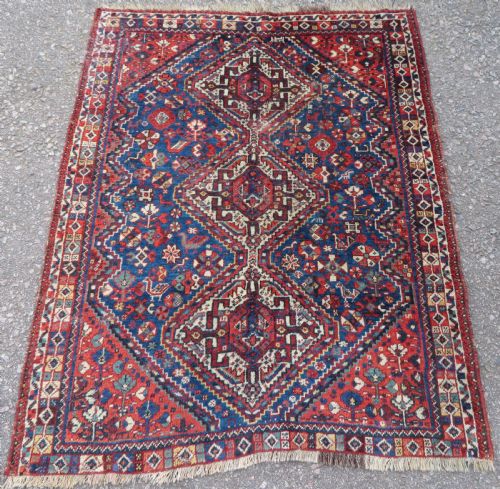

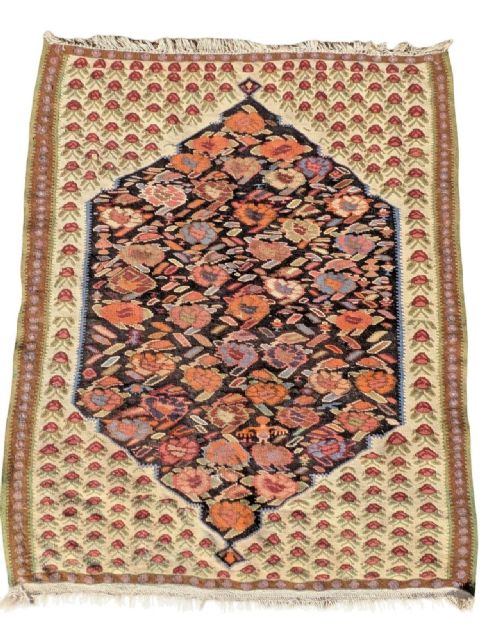
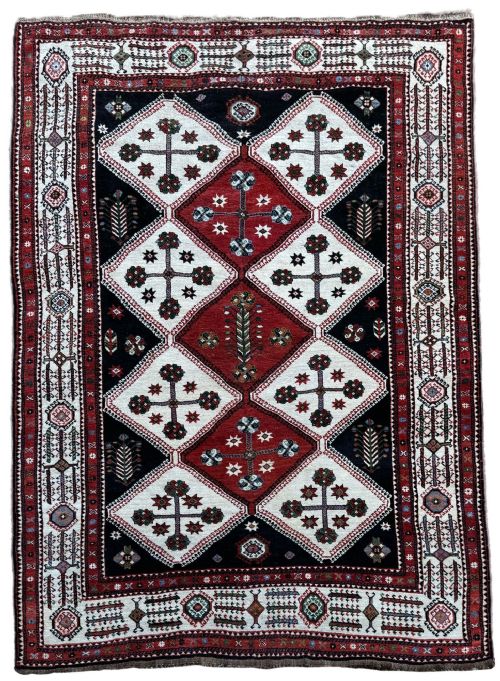
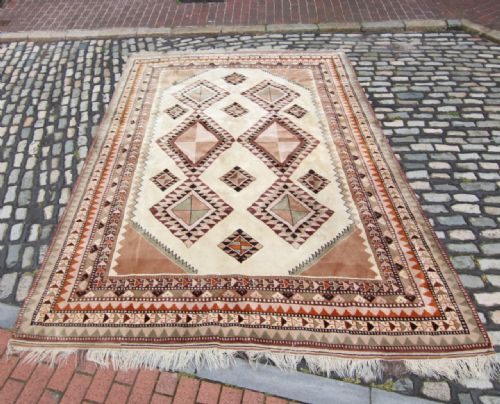
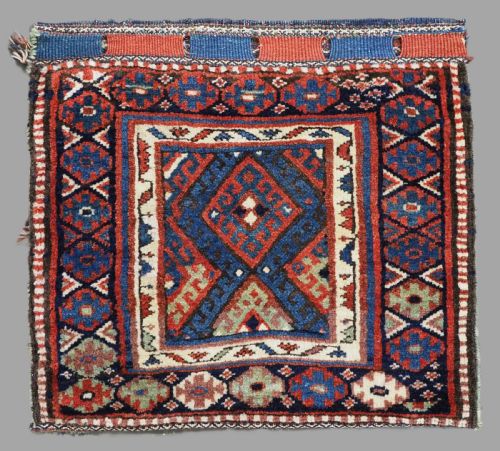
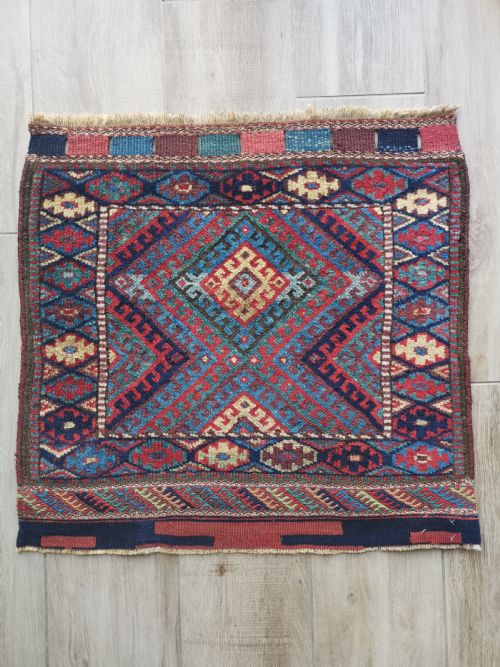
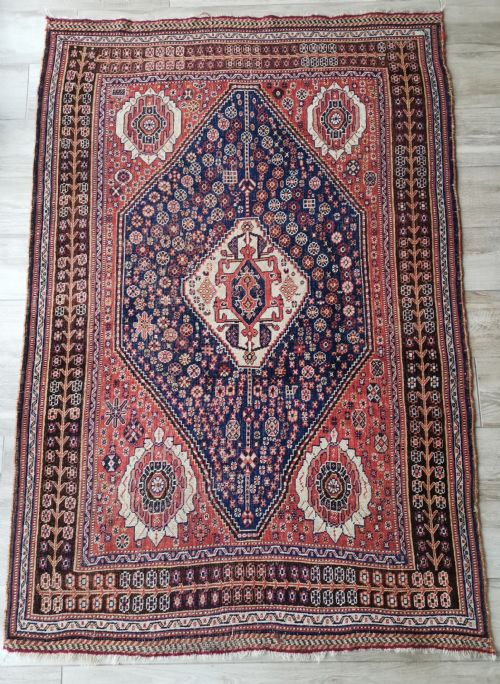
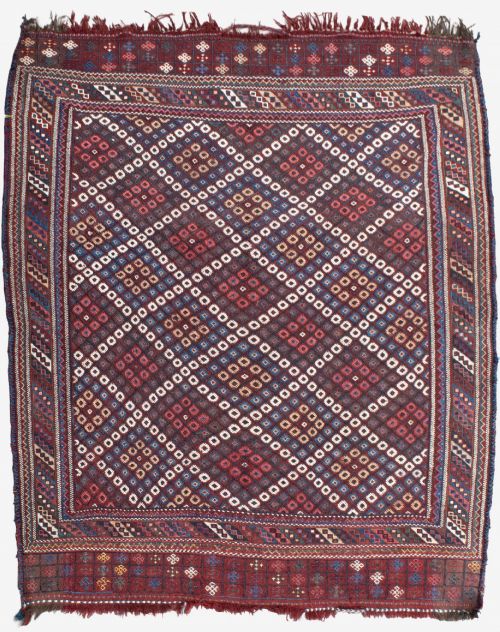


Persian Diamond Rug
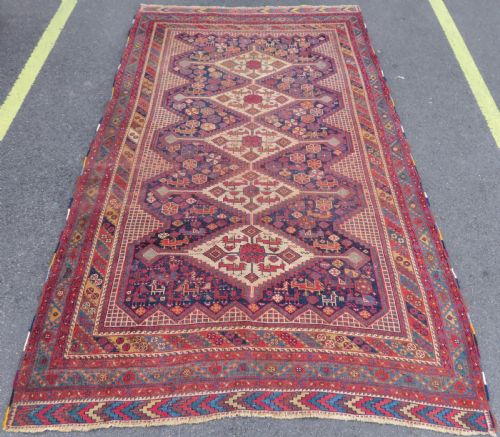
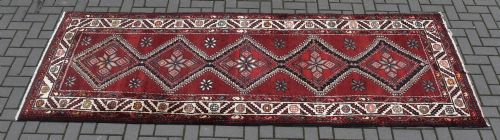
A persian diamond rug brings the geometric lattice and tribal artistry of nomadic weavers straight to a wooden floor.
Persian Diamond Rug
When you search for a persian diamond rug, you encounter woven textiles created by tribal and village makers across Persia and Anatolia. These pieces range from small saddlebag faces and kilims to room-sized carpets and long hallway runners.
The prevailing style relies on repeat diamond motifs, lattice frameworks and medallion structures handed down through generations. Examples on this page span the late nineteenth century through the early decades of the twentieth century, reflecting traditional weaving methods.
How They Were Made
These floor coverings utilise hand-spun wool for the pile and cotton or wool for the foundational warps and wefts. The combination yields a supple, resilient structure that responds well to traditional hand-knotting and flatweave techniques.
Weavers employed natural dyes to achieve rich colour palettes that shift subtly across the field. This dyeing process creates the characteristic depth and variation found in tribal and village textiles from the region.
What Varies in Quality
The standard of execution depends on the precision of the knotting, the handling of the geometric lattice and the clarity of the natural dyes. Tighter construction and balanced proportions distinguish the finer examples from simpler village work.
The handling of secondary details, such as the weave of plain-weave backs on bags or the complexity of tribal border motifs, signals the care taken by the maker. Integrity of the wool and stability of the foundation structure also determine the lasting character of each piece.
The Persian Diamond Rug Glossary
- Sofreh
- A tribal spreading cloth or dining cover used for food preparation and serving. These flatwoven or piled textiles often feature distinctive field arrangements.
- Kilim
- A flatwoven tapestry rug produced without a pile. This technique creates a lightweight textile with sharp geometric patterns visible from both sides.
- Saddlebag
- A paired container woven for transport on pack animals. Surviving fragments often retain complete plain-weave backs alongside the decorative face.
- Medallion
- A central ornamental motif set within the field of a rug. In these tribal pieces, the motif frequently takes a diamond or polygonal form.
- Boteh
- A traditional teardrop or paisley motif symbolising life and eternity. It appears frequently in various sizes across field and border designs.
Persian Diamond Rug: Frequently Asked Questions
How do I care for an old tribal rug?
Vacuum gently without using a beater bar to protect the wool pile from unnecessary friction. Professional cleaning tailored to antique textiles helps preserve the natural dyes and fibres.
Keep the piece out of direct, prolonged sunlight to prevent fading of the natural colours. Using an appropriate underlay keeps the rug stable and reduces wear on hard floors.
Where were these tribal rugs made?
The pieces originate from tribal confederations and village communities across Persia and Anatolia, including Qashqai, Khamseh, Afshar and Jaf Kurd groups. Each region developed distinct colour combinations and drawing styles.
Nomadic and village weavers drew upon shared motifs while maintaining regional identities. This local heritage informs the geometric patterns seen today.
How can I tell different tribal designs apart?
Tribal attribution relies on specific combinations of border motifs, colour palettes and structural traits. For instance, Khamseh and Qashqai pieces utilise particular geometric arrangements and wool characteristics.
Examining the selvedges, end finishes and back knots provides further clues to the specific tribe or village. Comparing repeat patterns helps distinguish between neighbouring weaving traditions.