

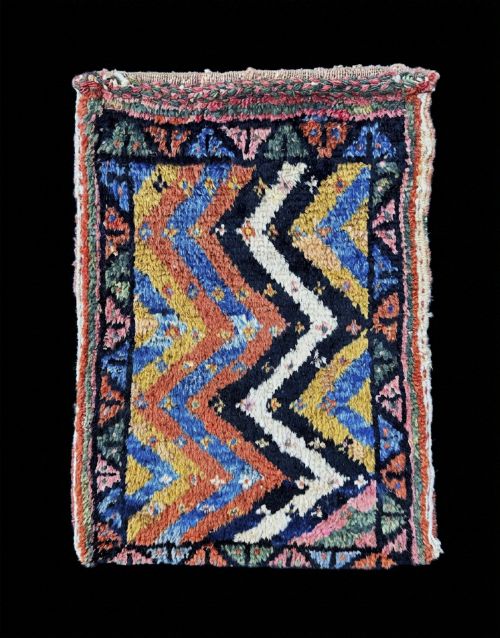
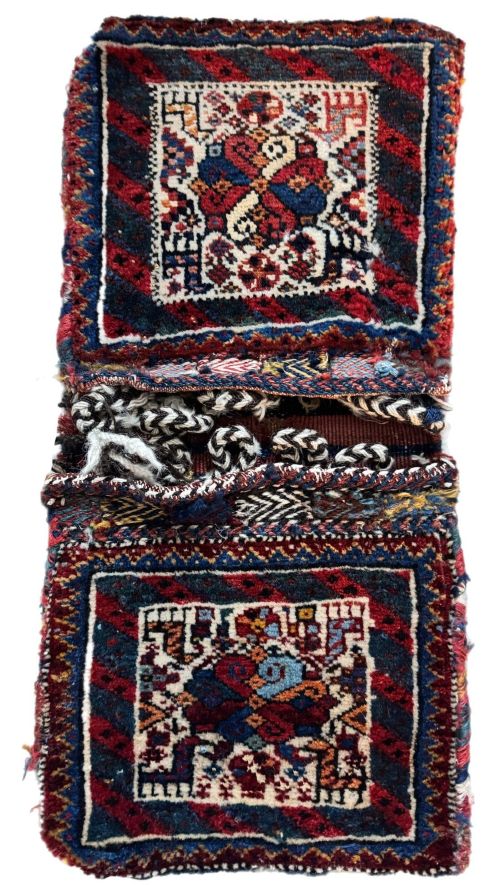
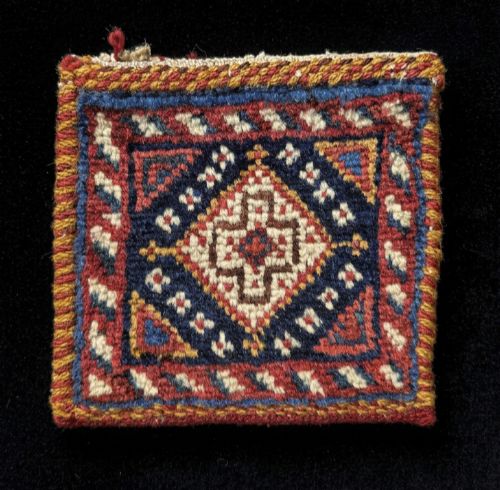
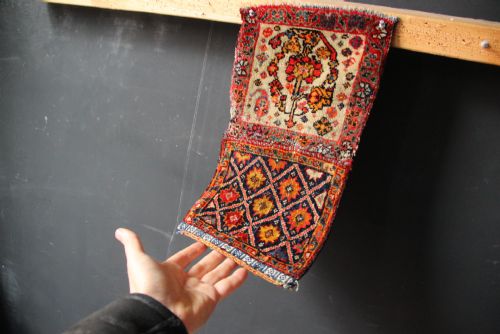


Persian Bag Face Textile
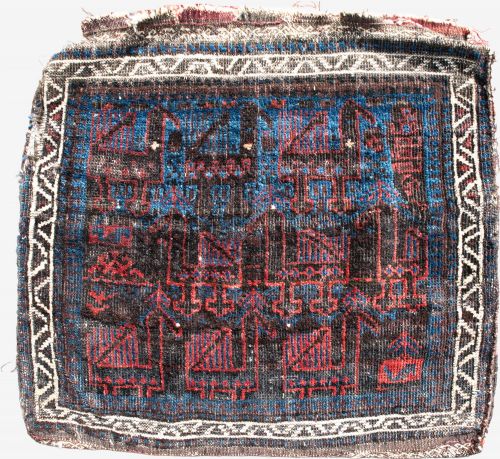
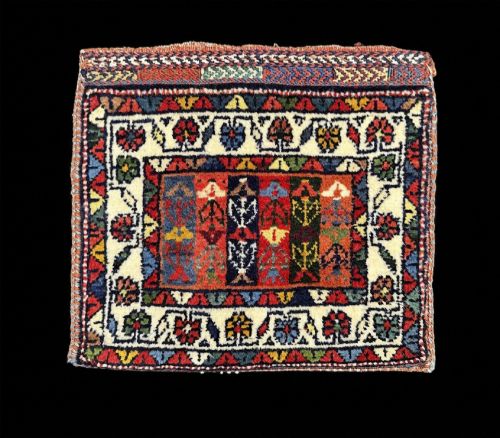
A persian bag face textile is a portable tribal artefact woven by nomadic groups in Persia, prized for dense geometric designs and rich natural colour.
Persian Bag Face Textile
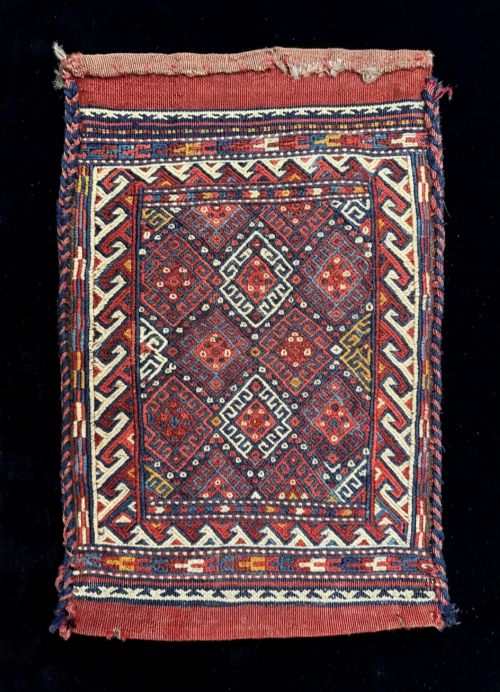
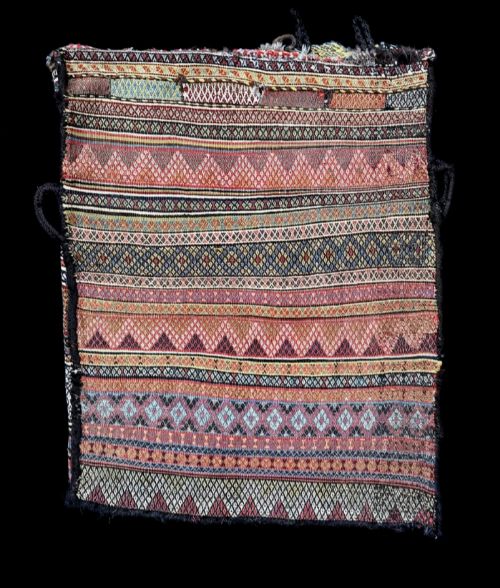
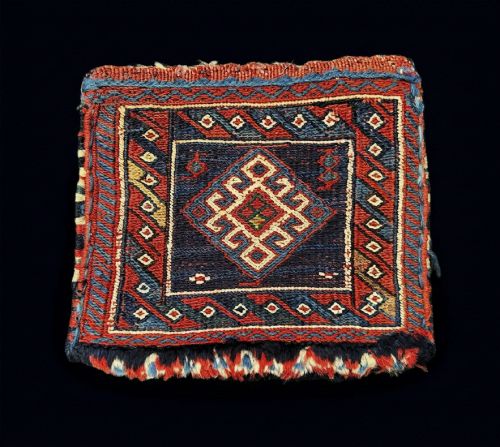
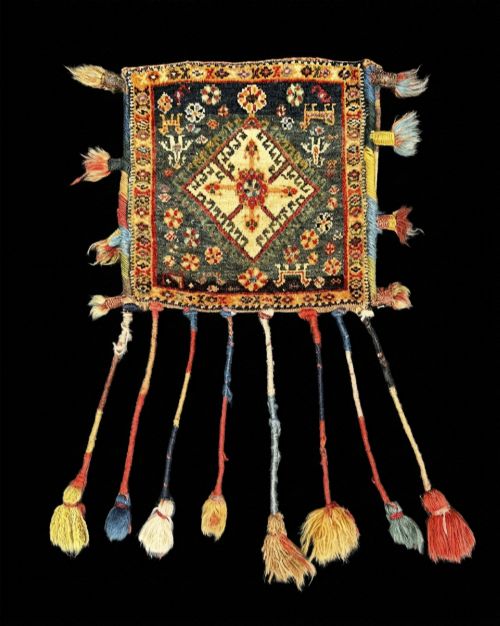
A persian bag face textile originates from tribal and nomadic groups operating across various regions of Persia during the nineteenth and early twentieth centuries. These fragments represent the front panels of functional storage items, vanity bags, saddlebags, or wheat sacks utilised daily by groups such as the Qashqai, Afshar, Baluch, Shahsavan, and Luri peoples.
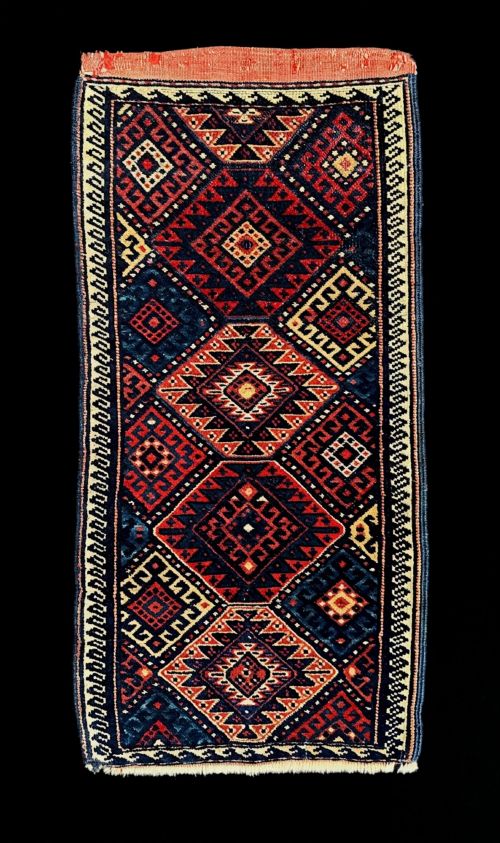
Most examples encountered on this page date from the late nineteenth century up to the 1930s, reflecting diverse regional aesthetics from Fars, Kerman, Khorassan, and Luristan. Forms range from small personal chantehs and vanity bags to larger saddlebag faces and pillow bags.
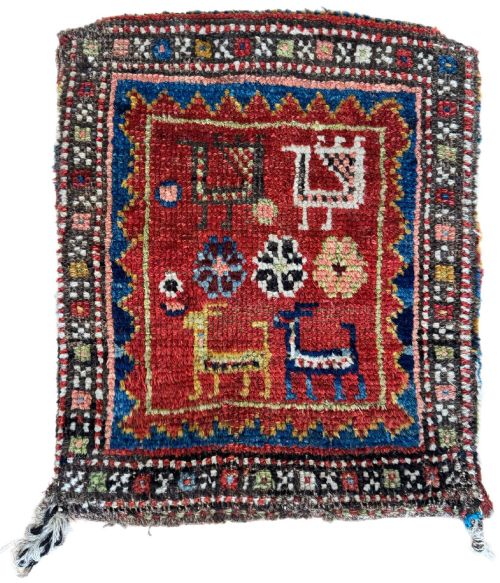
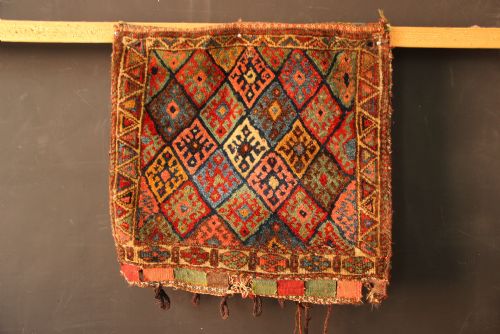
Tribal weavers utilised traditional motifs including central medallions, boteh patterns, tile designs, and animal or bird depictions. These utilitarian objects served practical storage purposes during migrations while displaying distinct tribal identities through characteristic weaving structures.
Quality Factors in Tribal Weaving
The fineness of the knotting or the tightness of the flatweave foundation dictates structural integrity and visual clarity. Higher quality examples demonstrate precise execution of complex geometric or pictorial motifs.
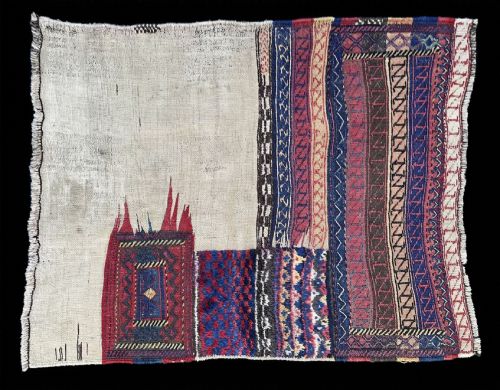
The brilliance and saturation of the natural dyes distinguish superior pieces, along with the quality and lustre of the wool selected by the weaver. Completeness, such as retaining original plain weave backs or complete side dimensions, also influences the integrity of the textile.
Persian Bag Face Textile Retail Price Guide 2026
Typical asking prices for persian bag face textile among the pieces listed under this phrase on Sellingantiques today, from the lower quarter to the upper quarter. They describe what is for sale here now, not the wider market.
Represented tribal groups include Qashqai, Afshar, Baluch, Shahsavan, Luri, and Kurdish weavers from across Persia.
The Persian Bag Face Textile Glossary
- Bag Face
- The decorative front panel of a tribal storage sack or saddlebag, usually preserved after the utilitarian back has worn away.
- Khorjin
- A traditional double saddlebag utilised for transport on pack animals during tribal migrations.
- Soumak
- A flatweave technique involving wrapping weft threads over warp threads in a continuous direction, producing a durable textured surface.
- Chanteh
- A small personal bag or pouch woven by tribal groups, often used for carrying small belongings or documents.
- Boteh
- A stylised floral motif resembling a pear, almond, or curved feather, frequently employed in Persian textile design.
Persian Bag Face Textile: Frequently Asked Questions
What were persian bag face textiles used for?
These items functioned as practical storage containers for nomadic households, transporting personal belongings, food, or equipment during seasonal migrations.
Over time, the decorative front panels survived independently from their utilitarian backs, preserving traditional tribal patterns for domestic display.
How do I identify different tribal origins?
Different tribal confederations utilised distinct structural techniques, colour palettes, and specific geometric or animal motifs unique to their regional heritage.
Examining the specific weave type, such as soumak work versus knotted pile, alongside characteristic border designs helps clarify attribution.
How should I display a bag face at home?
Many collectors mount these textile pieces on neutral fabric or display them flat as small accent rugs or cushion covers.
Due to their historic wool composition, mounting them away from direct sunlight preserves the natural dyes and fibres.
What differentiates a saddlebag face from a storage bag?
Saddlebag faces typically derive from paired transport bags designed to hang across animals, often featuring specific slit openings or mirrored layouts.
Larger storage sacks and wheat sacks, known as tacheh, generally display broader proportions and heavier utility weaves.