

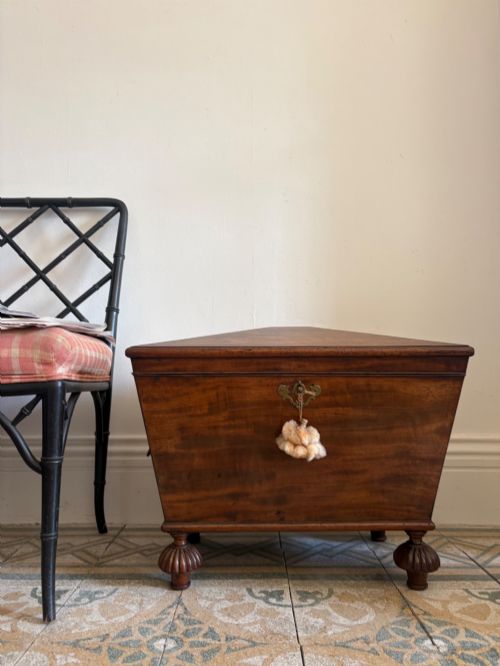


Period Wine Cooler
A period wine cooler brings formal dining traditions to life, holding ice and bottles in timber or metal vessels shaped during the Georgian and Regency eras.
Period Wine Cooler
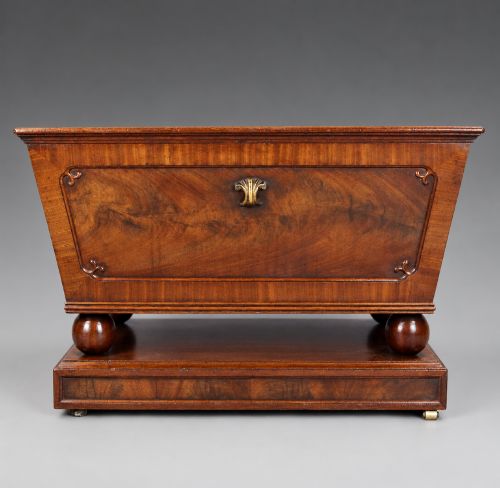
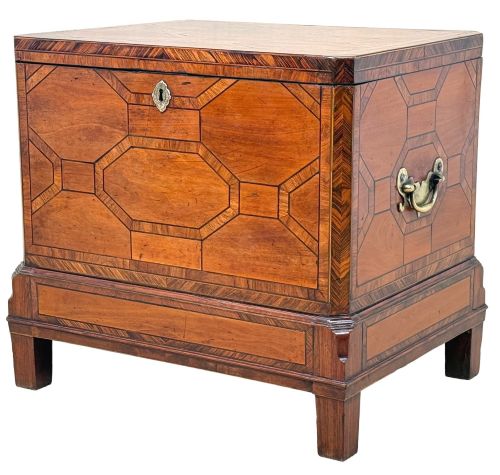
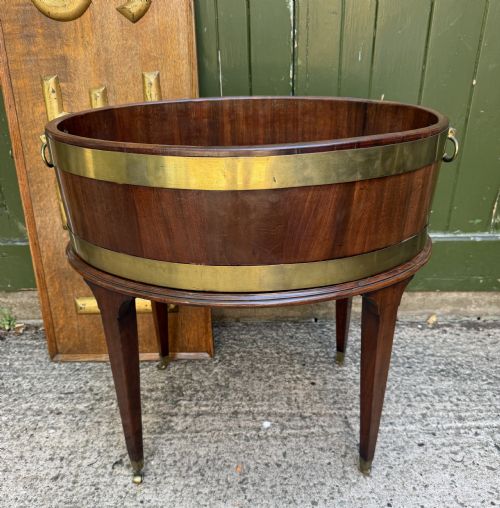
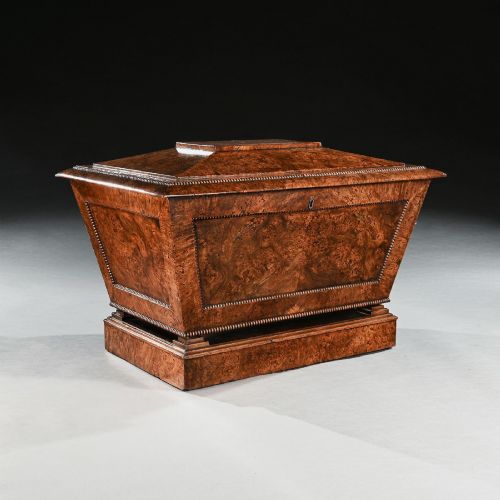
A period wine cooler encompasses cellarettes, ice pails, and champagne buckets originating largely from the eighteenth and nineteenth centuries. These vessels served dining rooms by keeping bottles chilled or holding ice at table during formal meals.
The pieces on this page are predominantly mahogany cellarettes and wine coolers from the Regency and George III periods. Buyers frequently encounter sarcophagus forms, oval brass-bound buckets, and octagonal designs resting upon stands or paw feet.
Beyond timber vessels, the selection includes silver plate, cut crystal, and porcelain ice pails alongside later Art Deco metal champagne buckets. Occasional related forms such as jardiniere stands and box planters appear within the grouping.
Materials and construction
Cabinetmakers utilised solid and veneered timbers including flame mahogany, satinwood, kingwood, pollard oak, walnut, burr elm, and padouk. Brass bands, mounts, and paw feet reinforce structural corners and ornament the exterior profiles of timber cellarettes.
Internal functionality relied upon fitted lead linings, zinc inserts, or copper components designed to contain melting ice and water safely. Metal vessels from the period employed Old Sheffield plate and copper, whilst later items incorporated silver plate and cut crystal.
Nineteenth-century diners enjoyed chilled wine while resting their feet near paw-footed wooden sarcophaguses hiding beneath the mahogany sideboards.
Judging execution and condition
Quality rests upon the selection of timber figures, such as flame mahogany or burr veneers, paired with crispness in cabinet work and brass binding. Finer examples maintain original lead linings, matching internal divisions, and authentic stands or feet.
The prestige of the workshop dictates value, evident in documented attribution to makers like Gillows or Matthew Boulton. Proportion, structural integrity, and depth of timber patina separate standard provincial pieces from exceptional workshop productions.
Chamberlain Worcester·Gillows·Matthew Boulton & Co·Christofle Paris
The Period Wine Cooler Glossary
- Cellarette
- A lockable container used for storing wine bottles near the dining table. They sit on the floor or on dedicated stands.
- Sarcophagus
- A box form with a sloping lid reminiscent of an ancient stone coffin, popular for Regency wine coolers. This shape often rests upon paw feet.
- Old Sheffield plate
- A composite metal made by fusing a thin sheet of silver to a copper base before rolling into sheets. It predates electroplating.
- Jardiniere
- An ornamental stand or pot intended to hold plants or flowers rather than bottles. They share forms with open wine coolers.
- Campana
- A vase profile shaped like an inverted bell with a flared rim and foot. This design appears in metal ice pails.
Period Wine Cooler: Frequently Asked Questions
What is a cellarette?
A cellarette is a lockable wooden chest designed to hold wine bottles in a dining room. They were typically positioned beneath sideboard tables or beside dining chairs during meals.
Interior compartments kept bottles separated, while lead linings allowed servants to pack ice around the wine.
How do I use a wine cooler today?
These vessels function effectively as decorative storage or ice buckets for contemporary entertaining. Placing modern ice packs inside protects original linings from moisture damage.
Open forms also accommodate potted plants or floral arrangements when serving drinks.
How do I tell George III from Regency pieces?
George III pieces from the eighteenth century tend to display restrained neoclassical lines, straight tapering legs, and neat brass banding. Mahogany and satinwood predominate in this earlier phase.
Regency items from the early nineteenth century embrace heavier architectural forms, including sarcophagus shapes, carved paw feet, and exotic veneers like pollard oak.
Are original metal linings common?
Original lead or zinc linings survive in a portion of surviving pieces, though many have been removed or replaced over centuries of use. The presence of an original liner adds authenticity to a cellarette.
Water-tightness varies, so inspecting the interior helps determine whether a liner is suitable for holding ice.