


Period Walnut Seating
Period walnut seating brings rich grain and deep colour into a room, offering enduring seating forms from the eighteenth and nineteenth centuries.
Period Walnut Seating
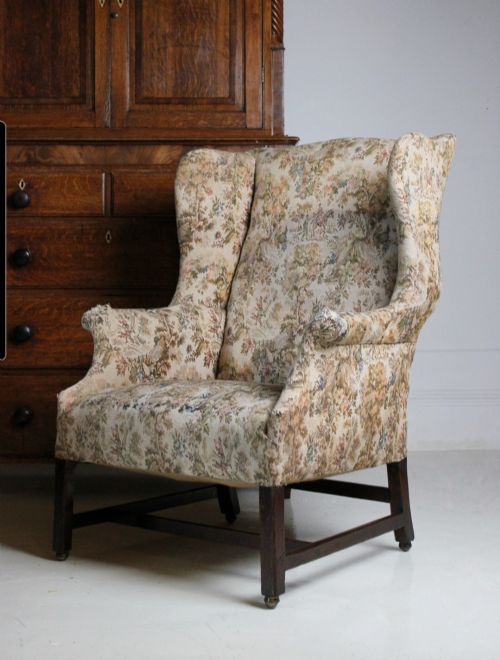
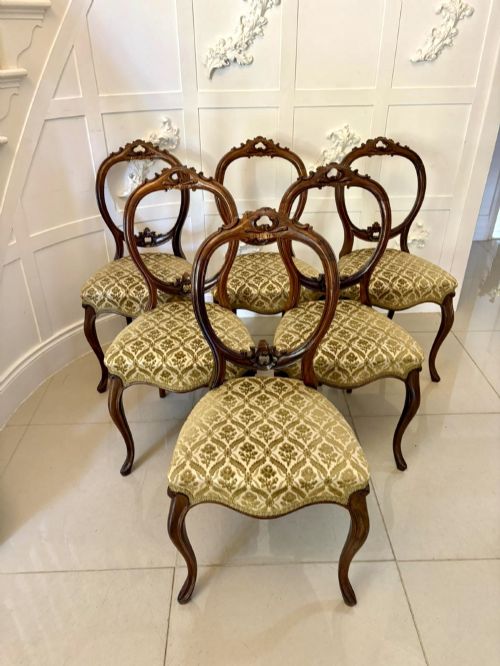
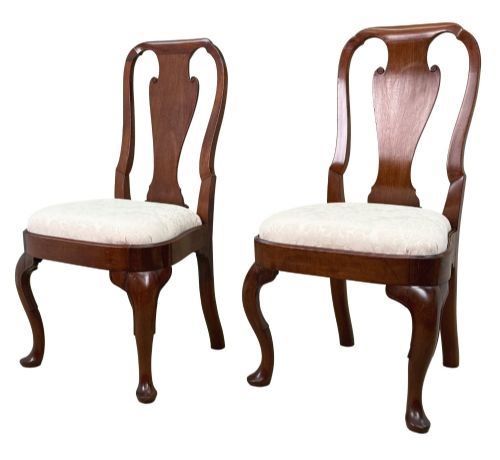
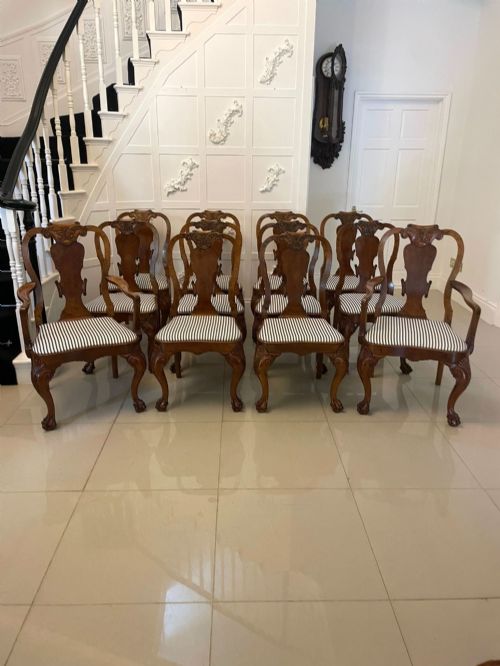
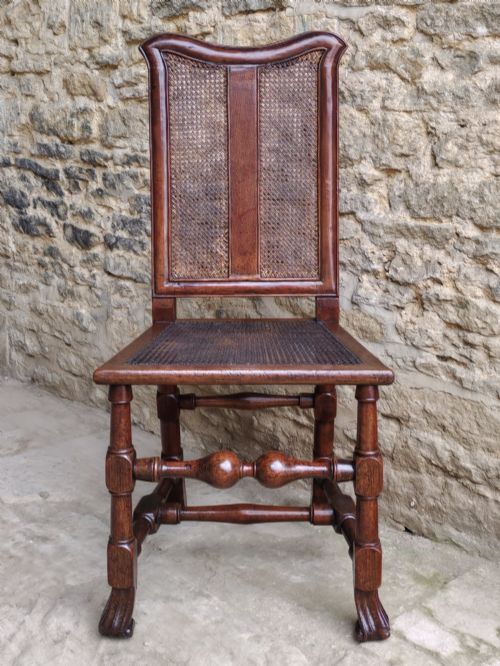
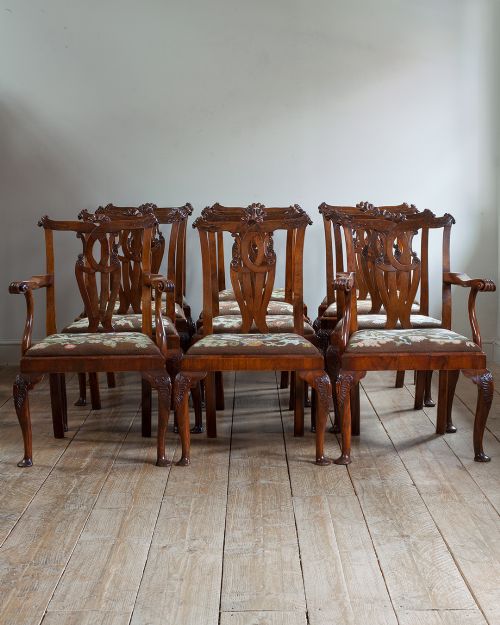
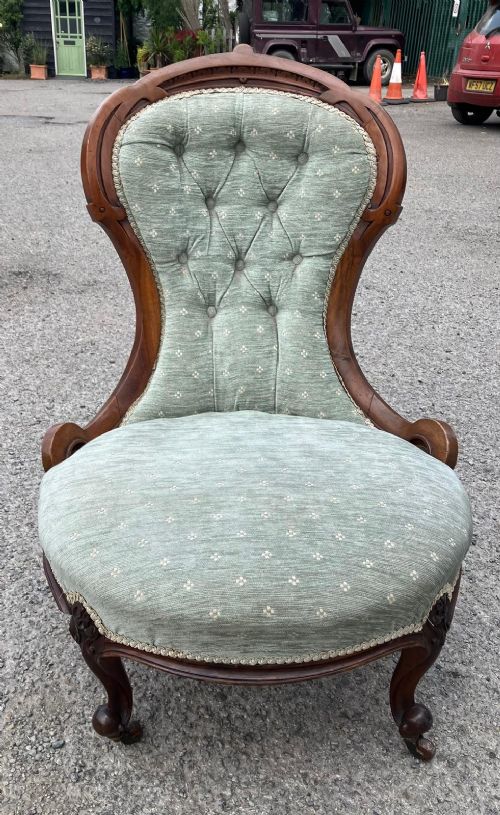
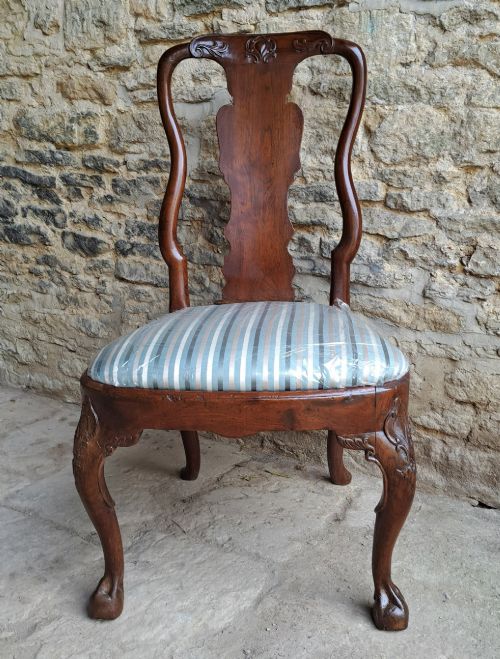
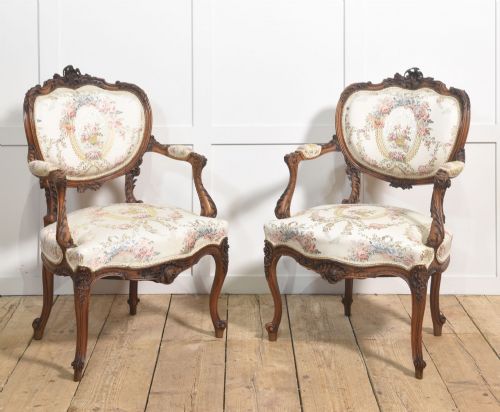
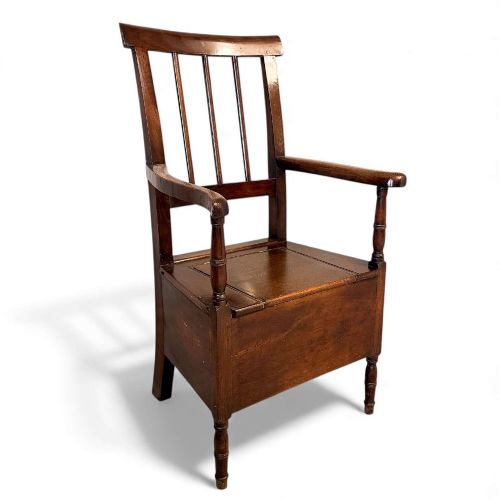
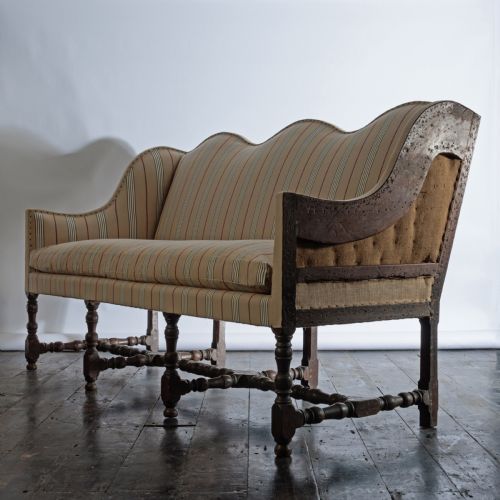
Period walnut seating encompasses a varied selection of chairs, armchairs, settees, and stools originating primarily from the eighteenth and nineteenth centuries. Buyers searching for period walnut seating encounter diverse forms ranging from early eighteenth-century Queen Anne and George I side chairs to robust Victorian dining sets.
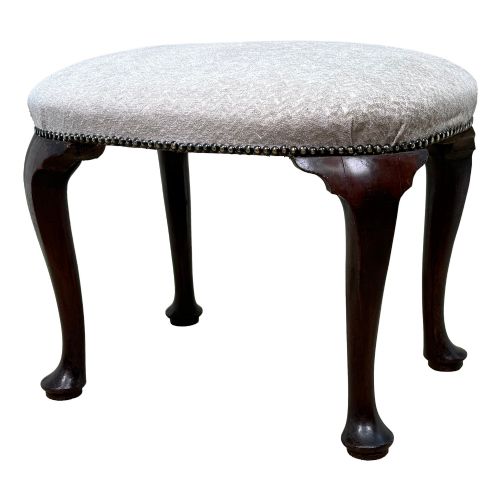
The selection frequently includes dining chairs sold in sets alongside individual armchairs, nursing chairs, and footstools. Styles span from the restrained curves of the early eighteenth century to ornate Victorian revivals and later twentieth-century interpretations.
Indicators of Excellence
Quality rests upon the crispness of carved details on walnut frames, the depth and figure of the timber grain, and the integrity of the original construction. Pieces exhibiting strong proportions and minimal timber replacement occupy the upper tier.
The preservation of original surface patination and authentic period upholstery materials distinguishes finer examples from later reproductions or heavily restored pieces.
Child-sized rocking chairs in walnut appear alongside grand library armchairs, proving that miniature Victorians took their seating comfort very seriously.
Charles Tozer·Lamb of Manchester
The Period Walnut Seating Glossary
- Burr walnut
- A veneer sliced from the gnarled growth of a walnut tree, prized for its swirling, intricate grain patterns on cabinetwork and chair backs.
- Ribbon back
- A chair back design featuring a central splat carved to resemble intertwined ribbons, popular during the Georgian period.
- Balloon back
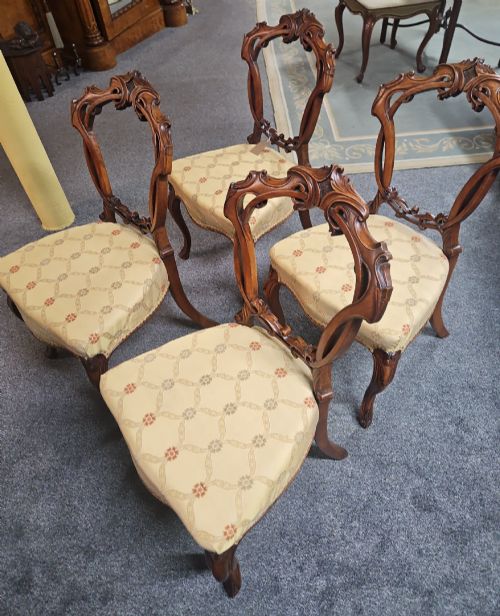
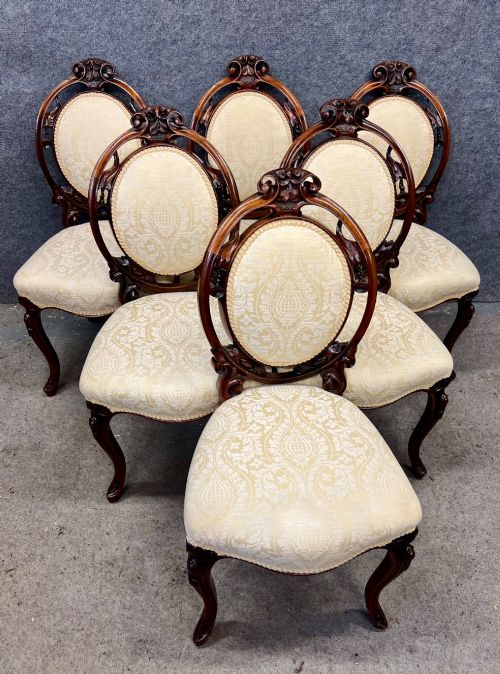
- A rounded, oval chair back profile characteristic of Victorian seating design.
- Needlepoint
- A form of counted thread embroidery traditionally used to cover chair seats and footstools in durable woolen yarn.
- Settee
- A long wooden or upholstered seat with a back and arms, designed to accommodate multiple people.
Period Walnut Seating: Frequently Asked Questions
How do I clean walnut chair frames?
Dust walnut frames regularly with a soft, dry cloth to prevent dirt accumulation on the timber surface. Avoid harsh chemical cleaners that strip the historic finish.
Apply a microcrystalline wax sparingly when the wood appears dry, buffing gently to maintain the natural sheen without building up a heavy residue.
Are these chairs suitable for daily dining?
Many period walnut dining chairs remain structurally sound for regular meals when handled with reasonable care. Solid joinery and robust timber frames allow them to function well in modern dining settings.
Heavier everyday wear can strain antique joints, so checking the stability of the frame periodically ensures longevity.
How do I identify Victorian walnut seating?
Victorian walnut pieces often display darker finishes, heavier proportions, and decorative revival motifs inspired by Rococo or Renaissance styles. Balloon back dining chairs and carved framed armchairs are common forms from this era.
Machine assistance in nineteenth-century production allowed for deeper, more uniform carved ornamentation on the walnut frames compared to earlier hand-tooled pieces.