


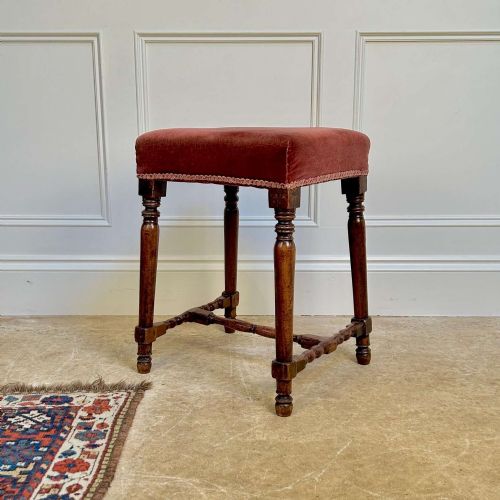


Period Upholstered Stool
A period upholstered stool brings tactile comfort and historic timber character to a room, ranging from compact foot rests to large ottomans.
Period Upholstered Stool
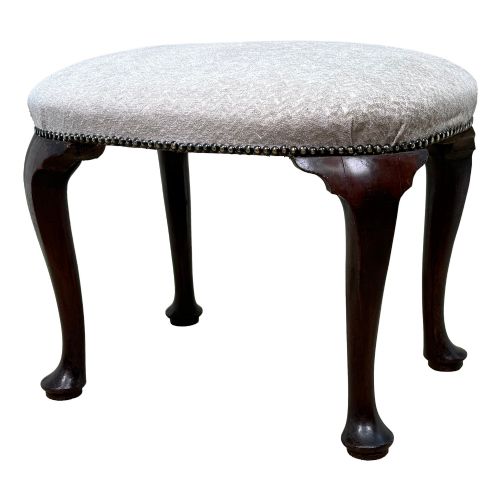
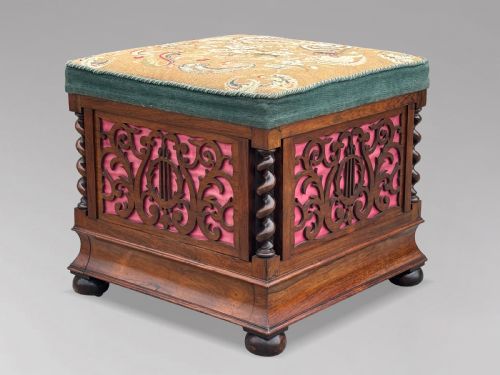
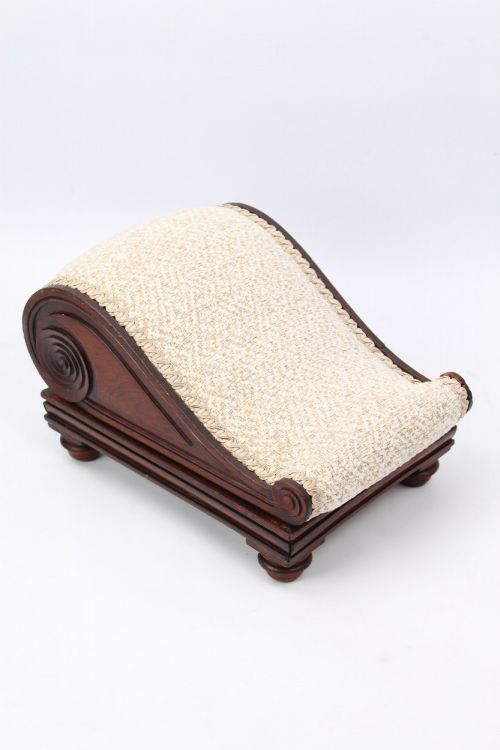
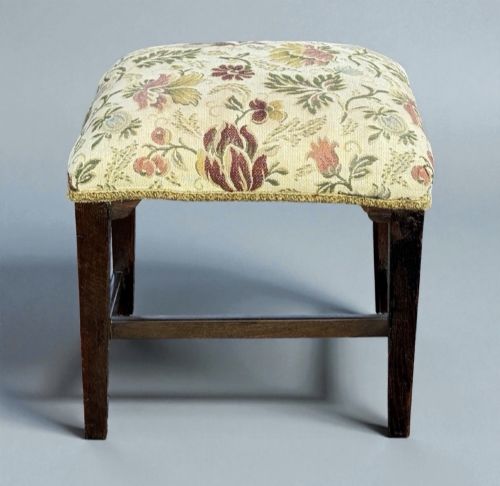
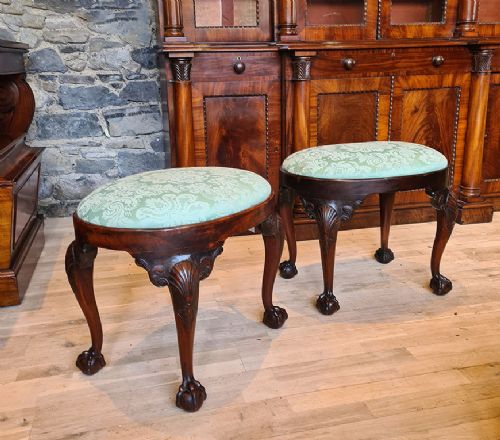
A period upholstered stool serves various domestic functions, from dressing table seats and piano stools to larger ottomans and footstools. The examples seen here span centuries of design, with particular concentrations in the Regency, Georgian, and Victorian eras.
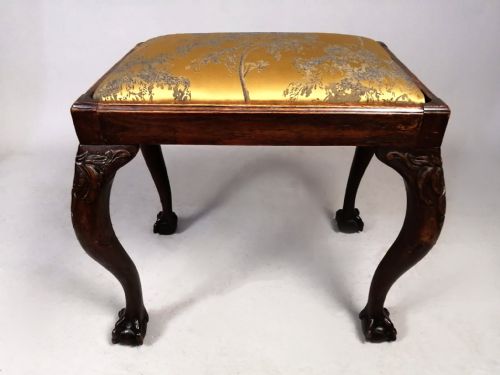
Buyers most frequently encounter mahogany and rosewood frames from the nineteenth century alongside earlier walnut and oak examples. These pieces combine exposed timber structures with textile, leather, or tapestry seats.
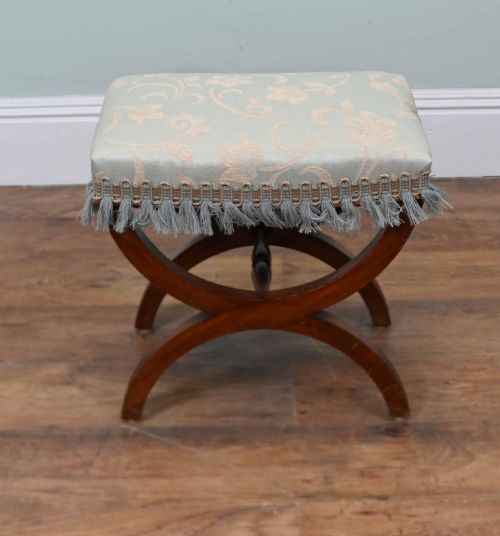
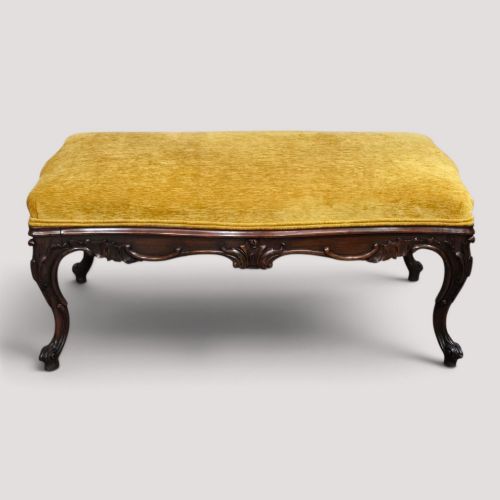
Forms range from simple rectangular footstools and box ottomans to X-framed stools and carved window seats. The selection includes both single items and matched pairs originating from British and European workshops.
Materials and Construction
Cabinetmakers utilised dense timbers including mahogany, walnut, rosewood, and oak to construct sturdy frames. These timbers were frequently carved, turned, or polished to showcase natural grain patterns.
Upholstery techniques combined traditional webbing and stuffing with diverse surface textiles. Surviving pieces feature period fabric, leather, needlework, and floral trellis tapestry.
Brass castors, gilt accents, and structural elements such as X-frames added mobility and decorative refinement to grander nineteenth-century examples.
Period Upholstered Stool Retail Price Guide 2026
Typical asking prices for period upholstered stool among the pieces listed under this phrase on Sellingantiques today, from the lower quarter to the upper quarter. They describe what is for sale here now, not the wider market.
Listings feature solid timber frames in mahogany, walnut, rosewood, and oak across the seventeenth, eighteenth, and nineteenth centuries.
Quality and Proportion
The refinement of the timber carving and the crispness of architectural details set superior examples apart from simpler utilitarian pieces. Finer frames display balanced proportions, integrated design elements, and thoughtful execution by skilled makers.
The integrity of the original wood structure and the quality of the surviving upholstery materials dictate the standing of an individual piece. Consistency in period materials and honest preservation elevate the desirability of the stool within its specific era.
I.M. Gillows of Lancaster·Mathew Gregson
The Period Upholstered Stool Glossary
- Ottoman
- A low upholstered seat or box without a back or arms, often featuring internal storage. These pieces functioned as resting places for feet or as occasional seating in reception rooms.
- X-frame
- A structural furniture design where the legs cross in the shape of an X to support the seat. This classical form appeared frequently during the Regency period.
- Tapestry
- A heavy hand-woven or needleworked textile depicting patterns or scenes used historically for durable seat coverings. Floral trellis designs frequently appear on nineteenth-century examples.
- Box Ottoman
- A seated furniture form incorporating a hinged lid that opens to reveal an internal compartment. These items combined practical storage with domestic comfort in nineteenth-century interiors.
- Back Stool
- An early form of seating resembling a chair without arms, featuring an upright upholstered back attached to a small base. These sturdy pieces date to the seventeenth century.
Period Upholstered Stool: Frequently Asked Questions
How do I date a period upholstered stool?
Dating relies on identifying the primary timber, structural joinery methods, and stylistic cues of the frame. Regency pieces often showcase rosewood and X-frames, while earlier eighteenth-century examples favour walnut or mahogany.
Secondary indicators include the presence of hand-turned legs, brass fittings, and the specific textile used for the upholstery. Comparing the overall silhouette to established design periods clarifies the likely decade of manufacture.
Were these stools used as footstools or seats?
Period stools fulfilled multiple roles depending on their scale and height. Smaller low examples served as footrests before larger chairs, while taller dressing table stools and piano seats were built for sitting.
Larger ottomans and window stools provided versatile seating options in public rooms and bedrooms alike. The presence of internal storage or specific upholstery wear often hints at the primary domestic function.
How should I care for antique timber and upholstery?
Preserving the timber frame requires maintaining stable indoor humidity and avoiding direct sunlight that can dry out old woods. Gentle dusting with a dry cloth keeps the polished surface clean without moisture damage.
Protecting fragile historical textiles and leather seats involves minimising direct friction and keeping the pieces away from heat sources. Professional conservation advice helps maintain older stuffing and delicate needlework fabrics.