

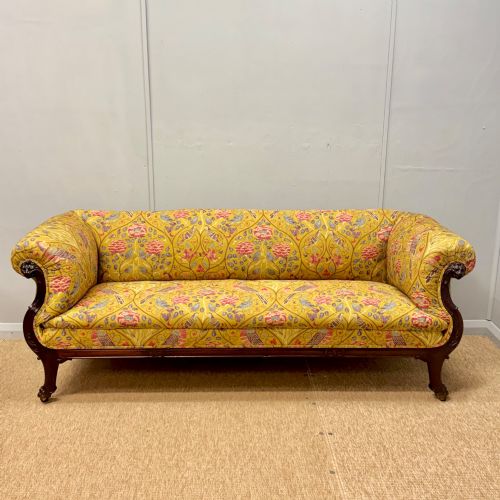
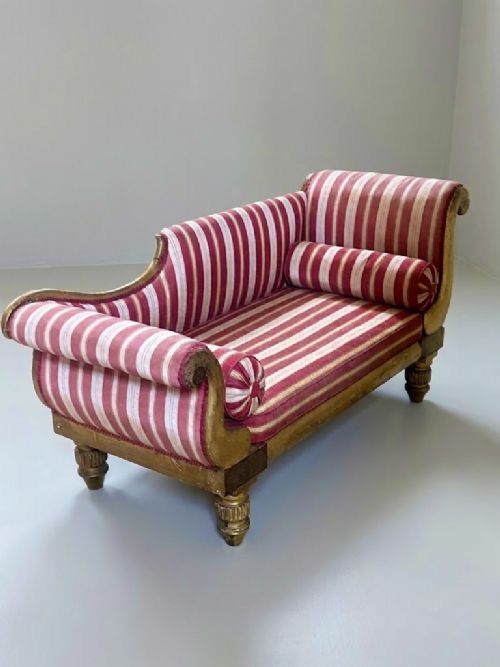
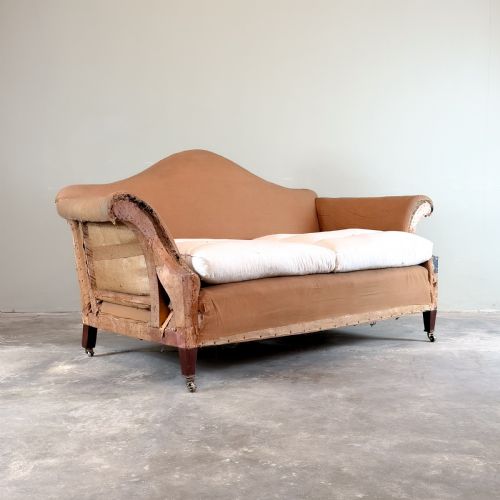
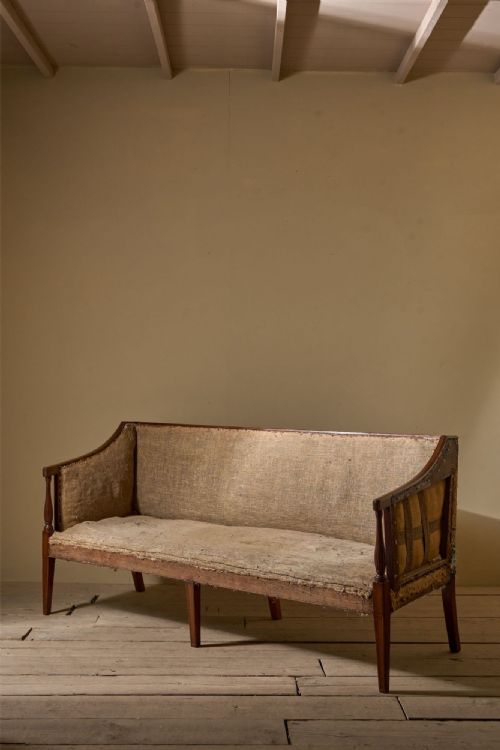



Period Upholstered Couch
These period upholstered couch examples unite centuries of seating, bringing Regency scroll ends and Georgian mahogany frames into modern rooms.
Period Upholstered Couch
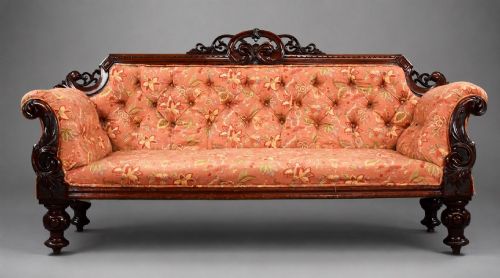
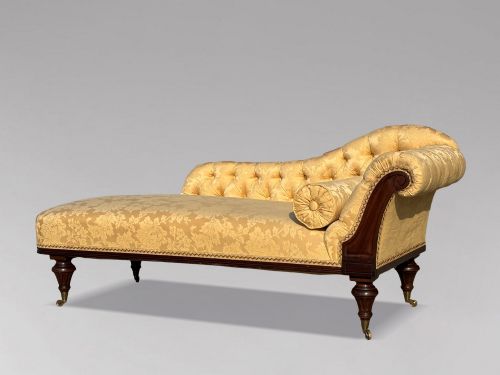
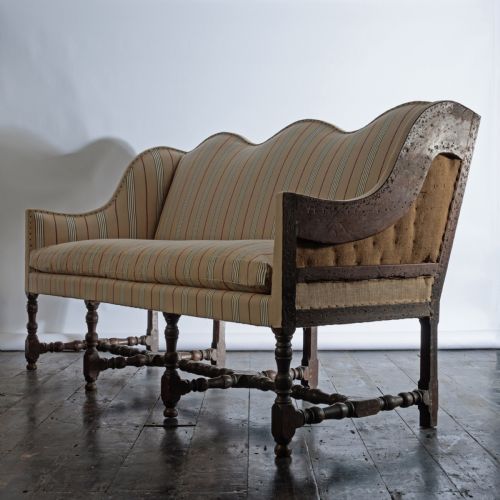
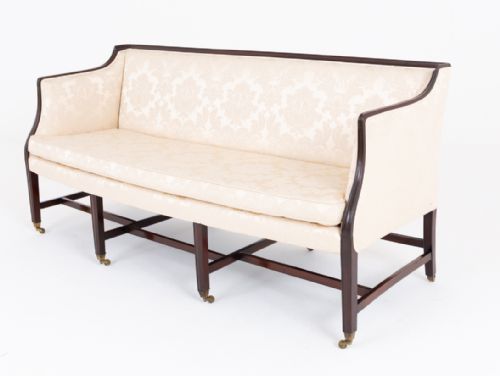
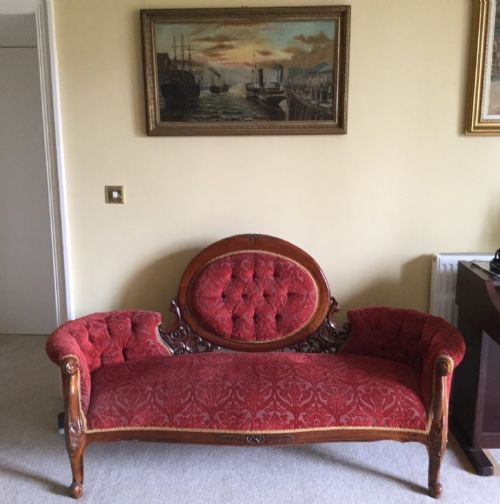
When you search for a period upholstered couch, you encounter a variety of forms including settees, double-ended sofas, and chaise longues originating from the 17th, 18th, and 19th centuries. The selection spans distinct eras such as the Georgian, Regency, Victorian, and Edwardian periods.
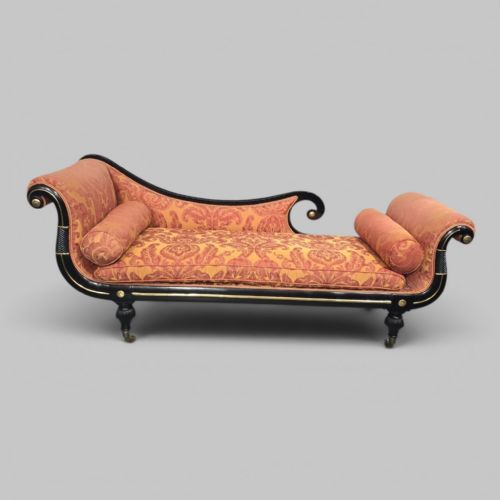
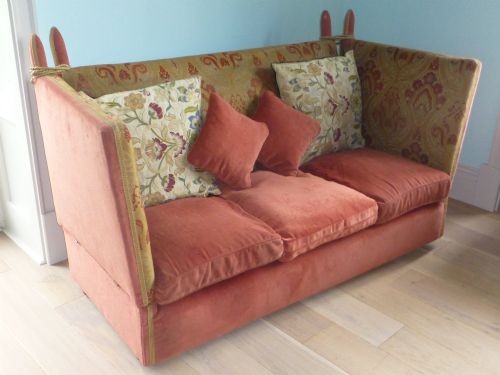
You are most likely to meet mahogany-framed sofas from the Regency and Georgian eras alongside Edwardian examples on this page. These pieces often feature specific silhouettes like the camel back, scroll end, or the adjustable drop arm characteristic of Knole sofas.
The materials supporting these upholstered surfaces include timber, mahogany, walnut, rosewood, and giltwood. Workshops from different decades applied various fabrics, from gold damask and silk to burgundy deep pile brocade, to finish the seating.
Craftsmanship and Proportion
The refinement of the wooden show frame separates standard seating from exceptional pieces. Carved details, such as lion mask hairy paw feet on George II examples, reveal the hand of the master carver.
Proportion and wood selection dictate the standing of a couch. Richly grained mahogany, figured rosewood, and balanced serpentine or camel back lines elevate the piece above simpler vernacular items.
Period Upholstered Couch Retail Price Guide 2026
Typical asking prices for period upholstered couch among the pieces listed under this phrase on Sellingantiques today, from the lower quarter to the upper quarter. They describe what is for sale here now, not the wider market.
Listings feature mahogany, rosewood, walnut, and giltwood frames paired with fabrics like damask, silk, and brocade across multiple centuries.
Giles Grendey·Howard and Sons·Chippendale·Hepplewhite
The Period Upholstered Couch Glossary
- Chaise longue
- An upholstered sofa in the form of a chair with a seat long enough for the user to recline. Many Regency examples feature scroll ends for arm support.
- Knole sofa
- A traditional English settee design characterised by high, adjustable or drop arms originally tied to posts with cords or braids. Antique versions often appear in damask or velvet.
- Giltwood
- Wood that has been covered with a thin layer of gold leaf or gesso. It appears frequently on grand 18th-century and Regency couches.
- Serpentine
- A line or edge that curves outward at the centre and inward at the sides. This contour frequently defines the front rails of Georgian and 19th-century settees.
- Double ended sofa
- A couch with identical raised scrolls or backrests at both ends, allowing the occupant to recline in either direction. These appear often in 19th-century mahogany and rosewood.
Period Upholstered Couch: Frequently Asked Questions
What is a period upholstered couch?
A period upholstered couch is a historical seating furniture piece featuring a wooden frame and textile covering, dating from eras such as the Georgian, Regency, or Victorian centuries.
These pieces encompass settees, daybeds, and double-ended sofas designed for formal drawing rooms and country houses.
How do I identify a Regency sofa?
Regency sofas typically display bold scroll ends, lyre shapes, or classical mahogany and rosewood frames reflecting early 19th-century taste.
They often incorporate brass details, reeded legs, and rich wood grains characteristic of the Regency period.
What is a Knole sofa?
A Knole sofa is a distinct seating form featuring high, hinged arms that can be lowered or adjusted to various angles.
Originating in the 17th century, antique versions are frequently upholstered in heavy fabrics like damask or velvet.
How should I care for antique upholstery?
Antique upholstery requires gentle cleaning with appropriate fabric attachments and protection from direct sunlight to preserve delicate silk, damask, or brocade.
The underlying wood frame benefits from occasional dusting with a dry cloth and proper humidity control in the room.