

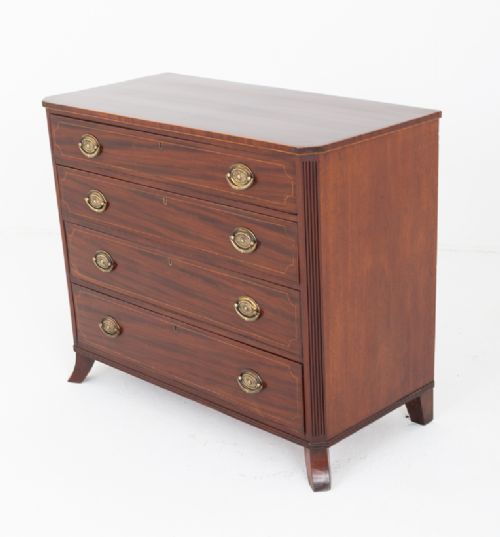
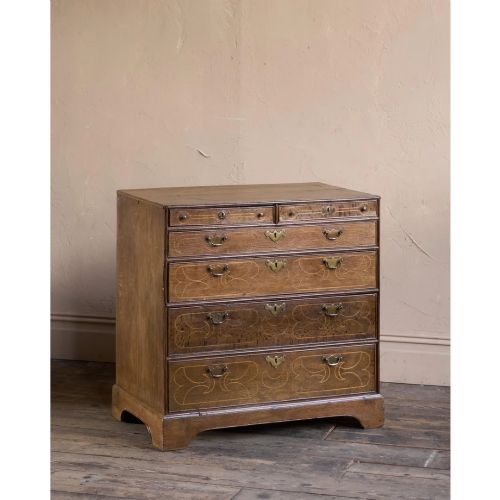
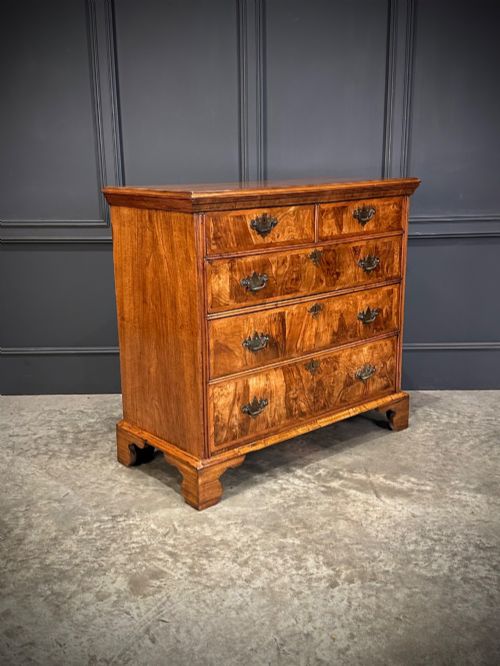


Period Tallboy Unit
A period tallboy unit gives you monumental storage without eating your floor space, stacking drawer upon drawer for the serious collector.
Period Tallboy Unit
When you search for a period tallboy unit, you encounter substantial vertical timber storage pieces spanning the seventeenth, eighteenth, and nineteenth centuries. These items range from simple oak chests to elaborate walnut and mahogany chests on stands.
The pieces on this page lean heavily toward classic Georgian and Regency chests of drawers alongside earlier William and Mary forms. You will find standard multi-drawer chests sitting alongside raised chest on stand variations.
Makers working in fruitwood inlay, yew wood, and pine produced these pieces to dominate tall rooms with narrow footprints. They serve the same practical purpose today as they did centuries ago, offering deep compartmentalised storage.
How they were made
Cabinetmakers constructed these pieces primarily using solid oak, walnut, and mahogany, often incorporating fruitwood inlay for decorative contrast. They relied on traditional joinery techniques to manage the natural movement of large timber panels over centuries.
Surfaces received various treatments, from clear polished mahogany to distressed mottled blue finishes on specific Georgian examples. Drawer interiors and secondary woods frequently feature pine or fruitwood, reflecting the workshop practices of the period.
Period Tallboy Unit Retail Price Guide 2026
Typical asking prices for period tallboy unit among the pieces listed under this phrase on Sellingantiques today, from the lower quarter to the upper quarter. They describe what is for sale here now, not the wider market.
The listings span multiple centuries, uniting seventeenth-century oak and walnut with eighteenth-century mahogany and nineteenth-century pine.
What varies in quality
Quality rests in the crispness of the timber grain, the depth of the natural patina, and the restraint of any inlay work. Finer examples display meticulous attention to proportion, where the height balances harmoniously with the narrow width.
The integrity of the original stand or base construction separates standard chests from superior collector pieces. Finer items retain their original brass hardware and untouched surface finishes rather than later replacements.
The Period Tallboy Unit Glossary
- Tallboy
- A tall chest of drawers, typically formed of one chest stacked upon another or upon a low stand. It maximises vertical storage capacity.
- Chest on Stand
- A chest of drawers raised off the floor on a separate table-like stand with legs. This form is common in seventeenth and eighteenth-century pieces.
- Inlay
- Decorative wood or brass inserted into recesses cut into the solid timber surface. Fruitwood inlay creates contrasting geometric or floral patterns.
- Patina
- The surface sheen and mellowing of colour acquired by timber over centuries of handling and exposure. A good patina indicates age and honest use.
Period Tallboy Unit: Frequently Asked Questions
What is a period tallboy unit?
A period tallboy unit is a tall timber storage chest built during the seventeenth, eighteenth, or nineteenth centuries. These pieces stack multiple drawers vertically to provide large capacity within a compact floor footprint.
They appear in various timbers including oak, walnut, and mahogany. Many sit upon dedicated stands or feature specialised fruitwood inlay.
How were tallboys used historically?
These units served primarily in bedchambers for storing folded linens, garments, and personal valuables. Their height kept clothes away from damp floor drafts while saving valuable bedroom space.
The upper drawers held smaller items, while the deep lower drawers accommodated bulkier textiles. Their imposing presence also signalled the status and wealth of the household.
How do I tell periods apart?
Seventeenth-century pieces, such as William and Mary examples, often feature oak or walnut construction with panelled sides and distinct stands. Georgian and Regency pieces transition toward smoother mahogany surfaces, refined brass hardware, and cleaner classical proportions.
Late nineteenth-century items often mimic earlier Georgian styles but typically display different secondary woods and sharper, less mellowed machine tooling inside the drawers.