
Period Sofa
A period sofa anchors a room with substantial timber frames and deep upholstery from the 17th to the early 20th century.
Period Sofa
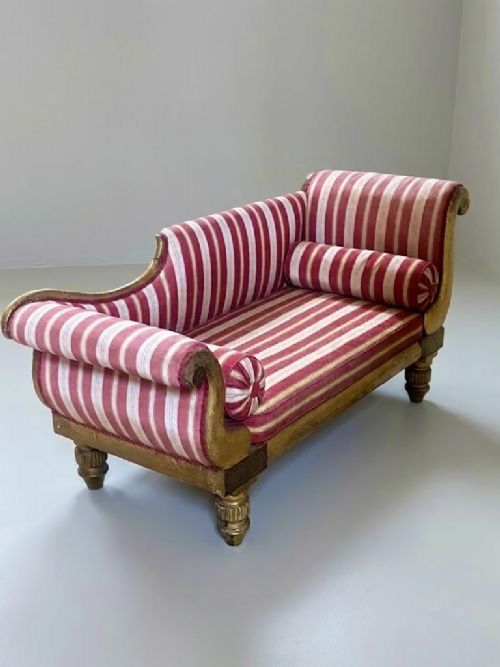
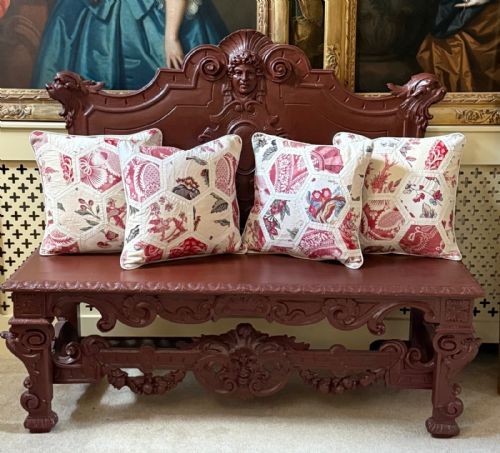
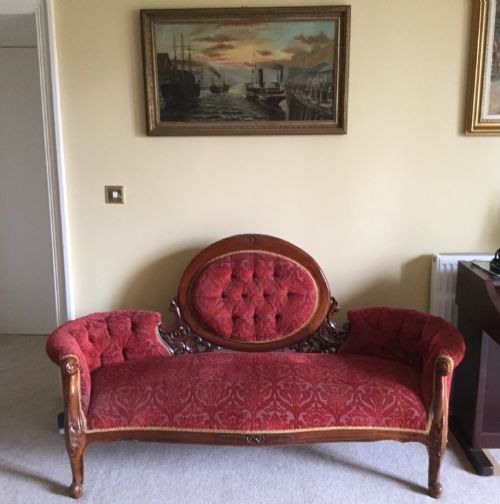
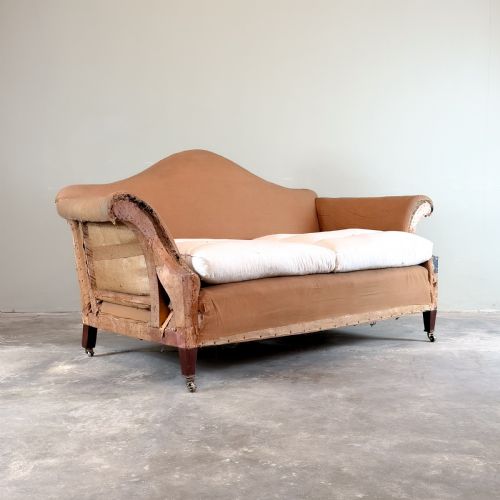
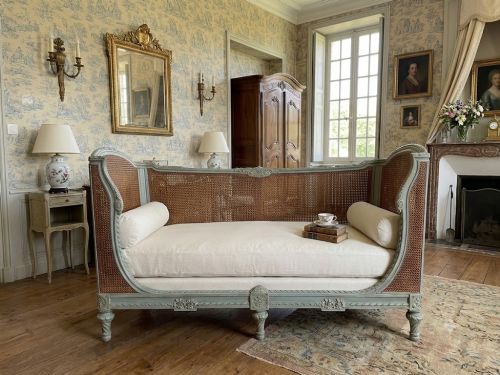
A period sofa encompasses large seating forms including camel back settees, double ended sofas, scroll end sofas, drop arm settees, day beds, and chaises longues spanning the 17th, 18th, 19th, and early 20th centuries. Buyers searching for a period sofa encounter formal seating framed in mahogany, rosewood, walnut, and giltwood, alongside variations upholstered in leather, brocade, silk, and modern fabrics.
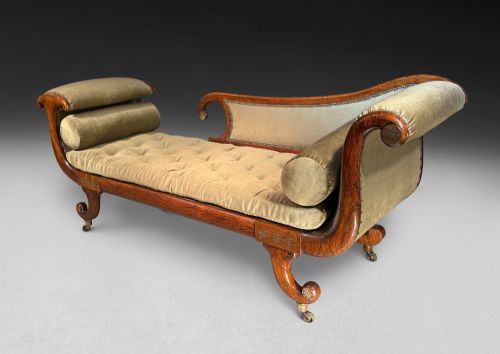
The selections on this page draw from Georgian, Regency, Victorian, Edwardian, and French styles such as Louis XVI and French Empire. Pieces range from carved mahogany framed settees of bold scale to brass inlaid simulated rosewood chaises longues and leather Chesterfields.
Earlier examples include Queen Anne walnut settees and 17th century wingback forms, while 19th century items bring double ended frames and scroll ends into domestic interiors.
Materials and Construction
Frames rely on dense hardwoods such as mahogany, rosewood, walnut, and oak, providing structural stability for large seating forms. Decorative elements incorporate giltwood, brass inlay, and carved details like lion mask hairy paw feet.
Upholstery methods utilise traditional materials including horsehair stuffing, sprung settee bases, and feather inners, covered in silk, brocade, velvet, leather, or linen.
Listings feature timber frames in mahogany, rosewood, walnut, and oak alongside upholstered finishes in leather, silk, and brocade across multiple centuries.
Quality and Distinction
Quality rests in the crispness of the timber carving, the integrity of the underlying frame construction, and the retention of original surface patination on woods like mahogany and rosewood. Pieces with distinct regional traits, complex brass inlay, or sculptural elements such as dolphins or carved lions paws stand apart from simpler domestic iterations.
The fidelity of the upholstery to historical precedent and the preservation of secondary timbers inside the frame influence the standing of each piece.
Giles Grendey·Jean-Joseph Chapuis
The Period Sofa Glossary
- Chaise Longue
- An upholstered long chair or day bed designed for reclining, popular during the Regency period. These pieces feature a single raised headrest and an elongated seat.
- Settee
- A small upholstered sofa with a back and arms, seating two or more people. Georgian and Victorian examples frequently utilise mahogany or walnut frames.
- Chesterfield
- A large upholstered sofa with deep buttoning and low arms of equal height to the back. Traditional versions utilise dark brown leather upholstery.
- Giltwood
- Timber coated with a thin layer of gold leaf. This finish appears on formal 18th and 19th century frames.
- Camel Back
- A sofa design featuring an undulating, arched top rail resembling a camel's hump. This profile originates in 18th century Georgian furniture.
Period Sofa: Frequently Asked Questions
How do I date a period sofa?
Dating relies on identifying the primary wood species, leg profiles, and structural joinery used within the frame. Styles shifted from walnut in the early periods to mahogany and rosewood during the Georgian and Regency eras.
Secondary indicators include upholstery foundations like webbing and springs, which evolved significantly from hand-stitched horsehair to coil sprung bases by the Victorian epoch.
Where should I place a chaise longue?
A chaise longue functions effectively as a standalone piece in a library, drawing room, or large bedroom where it can be viewed from multiple angles. Freestanding placement allows the carved woodwork and upholstery details to remain visible.
Position the piece away from direct sunlight to protect sensitive textiles such as silk and brocade from fading.
How do I maintain leather upholstery?
Leather upholstery on pieces like Victorian Chesterfields requires occasional conditioning to prevent the hide from drying and cracking over time. Regular dusting with a soft cloth removes surface particles.
Avoid placing leather furniture near heat sources or radiators, which accelerate moisture loss in antique animal hides.
What is the difference between a settee and a sofa?
Historically, a settee denotes a wooden or upholstered seat designed for multiple occupants, often sharing stylistic traits with dining or parlour chairs of the same era. Sofas generally imply larger, fully upholstered seating structures engineered for lounging.
Terminology varies across centuries, with 18th century makers frequently using settee for upholstered frames that modern buyers call sofas.