



Period Pendulum Clock
A period pendulum clock brings the rhythmic, mechanical pulse of centuries past directly into a room.
Period Pendulum Clock
A period pendulum clock is a timekeeping machine driven by weights or springs and regulated by a swinging pendulum, housed in a timber, bronze, or marble case. When you search for a period pendulum clock, you encounter forms ranging from towering floor-standing longcase clocks to compact mantel, bracket, and wall clocks spanning the seventeenth through the early twentieth centuries.
Makers and regional styles shape what you see, from London longcase clockmakers working in burr walnut and mahogany to French horologists mounting gilt bronze and ormolu upon marble bases.
Construction and Materials
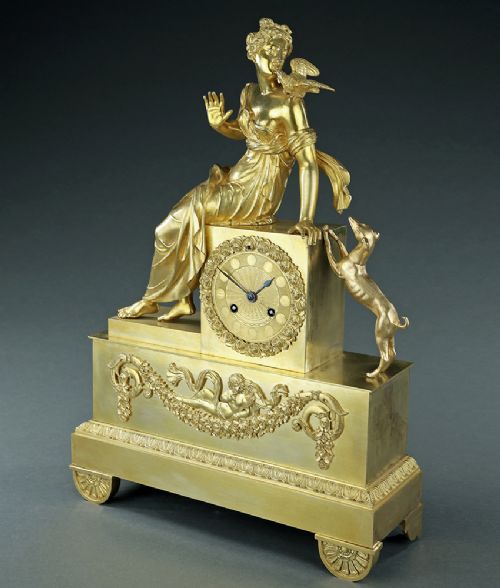
Cabinetmakers constructed the tall and mantel cases from dense native hardwoods like mahogany, oak, walnut, and elm, often applying intricate veneers, inlay, or ebonisation. French pieces frequently pair fire-gilt ormolu and cast bronze with white marble or glass bezels to house the movement.
Clockmakers fitted brass gear trains, fusee movements, and enamelled dials into these housings, sometimes utilising wooden dials on wall clocks or silk suspension systems for the pendulum. Craftsmen carved wood, cast metal, and painted enamel by hand to complete each functional sculpture.
Period Pendulum Clock Retail Price Guide 2026
Typical asking prices for period pendulum clock among the pieces listed under this phrase on Sellingantiques today, from the lower quarter to the upper quarter. They describe what is for sale here now, not the wider market.
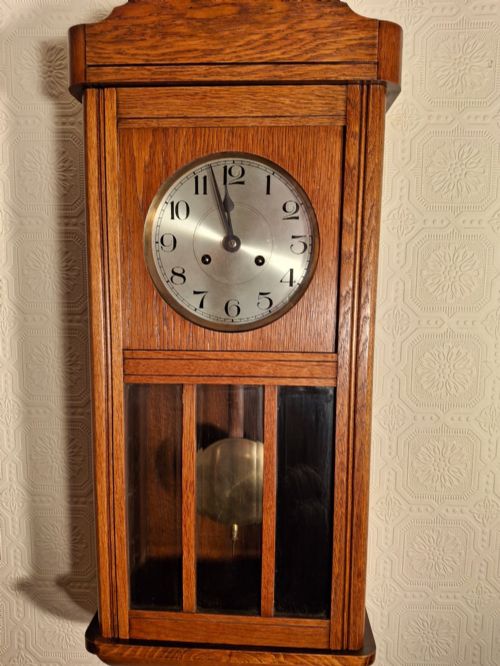
Listings span the seventeenth to the early twentieth century, incorporating English longcases, French Empire porticos, and Arts and Crafts oak wall clocks.
Judging Quality
Quality rests in the crispness of the bronze chasing on an ormolu mount and the depth of figure in a mahogany or burr elm veneer. Superior examples retain their original matching components, dial signatures, and movements without heavy modern replacements.
The architectural harmony of the case and the precision of the carved or inlaid decoration distinguish exceptional workshop output from standard commercial production.
Joseph Saer of London·Williams·Pons de Paul·Ravrio·Baltazart·Raine of Durham·Seikosha Seiko
The Period Pendulum Clock Glossary
- Fusee
- A conical pulley used in spring-driven clocks to equalise the torque as the mainspring unwinds. This mechanism helps maintain consistent timekeeping accuracy across the power reserve.
- Ormolu
- Finely chopped gold applied to a bronze base through a mercury amalgamation process, creating a durable golden finish. It appears extensively on French Empire clock cases.
- Cartel clock
- An ornamental wall clock enclosed in a carved, gilt, or bronze frame rather than a wooden box case. These designs were popular in the eighteenth century.
- Portico clock
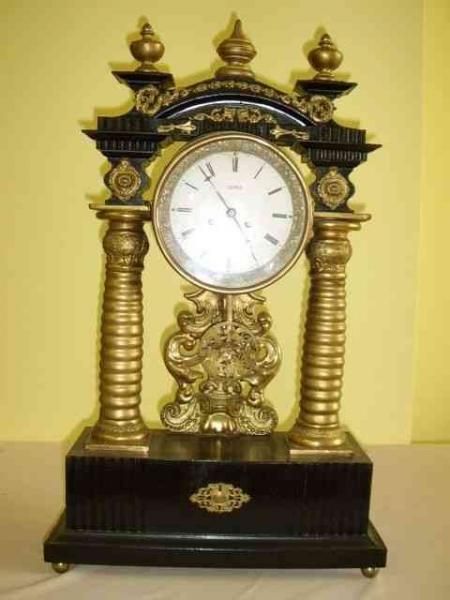
- A mantel clock featuring a architectural frame supported by four or more columns resembling a classical temple. They date predominantly to the late eighteenth and early nineteenth centuries.
- Verge escapement
- An early type of clock escapement mechanism that controls the release of the gear train using a crown wheel and pallet. It requires the pendulum to swing in a wider arc.
Period Pendulum Clock: Frequently Asked Questions
How do I wind a mechanical clock?
Most mechanical clocks require a key or crank inserted into winding holes on the dial to tension the springs or raise the weights. Care must be taken not to overwind the movement.
Different models require winding at intervals ranging from eight days to thirty days depending on the train configuration.
Where should I place a longcase clock?
Longcase clocks need a stable, dry interior wall away from direct sunlight, central heating vents, and heavy vibrations from doors. A level floor is essential for the pendulum to beat evenly.
Securing tall cases to the wall using a bracket prevents accidental tipping.
How do I tell a Georgian clock from a Victorian one?
Georgian clocks usually display restrained classical proportions, understated mahogany or oak cabinetry, and traditional brass dials with engraved details. Victorian pieces often incorporate heavier proportions, darker ebonised woods, or more ornate cast ornamentation.
Examining the internal movement fixings and dial construction helps confirm the manufacturing era.
Why does my clock gain or lose time?
Mechanical clocks are sensitive to temperature changes, which alter the length of the pendulum and the viscosity of the oil in the gear train. Adjusting the regulating nut on the pendulum bob corrects the rate.
Ensuring the clock stands level on its surface also restores an even beat.