



Period Newspaper Holder
A period newspaper holder keeps your daily sheets tidy with the craftsmanship of the Regency, Victorian, and Edwardian eras.
Period Newspaper Holder
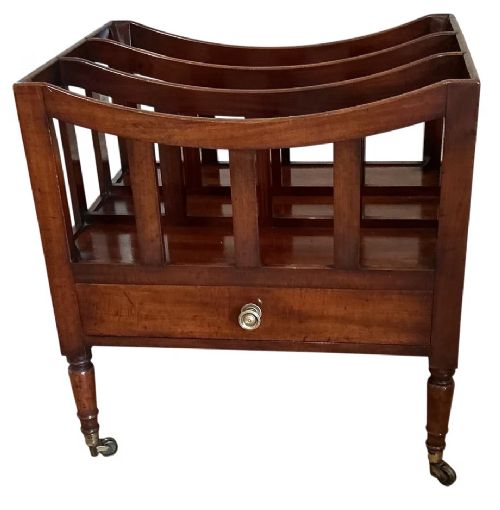
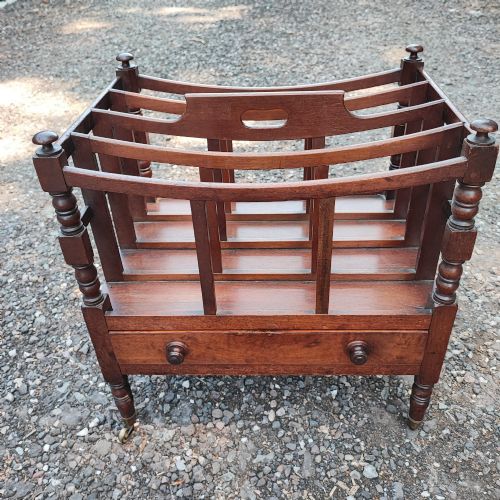
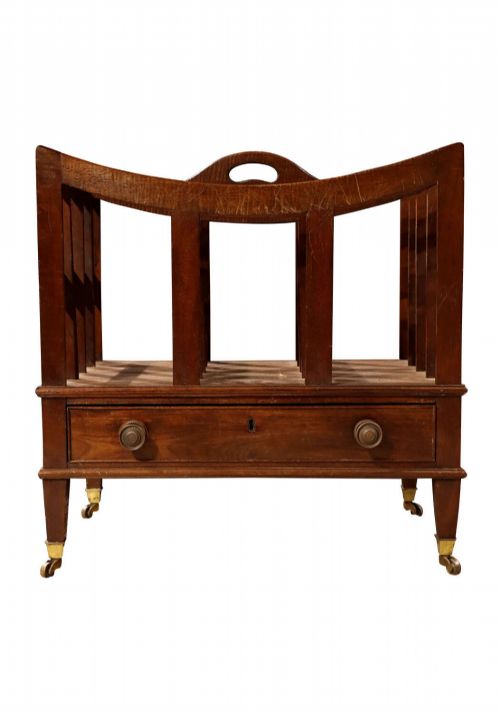
A period newspaper holder typically takes the form of a canterbury or a dedicated magazine rack, designed to sit beside a reading chair or table in the drawing room. These pieces hold journals, sheets, and daily papers upright in divided wooden slats or metal frames.
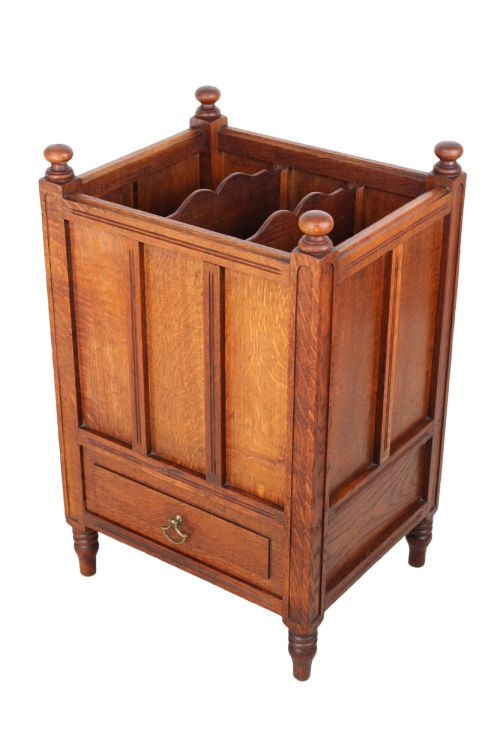
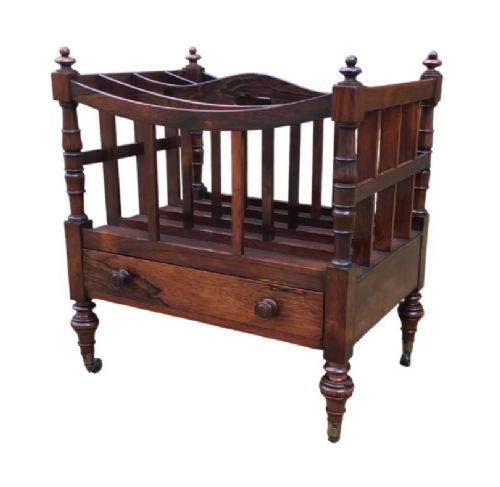
The versions you meet most often on this page date from the Regency and Victorian periods, alongside Edwardian examples and later 1920 pieces. They appear in forms ranging from boat-shaped rosewood frames to three-tier wooden racks and ornate brass stands.
Originating as stands for music folios and newspapers alike, these items blend utility with decorative cabinet-making. You will find them constructed to move easily across the floor, often incorporating low drawers or carrying handles.
Materials and Construction
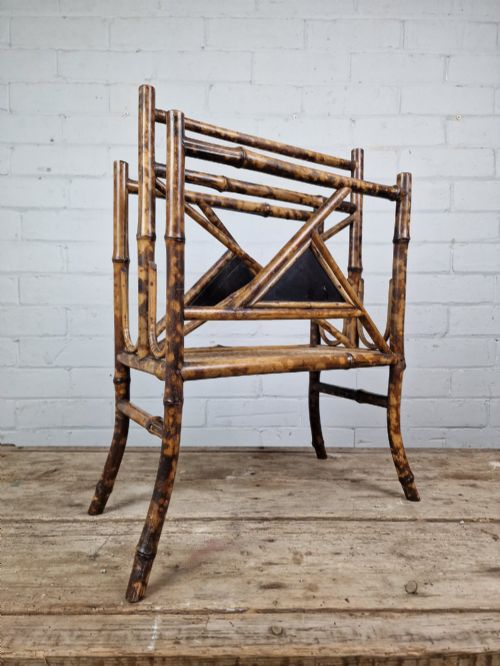
Cabinet-makers relied heavily on rich timbers such as mahogany, rosewood, and oak, often shaping them into slatted compartments and turned supports. Bamboo and lacquer also appear, reflecting the taste of the Aesthetic Movement during the nineteenth century.
Metalwork forms an alternative material stream, utilising brass for freestanding stands and wirework racks. Joinery techniques range from fine dovetailing on small drawers to sturdy pegged joints designed to bear the weight of heavy folios.
Period Newspaper Holder Retail Price Guide 2026
Typical asking prices for period newspaper holder among the pieces listed under this phrase on Sellingantiques today, from the lower quarter to the upper quarter. They describe what is for sale here now, not the wider market.
Some nineteenth-century readers clearly dropped their papers in a hurry, leaving behind stands sturdy enough to outlast several political dynasties.
Judging Quality
The distinction between ordinary utility items and superior pieces rests on timber selection and decorative detail. Finer examples display figured mahogany or richly grained rosewood, paired with crisp hand-turned spindles and elegant carrying handles.
Construction methods reveal the maker's hand through the tightness of the joinery and the presence of supplementary storage, such as a smoothly running drawer beneath the rack. Untidy repairs or replacement slats lower the standing of an otherwise honest piece.
Gillows
The Period Newspaper Holder Glossary
- Regency
- An English design period spanning the early nineteenth century, known for classical restraint and influenced by ancient Greek and Roman forms. Pieces from this era frequently utilise dark polished timbers.
- Aesthetic Movement
- A late nineteenth-century style that championed art for art's sake and embraced exotic materials like bamboo and Japanese-inspired lacquer work.
- Boat-shaped
- A curved, flared outline resembling the hull of a boat, commonly seen on the upper partitions of Regency canburys.
Period Newspaper Holder: Frequently Asked Questions
What is a canterbury?
A canterbury is a low, freestanding piece of furniture divided into upright slots for holding newspapers, magazines, or sheet music. They were built to keep reading material organised and within reach beside seating areas.
Most versions include low legs, carrying handles, and occasionally a small drawer underneath for smaller accessories. They function as both practical storage and decorative side furniture.
Where should I place a newspaper holder?
These holders sit naturally beside a reading chair, sofa, or desk where papers and journals accumulate. Their compact footprints allow them to fit easily into corners or alongside larger tables without crowding a room.
Because many feature finished sides and detailed woodwork, they look best placed where they remain visible rather than hidden away. Keeping them in dry conditions protects the timber or metal from warping or tarnishing.
How do I tell Regency from Victorian pieces?
Regency pieces often display cleaner classical lines, boat-shaped compartments, and dark rosewood or mahogany with minimal fuss. They date from the early decades of the nineteenth century and lean towards architectural restraint.
Victorian and later Edwardian examples tend to introduce heavier mouldings, different wood species like oak, or varied styles such as bamboo and brass wirework. Examining the turning style and timber grain helps clarify the period.
Were these stands only for newspapers?
Historical records show that these stands served multiple purposes, holding sheet music, journals, and books alongside daily newspapers. The divided compartments kept fragile paper goods flat and sorted.
Many listings note their dual identity as music stands or sheet music cabinets, reflecting how nineteenth-century households economised space with multi-use furniture.