



Period Marquetry Furniture
Period marquetry furniture brings together seventeenth-century geometry and eighteenth-century elegance through meticulous wood inlay.
Period Marquetry Furniture
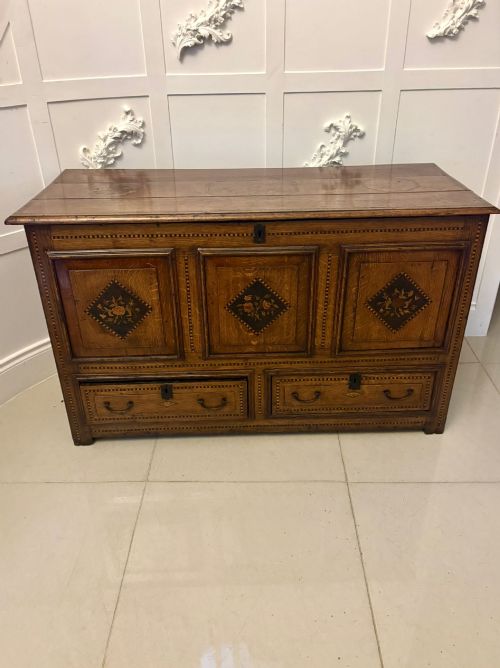
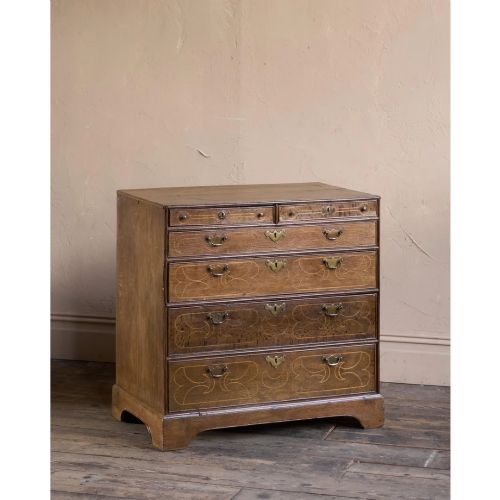
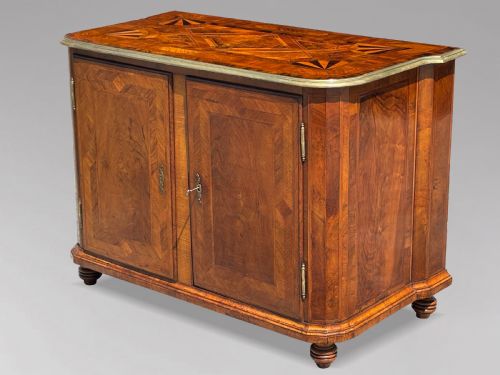
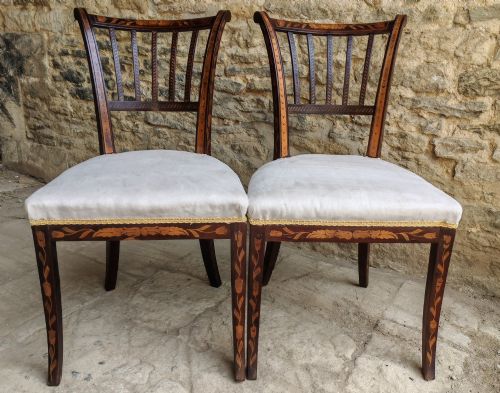
When you search for period marquetry furniture, you encounter items spanning the seventeenth century through the Regency era, featuring intricate wood and brass decoration.
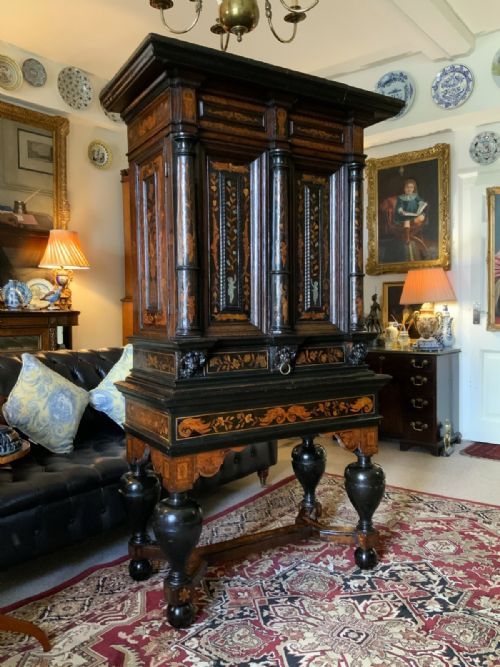
The pieces on this page include chests of drawers, cabinets on stands, side tables, and card tables originating from English, Dutch, and continental workshops.
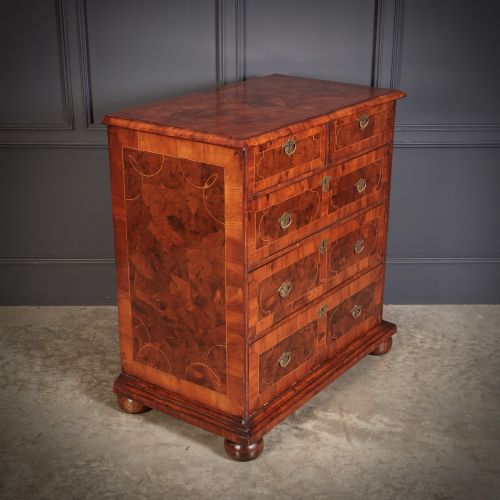
Early examples lean towards walnut, oak, and oyster veneers, while later Georgian and Regency pieces favour satinwood, rosewood, and mahogany.
How they were made
Cabinetmakers utilised contrasting timbers such as fruitwood, olive, harewood, and kingswood, often combined with pewter and brass inlay.
Veneers were cut into thin sections and arranged in geometric patterns or floral motifs, then applied to primary carcases of oak or pine.
Period Marquetry Furniture Retail Price Guide 2026
Typical asking prices for period marquetry furniture among the pieces listed under this phrase on Sellingantiques today, from the lower quarter to the upper quarter. They describe what is for sale here now, not the wider market.
Branch cuts create oyster patterns that turn ordinary tree limbs into miniature seascapes across a drawer front.
What varies in quality
The calibre of these pieces depends on the precision of the veneer work and the preservation of the original timber surfaces.
Subtlety in the contrast of grain and the integrity of the structural joinery distinguish finer examples from simpler provincial work.
Jas James Shoolbred
The Period Marquetry Furniture Glossary
- Marquetry inlay
- The practice of fitting contrasting wood veneers into a carcase to form decorative patterns. This technique defines the visual surface of many seventeenth and eighteenth-century pieces.
- Oyster veneering
- Cutting small circular cross-sections from small branches to create an oyster-shell pattern across a surface. It appears frequently on William and Mary furniture.
- Cabinet on stand
- A large storage box raised upon a separate support frame or legs. This form showcases elaborate drawer fronts and marquetry panels at eye level.
- Demi-lune
- A half-moon shape used for the tops and carcases of commodes and side tables. It allows the furniture to sit flush against a wall.
Period Marquetry Furniture: Frequently Asked Questions
What periods do these pieces cover?
The selection spans the seventeenth century, William and Mary, George III, Sheraton, and Regency eras.
Craftsmanship evolves from dark oak and walnut oyster veneers to lighter satinwood and rosewood finishes.
How do I identify a cabinet on stand?
A cabinet on stand consists of an upper storage section elevated on a dedicated set of legs or a frame.
This form places decorative veneer work at an elevated viewing height.
Where were these items made?
Origin points include English, Welsh, Dutch, and German workshops.
Regional preferences dictate whether oak, walnut, or exotic woods dominate the carcase.
How should I care for inlaid wood?
Keep inlaid furniture away from direct sunlight and dramatic fluctuations in room temperature.
Natural waxes help maintain the moisture and sheen of seventeenth and eighteenth-century veneers.