


Period Mahogany Sideboard
A period mahogany sideboard brings rich timber grain and classic Georgian or Regency proportion straight into a dining room.
Period Mahogany Sideboard
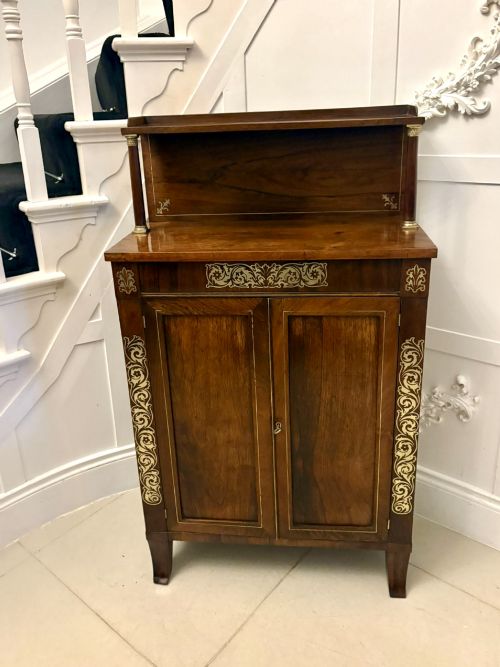
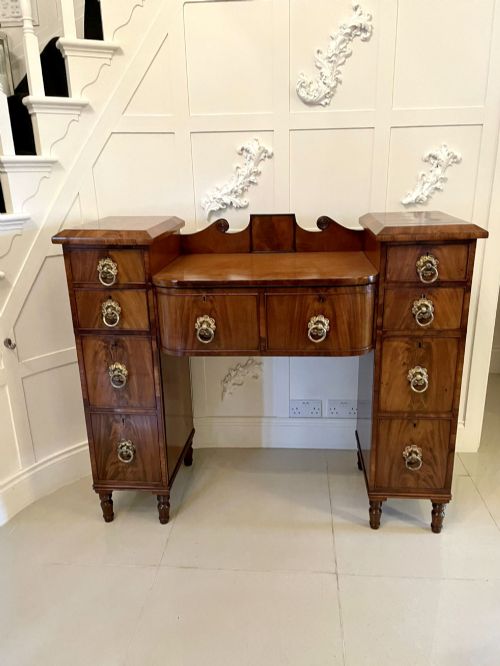
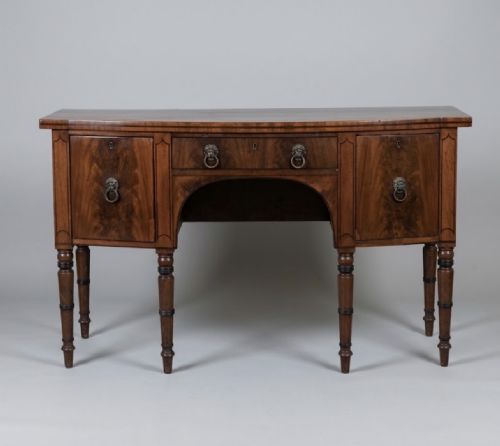
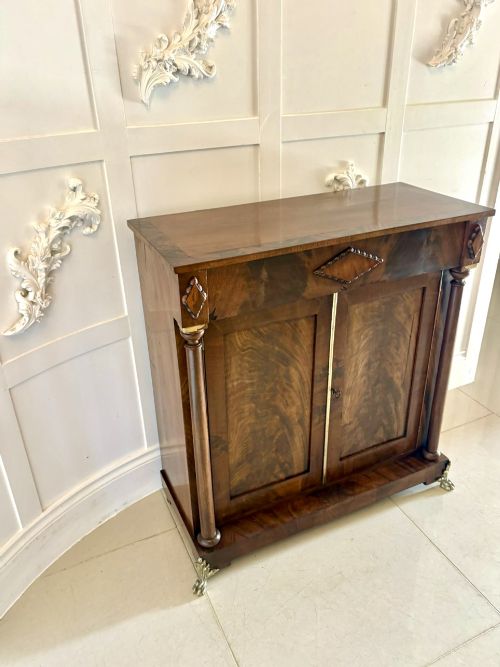
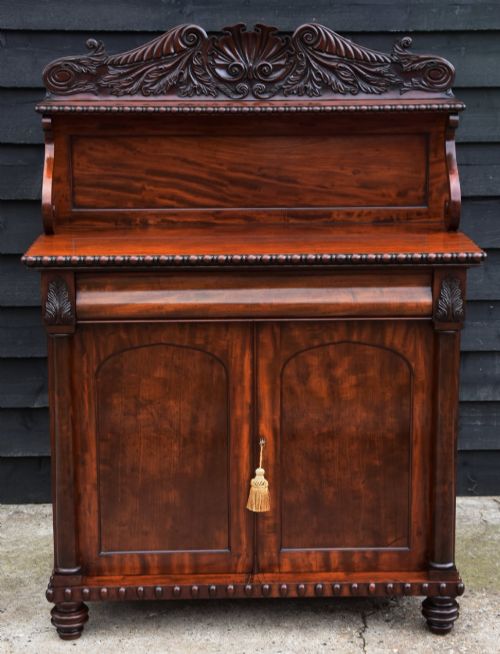
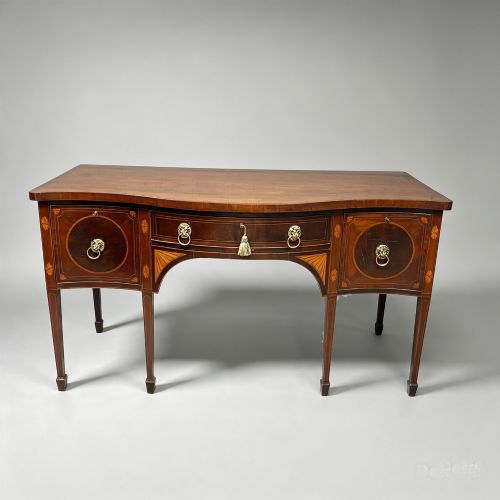
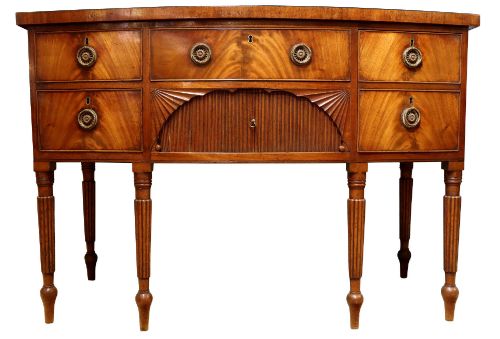
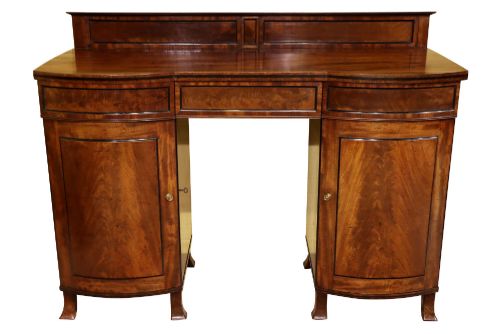
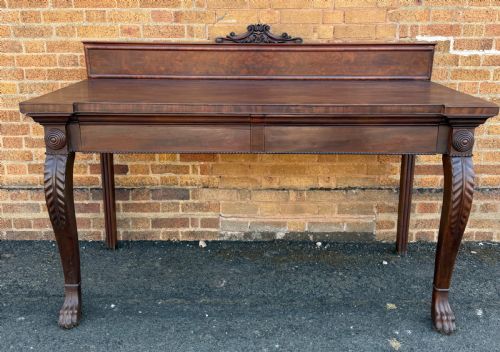
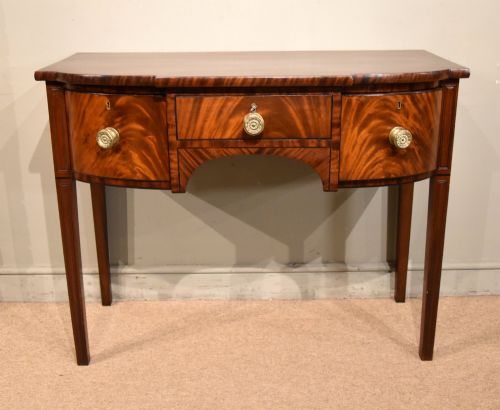
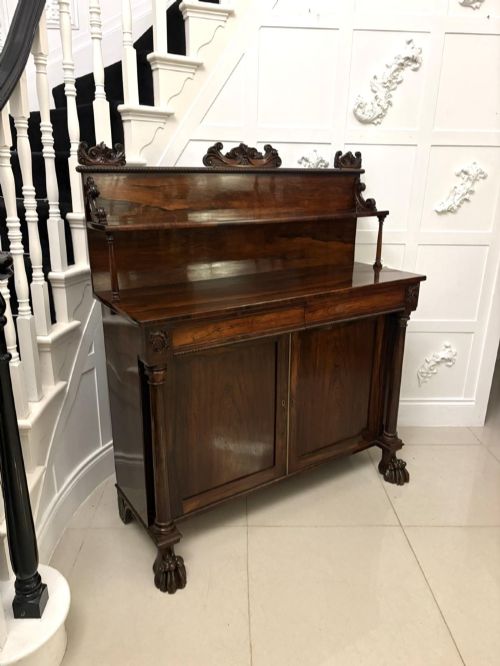
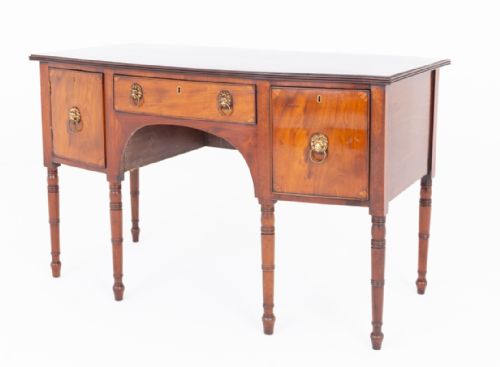
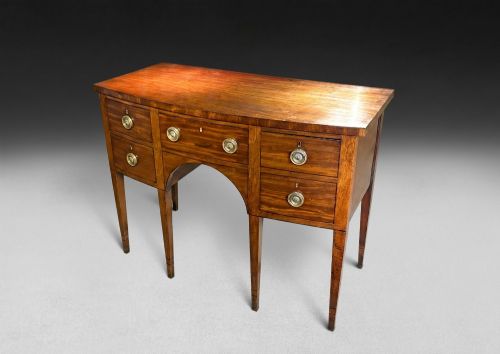
A period mahogany sideboard serves as a substantial focal point in a dining space, designed to store tableware and display serving dishes. When searching for a period mahogany sideboard, buyers encounter several distinct forms spanning the eighteenth and nineteenth centuries. The selection ranges from bowfront and serpentine shapes to pedestal designs and taller chiffonier cabinets.
Most examples originate from the Georgian and Regency eras, though Edwardian and Victorian iterations also appear. The timber varies from plain solid boards to highly figured veneers like flame mahogany. Cabinets, serving tables, and console tables frequently share the category alongside traditional sideboards.
How they were made
Cabinet makers constructed these pieces primarily using solid mahogany and mahogany veneers applied over secondary woods. Finer workshops selected choice sections of timber, including flame mahogany and plum pudding mahogany, to create striking visual patterns across drawer fronts and doors. Inlays of boxwood and brass details frequently accent the primary mahogany structure.
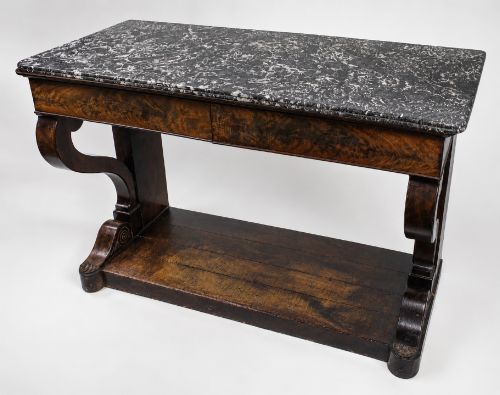
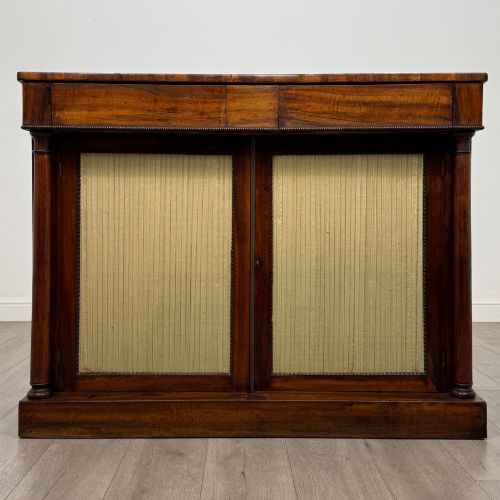
Secondary materials such as silk panels and marble tops appear on specific chiffoniers and console tables. Joinery relied on traditional hand-cut dovetails for drawers and sturdy frame-and-panel construction for doors and carcases. Brass grilles, handles, and gallery rails complete the metalwork on Regency and Georgian pieces.
Period Mahogany Sideboard Retail Price Guide 2026
Typical asking prices for period mahogany sideboard among the pieces listed under this phrase on Sellingantiques today, from the lower quarter to the upper quarter. They describe what is for sale here now, not the wider market.
Materials recorded across current inventory include solid mahogany, flame mahogany veneer, brass, boxwood, marble, and silk.
What varies in quality
The choice of timber grain fundamentally dictates visual appeal, with symmetrical flame mahogany veneer commanding higher regard than plain boards. The sophistication of the silhouette, such as a tightly curved serpentine or bowfront rather than a simple straight edge, marks finer cabinet making. Subtle details like crisp boxwood stringing and original brass mounts elevate a piece above standard utility furniture.
Proportion and scale also separate ordinary items from exceptional ones. Master craftsmen balanced the height, depth, and leg placement so that heavy timber retained a sense of elegance. Pieces retaining their original hardware and untouched interior fittings hold greater integrity than altered examples.
Gillows·Mack Williams And Gibton
The Period Mahogany Sideboard Glossary
- Bowfront
- A convex, curved front section that swells outward in the centre. This shape softens the corners of a room and defines many Regency designs.
- Chiffonier
- A low cabinet featuring shelves or enclosed cupboards below, often topped with a small mirror or gallery rail. These served similar storage purposes to standard sideboards.
- Flame mahogany
- A veneer cut diagonally across the bough of a tree to produce a flickering, flame-like grain pattern. Makers prized this timber for principal drawer fronts.
- Serpentine
- A front edge shaped with a central convex curve flanked by concave curves. This undulating profile requires high skill to construct.
- Stringing
- Thin lines of contrasting timber inlaid into the surface to create decorative borders. Boxwood is frequently used against dark mahogany.
Period Mahogany Sideboard: Frequently Asked Questions
Where should I place a sideboard?
These pieces traditionally anchor a dining room wall, offering a surface for serving food and storing linens below. Their generous proportions also suit large hallways or reception rooms.
Ensure you measure the depth of bowfront and serpentine models, as their curved fronts project further into the room than flat-fronted alternatives.
How do I identify a Regency piece?
Regency items typically display classical restraint, often incorporating brass inlay, lion paw feet, or reeded columns. The timber choice leans heavily toward rich mahogany and figured veneers.
Look for architectural influences derived from ancient Greece and Rome that became popular during the early nineteenth century.
What is the difference between a sideboard and a chiffonier?
Sideboards are generally larger dining room tables or cabinets designed for heavy serving duties and extensive storage. Chiffoniers are more compact side cabinets that often include upper shelving.
Chiffoniers frequently feature enclosed cupboards with fabric-backed or wooden doors rather than banks of deep drawers.
How do I care for mahogany surfaces?
Maintain the timber by dusting regularly with a soft, dry cloth and applying natural beeswax periodically to nourish the grain. Avoid placing furniture in direct sunlight or near heat sources to prevent the wood from drying out.
Keep marble tops clean using mild, non-abrasive soap and water to protect the stone from staining.