

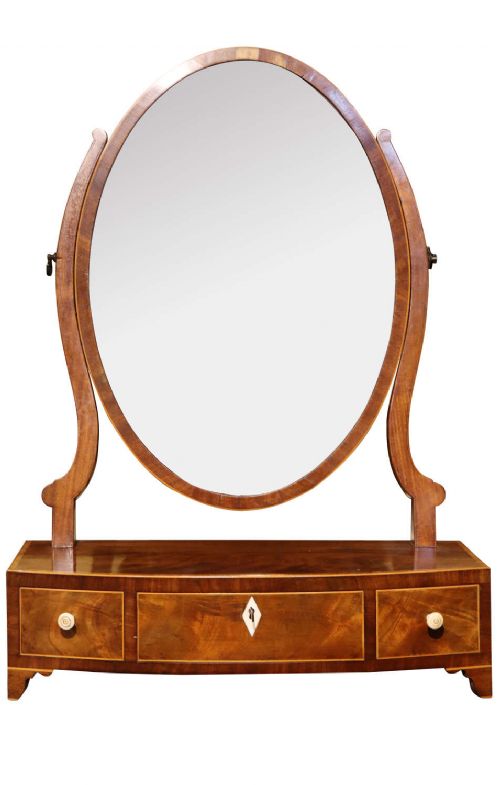


Period Mahogany Mirror
A period mahogany mirror brings warmth and depth to a room, offering centuries of cabinet-making craft in a single glass.
Period Mahogany Mirror
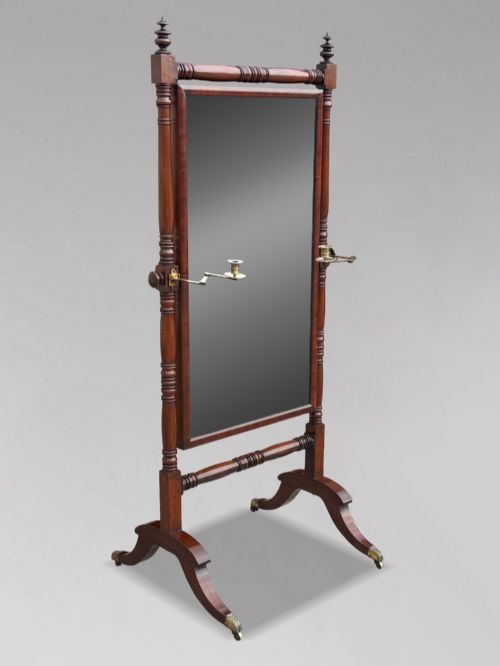
A period mahogany mirror encompasses wall-hanging plates, upright dressing glasses, and large floor-standing cheval mirrors from the Georgian, Regency, and Victorian eras. These items served functional roles in bedrooms and reception rooms alike, reflecting candlelight and daylight long before electric lighting became common. Buyers searching for a period mahogany mirror will find numerous examples ranging from compact toilet glasses to substantial architectural wall pieces.
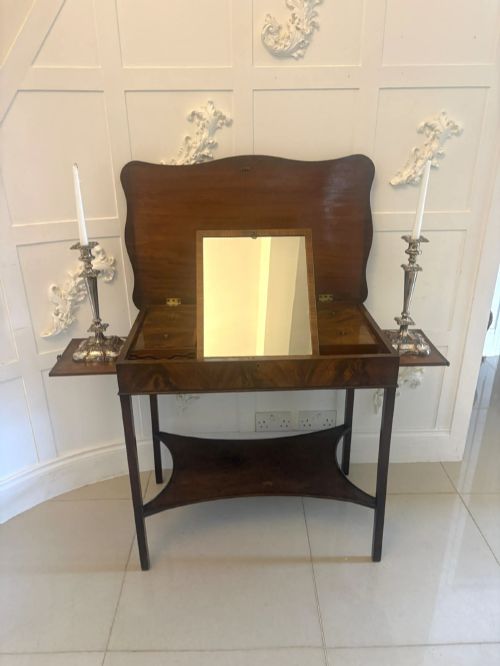
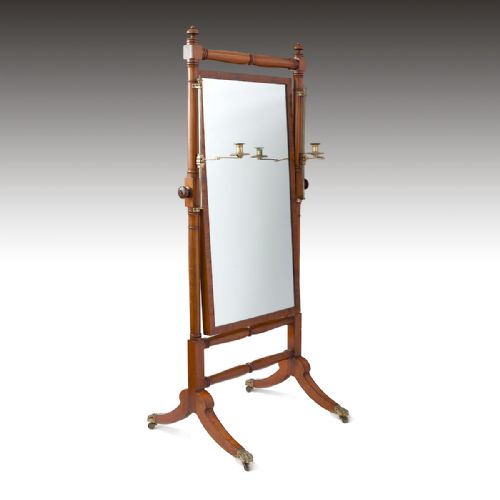
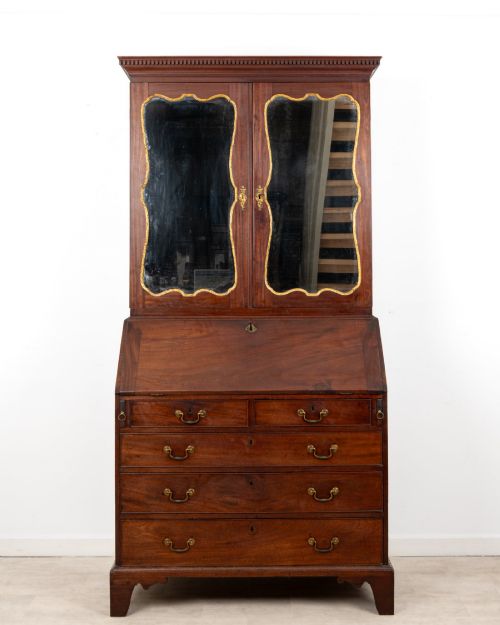
The surviving selection leans heavily towards Regency and Georgian designs, where dense tropical hardwoods met refined glass plates. Many items function as dressing mirrors with pivoting boxes and small drawers, whilst larger scaled cheval glasses provide full-length reflection. Alongside dedicated looking glasses, the selection includes related forms where mirrors form part of larger case furniture like sideboards and bureau bookcases.
How they were made
Cabinet makers built these frames using solid mahogany and figured veneers, often selecting timber with rich grain patterns and deep natural colour. Construction frequently involved mortise and tenon joints for structural stability, whilst smaller dressing boxes utilised dovetail joinery for the drawers. Frames might incorporate parcel-gilt detailing, brass candle sconces, or bone inlay to highlight the architectural mouldings.
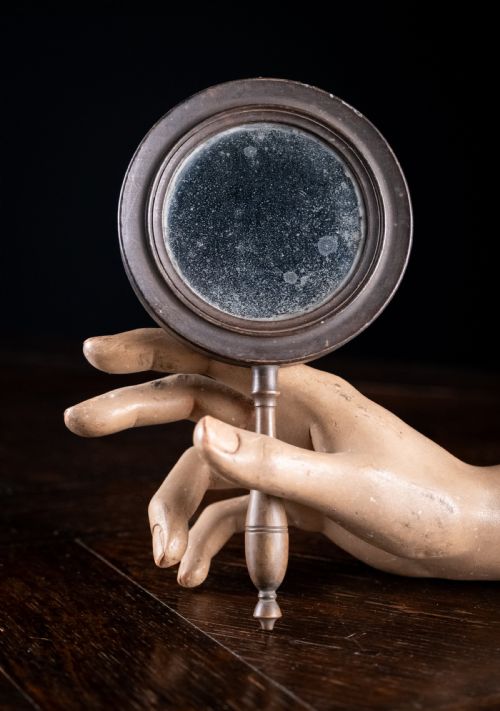
Early glass plates were cast or blown, then silvered using traditional metallic foils before later industrial methods produced more uniform reflections. The glass is secured within rebated frames behind wooden backs, occasionally retaining original mirror plates that show characteristic foxing and age spots. Giltwood accents applied to mahogany carcasses brought brightness through contrasting gold leaf against dark wood.
Listings feature mahogany mirrors spanning the Georgian, Regency, and Victorian periods, alongside Edwardian revivals utilising brass and giltwood.
What varies in quality
Quality rests upon the selection of timber figure, the crispness of carved details like fretwork or parcel-gilt motifs, and the preservation of original surfaces. Pieces displaying finely figured flame mahogany and well-proportioned architectural lines command attention over plain or later assembled examples. The proportion of the frame to the mirror plate dictates the visual balance, with superior makers achieving harmonious harmony across every dimension.
Original hardware, such as brass pivoting screws on swing mirrors or candle arms on wall plates, distinguishes a well-preserved survivor from a heavily restored piece. The clarity and depth of the glass plate also influence value, particularly where original mercury or early silvered plates survive intact with gentle ageing. Craftsmanship reveals itself in the hidden secondary woods and the precision of the dovetails inside supporting box bases.
Gillow·William Kent
The Period Mahogany Mirror Glossary
- Cheval mirror
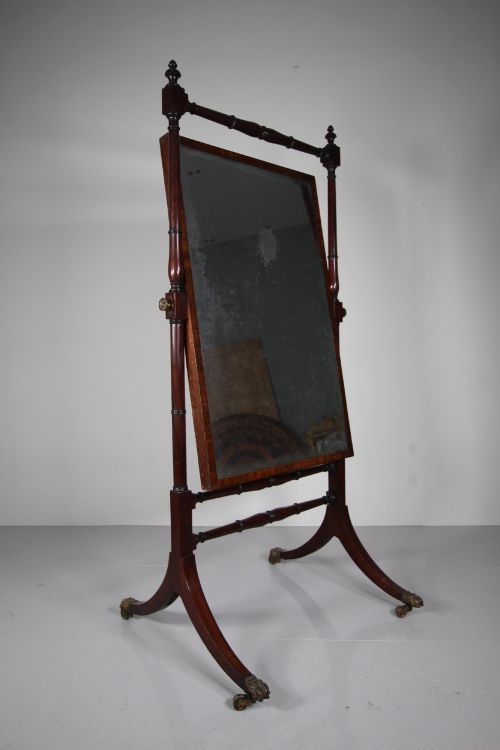
- A freestanding full-length mirror mounted in a pivoting frame between four upright posts. These large dressing glasses allowed a complete view of attire in Regency and Victorian bedchambers.
- Toilet mirror
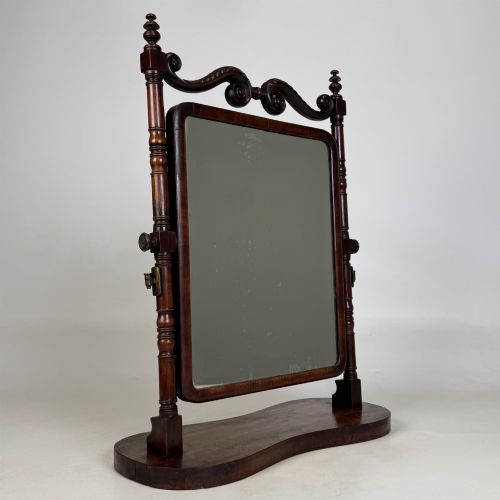
- A smaller glass mounted on a pivoting stand, usually set atop a small chest of drawers or box base with tiny compartments. They sat upon dressing tables for close grooming.
- Parcel-gilt
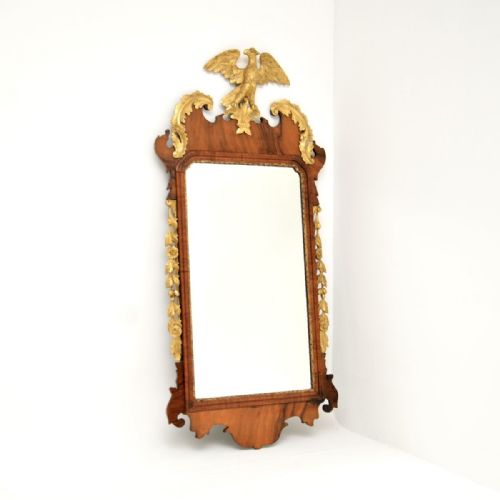
- Partially gilded woodwork where gold leaf highlights specific carved motifs, fretwork, or mouldings against a dark mahogany ground. This technique added reflective brilliance under candlelight.
- Pier mirror
- A tall wall glass designed specifically to hang on the wall space between two windows. They often sat above console tables or pier tables to amplify light in formal rooms.
- Foxing
- The natural degradation and spotting that occurs within older mirror plates over generations as moisture affects the backing. Collectors often prize original foxing as evidence of great age.
Period Mahogany Mirror: Frequently Asked Questions
Are original mirror plates common?
Many surviving pieces retain their original glass plates, though replacement plates are frequently encountered due to breakage or silvering decay over centuries. Original glass often exhibits slight distortions and characteristic dark spots known as foxing.
Inspecting the edges of the glass and how it is secured in the rebate helps determine if the plate belongs to the original period of the frame. A genuinely old plate adds considerable character and authenticity to the looking glass.
Where should I place a cheval mirror?
A cheval mirror requires a stable floor space where the heavy upright frame can stand safely without risk of being knocked. Bedrooms and dressing rooms remain the traditional and most practical locations for these full-length pivoting glasses.
Positioning the glass opposite a window allows it to bounce natural light around the room while providing a functional dressing aid. Because they are freestanding, they can be angled to capture the best light in the space.
What is a toilet mirror used for?
A toilet mirror served as a dressing glass for morning grooming and styling hair in the bedroom. The small drawers integrated into the base held trinkets, cosmetics, and small personal valuables.
Today these compact pieces sit comfortably upon chests of drawers, sideboards, or dedicated dressing tables as decorative accent items. They offer the charm of period cabinet work without requiring the floor space of a larger cheval glass.