


Period Mahogany Hall Table
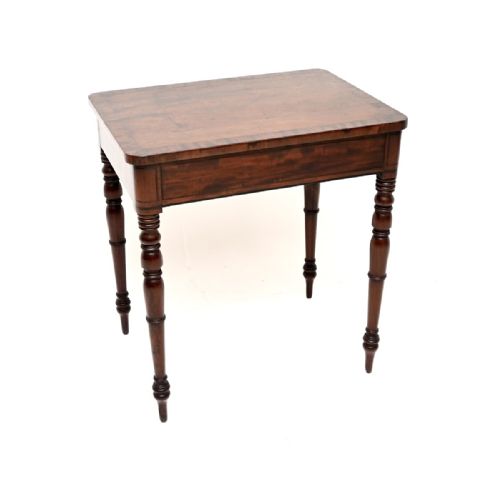
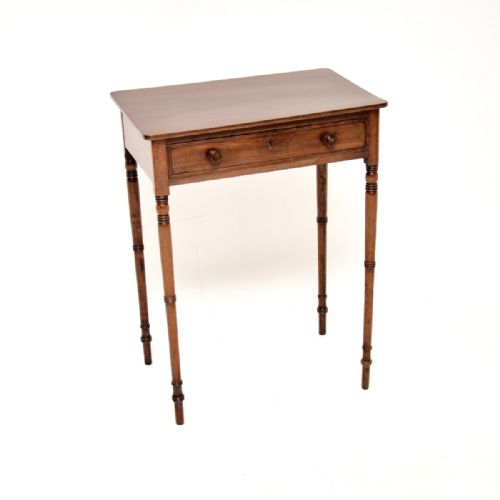
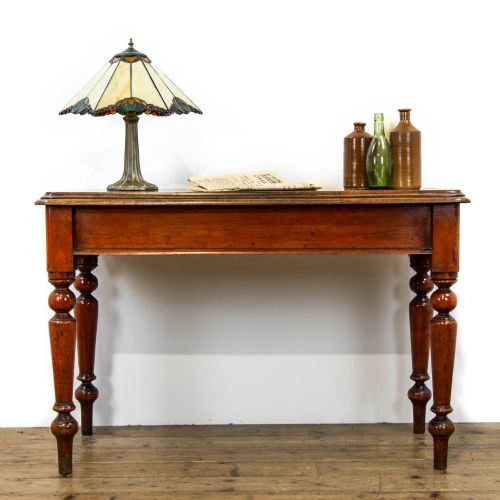
Period mahogany hall table designs encompass narrow entrance pieces constructed in Georgian, Regency and Victorian workshops.
Period Mahogany Hall Table
A period mahogany hall table provides a narrow surface for an entranceway, drawing on forms such as side tables, console tables and serving tables from the Georgian, Regency and Victorian eras. These pieces sit flat against a wall, designed to occupy minimal floor space while offering a practical landing place in a hallway.
The selections encountered here span the eighteenth and nineteenth centuries, including George III designs alongside later Victorian interpretations. Buyers frequently meet console and side table variations featuring single or multiple drawers beneath the timber top.
Factors determining quality
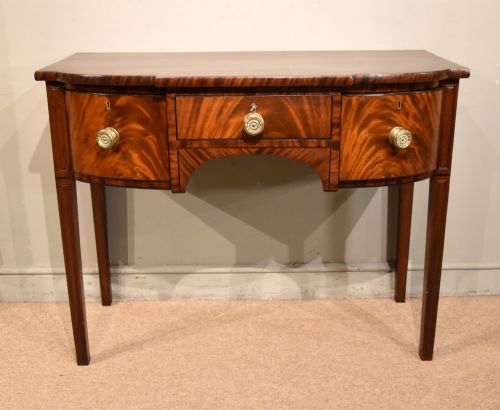
The grade of timber selected for the top dictates visual appeal, with figured flame mahogany commanding greater interest than plain stock. Superior examples display precise inlay work, such as fine boxwood stringing or marquetry, executed with strict geometric symmetry.
Structural integrity and original brass hardware elevate a piece above standard workshop output. Construction details, including drawer linings and the crispness of carved mouldings, separate standard utility items from master cabinetmaker productions.
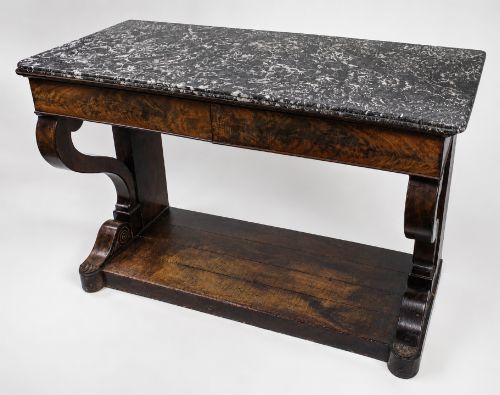
Listings feature eighteenth and nineteenth-century examples incorporating mahogany, marble, brass, ormolu and flame mahogany veneer.
Gillows of Lancaster
The Period Mahogany Hall Table Glossary
- Demi-lune
- A half-moon shape used for console tables designed to fit flat against a wall. This form became particularly popular during the late eighteenth century for smaller entrance spaces.
- Console table
- A table supported by brackets or legs against a wall, frequently featuring a decorative front. These pieces often carried marble tops during the Regency and French Empire periods.
- Flame mahogany
- A veneer cut from the fork of the mahogany tree to create a distinctive flickering flame pattern. Cabinetmakers prized this figure for prominent table tops and drawer fronts.
- Stringing
- Thin inlay lines of contrasting wood, such as boxwood or satinwood, set into the mahogany surface. This technique created delicate geometric borders around table edges and drawer fronts.
- Ormolu
- Gilt-bronze applied as decorative mounts to furniture frames during the nineteenth century. This technique added metallic contrast to dark mahogany and marble surfaces.
Period Mahogany Hall Table: Frequently Asked Questions
Where do you place a hall table?
These narrow tables sit flat against an entrance wall to provide a surface for post and keys without blocking foot traffic. Their shallow depth allows them to fit comfortably into restricted hallway spaces.
Historically, they also served dining and drawing rooms as serving or side surfaces. Modern interiors utilise them similarly to anchor a hallway or landing.
How do I identify a Georgian hall table?
Georgian pieces typically display restrained classical proportions, straight or tapering legs, and premium mahogany timbers with minimal ostentatious ornament. Look for hand-cut dovetails within the drawer construction and traditional timber shrinkage.
Stiles and rails will show the marks of hand tools rather than modern machine production. Makers of this era favoured architectural balance and structural honesty.
What is the difference between a console and side table?
Console tables traditionally rely on wall brackets or distinct front legs for support, often featuring decorative friezes intended to be viewed primarily from the front. Side tables stand independently on four legs and offer all-round finished cabinetry.
Both forms served similar reception functions in period houses. Hall placement frequently overlapped between the two categories.
How should I care for antique mahogany?
Maintain the timber by keeping it away from direct heat sources and sudden humidity shifts that cause wood to split. Regular dusting with a dry, soft cloth preserves the wax finish without building up residue.
Avoid commercial silicone sprays which damage historic polish. Period furniture responds best to occasional natural beeswax applications.