


Period Mahogany Buffet
A period mahogany buffet brings solid craftsmanship and rich timber grain to a dining room or hall.
Period Mahogany Buffet
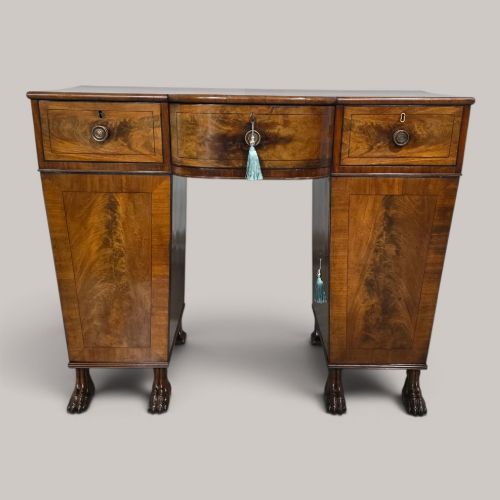
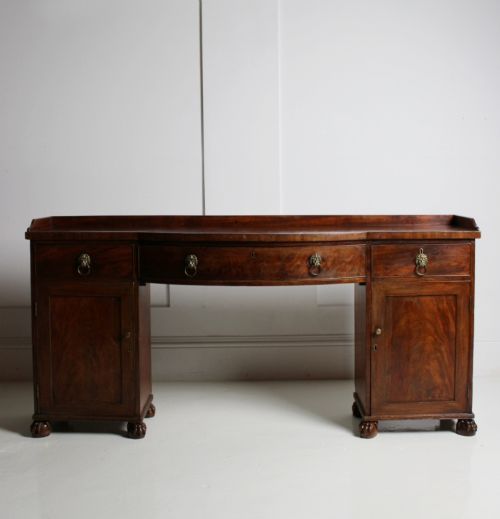
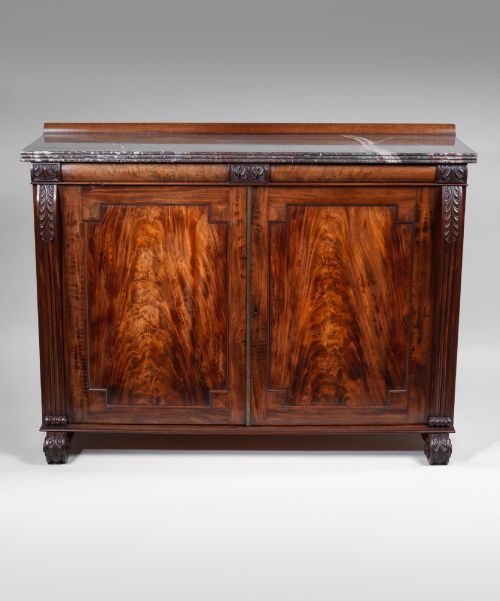
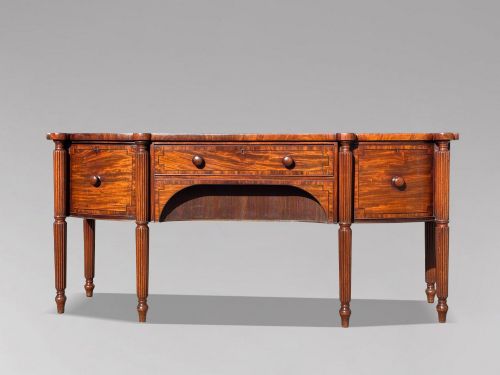
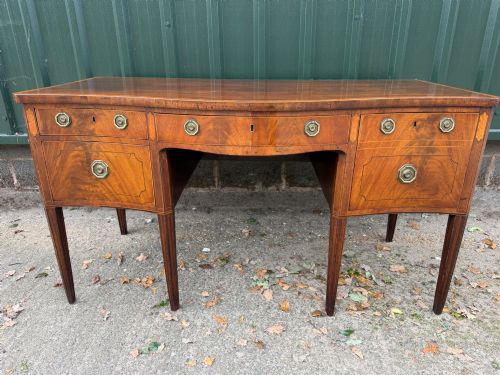
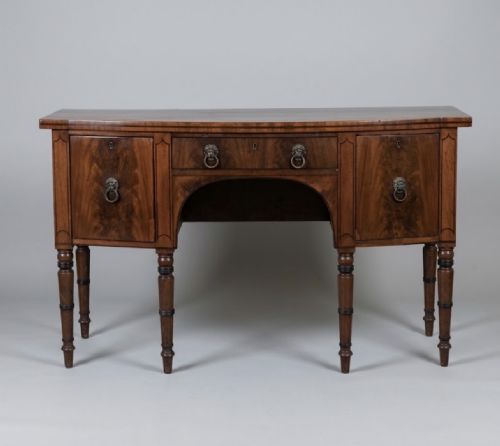
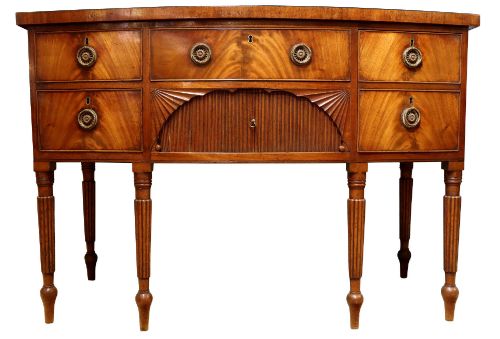
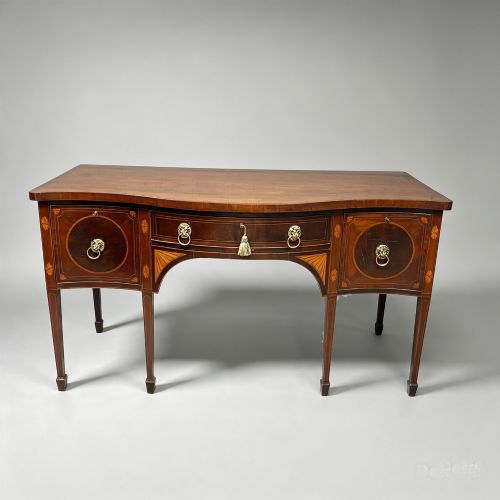
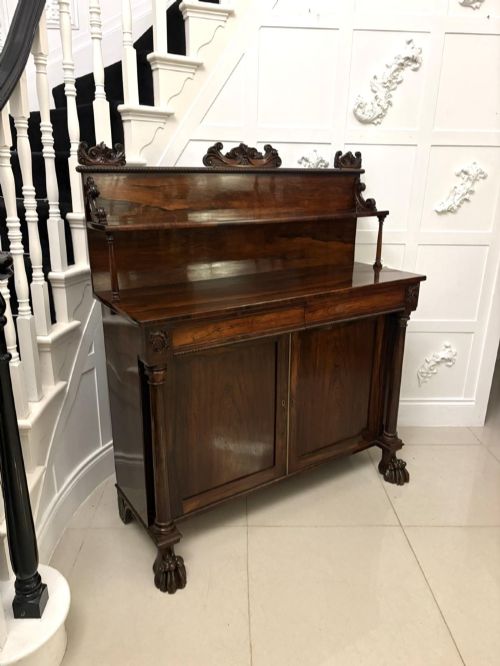
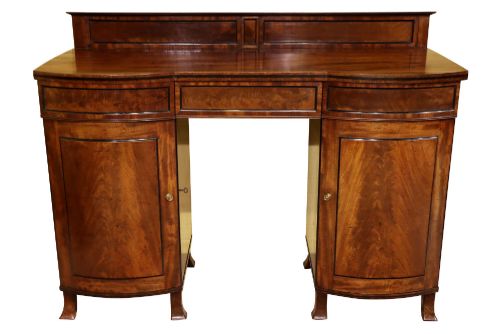
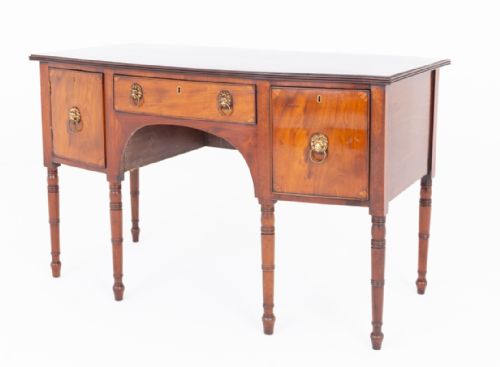
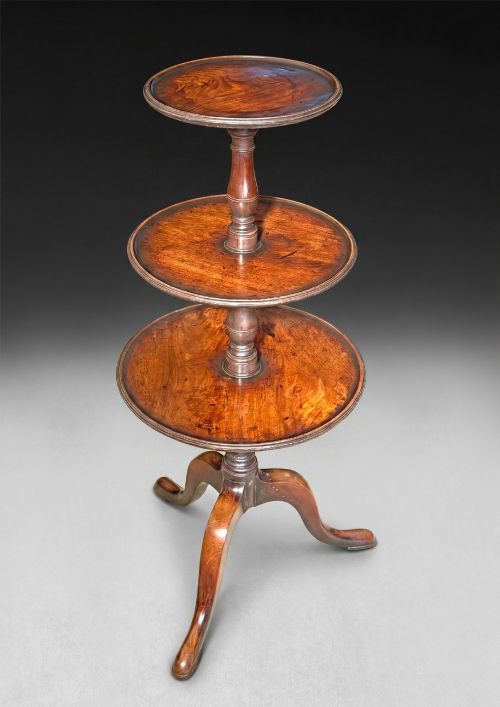
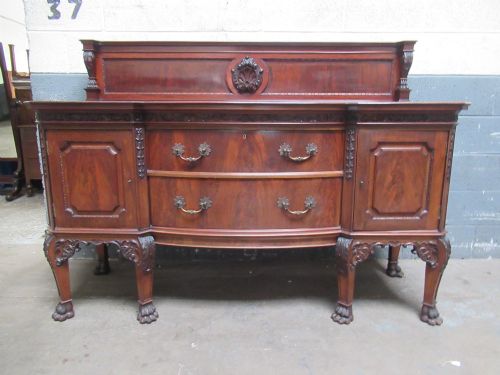
A period mahogany buffet encompasses practical dining room furniture designed for serving and storage during the Georgian, Regency, and Victorian eras. These items appear in formats such as sideboards, serving tables, three-tier dumb waiters, and side cabinets.
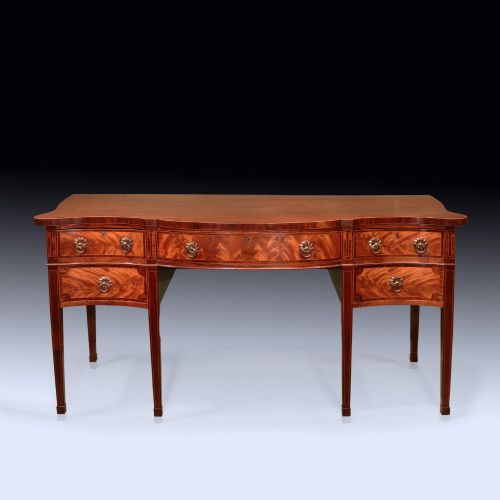
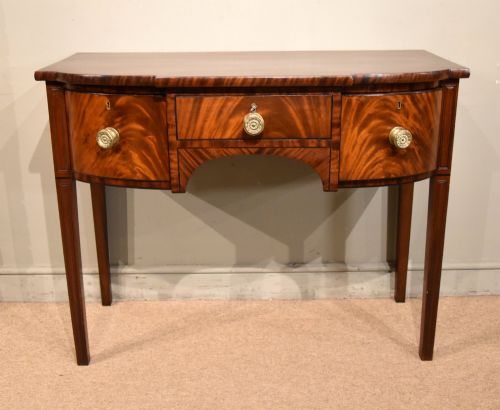
The pieces on this page span the eighteenth and nineteenth centuries, taking forms like bowfront and serpentine sideboards alongside tiered serving stands. Buyers seek these items for their functional surface space and substantial timber construction.
Regional workshops and cabinet makers produced these forms in mahogany, frequently incorporating brass details and satinwood inlay. Each format serves the practical demands of dining spaces while displaying the distinct design traits of its period.
Distinguishing quality in construction and design
The standard of timber selection and veneer matching defines the visual impact of a buffet. Superior examples display continuous flame mahogany grain across multiple drawers, while lesser pieces rely on plain or mismatched boards.
Execution of fine details such as stringing, brass hardware, and joinery separates standard production from master craftsmanship. Well-made items retain structural integrity in their drawer linings and backboards over centuries of use.
Period Mahogany Buffet Retail Price Guide 2026
Typical asking prices for period mahogany buffet among the pieces listed under this phrase on Sellingantiques today, from the lower quarter to the upper quarter. They describe what is for sale here now, not the wider market.
Some dumb waiters feature three tiers designed to hold plates and glasses out of reach of the family pets.
Gillows
The Period Mahogany Buffet Glossary
- Bowfront
- A curved front configuration that swells outward in the centre, commonly seen on eighteenth and nineteenth-century sideboards.
- Serpentine
- A furniture front shaped with a convex centre flanked by concave curves, requiring precise carpentry.
- Flame mahogany
- A veneer cut from timber where the branch meets the trunk, producing a distinctive flickering flame pattern.
- Dumb waiter
- A tiered stand with rotating or fixed circular trays used for serving food and drink without servants present.
- Chiffonier
- A low cabinet featuring shelves or a cupboard section, often utilised in dining rooms for storing silver and glass.
Period Mahogany Buffet: Frequently Asked Questions
What is a period mahogany buffet used for?
These pieces function as serving surfaces and storage units for dining rooms, holding tableware and serving dishes.
They provide deep drawers and cupboards that accommodate cutlery, linen, and bottles while offering a wide top surface for food presentation.
How do I identify a Regency buffet?
Regency items often feature classical proportions, brass inlay, and bold mahogany grain with restrained architectural moulding.
They lean toward architectural forms inspired by classical antiquity rather than the ornate carving of earlier periods.
Where should I place a dumb waiter?
A three-tier dumb waiter suits corners or side walls in dining rooms and sitting rooms where extra surface space is needed.
The tiered design maximises vertical display area while taking up minimal floor space.
How do I care for mahogany surfaces?
Maintain the timber by dusting with a dry cloth and occasionally applying natural beeswax to nourish the grain.
Avoid placing items in direct sunlight or near heat sources to prevent the wood from drying out and the veneer from lifting.